An article in Wired discusses lessons we can learn from the octopus. One of them touches on cross-cultural partnerships, formed when sometimes antagonistic groups come together to combat immediate problems:
 Some life-forms engage in symbiotic partnerships with other organisms. An octopus may provide shelter for toxic bacteria, which then give the octopus yet another tool in its arsenal—the ability, found in certain species, to inflict a deadly bite.
This skill, too, can translate to the man-made world. Symbiosis is at the heart of a remarkable partnership between Israeli, Palestinian, and Jordanian health practitioners who are sharing technology, databases, medicines, and knowledge to identify and reduce the threat of infectious diseases regardless of where they appear. These symbioses work not because they are perfect, all-encompassing solutions but because they solve immediate problems. The doctors in this coalition didn’t set out to create peace in the Middle East, but if peace does break out there, it will undoubtedly owe some credit to symbiotic relationships like this one.
And this isn’t the only place where these partnerships have born fruit:
[T]he facilitators of this Middle Eastern infectious-disease consortium have replicated their success in the mutually hostile southeast Asian countries bordering the Mekong River and are now bringing the model to southern Africa.
This reminds me of a book I’ve read that has found a place on my “favorites” bookshelf—Me, Myself, and Bob: A True Story about God, Dreams, and Talking Vegetables. In it, Phil Vischer tells how he founded Big Idea Productions, home of Veggie Tales, and built it into a major producer of Christian entertainment, only to see his dreams and his ministry end in bankruptcy. After having his grand plan, his “big idea,” fail, Vischer decided to imitate another sea creature . . . the jellyfish. He explained this approach in an interview with In Touch Magazine:
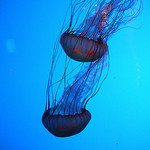 [M]y new company is called Jellyfish Labs—very intentionally, because jellyfish can’t choose their own course. They can’t locomote. They are carried by the current. And they have to trust the current will take them where they need to be and keep them alive.
I went off the track with Big Idea when I started making 20-year plans. I was like, “Okay, God, this is what I’m going to do for You in the next 20 years. Now, all You need to do is just bless it.” When we do this, we don’t have to listen anymore, because we’ve already figured out what we’re going to do. God is in some sort of subservient role where He gets to sit in the back seat and hand out the credit card when we need resources.
But for a jellyfish to make a 20-year plan—it’s humorous. It’s lunatic. I had viewed myself as a big macho barracuda in the ocean of life. In reality, I was a jellyfish—basically a spineless bag of goo that has no form.
. . . .
In reality, if I’ve given Christ lordship of my life, and if I understand the concept of lordship, where I am in 20 years is really none of my business. It’s my business to say, “Okay, God, what have You called me to do today?”
Expats, repats, TCKs, ATCKs, missionaries, ex-missionaries, and others who face life-changing transitions can find it hard to make, and keep, long-term plans. What does the future hold? Will my transitions define my life? Where am I headed? Who have I become? There is a time for making big plans and for having big ideas, but thanks to Phil Vischer for reminding us that even though the jellyfish doesn’t control the currents, it still gets where it needs to go.
(Rafe Sagarin, “When Catastrophe Strikes, Emulate the Octopus,” Wired, March 21, 2012; Tonya Stoneman, “Mighty like a Jellyfish,” InTouch Ministries)
[top photo: “Octopus at Mothra,” by Neptune Canada, used under a Creative Commons license; bottom photo: “Jellyfish” by CodyHanson, used under a Creative Commons license]


 Clearing Customs