The Secret Life of Walter, a Missionary [—at A Life Overseas]

8730883620_136e294d6c_k

[With apologies to James Thurber and Walter Mitty.]

“I’ll take the kids outside for a while so you can have some uninterrupted time,” says Walter’s wife as she softly closes the door to his office. It’s time to work on their monthly newsletter, and he turns to the keyboard.

Tap, tap, tap, ta-tap tap . . .

“Walter?” she yells back from the living room. “Don’t forget to update the email list before you send it out.”

Dear Friends:

As I start typing this newsletter, the words are already spilling out of my heart to let you know what’s gone on this month, but I’m going to change directions and do something a little different this time.

Because the number of our supporters has recently tripled, we realize that many of you don’t know us very well. Therefore we’d like to take this opportunity to summarize our ministry in this newsletter. (We’ll soon need to decide what to do with all the extra funds, but we’ll leave that topic for a later time.) For those of you who’ve been with us from the beginning, we hope you don’t mind. Here goes. . . .

We’re so glad to be able to serve God overseas. I can tell you that even when Hannah and I were co-CEOs of our own non-profit, recognized by Time magazine on it’s annual “100 to Watch” list, and leading worship at our church on the weekends, there was something missing in our lives. Little did we know at the time that it was mission work. But on that Easter morning, when Hannah and I woke up from the same dream—seeing Jesus beckoning us onto a 737—we both knew what we must do. God’s calling was confirmed when we announced our decision to our church later that day, and the entire congregation blessed us with a raucous standing ovation. Then, after the service, friends and people we’d never met before came up to us and put enough funds in our hands to cover our startup expenses twice over.

Still, we were concerned about sharing the news with our parents, as we knew they would miss being close by to us and their three grandchildren. But our fears were allayed when all four of them, through tears of joy, told us that they had been praying for this since we were in the womb. In fact, they wondered what had taken us so long.

That was four years ago, and we can report that we are absolutely flourishing in our new home. . . .

Finish reading at A Life Overseas.

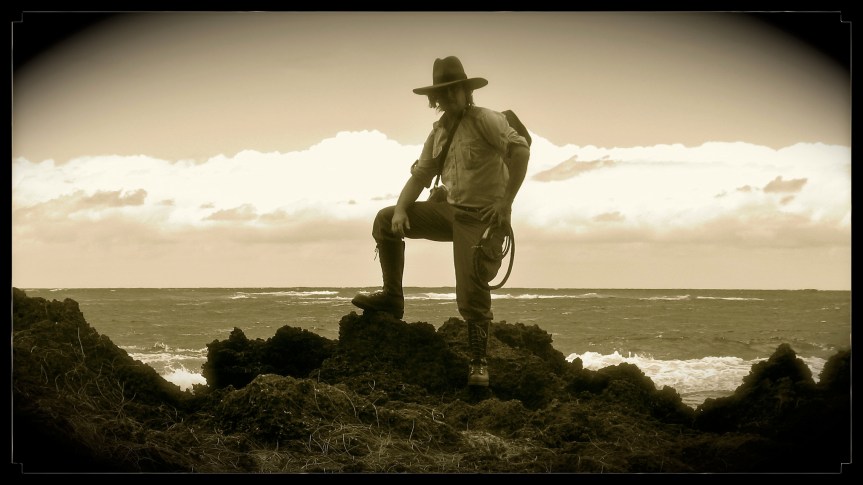
[photo: “Equipment Trial #3,“” by davidd, used under a Creative Commons license]

Culture Stress, when There’s No Hook to Hang It On [—at A Life Overseas]

Head over to A Life Overseas to read my complete post.

6854846176_3b16e91b22_k

When most people open up their closets in the morning, they usually ignore the out-of-style shirts on the edge, the wrong-color sweaters, the too-tight pants. Instead, as much as they can, they grab something that looks right, something that fits right, something that feels right.

When you transition between countries, your cultural closets get switched. Your choices become limited, and you often have to put on things you’d rather not wear. You’ve given up comfort for other purposes. Some of this discomfort is just an annoyance, like a scratchy tag inside the collar of your shirt. But some can seem unworkable, like that same shirt two sizes too small.

It’s the Water and the Dirt

When I and my family moved overseas, we weren’t surprised by culture stress. We may not have been fully prepared, but we weren’t surprised. What did surprise us, though, was that we couldn’t always identify the causes of our irritation and pain.

For many stressors, you know just what hook to hang them on. Singing at church feels a little off? It’s because everybody’s clapping on a different beat than you are. Can’t sleep? That’s because of the all-night traffic outside your window. Nagging cough? Pollution.

Being able to name a problem helps us sort things out. It gives us vocabulary for talking about it with others. It helps us better understand our new home and ourselves. It helps us find solutions. It helps us cope.

But sometimes, there is no hook, at least not an obvious one.

A few months after we landed in Taipei, my wife developed a “cold,” a cold that lasted on and off for over a year. Our doctor couldn’t find a solution and none of his remedies helped (one medicine caused her heart to race). Finally, he diagnosed her with shui tu bu fu, which can be translated as “not acclimated to the water and soil.” That’s odd, because we didn’t drink the water, and with all the concrete, and we rarely saw the soil. . . .

Continue reading . . .

[photo: “038,” by glassghost, used under a Creative Commons license]

Standing Up Crooked Together [—at A Life Overseas]

640px-Nowe_czarnowo-krzywy_las
The Crooked Forest outside Gryfino, Poland

Here’s an intro to my post this week at A Life Overseas.

Standing Up Crooked

There’s a tree near Colorado Springs that I admire. It’s a pine tree sitting on the property of The Hideaway Inn and Conference Center, where I and my family attended MTI’s Debriefing and Renewal several years ago.

This tree is surrounded by other pines, but this one’s different. While its trunk starts out on a vertical path, after a several feet, it breaks to the side at a ninety-degree angle. Then, over a few more feet, it makes a slow curve, working again on an upward climb.

Near the end of the retreat, we were told to find a place to be by ourselves, and I knew where I wanted to be, sitting in front of that tree. I must not be the only one who appreciates it, since there’s a bench facing it close by.

I don’t know what trauma caused the tree’s shape. Maybe it was a storm, maybe a disease, maybe the blade of an axe. Or maybe it was more of a heart thing—a promise unkept, a hope deferred, a joy shattered.

Regardless of the cause, the reason I admire this tree is that though having faced trouble, it still reaches upward. It’s “persecuted, but not abandoned; struck down, but not destroyed;” wrecked, but not ruined. No, not ruined at all.

Can you identify with this tree?

Have you ever had your feet knocked out from under you because of some tragedy?
Have you ever tried to take hold of something beyond your reach and fallen in the trying?
Have you ever been bent to the point of brokenness?
Have you ever been laid low by the realization that you are the cause of someone else’s pain?
Have you ever wrestled with God, refusing to let go until you get a blessing, and walked away limping?

[photo: “Krzywy Las w Nowym Czarnowie,” by Artur Strzelczyk, used under a Creative Commons license]

Finish reading at A Life Overseas.

It’s What’s Inside That Counts, Right? Here’s a Resource to Help Us Live That Way [—at A Life Overseas]

Inside-JobCome join me at A Life Overseas for my full post on a helpful book written by a friend and former missionary.

Stephen W. Smith wrote Inside Job for leaders, leaders who find themselves trying to “climb the slippery, treacherous slope of success” and too often falling with a crash, landing in a heap below.

Stephen was once among them. When he began life after graduate school, he says, “I developed an addiction to work that was applauded by every organization I worked for in my career. I was hooked—as every addiction hooks a person.” For Stephen, that work included his service on the mission field.

The solution, he writes, is to redefine success and to prioritize the care of one’s soul, what he calls “the work within the work.” Using the “Great Eight Virtues” listed in 2 Peter 1 as his foundation, in Inside Job Stephen presents the need for emotional and spiritual transformation and fleshes out what must be done to bring it about—”a process of learning, adjusting, repenting and starting anew with courageous convictions.”

The work within the work includes finding rhythm (not balance) in life, saying “no” in light of our limitations, recognizing the need for Sabbath rest, and understanding and managing transitions.

For many of us, this will require a nearly 180-degree turnaround. . . .

Finish reading at ALifeOverseas.com.

To Eat or Not to Eat, That Is the Question [—at A Life Overseas]

If it looks back, don't eat it!

Here’s my December post for A Life Overseas.

I need your help to crowd source this post. Let me explain.

In every culture, there are some foods that those on the outside don’t understand. In fact, many on the inside don’t understand them either. Maybe they were first eaten during a time of shortage, and then, after that time had passed, they were passed down from generation to generation, not because the need was still there, but because they had become a part of the people’s identity.

Maybe they are terrible-tasting things that we eat because they’re supposed to be good for us. (Maybe we think they’re good for us because they taste terrible?) And then there are those things that years ago, before refrigeration, were fermented—or prepared in some other way—to keep them from spoiling. And now, even after electricity, we still have them. Maybe it’s because over time our tastes just develop in different directions. Or maybe it’s because of extravagance: we’re wealthy enough to eat something odd and rare, just because we can.

Regardless of what put it on the menu, what food in your home-away-from-home gives your palate pause? Or, on the other hand, what have you tried that now has become part of who you are?

Go to A Life Overseas to read the rest of the post, enjoy a photo of fruitcake, leave your feedback, and see what others are eating saying. We want to hear from you!

[photo: “Have a Look,” by Malte Vahlenkamp, used under a Creative Commons license]

A Horrible Bird Named Jealousy [—at A Life Overseas]

166783926_d7da370d77_z

[Read the full post at A Life Overseas.]

“You can’t keep a bird from flying over your head, but you can keep it from building a nest in your hair.”

You’ve probably heard a form of this saying, usually referring to some sort of temptation.

I like the old Jamaican version: “You can’t keep crow from flyin’, but you can keep him from pitchin’ ‘pon you head.”

What birds are circling nearby for you? Lust? Anger? Hopelessness? Greed?

Yeah, I’ve got those. But there’s another kind of bird that wants to roost in my hair. It’s nasty and dirty, with grey oily feathers. It’s heavy and clumsy and foul smelling. It’s eyes, they’re a dull green. It’s name is Jealousy.

This is not the kind of righteous jealousy felt by God, whose name is Jealous (Exodus 34:14). No, my jealousy makes me lay claim to things that are not my own. If there are taller people in the room, not only do I look for a box to stand on, but I’m also tempted to kick the feet out  from under them. There’s nothing attractive about Jealousy, and the nest it wants to build is repulsive, as well, made out of frustrations and excuses, crooked sticks, rusty paper clips, snakeskins, and used Band-Aids.

Jealousy is the offspring of a strange combination of parents: One is “You’re not good enough,” and the other is “You deserve better.”

It’s been hovering close by for a long time, like a loyal friend. But it’s not a friend. I hate it. I hate it. I hate it. I hate it. And yet, there it is.

Continue reading at A Life Overseas.

[photo: “Home Improvement,” by Mike Timberlake, used under a Creative Commons license]

That One Safe Friend [—at A Life Overseas]

337964609_40bf770760_z

Here’s the intro to my post today at A Life Overseas

Do you have that one safe friend?

When I went overseas, I didn’t. In fact, I didn’t even know I needed one.

Don’t get me wrong. I had a lot of friends, good friends, but I didn’t have one particular person who was committed to the role of being that one safe friend. Since then I’ve come to the conclusion that all missionaries—and other cross-cultural workers—need someone whom they trust to be devoted to them because of who they are, not because of what they do, someone who will reach out to them consistently, someone who will encourage them, comfort them, laugh with them, and weep with them.

It’s not that there won’t be several people who could do this for you, but without someone specific to take on that responsibility, you may find yourself with no one. When you have your home church, your sending agency, your family, your coworkers, and your supporters behind you, it’s easy for each individual to think that you’re more than taken care of. At a Parents of Missionaries gathering I recently attended, Dr. Dorris Schulz, director for missionary care for Missions Resource Network, said that if she’s ever drowning, she hopes there’s only one person around. That’s because people in a crowd too often do nothing, assuming that someone else will step in.

Being that one safe friend, doesn’t take an exotic skill set. It’s not someone who has all the answers. And it doesn’t need to be someone with experience living abroad. But it does need to be someone who is a good listener, someone who is caring and empathetic, someone who understands you and understands the core challenges of life, regardless of the setting. It’s not an exotic skill set, but neither is it common to everyone.

You’ll need to be proactive in asking someone to be that friend. Don’t assume that people will come knocking, maybe because they doubt your need or their ability. So if you’re looking, what should you look for? What should you expect from that friend? Here are some suggestions:

Continue reading at A Life Overseas.

[Photo by Magnus Wrenninge, used under a Creative Commons license]

Harmonizing Sadness and Joy [—at A Life Overseas]

5389355486_8ae3459399_oIn 2012 I wrote “Can Grief and Joy Coexist?” In light of our own recent sadness, I’ve adapted it and posted it at A Life Overseas. Go there to read it all (and to hear the song at the end.)

Let me add my voice to those who are praising Pixar’s Inside Out as a great movie for the cross-cultural community. I think we’ll be showing clips of it to expats, repats, and TCKs for a long time to come. (If you’ve not seen it and don’t know what it’s about, I suggest you read Kay Bruner’s discussion of the movie, from a counselor’s point of view.)

I hope that someday Inside Out is made into a Broadway musical. I’d like to hear Sadness and Joy sing a duet at the end.

Dealing with Loss

My wife and son and I saw the film in the theater a few weeks ago. It was rather cathartic, as the past several months have been a time for us, like Riley in the movie, to deal with our emotions—while our emotions learn how to deal with each other. It’s been an especially difficult time for my wife. Her father died in March, and then a brother died last month.

Those events have brought back memories of difficulties we faced while we lived overseas. During our time outside our passport country, we experienced the deaths of my wife’s mother and another brother and of my father.

When you lose loved ones, it can trigger so much emotional confusion. When you live far away from them, a whole other set of complications come into play.

It’s not just losing someone we love, it’s often losing the opportunity to say Goodbye or the ability to grieve together when traveling with the whole family isn’t possible.

When should we go back? Who should make the trip? How long should we stay? What if we don’t meet others’ expectations? What are the rules?

And when sadness comes into the life of the missionary, it is so easy to ask, “Where is my joy?”

Read the rest at A Life Overseas.

[photo: “Golden Hearts on Blue,” by Lea Wiertel, used under a Creative Commons license]