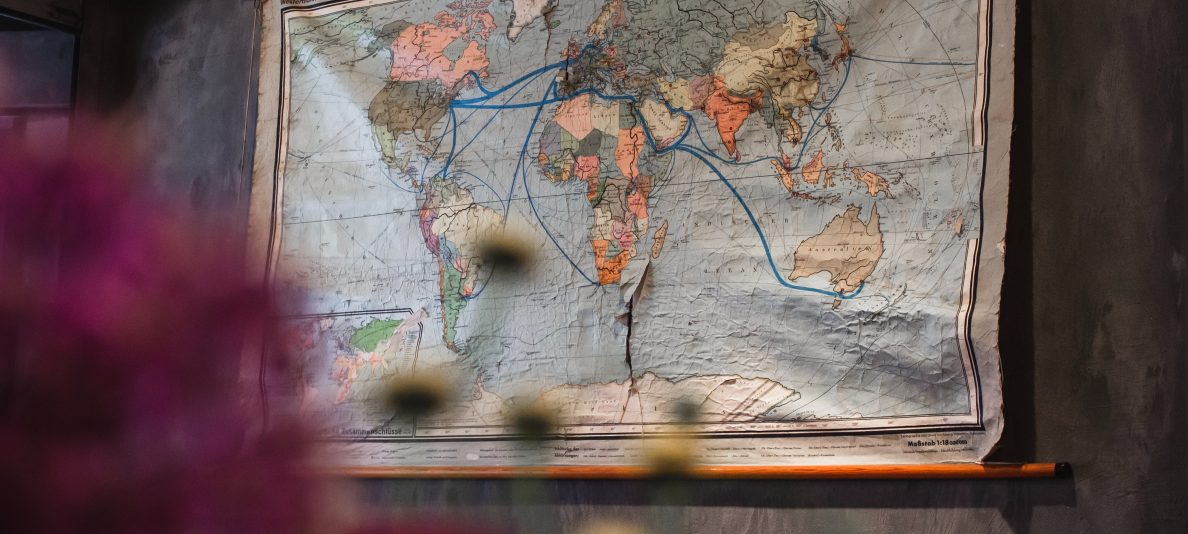
Got a Couple Hours? Take Time for Cairo

When it comes to movies, I’m often late to the game, as I usually catch them on DVD well after they’ve been released in the theaters. So only last week did I bring Cairo Time (2009) home from the library and watch it with my wife. I had not heard about it before and only picked it out because of the title and synopsis on the case. Sometimes that leads to disappointment, but this time, it paid off.

Cario Time is directed by Ruba Nadda, an Arab-Canadian, and stars Patricia Clarkson and Alexander Siddig. Clarkson plays Juliette, the wife of a UN worker who travels to Egypt to meet her husband for a long-awaited vacation. When she arrives, her husband is unable to leave his work in Gaza, so his friend, Tareq (Siddig) picks her up at the airport and introduces her to the city. Tareq is a dashing gentleman, and he and Juliette develop a relationship over the next several days. As several reviewers mention, Cairo is another major character in the story, as Juliette is swept off her feet by a city that also frustrates her. In a way, her relationship with Tareq mirrors how she feels about Cairo, enchanted yet perplexed by her own feelings . . . infatuated by the exotic newness while drawn back by her own “culture.”

Included on the DVD is a “Making Of” segment, in which Nadda says that the reason she became a filmmaker was because she “was desperate to shed light on the common misconceptions the West has of the Middle East.” The segment also includes behind-the-scenes footage from a “very Islamic, very religious” part of Egypt where they filmed a scene. The director was warned not to go there, but they did anyway, and she says it turned out being “one of the best days of [her] life.” They met a poor family there who welcomed them, gave them sodas, and asked about Seinfeld. With accompanying footage, Nadda tells this story:

The man’s wife, she’s veiled, she said “I need to be validated, I need to show the world what I look like.” And she began to unveil. And I was like, “But you’re going to be on camera. The West will see you.” And she said, “I don’t care. I want to show people that I exist.”

Cairo Time is not a fast-paced movie. Rather it moves at a deliberate, thoughtful pace. As Clarkson says in “Toronto Q & A” (also on in the “Bonus” section of the DVD), the director “had the courage to let there be silence.” Nadda adds,

I wanted to show a story that wasn’t about immediate gratification, you know, which is, I find, sometimes, a bit North American. It was “Cairo time.” . . . Cairo is so crazy and chaotic and beautiful, bustling, but it’s also an assault to the senses, and that chips away at your guard and it forces you to slow down whether you like it or not.

[photo: “Pyramids,” by Wilhelm Joys Andersen, used under a Creative Commons license]


African-American Expats

Here’s a book that I’d like to read . . . as soon as it’s written.

The Center for Intercultural Dialogue is calling for chapters and chapter proposals for a proposed book with the working title The Hidden Lives of African Americans Living Abroad Series, Book 1: Articulating the Opportunities and Challenges of Living Internationally. The overview of the book includes the following:

While anecdotal data indicate that the experiences of African Americans living abroad qualitatively differs from those of European Americans, there is a substantial lack of scholarship that investigates the ways in which national and ethnic identities are expressed (and experienced) cross culturally by Black Americans living overseas. In many ways, the everyday lived experiences of African American expatriates living abroad remain unknown—and largely neglected by mainstream media and academic research. This series seeks to examine and highlight what life is like for African Americans living abroad.

And here are some of the suggested chapter topics that look particularly interesting to me:

  • What it’s like to be the only African American in the country
  • “But you don’t have blonde hair or blue eyes”: Encountering and overcoming stereotypes of the “All American” image abroad
  •  “How do they treat Black people there?” Addressing the pre-departure fears of friends
  • Perceptions of African Americans abroad
  • African American Image in Overseas Advertising
  • Returning to the U.S. and Readjusting to Home

As a White American, I’ve often wondered what it is like for Black Americans living overseas, with the extra challenges of facing stereotypes and prejudices . . . layered on top of and intertwined with the other difficulties of cross-cultural living. Hopefully this book—and the whole series—will draw together some good stories and research and create a meaningful discussion.

Go to “CFP African Americans Living Abroad” for more information and submission guidelines.

[illustration: “Blank Open Book,” by DonkeyHotey, used under a Creative Commons license]

Homesick Immigrants

According to Gallup, recent polling shows that 13% of adults in the world, about 640 million, want to move to another country and stay there permanently. The country that they’d most like to move to is the US, with around 150 million wanting to go there. But that doesn’t mean that most will be moving any time soon, as earlier figures show that only 8% of those wanting to migrate plan to do so in the next year, and only 35% of that number are actually taking steps (applying for visas, buying tickets, etc.) to leave.

On the one hand, there’s the greener grass on the other side of the fence; on the other, there’s the emotional toll of leaving home. Susan Matt, professor of history at Weber State University and author of Homesickness: An American History, writes about changing countries:

It leads to opportunity and profits, but it also has high psychological costs. In nearly a decade’s research into the emotions and experiences of immigrants and migrants, I’ve discovered that many people who leave home in search of better prospects end up feeling displaced and depressed. Few speak openly of the substantial pain of leaving home.

Even though technology has done much to bridge the gap across the miles, it doesn’t eliminate homesickness. From 2002 to 2009, the percentage of immigrants in the US who called home at least once a week rose from 28 to 66, but all the phones, Facebook, email, and Skype in the world won’t stop the feelings of loss. Over the last nine years, the number of immigrants has dropped who say that they’re “extremely happy” or that they’d make the same move if they had to do it all over again. One study shows that Mexican immigrants in the US have a 40% higher rate of depression and anxiety than their relatives who stayed in Mexico. María Elena Rivera, a psychologist in Tepic, Mexico, believes that the increased ability to “phone home” can actually worsen homesickness, as the immigrants get constant reminders of what they are missing.

Matt’s point is not that changing countries represents a bad decision. Rather it’s that we romanticize it to the point that the sadness it often brings comes as an unexpected shock. We think that we’ve moved beyond a natural longing for home, but we haven’t.

The persistence of homesickness points to the limitations of the cosmopolitan philosophy that undergirds so much of our market and society. The idea that we can and should feel at home anyplace on the globe is based on a worldview that celebrates the solitary, mobile individual and envisions men and women as easily separated from family, from home and from the past. But this vision doesn’t square with our emotions, for our ties to home, although often underestimated, are strong and enduring.

We need to talk about homesickness more. It’s real, and advances in technology and changes in worldview won’t make it go away. If immigrants are going to be healthy in their new surroundings, then it will help for them to go in with eyes wide open and with realistic expectations. It is true: “Forewarned is forearmed.” Continuing the conversation isn’t easy, but it’s necessary. “Today, explicit discussions of homesickness are rare,” writes Matt, “for the emotion is typically regarded as an embarrassing impediment to individual progress and prosperity. This silence makes mobility appear deceptively easy.”

(Jon Clifton, “150 Millions Adults Worldwide Would Migrate to the US,” Gallup, April 20, 2012; Neli Esipova and Julie Ray, “Nearly 50 Million Worldwide Planning to Migrate Soon,” Gallup World, February 24, 2012; Susan J. Matt, The New Globalist is Homesick,” The New York Times, March 21, 2012; Scott Bittle and Jonathan Rochkind, “A Place to Call Home: What Immigrants Say Now about Life in America,” Public Agenda)

[photo: “She Stared at the Sea,” by Maaco, used under a Creative Commons license]

Stephon Marbury, China’s “Political Commissar”

Long before there was “Lin-sanity,” there was “The Year of the Yao.” That would be Yao Ming’s rookie season with the NBA’s Houston Rockets, and the subject of the 2005 documentary of the same name. One of the players who made an appearance in the film was Stephon Marbury. Playing for the Phoenix Suns, Marbury embarrassed Yao with a crossover dribble that made Yao tangle his feet and hit the floor (at 1:09 of the trailer, here). That was a while ago, and now, both players are no longer in the NBA. Yao has retired due to injuries, and Marbury, in an ironic twist, is now playing for the Chinese Basketball Association’s Beijing Ducks. Not only is he playing, but he just led his team to win the 2012 championship.

While playing in the US, Marbury was known for his philanthropy, but he also had a reputation for being selfish and hard to get along with. In fact, Sports Illustrated once named him the “most undesirable teammate” in the NBA. But according to China’s Economic Observer, things are different in China, where Marbury’s image has only an upside. During the 2005-06 season, reporters at the Daily News called Marbury, then a member of the New York Knicks, “the most reviled athlete in New York.” But now, in 2012, the people of China call him by the respectful title zheng wei, meaning political commissar.

For his fans, not only is he a great player leading them to victory, he is also someone who never disappoints them. No matter how long the queue is, he signs every notebook handed to him. . . . He also talks with the old Chinese ladies in his neighborhood, makes Chinese tea for journalists, has learned to use chopsticks and speak Chinese, and he even takes the crowded subway.

Marbury appreciates the fan support and acknowledges the difference that his time in China has made. “China changed the direction of my life,” he said. “I gained a lot of things that I did not have before. Coming to China has been a blessing for me.”

Marbury’s comments in a New York Times article last year echo these thoughts:

It’s just something about the serenity and peace of the country. I can’t really explain it; you’ve got to experience it.

He even gave advice to a fellow former NBA player in China, J.R. Smith, who was facing disagreements with his team:

I spoke with J. R. and I told him to make himself completely vulnerable to love: embrace the culture. You’ve got to acclimate yourself to something different, you’ve got to grow into it—and then you get this stillness and calmness about yourself.

And what are the future plans for the political commissar?

 It ain’t temporary, it’s for good. I’m going to stay here, I’m going to live here. I love it here.

(Zhu Chong, “Former NBA Bad Boy Stephon Marbury Reborn All Warm and Fuzzy in China,” Worldcrunch, from The Economic Observer, April 13, 2012; William C. Rhoden, “Away from N.B.A., Finding Success in China,” December 4, 2011)

If you’d like to see a great film about adjusting to a new culture, I recommend The Year of the Yao. Not only did the 7-foot-6-inch Houston Rockets’ center enter the US, he also stepped into the unique world of the NBA, carrying the hopes and dreams of an entire nation with him. The documentary is also a look into the life of his young translator, himself a “rookie” thrown into the mix.

[photo: “Stephon Marbury,” by Keith Allison, used under a Creative Commons license]

Returning Soldiers, “Fitting Back into That World”

NPR is running a series on the members of the 182nd Infantry Regiment, which has recently returned to the States after spending a year in Afghanistan. Reporters will be following the group as they adjust to life in the US over the coming year. I’ve never served in the military, but I have come “home” after living overseas. I can only imagine the loss and trauma and stress that these soldiers have experienced, along with the challenges they are now facing. But I’ve also learned that it doesn’t help to compare experiences: every situation is unique, and different levels of loss and trauma and stress are all still loss and trauma and stress. When I read/hear stories such as these, I’m reminded how much we all have in common when we come back to the US after adjusting to another culture. And while serving in a war overseas certainly adds to the challenges of readjustment (war has a “culture” all its own), I know other repats, former missionaries and NGO workers who served in harsh circumstances, who carry some of the extreme baggage that soldiers bring back with them.

Following are some pullouts from the report. If you are readjusting to life back in the States, regardless of where you were or what you did while you were away, change a few words here and there and see how many of these ring true to you. As I said, I’ve never fought in a war, but I’ve tasted some of the challenges of reentry. I will pray for the 182nd Infantry Regiment today. . . .

Once they settle back home, they’ll begin the transition from soldier to civilian. Some could face unemployment and financial problems; others may struggle with depression or post-traumatic stress disorder. Their families face challenges as well, trying to integrate these men back into their lives.

“But listen, something is no kidding going to slap you right across the face when you get home within the first 72 hours, and it’s going to let you know that life has continued on in your absence,” [says. Col. Tim Newsome].

Newsome says these war wounds [like PTSD or depression] should be treated like any other. . . . “Somebody has got something wrong with their foot, they go see the podiatrist,” he says, “no harm, no foul. Nobody says anything. It’s when they got something wrong up here, that’s when we want to put a stigma on somebody.”

But going home comes with its own kind of stress. Like many guardsmen, [Spc. John] Nestico had a civilian job before he deployed. He worked at Radio Shack selling cell phones, but a lot of his friends there have moved on, and he’s worried about fitting back into that world.

“For a while, admittedly I was in a bit of a free fall,” he says. “It just took a change of environment and the ability to talk to someone who wasn’t in uniform to allow myself to open up a little bit [and] to feel like what I say here isn’t going to be held in contempt or against me, but in the best interest of what’s good for me.”

They’ll return to their civilian lives. . . . For some, that will mean packing up their uniform and picking up where they left off; for others, it will mean picking up the pieces and starting over.

(Rachel Martin and Tom Dreisbach, “A Rest Stop on the Road from Soldier to Civilian,” NPR, April 1, 2012)

[photo: “110828-F-JP934-057,” by ISAF Public Affairs, used under a Creative Commons license]

Shanghai Calling: Come “Home”

I just saw a trailer for a new movie coming out. The movie’s called Shanghai Calling, and it’s about an American-born Chinese who is sent “back” to China by his boss. It’s a fish-out-of-water story, with the extra twist that this fish feels more out of place because he looks like he belongs.

When our kids attended a mission school in Taipei, they often had visitors come to talk about Third Culture Kid issues. One year, we were honored to hear from David Pollock, one of the authors of Third Culture Kids: Growing Up among Worlds. He said that, often, the people who have the hardest time fitting in to a new culture are those who look like they should fit in. So in China, an obvious foreigner will get praised for knowing a few Chinese words, while an outsider who looks Chinese may get scolded for not knowing “his own” language and culture.

Here’s the trailer. It’s pretty funny. Reminds my family of some of our experiences, like when the lead character shows an address to a taxi driver and it ends up being only half a block away. The complete film hasn’t been rated yet, so I can’t speak for whether or not it’s family friendly. Here’s hoping it is.

And it sounds like it’s getting a good reception in China from expats and nationals alike. Here’s what Daniel Hsia, the director, wrote in his blog (dated March 23) about preview screenings of Shanghai Calling in Beijing and Shanghai:

Fortunately, the audience loved the film.  After the screenings, American viewers thanked us for making a movie that could finally explain to their friends and families back home the strangeness of their daily lives in China.  Chinese viewers told us how refreshing it was to see a movie about modern China, and not just another ancient martial arts epic.  And both groups were surprised at how funny the movie was.  I guess most expats don’t necessarily see their lives as inherently comedic.

[photo: “Shanghai by Night,” by Sjekster, used under a Creative Commons license]