On Home and Moving and Childhood Anxiety, from Jess Archer, a Voice of Experience

3183077340_f713327c6c_z

As the daughter of the director of Billy Graham’s North American crusades, Jess Archer had moved 12 times by the time she was 14—going from city to city and country to country. This, she wrote this week in Christianity Today, turned her into “the poster child for generalized anxiety disorder.”

In her article, she groups relocating during childhood with experiencing divorce and being in foster care as “major traumas” that weaken or destroy the concept of home and can lead to “serious anxiety disorders in kids.”

When it comes to describing the trauma of moving, some Third Culture Kids and some TCK parents would agree whole-heartedly; others would say they don’t understand what all the fuss is about. But can we all agree that moving produces anxiety, even if it’s not of the serious-disorder kind?

Archer goes on to give advice on how to ease our children through transitions, including preparing them, taking time to say goodbye, protecting their routines, and praying over them.

I especially like her prayer, offered for an anxious child at bedtime. I like it so much that I don’t mind that she uses the word season (just a pet peeve of mine). I like it so much that I’m praying it for my children. I like it so much I’m praying it for my wife and for myself, and for my friends in transition, too:

God of peace, this child needs rest. Her body is tense and her mind is wired. Nothing in this space feels like home. Good shepherd, loosen the knots of anxiety. Infuse her with hope of a grand design for good in her life. Show her that a new season is coming, and that you make all things new.

Amen.

You can find Archer’s post, “Too Many Transitions Can Traumatize Our Kids,” at Her.meneutics (Christianity Today, July 25, 2016). And if you’d like to read more of her thoughts on finding stability as a child in a life filled with change, go get a copy of her memoir, Finding Home with the Beatles, Bob Dylan, and Billy Graham: A Memoir of Growing Up Inside the Billy Graham Evangelistic Association (Westbow, 2015).

At her blog, Archer includes the following excerpt from her book:

What people wanted to ask me growing up the way I did was: Can you tell me what it means to have a home? They wanted to ask me, but they didn’t have the language for it, and I was only a child. They thought, How would she know? She’s just a young girl.

Instead, people asked me a standard set of questions: How many places have you lived? Which was your favorite place? Which was the worst place to live? But what they really wanted were answers for their own lives. When I said I didn’t really have a home, they shivered for themselves . . . displacement at the core of every heart. The haunting need to know a place is yours forever, but the deep fear that it isn’t. Because I didn’t have a permanent home, I wrestled better and harder than most adults with the need for one, and by the time I was a teenager I had burned through to an expanded definition.

And amen again.

[photo: “Big Pilot,” by Chris Murphy, used under a Creative Commons license]

Another Song, Another Memory: The Call

Speaking of songs, here’s another one I like: “The Call,” by Regina Spektor. It shows up at the end of Prince Caspian, the second film in The Chronicles of Narnia series.

I watched the movie with my kids during one of our times on furlough/Stateside service. It’s easy to draw parallels between the Pevensies’ travels and cross-cultural service, and given the Christian underpinnings of C. S. Lewis’s writings, the missionary aspect isn’t too far away either.

The lyrics of “The Call” certainly are evocative for me. They begin

It started out as a feeling
Which then grew into a hope
Which then turned into a quiet thought
Which then turned into a quiet word
And then that word grew louder and louder
‘Til it was a battle cry

I’ll come back
When you call me
No need to say goodbye

The song plays over the closing scene of the film, as Peter, Susan, Lucy, and Edmond return from Narnia to World-War-II London. If you’ve ever come back “home” after living abroad, you know the feeling. It’s as if nothing has changed, but everything has—in big and small ways. Susan is called by the wrong name and Edmund realizes he’s left his new flashlight behind.

Of course, the lyrics don’t fit the missionary “call” perfectly, and “The Call” isn’t a “missionary” or “Christian” song. That makes sense, as Regina Spektor isn’t a Christian songstress. Born into a Russian Jewish family in 1980, the Spectors moved to the Bronx when Regina was nine. She tells The Village Voice,

I don’t even know half the time what exactly I believe. I do know that in some moments, I’m sarcastic about religion, and sometimes, I’m in awe of it, and sometimes, I’m angry at it, and sometimes, I love it.

The Village Voice says Spektor “can’t explain the meaning behind any of her songs, because she doesn’t so much write them as much as let them happen” and then goes on to cite “The Call” as an example of that process. Spector refers to writing the song, which she did late at night after a private screening of Prince Caspian, as “one of the most pure things that ever happened to me.”

If even Spektor doesn’t claim to know what her songs mean, I figure that gives me liberty to work my own meanings into “The Call.”

It also lets me stop trying to understand “Samson.”

Samson went back to bed
Not much hair left on his head
He ate a slice of Wonder Bread and went right back to bed
And history books forgot about us and the Bible didn’t mention us
And the Bible didn’t mention us, not even once

(Cristina Black, “Are You There, God? It’s Me, Regina SpektorThe Village Voice, June 10, 2009)

Culture Stress, when There’s No Hook to Hang It On [—at A Life Overseas]

Head over to A Life Overseas to read my complete post.

6854846176_3b16e91b22_k

When most people open up their closets in the morning, they usually ignore the out-of-style shirts on the edge, the wrong-color sweaters, the too-tight pants. Instead, as much as they can, they grab something that looks right, something that fits right, something that feels right.

When you transition between countries, your cultural closets get switched. Your choices become limited, and you often have to put on things you’d rather not wear. You’ve given up comfort for other purposes. Some of this discomfort is just an annoyance, like a scratchy tag inside the collar of your shirt. But some can seem unworkable, like that same shirt two sizes too small.

It’s the Water and the Dirt

When I and my family moved overseas, we weren’t surprised by culture stress. We may not have been fully prepared, but we weren’t surprised. What did surprise us, though, was that we couldn’t always identify the causes of our irritation and pain.

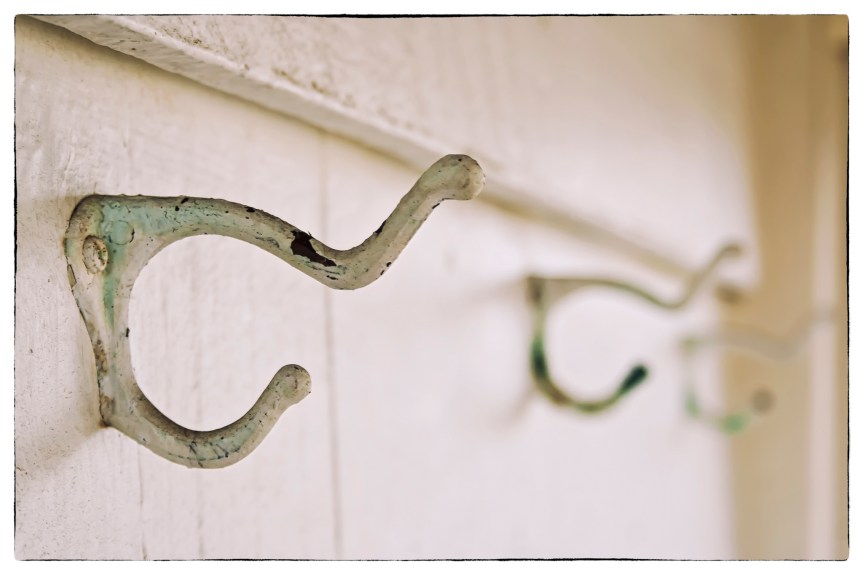
For many stressors, you know just what hook to hang them on. Singing at church feels a little off? It’s because everybody’s clapping on a different beat than you are. Can’t sleep? That’s because of the all-night traffic outside your window. Nagging cough? Pollution.

Being able to name a problem helps us sort things out. It gives us vocabulary for talking about it with others. It helps us better understand our new home and ourselves. It helps us find solutions. It helps us cope.

But sometimes, there is no hook, at least not an obvious one.

A few months after we landed in Taipei, my wife developed a “cold,” a cold that lasted on and off for over a year. Our doctor couldn’t find a solution and none of his remedies helped (one medicine caused her heart to race). Finally, he diagnosed her with shui tu bu fu, which can be translated as “not acclimated to the water and soil.” That’s odd, because we didn’t drink the water, and with all the concrete, and we rarely saw the soil. . . .

Continue reading . . .

[photo: “038,” by glassghost, used under a Creative Commons license]

Tiny Doors, Big Story

9139154652_41343f0eb4_z

The first handcrafted “fairy door” appeared in the Wayford Woods near Crewkerne, England, around the year 2000. But later, what had begun as a quaint novelty grew into a headache for the locals, with over 200 doors installed on tree trunks and too many visitors coming to have a look. So a few months ago, the trustees of the charity that owns the woods stepped in and removed all the doors. Like Love Locks in France, when small gestures go viral, their days often become numbered.

In Overland Park, Kansas, much closer to my home, another fairy-door story has unfolded with less attention—at least until now. Maybe you’ve seen the recent link at CNN.com: a photo of a tiny door with the title “A great big beautiful act of kindness.”

If you follow the link, it will take you to The Gnomist, a video made by Great Big Stories and CNN Films. To save you some time I’ve embedded it below.

It’s a story about much more than little doors. It’s about transitions, home, dreams, loss, grief, compassion, anger, endings, and beginnings. Are you familiar with any of these?

Grab a cup of tea or coffee and drink this in.

You can visit the blog The Firefly Forest for updates on the gnome community in Overland Park and to read the story of the blogger shown in the video.

(Steven Morris, “Wayford Woods Closes Its Fairy Doors after Attracting Too Many Visitors,” The Guardian, August 21)

[photo: “Otley Chevin,” by Alice Hutchinson, used under a Creative Commons license]
What Is a Bridge but a Paradox?

5078301307_31b7f7a46a_z

What do you see when you see a dock?

A place for studying the horizon?
For dipping a toe in the water?
For casting off?

Or a place for lowering your sails?
For stepping onto dry land?
For coming ashore?

Is it a place for setting out or coming back? Much depends on the compass of your heart.

If for you, the dock is too short, out of desire or necessity, you build it forward, step by step, plank by plank, as you go—through the spray and the mist and the fog. And when you’ve built till you’re more coming than going, you see another shore—build, step, build, step. You are there.

This is crossing cultures. This is creating a bridge. This is going from home to home.

Then, at some point, out of desire or necessity, you step back onto the bridge. You must have been gone a long time, because what was once a complete span is now incomplete. You need to build to close the gaps. And at times you’re simply on a dock again, building to a shore you cannot yet see. Strange. It was a bridge before.

This time while you’re crossing, you find that in the mist there are others with you, and when they talk, you understand them, because they are speaking your language.

“Where are you from?” you hear someone ask, and the answer, “That’s an interesting question.” “You, too?” one says. “Me, too,” another replies. You understand them, not because you use the same words, but because when you speak those words you agree on the impreciseness of their meanings: near, far, hot, cold, friends, enemies, rich, poor, family, strangershere, there, hello, goodbye. Their meanings are slippery, like the damp boards beneath your feet. And the slipperiness is comfortable.

In time, you cross the bridge again and again, sharing familiar greetings with those in the misty middle. But never do you set out without having to repair what was built before. You continue . . . build, step, build, step.

What is a bridge, but a paradox, leading from home to home, from not-home to not-home? Your heart’s compass spins. The shores, they push and pull, they give hugs at arms length, they don’t plan on changing, but they do. The same can be said of you.

And then, out of desire or necessity, you settle down farther inland. You put down roots in loose soil. There’s a dock over the next, next hill. You go to visit from time to time and walk its length. You listen to the slap of the waves. You breathe in the smell of the ocean. You taste the salt in the air . . . and you remember the sounds and the smells and the bitter-sweet flavors of where you used to be.

What do you see when you see a dock?

You put down roots in loose soil, but you still speak the language of the bridge.


These thoughts are inspired by Mission Training International‘s “Pair of Ducks.” MTI uses two rubber ducks—a “yay duck” and a “yuck duck”—to show cross-cultural workers and their kids that all the places where they’ve lived have their good and bad parts.

[photo: “Harbour Bridge,” by D.Reichardt, used under a Creative Commons license]

When Does a House Become a Home?

8346095057_9d01a36d6e_z

When does a house become a home?

I asked that question of some friends a while ago. One answered, “When your mess is everywhere.” Another said, “When you feel part of the neighborhood.” My wife said, “When you hang your pictures on the wall.”

When we first moved to Taipei, another missionary family let us live in their apartment for a few months while they were back in the States. We needed a house to stay in while we looked for a place of our own. But it wasn’t our home; it was theirs. Their clothes were in the closets. Their books were on the shelves. Their beds were in the bedrooms.

Later, we found that place of our own. It was on the 17th floor of a 21 story building. While we enjoyed living there, the family who owned the apartment had left some of their furniture there, so we always knew it was someone else’s place, and sure enough, after about two years, they told us they wanted it back for themselves.

When we moved, we ended up in a great apartment with a huge balcony . . . and a hovering landlord. She wouldn’t let us forget that we were in her house, like the time she dropped by on Sunday morning to prune the plants on our balcony so that their leaves wouldn’t clog the drain. The next day she saw me at the post office and commented on the strong odor in our house. It was my wife’s cooking, I said. Spaghetti. Not a good smell, she replied, frowning and shaking her head.

So when we got ready to move back to Joplin, Missouri, we should have been ready, right? Well, while we were busy moving from house to house in Taipei, the city itself had become our home. We had developed routines there. We had made friends there. We had a found a purpose there.

But we needed to move, and move we did. Though that was over three years ago, Joplin doesn’t yet feel like home again and neither does the house we’re in now. We’re renting, and we’re not making long-term plans to stay here.

Actually, it’s the third non-home house we’ve been in since our return. The first was a residence that our church had purchased for visiting and returning missionaries. We were there for about six months and are very grateful that it was available. We certainly weren’t the only ones in Joplin in transition at that time. It was June of 2011 and we were living across from the parking lot of the church property where two “tents” stood, distributing food and prayers to those affected by, as everyone here calls it, the tornado.

While we were there, the items that we’d had shipped from Taiwan arrived and we unloaded  them into the garage. From there we moved to a rental house, with me still looking for full-time work and all of us wondering what the future would bring, praying about where we’d land.

In Taiwan, I remember reading news about the recession in the States, but I didn’t anticipate how much it would affect my ability to find a job once we returned. Ask anyone looking for work and they’ll tell you how difficult it is right now. Add to that the fact that being out of the country makes a person out of sight and out of mind for potential employers. With so many people looking for employment, those doing the hiring hold most of the cards, and they’re reluctant to take chances on someone who could do the job. Rather, they’re looking for someone who’s already doing the job. And the risk is much lower if they choose someone whom they’ve known for a while.

Since our arrival, I’ve worked at a number of money-making ventures, often overlapping. They include being a janitor and a paraprofessional at an elementary school, cleaning at another school, working at a multi-media ministry, teaching ESL, driving a delivery truck for an auto-parts store, recruiting international students at a university, and donating plasma.

We’re still not sure if we’ve landed yet or if that will come later. And the pictures aren’t on the walls. Instead, they’re still packed up, stored under our bed. When we finally do open them up, I think we’ll find some that we forgot we have.

When I asked my question about a house becoming a home, another friend had this response: “It’s when you can go to the bathroom at night without turning the lights on.”

That reminds me of a passage in a book I read several years ago. It was discussing people who had been blind for a long time and then had regained their sight. Now that they could see, navigating their surroundings obviously should be much easier. Yet when they needed to move through their house—their home—quickly in an emergency, they would close their eyes. That was more familiar to them.

When we’re under stress, we rely on the familiar to help us find our way.

That’s home . . . the familiar place, the comfortable place, the place where we can close our eyes and know we belong.

[photo: “The Travel-House,” by Shena Tschofen, used under a Creative Commons license]

Repost from Stephen W. Smith: The Greenhouse Effect

When Steve and Gwen Smith founded Potter’s Inn, they had their hearts set on helping, as Stephen calls them, “men and women who are caught in the whitewater of life.” Some of those men and women are church leaders, some are leaders in business, some are missionaries. The Smiths, who have served in churches in Kentucky, North Carolina, and The Netherlands, now lead others in soul care and spiritual formation, with much of their ministry taking place at their retreat center, Potter’s Inn at Aspen Ridge, in Colorado.

My wife and I met Steve and Gwen when they were facilitators at the week of Debriefing and Renewal we attended (DAR is a program of Mission Training International) after we came back to the States following 10 years in Taiwan. We so appreciate the wisdom, comfort, and encouragement they shared with us and with the others in our group.

Steve, the author of The Lazarus Life: Spiritual Transformation for Ordinary People and Soul Custody: Choosing to Care for the One and Only You, recently posted the following on his blog.

207373492_59c7656c94_z

The Greenhouse Effect
(reposted with permission from www.pottersinn.com)

People build green houses to help plants and vegetables to flourish. When the weather conditions are less than ideal, greenhouses are constructed to help plants thrive.  Too much cold; too much wind; too many predators and nothing will grow.

In many ways, the ministry of Potter’s Inn is creating a Greenhouse Effect for people. People come to our retreat; read one of our books, experience soul care and something deep within happens. They begin to flourish in many ways they could never do without coming to the retreat or reading a book. Sometimes, the harshness of life—the predators and conditions—make life more difficult, almost unbearable. We need a new, safe and spiritual environment to grow and thrive.

We all need the right conditions to grow, don’t we? Jesus used this metaphor in helping his followers understand the spiritual life. We need the right soil—the right environment and conditions—to truly thrive.

This past weekend I personally experienced the Greenhouse Effect.  We hosted a “Coming Home” retreat based on the teaching of the life-changing book, Return of the Prodigal by Henri Nouwen. It was a moving weekend to be sure. One business executive flew in from Atlanta to attend. When he arrived, he showed me his worn, tattered shoes that were literally falling apart. He asked where the closest store would be so he could go buy new shoes. I said, “Here, take my shoes and wear them for the weekend. You’ve come with your ‘soul’ falling apart. God must really want you here.”  He smiled and graciously took my shoes and wore them. On Sunday, I said, “Wear these shoes all the way ‘home’ cause God is doing a new thing in your life.” He cried and wept in my arms.

The weekend was so very powerful for all of us. Healing. Restorative and Transforming. For me, it was a moment of truly giving someone shoes who had come as the Prodigal—someone who had lost so much on their journey home.  We sat in silence for our final breakfast and ate breakfast together without one word. As I sat there with my fruit and yogurt, I wept. I was flooded with emotion and compassion. It was a moment of sheer highlight for me to truly feel God’s love for me and so many others who had come with their Prodigal hearts only to truly come home to God again.

Everyone needs a greenhouse to flourish. Churches help us flourish.  Friends help us flourish and as you know, Inns help us to flourish. Jesus told another story to help us understand this in the story of the Good Samaritan. After the man was beat up and left stranded, someone took this man to an “Inn” where he would experience the Greenhouse Effect.

That is who we are. This is what we do.

[photo: “Antique Greenhouse Interior,” by Jaydot, used under a Creative Commons license]

10 Things I’d Rather Not Hear When I’m Hurting

365 0127

“Every time there’s transition, there is loss. So when people are feeling strange about their situation I ask them, ‘What did you lose?’ Because where there’s loss, there’s grief.” —Ruth Van Reken, author of Third Culture Kids

The losses involved with cross-cultural transitions are many, and not all will be voiced as simple answers to the question “What do you miss the most?” They include relationships, dreams, purpose, status, identity, and some things that defy labels.

When someone is grieving a loss—whether of a loved one or of opportunities or of “home”—we tend to search for something to say rather than for a chance to listen. And when we speak, we too often don’t invite the person to express her sadness. Instead, we say what we hope will make the grief go away.

Why are we so uncomfortable with grief? Of course, we don’t like for our friends to be sad, but how often does our discomfort also come from not wanting to be around sad people?

At the risk of being hypocritical, I’ve made a list of things that I don’t like to hear when I’m sad and hurting. I’m afraid that I’ve said most of them myself and probably will continue to do so from time to time. But I’m trying to listen more and talk less. I’m trying to allow grief to run its course in others and not try to make it go away so that can get on with life.

I need to give credit to a small book, A Friend in Grief: Simple Ways to Help, for it’s inspiration and validation. At just over 100 pages, this guide by Ginny Callaway is full of practical advice for what to say and what not to say, for what to do and what not to do when helping a grieving friend. From her own experience—Callaway’s ten-year-old daughter died in a car accident—and from talking with others, Callaway knows what she’s writing about. Even though the subject of her book is grief caused by the death of a loved one, her advice is valuable for dealing with people grieving other losses as well.

You may not agree with my list. Some items may seem rather picky, and some may be the things that in fact cheer you up. But if I do nothing else, I’d like to initiate an inner conversation on how our words may sound, even if they come from the best of intentions.

10 Things I’d Rather Not Hear . . . and Shouldn’t Say:

1 – I know how you feel.
(This was first on Callaway’s list, too.)

We don’t know exactly how others feel, and even if we’ve gone through something similar, it’s only similar, not exactly the same. We don’t know everything from a person’s past that has culminated in the present emotions. “I know how you feel” doesn’t invite much further sharing. You might try saying something like, “I know a little of what you’re going through,” that is, if it’s true.

“I know how you feel” often leads to . . .

2 – Let me tell you what happened to me.

This is not a time to one-up someone. We shouldn’t invalidate others’ experiences or their emotions. Maybe my friend moved three times in a year. Telling her that I’ve moved six times says, “Compared to me, you don’t have the right to feel sad.” This phrase is a close cousin to “We all have our problems.”

3 – Do you mind if I take this call?

When we’re having deep, important conversations with others, a you’re-important-enough-to-me-that-I’ve-set-aside-this-time-for-you talk, we shouldn’t even have our phones out, ringing, beeping, or buzzing. Just being able to see a cell phone during a conversation distracts from building relationships. We shouldn’t acknowledge a ring unless it’s to silence the phone. And we shouldn’t answer our phones unless we’re on call for an emergency situation. It’s not always possible to escape distractions, but that means we need to do a better job of choosing our times and places.

4 – Everything happens for a reason. (It’s all part of God’s plan. It wasn’t meant to be.)

I actually don’t believe this to be true. Maybe you do. Either way, it’s not a cure-all that makes the pain go away, even though that’s often how it’s used. It’s become something that too many people say with little thought to the theology behind it. This often sounds like “Why are you sad? This is the way it’s supposed to be.” But if the things that have occurred happen not to feel like good things, then remember . . .

5 – When one door closes, another one opens.

A more spiritualized version of this is “When God closes a door, he opens a window.” I haven’t figured out which chapter of the Bible this verse comes from. It’s one of the many platitudes that people say to make everything OK. Feel-good sayings tell the listener just that: “Feel good.” They are often used to tie problems up in a bow and to do the same for many a conversation: Now that we’ve solved that problem, we can talk about something else.

6 – Let me know if you need anything.

Many people who are huting emotionally feel as if they’re burdening others and can be embarrassed by how needy they’ve become. Saying “Let me know if you need anything” puts the ball in their court to ask for help. And even though we’ve made the offer sincerely, when someone considers sharing a need, it’s very easy for him to feel as if he’s imposing. Instead, we should continue to ask what his needs are . . . and also help without an invitation.

7 – It could be worse. (You have so much to be thankful for.)

Of course it could be worse. But that’s not the point. It’s bad enough. Words saying that a person’s problems don’t deserve the grief being expressed can lead that person to hide his sorrow, convinced that his feelings aren’t justified. Hidden sorrow doesn’t go away, it just shows up later as unexplained despair, anger, physical ailments, and the like.

8 – You need to move on.

It’s no fun to be stuck in a difficult place, but that place may seem like the only option. When the routines of the past are gone, and the future is frighteningly unsettled, what does progress look like? It’s not simply putting on a smile so that others feel more comfortable.

9 – I want the old you back.

There’s a good chance the grieving person wants her old self back, too. It may seem as if the grief is the cause of the change, but often, one of the losses that the person is grieving is the loss of the person she used to be. That loss wasn’t chosen. It wasn’t planned, expected, or wanted. And coming “home” doesn’t mean the changes will automatically go away.

And last, but not least . . .

10 – This is just a season.

Doesn’t it seem that for Christians every period of time has become a “season”? When people tell me that my difficulties are only a season, I hear them say that they will end soon, and spring is around the corner. How do they know? What if my winter lasts for 8 years? Why don’t we call the good times “just a season”?


I Need to Listen with Grace, Too

Now that I’ve gotten all that off my chest, I’ll step down off my rickety soapbox and look at things from another angle. As a sometime recipient of the words above, I also understand that I need to receive with grace my friends’ efforts—even when I’m hurting. I need better to hear their concern even when the words don’t feel right.

Missionary Rachel Marie Stone and her fellow authors address this in their Christianity Today article, “Go Ahead, Say the Wrong Thing.” She writes that “listicles” of “things you should never say” are all the rage but often misguided.

I’ll stand by my list, but I’ll also take her point to heart:

Just before I returned from a very difficult time as a mission worker in sub-Saharan Africa, I talked to my therapist on Skype. She’d been a mission worker herself, and understood my anxiety:

“I just can’t stand the thought of all the stupid things people at church might say to me about this experience,” I told her.

“But people will say stupid things,” she said kindly. “The question is, how will you receive those stupid remarks?”

It seemed to me then that my own sense of the importance of right words did not necessitate my hair-trigger outrage at hearing “wrong” words. I could survive thoughtless remarks, choosing to hear, beneath them, the genuine concern and impulse to connect that underlies so much of our imperfect human communication.

When I’m helping, I’ll do my best not to say the wrong things. When I’m being helped, I’ll do my best to hear those best intentions.

(Peter Katona, “More and More Americans Consider Themselves ‘Hidden Immigrants,’” Columbia News Service, February 27, 2007; Ginny Callaway, A Friend in Grief: Simple Ways to Help, High Windy Press, 2011; Rachel Marie Stone, Megan Hill, and Gina Dalfonzo, “Go Ahead, Say the Wrong Thing,” Christianity Today, August 5, 2014)

[photo: “365 0127,” by Tim Caynes, used under a Creative Commons license]