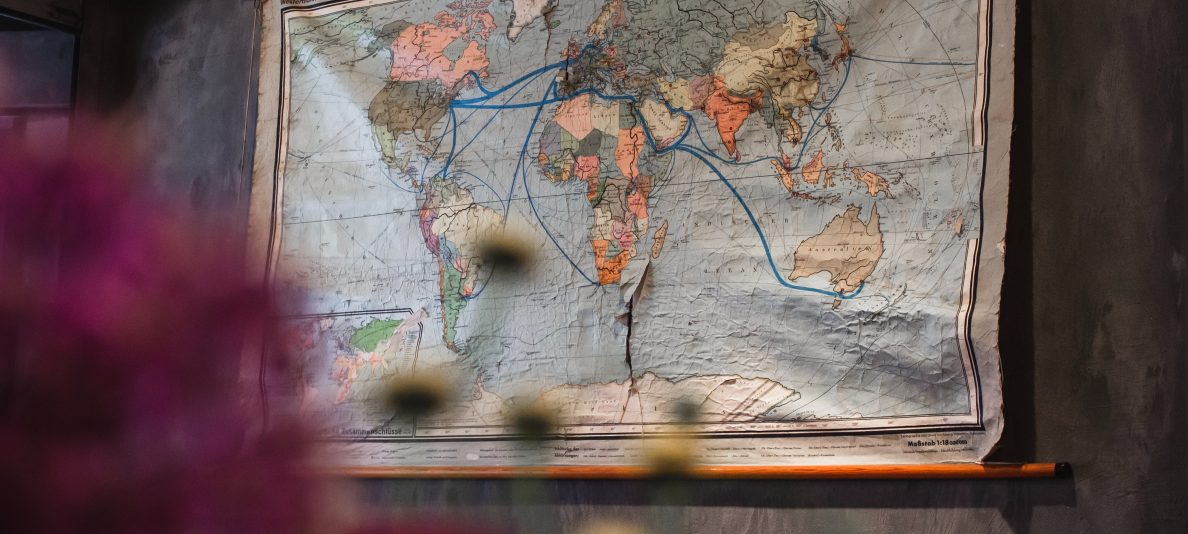
Chinese Towns with Châteaus and Pubs

421040590_416a162457If imitation truly is the greatest form of flattery, then many in China believe that flattery will get them everywhere.

Over the past decade, China has experienced a boom in the building of look-alike cities and structures, fashioned after architecture from non-Chinese locales. Leading the trend is Shanghai’s “One City, Nine Towns” project, building foreign-inspired housing developments to draw residents out of the city’s crowded center—though it seems that the people have been a little reluctant to make the move.

There’s been a bunch written about the carbon-copy construction—lots of photos, too. Here are links to some of the articles around the Web:

Welcome To the Bizarre Chinese Ghost Town That Looks Like It Was Plucked from the British Countryside
(Julie Zeveloff, Business Insider, June 14, 2011)
“Thames Town is not nestled in the British countryside; it’s located in the northeast corner of China in Songjiang, near Shanghai. And it didn’t grow gradually over hundreds of years.”

Anting New Town: Car Museum, Cafes and Homes, but No People
(CNN Travel, September 24, 2010)
“The Anting New Town development was designed by Albert Speer, the son of Hitler’s favorite architect, to accommodate 50,000 inhabitants in apartment buildings and stand-alone houses.”

Going Dutch: Shanghai’s “Holland Town” Brings Europe to the City
(Mathias Guillin, CNN Travel, July 8, 2010)
“Life in Shanghai can be a bit monotonous: work, party, brunch and then do it all over again the next weekend. If you need to break things up and don’t want to hop on plane, head over the river and check out Pudong’s Nederland, aka ‘Holland Town.'”

Luodian—a Slice of Sweden in China
(Ulrika K Engström, Sweden.se, February 10, 2006)
“Luodian is a fully fledged copy of a Scandinavian town. Even the weather seems to have been specially imported to this newly built development in Baoshan, one of 16 districts in Shanghai.”

China: Shanghai: Citta di Pujiang
(Bret Wallach, The Great Mirror)
“An Italian city in Shanghai? But of course: this is another of Shanghai’s new towns, like Thames Town, but in this case Venice. Well, that’s what you’ll read in the press, but this new town doesn’t ape Europe: it has lots of water, in other words, but an intensely modern architectural style.”

China Builds Its Own Eiffel Tower
(Metro News, September 21, 2007)
“Chinese architects copied the Eiffel Tower, the Arc de Triomphe and the famous fountain in the gardens of the Palace of Versaille to make their own version of the French capital. Famous buildings and Parisienne style gardens are surrounded by rows of European-style villas where up to 100,000 Chinese people will live in a special gated community called Tianducheng just outside Shanghai.”

Made in China: An Austrian Village
(Reuters, June 5, 2012)
“A $940 million Chinese clone of one of Austria’s most picturesque villages, the UNESCO World Heritage-listed Hallstatt, recently opened its doors to visitors in the southern Chinese province of Guangdong amidst some controversy.”

Photos: Jiangsu City Has Four Fake US Capitols
(Michael Evans, Shanghaiist, December 3, 2012)
“The Jiangsu city of Wuxi is home to not one, not two, but four buildings with a less-than-coincidental resemblance to the US Capitol.”

Village Uses Famous Site Replicas to Draw Tourists
(Wang Hongyi, China Daily, October 12, 2011)
“[T]ourists can also see replicas of the US Capitol building, the Arch of Triumph in France and the Sydney Opera House by going to Huaxi village, which is deemed the richest village in China.”

Dorset Town is Re-built in China
(BBC News, July 26, 2007)
“A town in China has been modelled on Dorchester after planners saw the town’s picture on a Christmas card. The development in Chengdun, Sichuan province, named British Town, is complete with mock Victorian and Georgian architecture.”

Mr. Zhang Builds His Dream Town
(James Fallows, The Atlantic, March 2007)
“After lunch, Zhang thanked the guests for coming and invited them to spend time seeing some of the other highlights of Broad Town: the 130-foot-high gold-colored replica of an Egyptian pyramid, for instance.”

China’s Elite Learn to Flaunt It while the New Landless Weep
(Joseph Kahn, The New York Times, December 24, 2004)
“Chateau Zhang Laffitte is no ordinary imitation. It is the oriental twin of Château Maisons-Laffitte, the French architect François Mansart’s 1650 landmark on the Seine. Its symmetrical facade and soaring slate roof were crafted using the historic blueprints, 10,000 photographs and the same white Chantilly stone. . . . ‘It cost me $50 million,’ Mr. Zhang said. ‘But that’s because we made so many improvements compared with the original.'”

Château China: $30 Million “Hobby”
(Sheila Melvin, The New York Times, January 10, 2006)
“The town of Changli, in Hebei Province, resembles any other nondescript county seat in northern China. . . . But just outside the town center is a 200-hectare, or 500-acre, vineyard replete with a state-of-the-art wine production facility; a villa with tasting rooms and restaurants; a three-story wine school; a luxury hotel, and an immense private château. The Tuscan-style complex is so opulent and incongruous in the Hebei countryside that it at first seems like a mirage.”

Related Post:
Shanghai Calling: “Come Home”

[photo: “07/02/23 15:10:06 Shanghai,” by 2 Dogs, used under a Creative Commons license]

Starbucks: Designing a Global Concept

Last week, after a particularly long day, I bought a bag of Chips Ahoy! chocolate-chip cookies and had myself some cookies and milk. Nabisco is an American company, and chocolate-chip cookies are an American original, but eating them made me feel as if I were . . . back in Taiwan. That’s because one evening in Taipei, after a particularly long day, I needed some comfort food. So I grabbed a (very small) box of Chips Ahoy! cookies from the supermarket. It wasn’t that they were a staple of mine in the States. In fact, I don’t remember eating them before moving overseas. That’s why, now that I’m back in Missouri, Chips Ahoy! reminds me of Taiwan. Funny how the mind works.

Something else that reminds me of Taiwan is Starbucks. I’d never been inside one before moving to Taipei, but when we moved to Yong He (now part of New Taipei City), the cafe in our neighborhood became the default location for our weekly team meetings. So now, whenever I see a Starbucks, I think of some I’ve visited in Taiwan: the one underneath Taipei Main Station, the one with the huge second story in downtown Taipei, the one overlooking the harbor in Keelung, the one in the Xi Men Ding night market, and, of course, the one on the corner of an extremely busy intersection in Yong He, just a few blocks from our apartment.

I like Starbucks. I know their drinks are too expensive. And I don’t fit in with the true Starbucks aficionados. But it feels good to me. It feels international to me.

Since its humble origins in Seattle in 1971, Starbucks truly has become an international chain. The Starbuck’s company, which already has over 7,000 cafes outside the US, is making a move to beef up its international presence and plans to open 1,200 stores in the current fiscal year, which started this month. More than half of these openings will be outside the US, with about 500 in Asia. Over half of these 500 will be in China.

Wherever Starbucks opens a cafe, they alter their interiors and menus to fit the country. Take for instance in India, where the country’s first Starbucks just opened in Mumbai this month, serving Indian-grown coffee, murg tikka panini, and tandoori paneer rolls in a cafe that features furniture made from Indian teakwood. And then there’s Taiwan, where the Asian-inspired creations on the menu have given the world green-tea lattes and Frappuccinos.

Take a look at the following video to see how the company’s store designers work to connect each store to its community. Sounds like a cool job to have.

Click here to see a map from The Seattle Times showing Starbucks’ expansion around the world. Or go here for an interactive map from Loxcel that gives statistics for each country and store markers that show addresses and hours of operation. Load the Loxcel map on your smartphone and you can even search for stores that are currently open and click the phone icon to call them directly.

(Melissa Allison, “Starbucks Opens Its First Cafe in India,” The Seattle Times, Oct. 19, 2012; Melissa Allison, “Starbucks Maps Future of Venti-Sized Global Expansion,” The Seattle Times, Aug. 4, 2012)

[photo: “Starbucks Green Tea Cream,” by awee_19, used under a Creative Commons license]

Look, Ma, No Hands: An Engineer Brings His Cross-Cultural Creativity to the Ford Escape

While I was watching my alma mater, Mizzou, play South Carolina in football Saturday, a commercial caught my attention. (Actually, the commercial was one of the high points of the game for me, since the Tigers lost in convincing fashion.) The ad was for the 2013 Ford Escape and highlights its hands-free liftgate, which lets you open and close the back hatch by using your foot. This is possible because of a motion sensor under the rear bumper that is programmed to respond only to a kicking motion.

The feature is the brainchild of Ford exterior systems engineer, Vince Mahe, who was born in France and moved to the US at the age of 10. The Escape’s Facebook page says Mahe learned English from watching Sesame Street. Later, he became a fire fighter, then joined Ford, where he developed the “Open Sesame” feature. (Sesame Street. Open Sesame. Sounds like a theme.)

Chalk up another tally for creativity born from cross-cultural experiences. According to the commercial,

Vince Mahe grew up on two continents and noticed that wherever you go, people have their hands full but their feet free. The result, a liftgate you operate with your foot.

See here for yourself:

During a live chat, Mahe was asked how fighting fires helped him in is work at the auto maker. Mahe answered,

Being a fire fighter taught me how to keep calm under pressure and realize there is always a solution. You must keep your calm when collaborating with a team, especially under pressure. . . .

Another question concerned the transition between the two jobs. Mahe:

The transition to Ford was the same as other transitions I had in my life, like moving from France to the United States. It’s another adaptation I had to make in my life, but I have been happy with it. . . .

Of course, not all of the creative people at Ford used to be cross-cultural kids. (There are three other innovators who star in their commercials, with no mention of their backgrounds.) But it’s interesting how much Ford is stressing the effect that Mahe’s past experiences have had on his creativity and problem-solving skills. Here is Mahe explaining the relationship in his own words:

Ford is marketing the Escape outside the US, as well. But in other countries, it is being sold under the name Kuga. Their global strategy also means that Ford is paying attention to place-specific details in the Kuga’s design. One of these variables is color, and Ford is introducing a “global colour”—a “subtle green”—they’re calling Ginger Ale. “Choosing the right colours is crucial, wherever the car is being sold,” says Serife Celebi on Ford’s media site. Celebi, the colour and material design supervisor for Ford of Europe, adds, “Ginger Ale is stylish enough to suit urban landscapes across the world and still have a playful edge.”

Regional factors also affect the planning for interior colors: Ulrike Dahm, colour and trim supervisor, Ford of Europe, says,

In Asia, lighter interiors are more desirable. Many people live in huge cities where space is at a premium, so having a light and airy interior is seen as luxurious. In Europe, colours and trim take a lot of influence from the tech industry and are generally darker. Gloss black is a popular choice.

Maybe the same kind of attention to cultural tastes was not given to the SUV’s name, which has been used by Ford outside the US since 2008. I didn’t find any explanation from Ford for the origin of the name, but several sites point out that kuga is a Serbo-Croation word for “plague.” No word on whether that has affected sales in Serbia and Croatia.

(“Trend-Spotting on a Global Scale: How Ford Designers Tailored All-New Kuga to Suit Customers Worldwide,” media.ford.com, April 19, 2012)

[photo: “2013 Ford Escape,” by Automotive Rhythms, used under a Creative Commons license]
The Asian Squat for the West of the World

If you’re a Westerner who’s traveled to Asia, you’ve probably marveled at the locals’ ability to relax in their preferred alternative to just standing around—the Asian squat. You’ve also probably brought back stories (and photos) of “squatty potties,” and you understand why the bathrooms in international airports have signs that read, “No Standing on the Toilet.”

But if all this is new to you and you see the need for more information, or if you’d like help in pulling off the squat yourself, I refer you to Daniel Hsia’s mockumentary, How to Do the Asian Squat. Watch it because you want to know the history behind the Asian squat. Watch it because you want to know the physics behind the Asian squat. Or watch it simply because “Each and every day, more and more tired-legged, stiff-backed Americans are discovering a new and exciting way to squat!”

And if you really want to get on board (pun intended), take a look at “Nature’s Platform” for how you can convert a Western toilet into your very own squatty potty. The site is complete with testimonials from physicians, anthropologists, and yoga instructors. Unfortunately, it looks as if the company is not accepting new orders at this time. But don’t be disheartened, you can go here for their instructions on how to create your own conversion kit from concrete blocks and plywood. Or as an alternative, you can visit Lillipad of New Zealand, where their trendy (?) looking “squatting platform” is on sale . . . and available. They sell plans for building your own, too. (But hurry, the plans are 50% off till the end of July.)

[photo: “Old Man Squatting on Steps,” by Lon&Queta, used under a Creative Commons license]
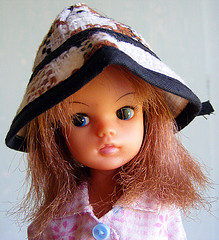
The UK’s Sindy Could Become the First Third-Culture-Kid Doll

Her 50th birthday is around the corner and she can no longer keep up with fashion. Can anyone save Sindy, the doll created to be a British rival to Barbie?

So begins David Sillito in his article for BBC News, “How Barbie Crushed Sindy” (July 2, 2012).” The “she” he is referring to is Sindy, a doll created by England’s Pedigree Toys in 1963. Like Iran’s Sara and Dara, Sindy was presented as an alternative to the American-made Barbie.

Sindy was the “British girl-next-door.” Compared to Barbie, she had a rounder face, a younger look, shorter legs, and a flatter chest. Sindy had great success through the 80s, peaking in 1985 with 80% of the UK doll market. But as the 90s began, Sindy was losing out to the ever glamorous and trendy Barbie, so Pedigree remade her, more in the image of her American rival. Mattel, Barbie’s manufacturer, noticed and filed a lawsuit against Pedigree. The British company responded with another makeover.

Helen Carter, “an avid Sindy collector and fashion lecturer” misses the old look, telling BBC “[The original Sindy] has got such a warm, friendly expression on her face, she’s got side-glancing eyes. She’s not challenging in any way, she’s pretty, she’s the English Rose.”

Up until 2009, the newest generation Sindy was being sold by Woolworth’s, but when that chain closed, Sindy said goodbye, as well. Now, Pedigree is looking for someone else to take over the Sindy name. “We don’t really have the skills to keep up with all the fashions,” says Pedigree’s Jerry Reynolds. “If it’s a retailer or a manufacturer, they have to change her clothes every year to keep up with trends.”

I think I have a solution. Sindy should go back to her origins, and she should be marketed as the “Third Culture Kid” doll. Here are 6 reasons why it makes sense:

  1. In 1984, Michigan State University sociologist Ted Ward called TCKs “the prototype citizens of the future.” The future has arrived and Sindy can help lead the way.*
  2. Many of the earlier Sindys are proud of their TCK heritage, as they have “Made in Hong Kong” printed on their waists.
  3. TCKs don’t always “keep up with the trends.” Sometimes it’s because they aren’t aware of the trends, sometimes because they disdain the trends. Either way, Sindy can create her own fashion statements. (And, as the BBC article mentions, Sindy could re-adopt her original wardrobe, going “retro to cash in on the popularity of vintage looks.”)
  4. Barbie has a closetful of international costumes, but they’re just that, costumes. Sindy could show the world what the real global citizen wears, as she transitions in and out of countries. Think of the culturally-relevant clothing possibilities. Collect them all!
  5. If Sindy could talk, what global stories she could tell, and all with a cosmopolitan British accent.
  6. Sindy should get back her “side-glancing eyes” (they turned forward in the makeover). This would represent the inquisitiveness of the TCK mind, mixed with a little bit of suspicion.
  7. Sindy looks like a TCK name, doesn’t it?

So who will save Sindy? Raise your hand and give Mr. Reynolds a call.

* When I wrote this post, I hadn’t looked up the source of this oft-quoted quotation. Actually, it’s from 1987, and it’s a paraphrase of “[T]he missionary kid of the nineties will be the prototype of the Christian of the twenty-first century.” I wrote more about Ted Ward and the context of this quotation at “TCKs as Prototypical Citizens and Culture Shock as Exaggerated Poop: Ted Ward and His Views on Growing Up Abroad.” (updated 03/2015)

[photo: “Sindyhat,” by Holly at The Thinking Doll, used under a Creative Commons license]

Coca-Cola: Selling Soda and Marketing Global Happiness

Remember the Coca-Cola chorus in the 70s singing “I’d like to buy the world a Coke”? Well, The Coca-Cola Company is getting one step closer to that goal. Myanmar, one of only three countries left where Coke is not sold, will soon join the rest of the globe in serving the world’s most popular soft drink. After being gone for more than 60 years, Coca-Cola plans to re-enter the Myanmar market soon, when the US government officially allows investments there, this in response to Myanmar’s recent turn to democracy. This will leave only Cuba and North Korea on the outside of the Coke market.

Buying the world a Coke wasn’t The Coca-Cola Company’s only plan. It also wanted to “teach the world to sing” and “buy the world a home and furnish it with love.” Today, Coke’s hopes are still lofty. Their current campaign is “open happiness,” and they are spreading the message that “There are reasons to believe in a better world.” Below are three videos demonstrating this theme—citing what seem to me to be some odd pairings of vague statistics (“While one scientist is creating a new weapon . . . 1 million moms are baking chocolate cakes”). Oh well. They’re fun videos, and the music is cool. It’s the thought that counts, right? It’s Coca-Cola.

The first video is the global edition. The second is for Africa. The third is for India. And finally, the fourth video is of a guy who traveled around the world and drank a Coke in every country he visited.

(Tony Jordan, “Coca-Cola Announces Will Return to Myanmar after 60 Years,” Yahoo! Finance, June 15, 2012)

[photo: “Faces, Langa, Cape Town,” by Dietmar Temps, used under a Creative Commons license]
Three Ways to Find Out Where You Fit into the Global Work World—Hours, Pay, and Real Slave Labor

Back in 2003, the Taipei Times reported that the Taiwanese put in the most working hours of anyone in the world, averaging 2,282 per year, or 44 per week. According to a recent BBC article on workplace suicides in Taiwan, the current situation hasn’t improved much, if at all, stating that the average Taiwan employee works “about 2,200 hours annually.” Even this number would put Taiwan at the top of the Organisation for Economic Co-operation and Development’s  list of  hours worked per country, as reported by BBC. (My guess is that the OECD left Taiwan out because it does not recognize it as a country. They list Taiwan on their website as “Chinese Taipei.”)

So where does your work schedule fit in? Are you above or below the global average? To find out, enter your information on the BBC News site “Who Works the Longest Hours?

And while you’re at it, take a look at “Where Are You on the Global Pay Scale?

And finally, go to Slavery Footprint’s “How Many Slaves Work for You?” to find out how your lifestyle depends on slave labor around the world. It’s a pretty slick site that brings attention to a very important topic.

(“Taiwan Works Too Hard: Survey,” Taipei Times, August 31, 2003; Cindy Sui, “Deaths Spotlight Taiwan’s ‘Overwork’ Culture,” BBC News, March 19, 2012)

[photo: “kill me now,” by Katrine Thielke, used under a Creative Commons license]

Books, Boxes, Building Blocks

Like books? (check) Need to be organized? Move often? (check, check)

Here’s a great idea. Simple, stackable, interlocking cubes that serve equally well as bookshelves and moving boxes. That’s the upside—watch them in action in the video below. But there’s also a downside: They’re only available in Europe, and the large cubes start at around US$50.

Kazam! is looking for people to buy at least 3,000 of their BrickBoxes for distribution in the US, Canada, Brazil, or Australia. Any takers? Here’s hoping these things go global and the price goes way down.