
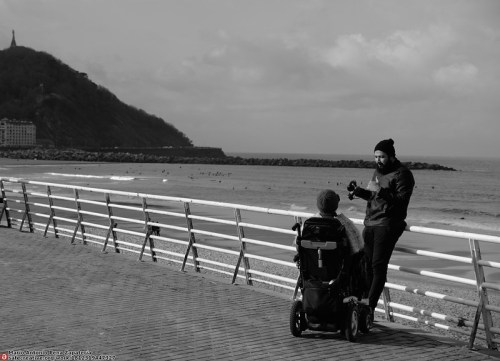
Can You Ask Me Again How I Am? [—at A Life Overseas]

At some point in my life I learned not to accept hospitality on the first offer. Even if I want something, I need two or three invitations.

“Would you like a piece of cake?”

“Thanks. I’m OK.”

“Are you sure? I’ve got plenty, and I can’t eat it all myself.”

“Oh, I don’t want to bother you.”

“It’s no bother at all. Let me go get you some.”

“Well . . . I guess I could eat a small piece.”

I’m not sure where this habit came from, and it really is a habit. I often turn people down at least once even before I give it any thought, even when I realllllly want some cake. Did it start when I was a child with me imitating the culture of my small midwestern town? Did I get it from advice in a Dear Abby column? Or did I pick it up in my host Asian country, where saying yes too soon can be seen as a sign of greediness? Is that it? Do I do it out of not wanting to appear overeager, or could it be because I know that sometimes make an offer simply out of politeness, hoping I’ll be turned down but still get credit for my generosity?

There’s another offer—or invitation—that is over-easy to decline. It’s when someone asks, “How are you?” We all have our pat answers: Fine. OK. Not bad. Wonderful. Can’t complain. Or we simply repeat back, How are you? And then the conversation, or at least the greeting part of it, is over. Because it is just a greeting, right? They don’t really want to hear about the problems I might have—and I don’t really want to overshare.

Those of us in cross-cultural ministry can get around the risk of vulnerability by pretending we were just asked, “How’s your work going?” and jumping into newsletter or church-report mode. “Things are going great! We had two new visitors at our meeting last week and we’re getting ready to host a college team. How are things with you?”

Or we just go silent, with nothing more than a slight smile or shrug. . . .

Read the rest of this post at A Life Overseas.

[photo: “conversation,” by Mario A. P., used under a Creative Commons license]
Watch for the Thing after the Thing [—at A Life Overseas]

I’ve written before about our return to Joplin one month after an F5 tornado devastated our Missouri community, and it’s been on my mind again lately. It’s not because of the approaching fourteenth anniversary of the event on May 22. Nor is it because of the recent release of the Netflix documentary focusing on Joplin, The Twister: Caught in the Storm. No, it’s actually because of a March 27 article in Christianity Today titled “Donated Clothes Still Being Sorted in Appalachia.”

“[S]ix months after the disaster,” writes Isaac Wood, referring to Hurricane Helene, “First Baptist Church of Roan Mountain is still swimming in donations.”

“We’ve still got probably 10,000 toothbrushes,” pastor Geren Street tells Christianity Today. “We’ve still got 20-something pallets of water bottles. I can’t tell you how much water we’ve given away, and to look out there and still see 20-something pallets? It’s crazy.”

I understand. While my oldest son was already living in Joplin when the tornado hit, the rest of us came back a few weeks later, in time to experience “the disaster after the disaster.” That’s what a friend who was instrumental in our church’s response efforts called it. So much was given to help the people of our community: the toothbrushes, the bottles of water that we all were drinking months later, the containers of clothing needing to be sorted by sex, by size, and by whether they were even wearable. And then there was the truckload of hundreds of flip flops with soles that would leave behind a picture in wet sand.

I thought my friend had made up the phrase “the disaster after the disaster.” But it turns out he probably heard it from one of the seasoned relief workers who’d shown up to help. Wood’s article points to several experts referring to the massive inpouring of donations—especially used clothing—as “the second disaster,” “a second-tier disaster,” and yes, “the disaster after the disaster.

People experienced in relief work know to watch for the difficulties that follow natural disasters. They anticipate not only the need to take care of donations that demand huge amounts of time, space, and attention, but they also know to warn counselors, therapists, religious leaders, teachers, and parents to watch for the spiritual, mental, and emotional issues that will arise for months and years to come.

For some of you, who have faced or will face natural disasters in your part of the world, there’s practical advice here. But for all of us, in other areas of our lives and work, we can apply the lesson of looking out for how a solution can bring its own challenges, how an answer can lead to more questions. It’s “the thing after the thing.” . . .

Read the rest of my post at A Life Overseas. . . .

photo: “Binoculars V,” by Chase Elliot Clark, used under a Creative Commons license]

And Yet . . . : Acknowledgement and Encouragement for Those Serving in Weakness [—at A Life Overseas]

I did not come to this this place with superior eloquence or wisdom, but in weakness and in fear and with much trembling.
I became a little child among them.
Try as I might, I am slow of speech and slow of tongue.

God, I seek your face but I see in a mirror indirectly.

I started with such lofty goals, but my endurance has expired; I have lost all hope of deliverance from the Lord.

I am absolutely terrified, and you, Lord—how long will this continue?
The spirit is willing, but the flesh is weak.
My physical body is wearing away.

I am a clay jar.

Finish reading my post at A Life Overseas. . . .

[photo by Amanda King]

‘Tis the Season for Condescension [—at A Life Overseas]

Lately I’ve been feeling inadequate.

Not enough. Deficient. Incomplete. Lacking.

I’ve felt this way before. For instance, there was when I was trying to serve people in my host country but often coming up short in my ability to navigate the language and culture and ministry expectations. And now I’m back in my passport home trying to serve people who are new to the US, working on their own navigations. And I frequently get tripped up by the red tape and details and deadlines—even though it’s my system we’re dealing with.

It’s challenging to be in a position where you feel in over your head, and when you’ve put yourself there by choice, it adds to the complicated emotions. It all can easily become overwhelming. It helps, though, to develop an attitude of humility—the kind of humility Christ modeled when “he made himself nothing, by taking the very nature of a servant, being made in human likeness” (Philippians 2:7 NIV), and came to our world as a baby, as one of us, even the least of us. He “condescended.”

Today, we warn against condescension, but the meaning of condescend was originally to climb down to be with someone of a lower rank or position. Back then, that was considered a good thing, and the word was used to describe Jesus’ journey to be with us. It was only later that condescend took on the negative connotation of making a show of superiority.

Finish reading at A Life Overseas. . . .

[photo: “Ladder from Above,” by Erik Norvelle used under a Creative Commons license]

Helping Cross-Cultural Workers Flourish through Member Care: An Interview with Josh Beck, Executive Director/CEO of Barnabas International [—at A Life Overseas]

I’ve known Josh Beck for quite a while, having attended and being sent out for overseas work by the same congregation. We’ve had a lot of good conversations over the years, and now that he’s recently completed his first year as the Executive Director/CEO of Barnabas International, I wanted to ask him a few questions about the importance of member care for those serving abroad.

First question, Josh: What has caused you to value the role of member care in cross-cultural work?

When we were serving overseas, my family and I were the recipients of member care, mainly from our sending church. We have some incredible stories of how they shepherded us before, during, and as we exited our ministry overseas. This impressed upon me the important role that pastoral care plays in living out our calling.

Sometimes, we can take the view that member care is not particularly essential to missions. Strategic thinkers hash out methodologies for witnessing, identify key areas of the world the gospel has yet to penetrate, and whiteboard inventive ways to utilize tools and resources to “accomplish the mission.” What is often overlooked is the fact that flourishing missionaries birth flourishing ministries. Who we are becoming while we follow our call is just as, if not more, important than what God is calling us to do!

What is the path that led you from missionary to executive director of a member-care organization?

The path that led me into my current role is a bit circuitous. . . . (read more at A Life Overseas)

[photo: “Talk,” by Georgie Pauwels, used under a Creative Commons license]

Podcasts, Anyone? Let’s Serve Up a Smorgasbord [—at A Life Overseas]

Some people scroll Facebook. Some TikTok. Some Youtube. Some spend their online time on Pinterest or X or Insta or IG or Gram (and I’m going to stop there, before I pull a muscle).

Some people scroll Facebook. Some YouTube. Some TikTok (at least for now). Some spend their online time on Pinterest or X or Insta or IG or Gram—and I’m going to stop there, before I pull a muscle.

If you can’t tell already, I’m not a big consumer of social media, but I do have go-to sites of my own. Most mornings I call up a collection of tabs for local, world, and Church news; sports updates; and several blogs. One site that I check daily is MinistryWatch, which helps readers make informed decisions about giving to Christian charities. A couple of weeks ago, MinistryWatch‘s editor, Warren Cole Smith, wrote about the recent online conversation concerning the drop in the number of American conservatives listening to NPR. He says that his “own experience reflects that change.”

“Part of the reason for these changes,” Smith writes, “is technological. The rise of podcasts means that we have a much wider variety of listening choices than we did even a decade ago. As recently as a few years ago, when I got in my car, I turned on the local NPR affiliate. Today, I plug in my iPhone and listen to a podcast.”

Some people listen to podcasts . . . but not me, at least not often. I have listened to season one of Serial (on NPR, oh, the irony) and The Rise and Fall of Mars Hill, but that’s mostly it. I don’t have an iPhone and my 2006 Honda CR-V doesn’t speak Bluetooth.

I know that many of you are fans of podcasts, though. So I’d like your help in crowdsourcing a list of them for your fellow ALO readers. What do you listen to? What podcasts do you tune in to to get your cross-cultural-worker information, insights, or inspiration? Maybe you host a podcast yourself. Let us know. Also, what podcasts not specifically in the cross-cultural-worker orbit do you follow—ones that tangentially speak into the CCW mindset and experience?

Continue reading and see the list at A Life Overseas. . . .

[Warren Cole Smith, “Editor’s Notebook: Listening in on the World,” MinistryWatch, April 12, 2024]

[photo by Gil Medina]

When the “Perfect!” Fit Isn’t [—at A Life Overseas]

There seems to be an awful lot of Perfect! going on these days, at least in my part of the world. I told my server at a restaurant that I wanted fries and steamed broccoli to go with my entree. “Perfect!” he said. A nurse read off my blood pressure. “Perfect!” again. When I offered 8:30 as a possible time for an appointment, I heard “Perfect!” over the phone.

And then I was at a hotel not long ago and saw an advertisement for “Perfect Pizza.” I really, really wanted to run up to the hostess and yell, Elf-style, “You did it! Congratulations! The perfect pizza! Great job everybody! It’s great to meet you!”

I know it’s just a trendy shorthand for “good” or “fine” or “sounds OK to me,” but Perfect! sure bumps things up a notch. It sounds so comforting, so . . . exciting. And while it’s not my go-to expression (“Great!” is my over-the-top adjective of choice), I still see myself hoping for perfection, and wanting to claim it when I think I’ve found it.

For instance, “Please, Lord, bless us with just the right apartment, in just the right quiet neighborhood, with just the right opportunities for outreach, with just the right distance from the preschool and bus stop, and just the right rent for our budget” is like something I might have prayed while we were looking for a new place to live overseas. And when we’d found a new home that checked all the boxes, we’d declare it a Perfect! fit and would tell our supporters as much in our next newsletter.

A Perfect! fit.

Pardon the detour, but have you heard of “wire electrical discharge machining”? . . .

Read the rest of my post at A Life Overseas.

[photo: “A few pieces are still out of place,” by Nic McPhee, used under a Creative Commons license]

Chesterton’s Fence: Understanding the Why of the Status Quo before Seeking Change [—at A Life Overseas]

The traveller sees what he sees; the tripper sees what he has come to see. —G. K. Chesterton (Autobiography)

G. K. Chesterton, the turn-of-the-20th-century English author, journalist, and Christian apologist, first came to my attention through quotations on travel taken from his writings. Along with the one above, there’s also

The whole object of travel is not to set foot on foreign land; it is at last to set foot on one’s own country as a foreign land. (—Tremendous Trifles)

and

They say travel broadens the mind; but you must have the mind. (—said by the character Gabriel Gale in “The Shadow and the Shark”)

While these aphorisms apply to travelers and “trippers,” they also are relevant to movers and shakers, those who relocate to other countries and cultures in order to make a difference there. In that vein, I’ve recently found another idea from Chesterton—often referred to as “Chesterton’s fence”—that can relate to the life of cross-cultural workers. Before explaining it, here’s a little background.

Chesterton, born in 1874, was well known in his day as an influential defender and explainer of the Christian faith. C. S. Lewis, a major Christian apologist in his own right, credits Chesterton for impacting his conversion from atheism. In his memoir, Surprised by Joy: The Shape of My Early Life, Lewis writes that in reading Chesterton’s Everlasting Man, he “for the first time saw the whole Christian outline of history set out in a form that seemed to me to make sense.” And the prolific Christian author Philip Yancey writes that if he were stranded on a desert island and could have “only one book, apart from the Bible, I may well select Chesterton’s own spiritual autobiography, Orthodoxy.”

Chesterton began his faith as an Anglican, later converting to Roman Catholicism, with this conversion being the subject of his book The Thing: Why I Am a Catholic. It’s in this work that we find Chesterton’s fence. That concept in a nutshell is this:

When you come across something that you think needs to be changed, you should first find out why it is the way it is. Only after understanding why it came to be can you then follow through with the change.

To read the rest of this post, go to A Life Overseas. . . .

(C. S. Lewis, Surprised by Joy: The Shape of My Early Life, Geoffrey Bles, 1955; Philip Yancey, Soul Survivor: How My Faith Survived the Church, Doubleday, 2001)

[photo: “The Fence Line,” by Alan, used under a Creative Commons license]