The first handcrafted “fairy door” appeared in the Wayford Woods near Crewkerne, England, around the year 2000. But later, what had begun as a quaint novelty grew into a headache for the locals, with over 200 doors installed on tree trunks and too many visitors coming to have a look. So a few months ago, the trustees of the charity that owns the woods stepped in and removed all the doors. Like Love Locks in France, when small gestures go viral, their days often become numbered.
In Overland Park, Kansas, much closer to my home, another fairy-door story has unfolded with less attention—at least until now. Maybe you’ve seen the recent link at CNN.com: a photo of a tiny door with the title “A great big beautiful act of kindness.”
If you follow the link, it will take you to The Gnomist, a video made by Great Big Stories and CNN Films. To save you some time I’ve embedded it below.
It’s a story about much more than little doors. It’s about transitions, home, dreams, loss, grief, compassion, anger, endings, and beginnings. Are you familiar with any of these?
“A Grim Military Past on Japan’s Cuddly ‘Rabbit Island'”
The pretty little island of Okunoshima is known for two things: It was there that the Japanese military once cooked up chemical weapons, a mission so guarded that the spot did not exist on official World War II-era maps. And it is totally overrun by fluffy bunny rabbits.
. . . .
For animal lovers, this sounds downright precious, and it is. But on a gray day, with a chill in the air, it also feels something like the establishing scenes of a Hitchcock movie, before things go so horrifically wrong.
Wander past enough English signs labeled “Remains of the poison gas storehouse” and you can’t help wondering whether the two things that make this island so unusual are, in fact, grimly linked. In 1997, the former director of the poison gas museum told Tokyo journalists that the rabbits now on the island had nothing to do with lab animals in bygone weapons tests. Instead, the story goes, rabbits were left on the island decades ago by schoolchildren — and did what rabbits do so well.
OK, here’s the deal. Since adult coloring books are all the rage now, and because there are studies that show that coloring can reduceanxiety and stress, I decided I’d search Amazon to see what titles I could come up with on the topics of travel, places, cultures, and the like.
After I came up with 30 or so, I was feeling pretty good about myself, but then a few things happened. First, my tendency to be obsessive about lists kicked in and I felt the need to make my list not just longer, but all-inclusive. Then I realized that if I wanted to include designs and patterns (Indian, Celtic, Arabic, etc.) I’d never be done, so I eliminated them, as much as it pained me . . . because a lot of those book are pretty cool. But just when my list seemed more manageable, I discovered the whole library of Dover coloring books. I was bombarded with all their history-themed offerings, and I had to decide what made a coloring book “adult” rather than “for kids.” I put some more titles in, left some out (more pain), and expanded my category from adults to “colorists,” a term I see thrown around by publishers. I figure it means people who take their coloring seriously, even as they use it to wind down, people who are more-mature colorers who choose detailed pictures that can accommodate sharpened pencils, not just fat Crayons: colorists. Of course detailed pictures would include all those intricate designs and patterns. . . . Did I mention how much it pains me to leave them out?
So after all that, here’s the list I’ve come up with. It’s nearly 200 entries long, and it’s caused me no small amount of anxiety to put it together. It wasn’t just finding them all, but also arranging them (I gave up on working too hard on that), trying to get all the links straight, and realizing that my list is outdated before I hit the publish button.
What I’m trying to say is that my efforts to put together an exhaustive list have left me exhausted . . . and stressed.
I guess I need to order a coloring book so I can relax. Now, what about colored pencils? Is 24 enough, or should I go with 500?
“You can’t keep a bird from flying over your head, but you can keep it from building a nest in your hair.”
You’ve probably heard a form of this saying, usually referring to some sort of temptation.
I like the old Jamaican version: “You can’t keep crow from flyin’, but you can keep him from pitchin’ ‘pon you head.”
What birds are circling nearby for you? Lust? Anger? Hopelessness? Greed?
Yeah, I’ve got those. But there’s another kind of bird that wants to roost in my hair. It’s nasty and dirty, with grey oily feathers. It’s heavy and clumsy and foul smelling. It’s eyes, they’re a dull green. It’s name is Jealousy.
This is not the kind of righteous jealousy felt by God, whose name is Jealous (Exodus 34:14). No, my jealousy makes me lay claim to things that are not my own. If there are taller people in the room, not only do I look for a box to stand on, but I’m also tempted to kick the feet out from under them. There’s nothing attractive about Jealousy, and the nest it wants to build is repulsive, as well, made out of frustrations and excuses, crooked sticks, rusty paper clips, snakeskins, and used Band-Aids.
Jealousy is the offspring of a strange combination of parents: One is “You’re not good enough,” and the other is “You deserve better.”
It’s been hovering close by for a long time, like a loyal friend. But it’s not a friend. I hate it. I hate it. I hate it. I hate it. And yet, there it is.
When Brené Brown, a professor at the University of Houston Graduate College of Social Work, discovered that “the way to live is with vulnerability,” it flew in the face of her training as a researcher. She had been taught to control and predict, the antithesis to being vulnerable.
She voiced this in a 2010 TED Talk, and the video went viral. Two years later, she followed it up with another TED Talk, this time on the topic of shame. While not as popular as her first video, it’s powerful in its own right. In it, she shares about the response to her earlier talk and stresses two basic points: “Vulnerability is not weakness,” and “We have to talk about shame.”
To combat shame, she says, we need empathy, because “empathy’s the antidote to shame.”
If you put shame in a Petri dish, it needs three things to grow exponentially: secrecy, silence, and judgment. If you put the same amount in a Petri dish and douse it with empathy, it can’t survive. The two most powerful words when we’re in struggle: me too.
That brings us to a third video. This one is a short animation, adapted from a presentation Brown made on vulnerability to the Royal Society for the Encouragement of Arts, Manufactures and Commerce (RSA). The RSA piece is titled “The Power of Empathy.”
“Empathy is a choice,” says Brown, “and it’s a vulnerable choice.”
In this short, embedded below, she refers to four attributes of empathy, identified by nursing scholar Theresa Wiseman:
Seeing the world as others see it
Being non-judgemental
Understanding another’s feelings
Communicating that understanding
The animation is a nice touch in fleshing out Brown’s words. I especially like the image of lowering a ladder down into another person’s darkness. One of the books we have on our bookshelf at home is Bonnie Keen’s A Ladder out of Depression: God’s Healing Grace for the Emotionally Overwhelmed. It is nice to see that ladder not just as a metaphor for recovery, but for empathy, as well. (As an aside, I also like how, when you can’t see her face, Brown sounds a lot like Martha Stewart.)
I do, though, have a bone to pick with Brown—bear with me here, or just skip straight to the video. While she does a great job of describing empathy, she does so at the expense of sympathy. I really don’t think that empathy is “very different” from sympathy. I don’t agree that “sympathy drives disconnection.” Brown describes empathy as “feeling with people,” which actually sounds to me like a good description of sympathy. In fact, when the word sympathy came about over 400 years ago,it was from the Greek sin, “together,” plus pathos, “feeling.” . . . in other words, a “feeling together.”
Empathy, on the other hand, is a relatively new term, introduced into the English language by psychologist Edward Bradford Titchener in 1909. Titchener got the idea for empathy from einfühlung, a German word crafted 50 years earlier to describe a form of art appreciation based on projecting one’s personality into the art being viewed—thus, “a feeling in.”
Over time, sympathy has had to give ground as empathy has gained the high road, and sympathy has come to imply something more like “detached pity” or “a lack of compassion.”
But of empathy, Titchener writes,
We have a natural tendency to feel ourselves into what we perceive or imagine. As we read about the forest, we may, as it were, become the explorer; we feel for ourselves the gloom, the silence, the humidity, the oppression, the sense of lurking danger; everything is strange, but it is to us that the strange experience has come. We are told of a shocking accident, and we gasp and shrink and feel nauseated as we imagine it; we are told of some new and delightful fruit, and our mouth waters as if we were about to taste it. This tendency to feel oneself into a situation is called empathy, on the analogy of sympathy, which is feeling together with another. . . .
One could even make the case that inserting our feelings into another’s situation can get in the way of seeing the individualness of that situation. Sometimes it is better not to say, “I know how you feel,” but rather “I can’t imagine how hard this is for you.”
As Brown explains, sometimes the best thing to say is very little, something like “I don’t even know what to say right now, I’m just so glad you told me.”
Oh, well. Thank you for letting me step in and defend sympathy. I think it’s gotten a bad rap. I think it’s been misunderstood. And I empathize with that.
To see why a blog about cross-cultural issues is interested in the topic of empathy and listening, go here.]
Paddington is one of my favorite movies that I saw last year. Much more than just a kids’ movie, it was nominated for best film at the UK’s 2015 Empire Awards, and won for best comedy. It also carries a 98% rating at Rotten Tomatoes.
The story in a nutshell is this: When Paddington comes to London, it’s not quite what he’s heard it would be. And as if it weren’t enough of a culture clash for an orphan bear to arrive in the big city, this cub comes from “Darkest Peru.”
If you haven’t seenthe movie yet, you should. It’s a great family film for Christmas time. And if you have seen it, here are some clips to refresh your memory.
First Contact: Meeting the Brown Family
BSL: Bear as a Second Language
Bathroom Etiquette: Those Aren’t Ear Brushes.
Sign Language: Why Do I Need a Dog for the Escalator?
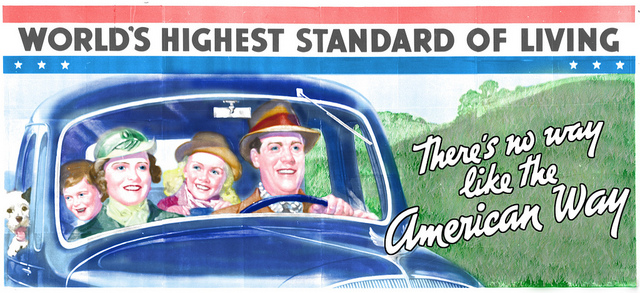
On a recent flight over the Pacific, I perused the October issue of American Way, the inflight magazine of American Airlines. Here are my thoughts:
Gracing the cover, singer/songwriter Jessie J “continues to redefine herself.” I wasn’t familiar with her first definition.
At CashInYourDiamonds.com, I can sell my “unwanted diamonds for cash.” Finally, a place to unload all those gemstones that have been dragging me down.
People Tools, by Alan C. Fox, is not a book about people who are tools.
Reading the tagline “Athlete and TV host Michael Strahan knows how to dress” didn’t quite pull me into that article.
Voodoo comes from vous, the French word for you, and the English do. Who knew?
Judging by all the advertisements, hair loss must be a big deal for travelers.
Oh yeah, Bondi is a beach in Sydney, not just an iMac color.
The mag writers’ favorite shirt is made by Ledbury, with its “fused canvas interlining” in the collar to keep it from collapsing. . . because “crushed collars are a business traveler’s nightmare.” Can you say, “First-world problems”?
It took me a while to realize that Amber Kelleher-Andrews, of kelleher-international.com, has been awarded “top global matchmaker,” not “watchmaker.” By the way, who exactly gave her that award?
The editors let me know that “78% of readers will act on an ad they’ve seen in this magazine.” If that includes people who blog about the advertisements, count me in.
Stretching from Alaska to the pencil tip of Argentina, the 48,000km-long Pan-American Highway holds the record for the world’s longest motorable road. But there is a gap—an expanse of wild tropical forest—that has defeated travellers for centuries.
The gap stretches from the north to the south coast of Panama—from the Atlantic to the Pacific. It’s between 100km and 160km (60-100 miles) long, and there is no way round, except by sea.
It was only in 1960 that anyone managed to cross the Darien Gap by car—in a Land Rover dubbed The Affectionate Cockroach and a Jeep. It took nearly five months, averaging just 200m per hour.




 Clearing Customs