
Serving Globally: The Tuggings on Our Souls

244870161_2a9468bb74_mI’d like to point you toward two recent thought-provoking articles from Christianity Today. Both appear under CT‘s “This Is Our City” banner.

The first is written by Rachel Pieh Jones, who blogs at Djibouti Jones. It’s titled “You Can’t Buy Your Way to Social Justice,” with the tag, “Why the activism of some fellow Americans scares me.”

At her blog Jones writes,

Today I have an article at Christianity Today and I’m kinda scared about it. [. . .] The article looks at the current trends of using intentional purchases (fair trade coffee, etc) to fight injustice worldwide, from the perspective of someone (me) who has spent more than a decade living overseas, working toward development and human dignity in the Horn of Africa. [. . .] I’m afraid people will be offended or get mad. [. . .] But . . . well . . . there it is. I have a lot to learn, which I hope comes across in the essay and I look forward to learning from you because overwhelmingly, you challenge me to think better, to not be complacent, and you handle my messy process with grace.

From the CT article: “I have a theory about what is partly contributing to the dearth of young Americans willing to spend their lives on behalf of others,” Jones writes. “They think they already are.”

The second article is “Choosing Marriage over the Mission Field,” about “How Tim Kietzman, a successful missionary eye doctor, chose quiet faithfulness despite enormous needs in Pakistan.”

After moving with his family overseas, Kietzman served 10 years as an ophthalmologist in the Pakistani valley of Gilgit. But according to the article, his “boldest act for God may have been coming home from Pakistan to repair his marriage of almost 30 years.”

How he came to make that choice involved re-understanding something Kietzman calls the “Isaac syndrome.” “Missionary kids are the sacrificial child for their parents doing what God wants them to do,” he said. “A lot of times they feel like they’re under the knife . . . like they’re second-class citizens.” Compounded by the sense of missing out on their home culture, the Isaac syndrome can leave missionary kids with spiritual baggage.

The Kietzmans returned to the States when “the Isaac role quietly fell on their marriage,” when it “eventually proved too much.”

Read these articles to have your thoughts challenged on making a difference globally—challenged by people who are not writing about theories, but who are writing about the push and pull and stretch and pressures on their own lives—lived “over there” and “over here.”

(Rachel Pieh Jones, “Why I’m Afraid of American Christians,” Djibouti Jones, May 15, 2013; Rachel Pieh Jones, “You Can’t Buy Your Way to Social Justice,” Christianity Today, May 14, 2013; Anna Broadway, “Choosing Marriage over the Mission Field,” Christianity Today, June 13, 2013)

[photo: “Tug of War,” by toffehoff, used under a Creative Commons license]

The Changing Face of the World, with or without Plastic Surgery

1341534683_634ca4e8e2_mIn 2011, when National Geographic reported on the global population reaching 7 billion, it determined that the “most typical” person in the world is a 28-year-old Han Chinese male.

But that doesn’t mean that the East Asian look is the most popular. Many Asians, such as those in South Korea, are using cosmetic surgery to gain a more Westernized appearance. While Americans have the most plastic-surgery procedures each year, on a per-capita basis, South Korea comes out on top, with 16 procedures per 1,000 people in 2010. Here is the complete list of the top-10 countries:

  1. South Korea
  2. Greece
  3. Italy
  4. Brazil
  5. Colombia
  6. US
  7. Taiwan
  8. Japan
  9. France

In South Korea, as in many East Asian countries, popular procedures—aimed toward an idealized Western appearance—include narrowing and sharpening the nose, adding double creases to eyelids, lightening skin, slimming round faces, and reducing calf size.

But using surgery to chase the features of another culture carries “complex psycho-social implications,” says Mario Dini, director of the University of Florence’s School of Plastic and Aesthetic Surgery. “A foreign patient who wants to westernize their face, which is universally considered ‘successful,’” he tells La Stampa, “hopes that the scalpel will change their culture too—but this isn’t possible.”

Anthropologist and journalist, Geneviève Makaping, from Cameroon, agrees:

The risk of unconditionally accepting to operate on patients and respond “yes” to all of their requests is to leave them in a cultural limbo. The people who want to erase, or minimize, their physical origins usually aren’t completely assimilated with Westerners, and are turned away from their own social groups who criticize and stigmatize this choice because they feel their faces are being discriminated against.

Of course, global norms and ideals continue to change. Watch this National Geographic video  and you’ll see that by 2030, the most typical person will be from India.

Given time, though, due to  intermarrying across cultures, we all my end up looking like Brazilians. Stephen Stearns, an ecology and evolutionary biology professor at Yale, tells LiveScience that since the invention of the bicycle the distance between potential spouses has continually increased. Bring in paved roads, automobiles, and airplanes, and our wold has become even smaller when it comes to finding a mate. This means that recessive traits will become fewer and fewer, and other traits that separate us now will blend together. What will this look like? In a few hundred years, according to Stearns, it will look Brazilian.

But why stop at a few hundred years? What about in 100,000 years? Artist Nickolay Lamm teamed up with Alan Kwan, a computational genomicist, to illustrate what they think future humans might look like. Published two weeks ago at MyVoucherCodes.co.uk, Lamm’s renderings show features brought on by increased brain size and life in space colonies. Maybe those old movie images of aliens with large foreheads and oversized eyes were on to something.

100000-Years_feature


(“A Cut Above,” The Economist, April 23, 2012, using information from the International Society of Aesthetic Plastic Surgery; Rosalba Miceli, “Plastic Surgery as a Way to Look Less ‘Ethnic’—and Get Ahead?” Worldcrunch, April 15, 2013, translated from “La chirurgia plastica ‘etnica’ può cancellare i pregiudizi razziali?” La Stampa, April 2, 2013; Natalie Wolchover, “Will Humans Eventually All Look like Brazilians?” LiveScience, September 18, 2012; Nickolay Lamm, “What Will Humans Look Like in 100,000 Years?What’s Hot, MyVoucherCodes, June 7, 2013)


[photo: “Eyes,” by XracZ, used under a Creative Commons license; illustration by Nickolay Lamm, used with permission]

Anne Frank: The Immeasurable Value of a Red-Plaid Diary

3435010249_b0f5339bda_n

If Anne Frank hadn’t died in the Bergen-Belsen concentration camp in 1945 and had gone on to survive the normal maladies of life, she would have turned 84 on June 12 last week.

It was on her 13th birthday, 71 years ago, that she received the gift of a red-plaid autograph book and began using it as a diary. The first words she wrote were,

I hope I will be able to confide everything to you, as I have never been able to confide in anyone, and I hope you will be a great source of comfort and support.

She then continued to chronicle her life as a young German-born Jewish girl living in Amsterdam under the tyranny of German occupation, as she and her family hid from the Nazis in a set of secret rooms. After two years, in 1944, they were discovered and deported to Auschwitz.

In describing the role of her diary, Anne is also defining the roles of a good listener: A rare confidant who values acceptance over judgment (realizing there will be time for editing and feedback later). A safe friend who reflects back what is heard, allowing the speaker to work through her problems rather than forcing quick solutions. A concerned companion who offers silence—like blank pages—to be filled with another’s valuable stories. An empathetic advocate not afraid to hear raw emotions and honest truth.

May we all be givers of that kind of comfort and support. May we share the qualities of Anne’s red-plaid diary. May we be that kind of gift to someone who needs to be heard.

(Anne Frank, Trans. Susan Massotty, The Diary of a Young Girl, Eds. Otto H. Frank and Mirjam Pressler, New York: Everyman’s, 2010)
[photo: “Anne Frank Diary at Anne Frank Museum in Berlin,” by Heather Cowper, used under a Creative Commons license]

Comfort Food, Stress, and Life Expectancy

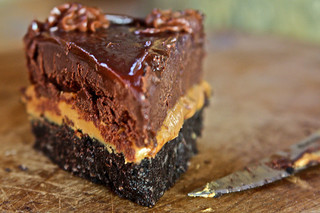
3966115371_47a4d1b1a5_nChocolate. Macaroni and cheese. Ice cream. Potato chips. Hot dogs. Chocolate.

When we feel down, we often turn to familiar foods, junk food, or other “guilty food pleasures” for comfort. The stresses of living in a new culture often provide the emotional downturn, and that, coupled with the fact that our usual feel-good foods are hard to come by, means that we want comfort food even more.

But comfort food, like many things that we enjoy, is a double-edged sword.

First, while we often look to food for a pick-me-up, a recent study suggests that typical comfort foods—which are often not the best health-wise—can actually make you feel worse. Researchers at Penn State University found that among women who are concerned about their body image but also have “high levels of unhealthy eating habits,” negative moods were “significantly higher” after what they called “disordered” eating.

Added to this, more research has found that mildly depressed people can have more difficulty discerning fatty tastes in food. A study, the results of which were published last week in the scientific journal PLOS ONE, used happy, sad, and neutral videos to alter the moods of participants. While those with mild (nonclinical) depression typically had normal perceptions of fat content in foods, after increased positive or negative moods, they lost that ability to discern between high-fat and low-fat foods. Thus, people seeking comfort from food are more susceptible to make unhealthy eating decisions.

But there may be a silver lining: Being somewhat overweight can improve your health. Of course, severe obesity is never good, but according to an NPR report, an analysis of literature by the Centers for Disease Control and Prevention found a 6% decrease in the risk of death for people who are slightly overweight (as measured by body mass index [BMI]). The findings, published in JAMA, have been met with skepticism by some in the medical community, but others find common ground.

As reported in a Worldcrunch article (translated from the German newspaper Süddeutsche Zeitung), since 1999, studies in several countries have shown that overweight people with BMIs of around 27 to 30 have higher life expectancies than their thinner counterparts. It is important to note, though, that the extra weight is helpful when it occurs in places like the arms, legs, hips, and bottom. When it’s around the waist, as in a “spare tire,” though, it does more harm than good.

The article also cites the work of Achim Peters, at Germany’s University of Lübeck, and Bruce McEwen, of Rockefeller University in New York, who have developed a theory called the “obesity paradox.” It states that being overweight is a healthy way to manage stress. That’s because Peters claims that the brain is “selfish,” requiring 50% of the body’s glucose when a person is not under stress. But when stress occurs, the brain wants 90% of the glucose. In an obese person, the glucose is tied up in building fatty deposits, which means the brain demands more energy, and the cycle continues. Thus, according to the theory, obesity is caused by, and is a healthy response to, chronic stress. That means that being skinny isn’t always the best thing. In fact, according to Peters, the worst category to be in is “thin and under pressure.”

If all this leaves you a little confused, and if that confusion has you feeling down, don’t despair.

I’ve already mentioned my fondness for Arby’s and my desire to see them expand around the globe. So just relax and follow me over to Arby’s for a comforting meal of a roast beef sandwich (with horseradish sauce), curly fries, and a Dr. Pepper. After all, it is “Good Mood Food.”

(Matthew Swayne, “Unhealthy Eating Can Make a Bad Mood Worse,” Penn State University, March 15, 2013; Petra Platte et al., “Oral Perceptions of Fat and Taste Stimuli Are Modulated by Affect and Mood Induction,” PLOS ONE, June 5, 2013; Allison Aubrey, “Research: A Little Extra Fat May Help You Live Longer,” NPR, January 2, 2013; “‘Obesity Paradox’—More and More Studies Find the Overweight Live Longer,” Worldcrunch, November 8, 2012, translated from Christina BerndtDicke leben länger,” Süddeutsche Zeitung, November 3, 2012)

[photo: “Chocolate Peanut Butter Cake of Decadence,” by Nora Kuby, used under a Creative Commons license]


Paris: The City and the Syndrome

from Trey Ratcliff at www.stuckincustoms.com

Though I often looked for one, I finally had to admit that there could be no cure for Paris.

These are the opening words of Paula McClain’s novel, The Paris Wife. Told from the viewpoint of Ernest Hemingway’s first wife, Hadley, the book shares the story of the young couple as they dive into life in Jazz-Age Paris.

I’ve not read the book, but I’ve read the first page, on the back of the most recent issue of the travel magazine Afar (which, by the way, I purchased with frequent-flier miles). The page is part of an advertisement, displayed on a Kindle Paperwhite held by a tourist overlooking the iconic white and blue buildings of Santorini, Greece. The caption for the ad reads, “Perfect for Getaways.”

It seems that some Japanese travelers have the same view of Paris as Mrs. Hemingway: It’s a condition in need of a remedy.

Back in 2006, BBC published an oft-quoted story about a phenomenon called “Paris Syndrome.” According to the article, each year, a dozen or so Japanese tourists have a psychiatric breakdown of sorts upon visiting the French capital. First identified by Hiroaki Ota, a Japanese psychiatrist in France, the syndrome is brought about when the realities of Paris don’t match the visitors’ romanticized expectations. While some of the symptoms sound like culture shock, others, such as delusions and hallucinations, are more extreme.

While some deny the existence of an actual syndrome, BBC reports that the Japanese embassy in France has set us a 24-hour hotline to help deal with the situation.

Below is a short documentary from John Menick, Paris Syndrome (2010). It takes a more in-depth—and sometimes sceptical—look at the condition, including interviews with French psychiatric professionals. Besides Paris Syndrome, the video also touches on such topics as Stendhal Syndrome, psychiatric portraiture, and historical views of travel-related mental illnesses. It even looks at Mehran Karimi Nasseri, the inspiration for the movie The Terminal.

So . . . what is the cure for Paris? While some are searching for one, most see no need. The author Gertrude Stein, a friend of the Hemingways from their time in France, saw the City of Light as a place that nurtured her creativity. “America is my country,” she said, “and Paris is my hometown.”

(Paula McClain, The Paris Wife, New York: Ballantine, 2011; Caroline Wyatt, “‘Paris Syndrome’ Strikes Japanese,” BBC News, December 20, 2006)

[photo: “Another Summer Day in Paris,” by Trey Ratcliff at Stuck in Customs, used under a Creative Commons license]
Video Poetry

Two wordless videos

One fast

One slow

Striking

Vivid

Lyrical

One from Japan

One from India

Hayaku and

Holi

(Brad Kremer, Hayaku: A Time Lapse Journey through Japan, 2010; Jonathan Bregel and Khalid Mohtaseb, dirs., Holi, Variable, 2012)

Do You Have Compassion Fatigue?

5982590252_cab6303486_nAre you a cross-cultural worker in a “caring profession”? Are you a member-care giver or coach to someone who works cross-culturally? Do you sometimes feel overwhelmed by the needs of those you’re helping, pouring out more and more from a reservoir that is going dry? Has your compassion satisfaction turned into compassion fatigue?

A few weeks ago I attended a day-long workshop entitled “Resilience Strategies for Educators: Techniques for Self-Care and Peer Support.” It was offered to our community in Joplin, Missouri, because of the ongoing effects—felt by educators and students—of the May 22 tornado, two years ago.

I am very interested in how the vocabulary and strategies used by the facilitators, Arthur Cummins (Orange County Department of Education) and Stephen Hydon (University of Southern California), parallel what I’ve heard presented by those in member care for cross-cultural workers. One of their goals was to give us “tools” for our “toolbox,” and I’d like to share one of those tools with you: the “Professional Quality of Life Scale,” or ProQOL.

The ProQOL measures “compassion satisfaction” and “compassion fatigue,” with the latter category further broken down into “burnout” and “secondary trauma.”

I have included the ProQOL Measure below. As you can see, it uses the generic terms help and helper, but they can be substituted with words to better fit a given audience. A printable version, along with scoring instructions, is available here. The ProQOL Measure in 17 non-English languages (versions vary) can be downloaded here. And the 2010 edition of the “The Concise ProQOL Manual,” explaining the background and interpretation of scores is here.

For those interested in more information on compassion fatigue and trauma stress, try these sites:

If you use the scale, I hope that you find you’re doing well, but if the results show that you have compassion fatigue, I hope you can find the rest and help you need.

Professional Quality of Life Scale (ProQOL)

Compassion Satisfaction and Compassion Fatigue (ProQOL) Version 5 (2009)

When you [help] people you have direct contact with their lives. As you may have found, your compassion for those you [help] can affect you in positive and negative ways. Below are some questions about your experiences, both positive and negative, as a [helper]. Consider each of the following questions about you and your current work situation. Select the number that honestly reflects how frequently you experienced these things in the last 30 days.

1=Never    2=Rarely    3=Sometimes    4=Often    5=Very Often

___ 1. I am happy.
___ 2. I am preoccupied with more than one person I [help].
___ 3. I get satisfaction from being able to [help] people.
___ 4. I feel connected to others.
___ 5. I jump or am startled by unexpected sounds.
___ 6. I feel invigorated after working with those I [help].
___ 7. I find it difficult to separate my personal life from my life as a [helper].
___ 8. I am not as productive at work because I am losing sleep over traumatic experiences of a person I [help].
___ 9. I think that I might have been affected by the traumatic stress of those I [help].
___ 10. I feel trapped by my job as a [helper].
___ 11. Because of my [helping], I have felt “on edge” about various things.
___ 12. I like my work as a [helper].
___ 13. I feel depressed because of the traumatic experiences of the people I [help].
___ 
14. I feel as though I am experiencing the trauma of someone I have [helped].
___ 15. I have beliefs that sustain me.
___ 16. I am pleased with how I am able to keep up with [helping] techniques and protocols.
___ 17. I am the person I always wanted to be.
___ 18. My work makes me feel satisfied.
___ 19. I feel worn out because of my work as a [helper].
___ 
20. I have happy thoughts and feelings about those I [help] and how I could help them.
___ 21. I feel overwhelmed because my case [work] load seems endless.
___ 22. I believe I can make a difference through my work.
___ 23. I avoid certain activities or situations because they remind me of frightening experiences of the people I [help].
___ 24. I am proud of what I can do to [help].
___ 25. As a result of my [helping], I have intrusive, frightening thoughts.
___ 26. I feel “bogged down” by the system.
___ 27. I have thoughts that I am a “success” as a [helper].
___ 28. I can’t recall important parts of my work with trauma victims.
___ 29. I am a very caring person.
___ 30. I am happy that I chose to do this work.

(After completing the scale, go here for the self-scoring guide.)

© B. Hudnall Stamm, 2009. Professional Quality of Life: Compassion Satisfaction and Fatigue Version 5 (ProQOL). /www. isu. edu/~bhstamm or www. proqol. org. This test may be freely copied as long as (a) author is credited, (b) no changes are made, and (c) it is not sold.

[photo: “I Think I’ll Start a New Life,” by Noukka Signe, used under a Creative Commons license]

Barnga—When Cultures Play by Different Rules

When it comes to cross-cultural simulation games, Barnga is an oldie but a goodie.

Barnga was created by Sivasailam “Thiagi” Thiagarajan in 1980, while working for USAID in Gbarnga, Liberia. During a coup, his team’s vehicles were commandeered by the military, so Thiagarajan and his colleagues stayed in their compound, passing the time playing Euchre. Born in Chennai, India, Thiagarajan had moved to Bloomington, Indiana, where he’d learned how to play the card game, and as his Liberian coworkers hadn’t played it before, he gave them a copy of Hoyles Games to read up on the rules. The trouble was, after their crash course, they all came away with different interpretations of how to play. Rather than clear up the arguments, Thiagarajan let the players work it out, and after three hours, the group had settled on their own, unique version of Euchre.

“This interesting episode presented me with a blinding flash of the obvious,” writes Thiagarajan in Barnga: A Simulation Game on Cultural Clashes. “Serious conflicts arise not from major, obvious cultural differences, but from unrecognized, minor ones.”

From this, Thiagarajan developed Barnga, one of 120 simulations and games that he has created during his career.

The concept of Barnga is simple (Spoiler Alert!): players are given rules for a card game called “Five Tricks.” Unknown by the players, though, is that each set of rules is slightly different. When participants begin playing, the results are many and varied: confusion, accusations of cheating, frustration, assertions of authority, feelings of isolation, resignation, competitiveness, formation of alliances, etc.

The instructions for Barnga not only include how-tos for the simulation but also guidelines for directing the follow-up discussion—wherein lies the real meat of the experience. It’s when people discuss how they feel about the game, and about each other, that the shift is made to the realm of cultural interaction.

Barnga works best with about 20 to 40 players, though it is possible with fewer than eight. Instructions—in four languages—are available from several sources, including Thiagarajan’s website, The Thiagi Group, and Amazon, where several pages describing the game are available with the “Look Inside!” feature.

If you’ve played Barnga in the past, it may be worth another look, as the “25th Anniversary Edition” includes the following updates:

  • the option of partnership play, which opens up discussion on the effect of moral support
  • a subtle trick that reinforces the idea that everyone is using the same rules
  • multiple tournament formats, and
  • more debriefing prompts

And if Barnga whets your appetite for group activities, take a look at Thiagarajan’s list of over 300 free “training games and activities,” most of which also appeared in the Thiagi GameLetter.

(Sivasailam “Thiagi” Thiagarajan, with Raja Thiagarajan, Barnga: A Simulation Game on Cultural Clashes, Intercultural Press, 2006)

[photo: “Card Games,” by Twaize, used under a Creative Commons license]