Music for the Unsettled Soul

I re4473073565_3871119347_nally, really, really like the music of Page CXVI (formerly The Autumn Film). This group of three is “re-imagining” classic hymns for new generations, and just by reworking the melody and tempo, they bring new meaning to old songs. My favorite is “Joy,” which I highlighted in a post about dealing with grief.

Maybe there’s a special place for their music in the lives of those facing cross-cultural transition and stress.  Adam, who (like me) travelled with his family from the corn fields of the American Midwest to a “city of millions” overseas, sent an email to Page CXVI last year, and they posted it on their blog.

Adam writes about a “journey of faith” that took him, his wife, and their two-year-old son to “a place where hearts are ripe for harvest but the fields have many fences,” a place where they faced many trials:

Financial difficulties, spiritual conflict, and multiple miscarriages deepened my desire for God’s presence but also created questions for which I did not have answers. There were many nights that seemed very dark. Not the dark you see, but the dark you feel when you don’t have peace. In the midst of our many struggles, I would sit and watch the city lights and listen to Page CXVI.

Adam first heard the band before he went abroad when they led worship at a missions conference he attended.  Then, when he flew to his new home, he carried with him some of the group’s music.

The slow movement of traffic and the colored lights did little to bring comfort when I would sit staring out my window, but the music, with its rich lyrics and calming arrangement, did something nothing else could. When the elements madly around me were raging, God used the music and through the music biddeth them cease, turneth their fury to peace.

Here are two videos of the group performing the hymns “How Deep the Father’s Love” and “Come Thou Fount.” In the third, they sing “Peace Like a River,” from their latest project, Lullabies.

In another video, Page CXVI – Explains the Deeper Meaning of Hymns, lead singer Tifah Phillips, née Al-Attas, smiles and says matter-of-factly, “I grew up in this all-Chinese church. . . .” I bet there’s an interesting story there. I’d like to hear more about her background, about how her cross-cultural experiences have affected her faith and creativity. Maybe her bandmates, Reid Phillips (her husband) and Dann Stockton have their own stories to tell.

Continuing on, Phillips talks about the depth of the hymn “Be Still, My Soul,” noting how the song deals with some important questions:

What does it really look like to trust God? What does it look like to trust God when you’re dealing with anxiety or fear or unrest . . . ? What does he offer us in return? Stillness and peace?

I think these are the kinds of questions that were on Adam’s mind when he looked out his apartment window. I think they are the kinds of questions that a lot of us have on our minds.

(Page CXVI’s web site explains that the group’s name refers to the 116th page of C. S. Lewis’s The Magician’s Nephew, where Aslan “begins to sing Narnia into creation out of a black void.”)

[photo: “Rain,” by Josef Stuefer, used under a Creative Commons license]


An Interview with Jessica Stahl of Voice of America

307933_693320373262_563685602_nI first “met” Jessica Stahl after I wrote about a post from The Student Union, a blog she edits for Voice of America. A native of Long Island, she now lives in Washington, D.C., where she works across the street from the Capitol building.

I’ve enjoyed reading Jessica’s blog and then chatting with her through email. I’m interested in the work she does at VOA (see the end of this post for more info about her employer), so I asked if I could interview her. She graciously agreed.

When I asked Jessica what she does at VOA, she told me she is “a producer for social media and special digital projects.” That led me to my first question:

What does “a producer for social media and special digital projects” do?

So, my actual title is “Audience Engagement Analyst,” which is one of those phrases that makes less sense the more you think about it. I call myself a social and digital media producer because that’s much more accurate to what I do. Basically, I manage VOA’s social media presences in English and advise our reporters and programs on how to use social media in their own work, and then I also put together projects and coverage that has a social media or user-generated component to it. Sometimes that’s an article that’s based on something that’s happening on social media (like when the Israelis and Palestinians were basically live tweeting the Gaza conflict a few weeks ago), and sometimes that’s a big project around an event like the presidential inauguration (which is what I’m working on at the moment).

You also edit The Student Union. How did you get started with that?

The Student Union came about a bit by accident. When I started in this job, I was looking around our website and familiarizing myself with what we had going on, looking for areas for improvement. One that jumped out at me immediately was our coverage of international-student issues. We would do these profiles of international students, which were fairly formulaic, and I immediately thought how much more interesting it would be to have international students telling their own stories. It was one of those things where I pitched the idea and was essentially told, “Great, go do it.” So I did. At the time I didn’t know anything about international-student issues, so that first year was a pretty big learning curve!

But I really love working on it. I love editing, and I like writing/reporting without the deadline pressure of breaking news, and I find working with the students so incredible. Their stories are fascinating, and they are so talented, and I love being in a position to help them mold that (not that they always need my input). If I’m honest, it makes me feel important and useful in a way that my regular job doesn’t always!

How did your life before VOA get you ready for what you do now?

That’s a tough one, because I fell into this a bit by accident. My degrees are both in international relations and economics—I did journalism as a hobby in college and grad school but never seriously considered pursuing it as a career. But I ended up at this job at VOA and I absolutely love what I do. I didn’t really have a lot of knowledge about social media when I started, but I’ve learned as I went and now I’d say (humbly, I hope) that I’m very good at my job.

I do think that the training I got in college as a print journalist has been absolutely vital though—that’s where I had the principles of journalism and of good writing drilled into me.

And my interest in/knowledge of international relations comes in handy pretty much every day, since I’m constantly dealing with world news and expected to have a really solid grasp on everything happening around the world.

Back to The Student Union: You have a great mix of students contributing to the blog. How did you meet them?

I find the writers in a whole bunch of different ways—a lot of it is actually dumb luck from students stumbling across the blog and then asking how they can get involved. That’s how I got matched up with two of my best writers: Anna Malinovskaya, from Russia, and Sarah Bosha, from Zimbabwe. I also do a lot of outreach towards the end of the summer with EducationUSA advisors around the world and with international student advisors at US universities, and they’ve been really helpful in spreading the word among their students and helping connect me with people who might be interested. And then, of course, I put it out there on our social media channels as well.

There is actually an application process, so I get to shape the group to make sure it’s pretty diverse in terms of country of origin, location in the US, major, and level of education. But most of that stuff sort of works itself out naturally, and the biggest things I look for are whether the student has ideas and is comfortable sharing things about their own life.

Can you give us examples of posts that give us a taste of how interesting/insightful The Student Union can be?

I’m personally interested in questions of identity and how that’s challenged in cross-cultural situations, and we’ve had some amazing posts on that topic, including from an African girl who had to confront her bias against gay people, “Just when I Learn the Answers, They Change the Questions: A Zimbabwean’s Journey“; from a Chinese girl who tried out several American personas, “What Does It Mean to ‘Be American’ as a Chinese Student“; and from an Afghan guy about the burden of showing American classmates that Afghans are normal people, “‘Who Are You?’ What It Means to Be an Afghan among Americans.”

But we also discuss quirks of American culture, like in this post about classroom discipline (by Anna), “Two Russians Discussing American Education,” or this one about the meaning of the phrase, “How are you?” “The ‘Wrong’ Way to Answer ‘How Are You?’” as well as more informational things like admissions procedures/requirements.

No matter what the topic is, it’s always from a first-person perspective, which I think is what makes it interesting. We’re not just telling people do this or do that (I have a serious pet peeve about “advice” articles that are so vague they can’t possibly be actionable or have no context to help you apply the advice to your own life); we’re sharing what we’ve done and what we learned from it, which someone can just read as a compelling story or can use as an input to make their own decisions.

The international students you work with, did they know about Voice of America before they met you? Did they listen to it in their home countries? What ideas/opinions did they have about VOA?

Depends. Some did, some didn’t. This year, I think, most didn’t. So I think for the most part they don’t really have a pre-existing opinion about VOA. During winter break a bunch will be traveling through D.C., and I’m really psyched to have them over to VOA and show them around so they can get a better sense of what they’re part of.

That sounds like a great time, for them and for you. I’d enjoy seeing DC through their eyes (I hope they get to blog about it). I’d also like to see DC through the eyes of an “insider.” So one last question: If I were to bring some international students to visit DC, after going to all the standard must-see sights—and VOA, of course—what would be a place off the beaten path that you think we should experience? What is a place that you’ve discovered because you’ve made D.C. your home?

One of our bloggers who spent a semester in D.C. did a nice insider’s look at some of the things she discovered, so you can check that out: “A Shifting Identity in Photos: Jihve’s Story.” For me, one of the things I love about D.C. is just the feeling of gravitas you get walking past the US Capitol and the White House. I still always get chills going past the White House. So I recommend walking the National Mall and seeing those sights, both during the day and at night when they’re all lit up. There’s an amazing spot on the steps of the Jefferson Memorial where you can look across the Tidal Basin and see the Capitol on your right, the White House through the trees straight ahead and the Lincoln Memorial on your left, and it’s just gorgeous.The other thing that people probably don’t know about D.C. is how many different neighborhoods we have. It’s not just downtown that’s interesting. I love to walk (probably obvious from my previous suggestion), so I’ve really enjoyed just wandering through the neighborhoods and absorbing their different characters. I recommend Capitol Hill, particularly Eastern Market (which is a giant open-air food/crafts market), U Street (for something that is more authentic to DC’s homegrown culture), and Georgetown.

____________________________________

Voice of America began broadcasting in 1942 and in the 70 years since has grown to reach a television and radio (including shortwave) audience of 141 million each week, in 43 languages. Begun “as a response to the need of peoples in closed and war-torn societies for reliable news,” VOA is under the direction of the Broadcasting Board of Governors, an independent agency of the US government. The BBG’s mission is “to inform, engage and connect people around the world in support of freedom and democracy.”

(“VOA Fast Facts,” Voice of America)
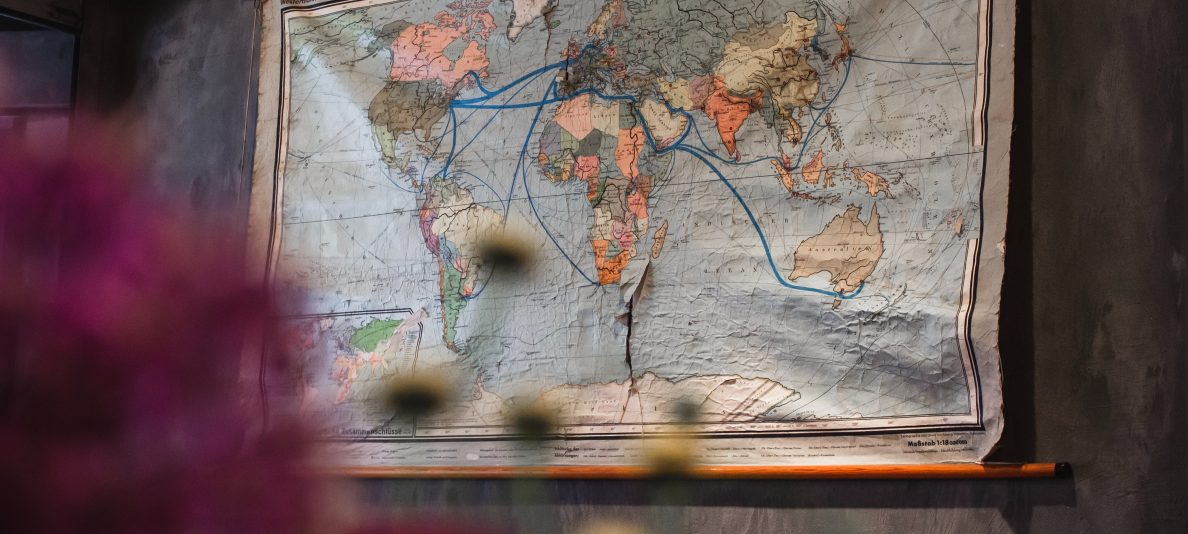
Live and Learn Abroad to Boost Creativity

You’ve been overseas and you’re back in the US looking for work. Not many job descriptions say that the “ideal candidate will have lived outside the US.” So what transferable qualities or skills have your experiences developed in you? How about adaptability, flexibility, resilience, and empathy?

Here’s something else you can add to your qualifications, and there’s research to back up the claim: creativity.

Finding the Relationship between Creativity and Living Cross-Culturally

A few years ago, William Maddux and Adam Galinsky conducted a series of experiments that demonstrate the link between living abroad and creativity.

  1. In the first, the pair showed that the more time a subject had spent living (though not traveling) abroad, the more likely it was for him to solve a particular puzzle. But the cause-effect relationship wasn’t clear. What if it’s simply because creative people choose more often to live abroad?
  2. The second experiment verified the results, this time using built-in controls for personality factors that are linked to creativity in order to isolate the effects of living abroad.
  3. The third study had subjects who had previously lived abroad think and write about their experiences. They were then tested, showing a temporary increase in creativity.
  4. Study number four looked at adaption to a new culture as the main driver of increased creativity. It showed that the more a person adapted, immersing herself in a culture, the higher the creativity.
  5. And, finally, the fifth study followed up by showing that subjects with past living-abroad experience who then imagined and wrote about adapting to a foreign culture exhibited higher levels of creativity in a subsequent exercise.

(William Maddux and Adam Galinsky, “Cultural Borders and Mental Barriers: The Relationship between Living Abroad and Creativity,” Journal of Personality and Social Psychology, May 2009)

Wanting to Live Abroad Isn’t the Same

As described in a recent article in Pacific Standard, researchers at the University of Florida, Gainesville, further validated the idea that studying abroad increases creativity, rather than vice versa. The study, by Christine Lee, David Therriault, and Tracy Linderholm, looked at three groups of students: those who had studied abroad, those who were planning to study abroad, and those who had not nor were planning to study abroad. The first group scored higher than the other two in levels of creative thinking, suggesting that it’s the actual experience of living overseas, rather than a personality type that is inclined to do so.

(Tom Jacobs, “To Boost Creativity, Study Abroad,” Pacific Standard, August 6, 2012; Christine Lee, David Therriault, and Tracy Linderholm, abstract of “On the Cognitive Benefits of Cultural Experience: Exploring the Relationship between Studying Abroad and Creative Thinking,” Applied Cognitive Psychology, July 2012)

Diversification and Flexibility

In the abstract to their research published in the Journal of Experimental Social Psychology, researchers from the Netherlands and California note that “past research has linked creativity to unusual and unexpected experiences, such as early parental loss or living abroad.” Their experiments suggest that it is the “diversifying” aspect of these experiences that brings about great “cognitive flexibility.”

(Simone Ritter, et al., abstract of “Diversifying Experiences Enhance Cognitive Flexibility,” Journal of Experimental Social Psychology, July 2012)

Learning the Whys of Culture Helps Even More

Back to Maddux and Galinsky, this time joined by Hajo Adam. Working on the idea that adapting to a new culture brings about novel ways of thinking, the researchers asked, “What is it about adaptation to foreign environments that is critical for facilitating the creative process?” They hypothesized that it is learning about a foreign culture in a multicultural setting that boosts creativity, To test this, the researchers assembled a group of university students in Paris who had previously lived abroad. They then “primed” part of the group by having them think and write about a time when they had learned about another culture. Others in the group did the same about a time of learning about their own culture. As predicted, the first group scored higher in a followup test of creativity.

The three then focused on “functional learning,” or “learning about the underlying reasons for observed foreign rituals, rules, and behaviors.” Subsequent experiments showed that creativity increased even more when the priming focused on not only on learning something new about another culture but learning when the subjects were actually able to find out the reason behind the cultural differences.

(William Maddux, Hajo Adam, and Adam Galinsky, “When in Rome . . . Learn Why the Romans Do What They Do: How Multicultural Learning Experiences Facilitate Creativity,” Personality and Social Psychology Bulletin, June 2010)

Boosting Your Resume in a Globalized World

So, in review, if you want to develop your creativity, here’s the plan:

  1. live overseas
  2. adapt to another culture
  3. learn about that culture
  4. and learn why a culture is the way it is

In an article posted by the Kellogg School of Management, Maddux tells the American Psychological Association that their research

may have something to say about the increasing impact of globalization on the world, a fact that has been hammered home by the recent financial crisis. Knowing that experiences abroad are critical for creative output makes study abroad programs and job assignments in other countries that much more important, especially for people and companies that put a premium on creativity and innovation to stay competitive.

(Audrey Hamilton, “Living Outside the Box: New Research by Kellogg Professor Adam Galinsky Suggests That Living Abroad Boosts Creativity,” Kellogg School of Management, April 23, 2009)

[photo: “Globeism,” by Joel Ormsby, used under a Creative Commons license]

African-American Expats

Here’s a book that I’d like to read . . . as soon as it’s written.

The Center for Intercultural Dialogue is calling for chapters and chapter proposals for a proposed book with the working title The Hidden Lives of African Americans Living Abroad Series, Book 1: Articulating the Opportunities and Challenges of Living Internationally. The overview of the book includes the following:

While anecdotal data indicate that the experiences of African Americans living abroad qualitatively differs from those of European Americans, there is a substantial lack of scholarship that investigates the ways in which national and ethnic identities are expressed (and experienced) cross culturally by Black Americans living overseas. In many ways, the everyday lived experiences of African American expatriates living abroad remain unknown—and largely neglected by mainstream media and academic research. This series seeks to examine and highlight what life is like for African Americans living abroad.

And here are some of the suggested chapter topics that look particularly interesting to me:

  • What it’s like to be the only African American in the country
  • “But you don’t have blonde hair or blue eyes”: Encountering and overcoming stereotypes of the “All American” image abroad
  •  “How do they treat Black people there?” Addressing the pre-departure fears of friends
  • Perceptions of African Americans abroad
  • African American Image in Overseas Advertising
  • Returning to the U.S. and Readjusting to Home

As a White American, I’ve often wondered what it is like for Black Americans living overseas, with the extra challenges of facing stereotypes and prejudices . . . layered on top of and intertwined with the other difficulties of cross-cultural living. Hopefully this book—and the whole series—will draw together some good stories and research and create a meaningful discussion.

Go to “CFP African Americans Living Abroad” for more information and submission guidelines.

[illustration: “Blank Open Book,” by DonkeyHotey, used under a Creative Commons license]