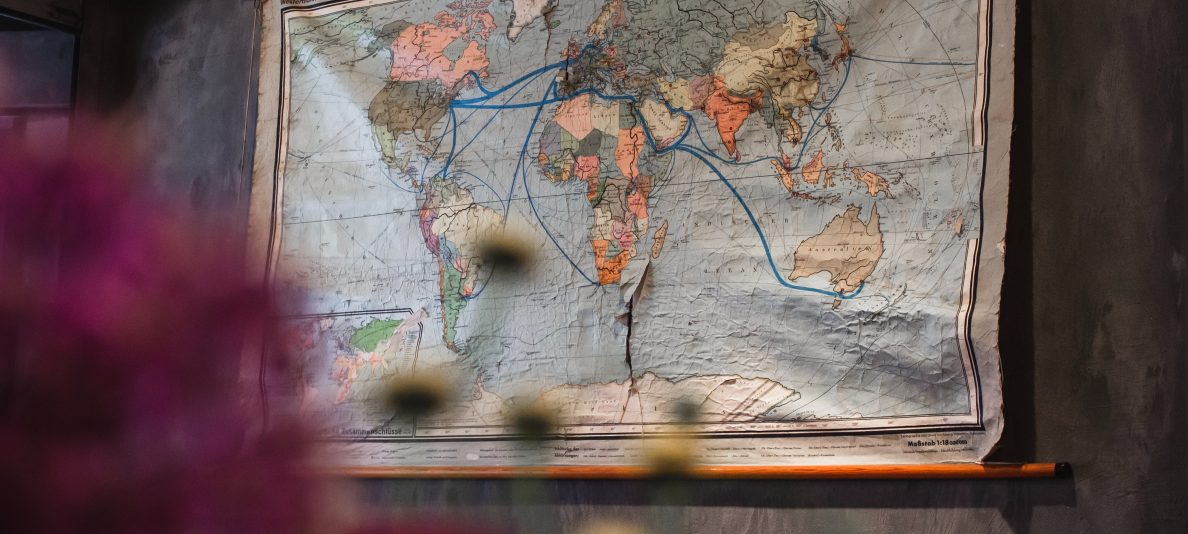

Homesick Immigrants

According to Gallup, recent polling shows that 13% of adults in the world, about 640 million, want to move to another country and stay there permanently. The country that they’d most like to move to is the US, with around 150 million wanting to go there. But that doesn’t mean that most will be moving any time soon, as earlier figures show that only 8% of those wanting to migrate plan to do so in the next year, and only 35% of that number are actually taking steps (applying for visas, buying tickets, etc.) to leave.

On the one hand, there’s the greener grass on the other side of the fence; on the other, there’s the emotional toll of leaving home. Susan Matt, professor of history at Weber State University and author of Homesickness: An American History, writes about changing countries:

It leads to opportunity and profits, but it also has high psychological costs. In nearly a decade’s research into the emotions and experiences of immigrants and migrants, I’ve discovered that many people who leave home in search of better prospects end up feeling displaced and depressed. Few speak openly of the substantial pain of leaving home.

Even though technology has done much to bridge the gap across the miles, it doesn’t eliminate homesickness. From 2002 to 2009, the percentage of immigrants in the US who called home at least once a week rose from 28 to 66, but all the phones, Facebook, email, and Skype in the world won’t stop the feelings of loss. Over the last nine years, the number of immigrants has dropped who say that they’re “extremely happy” or that they’d make the same move if they had to do it all over again. One study shows that Mexican immigrants in the US have a 40% higher rate of depression and anxiety than their relatives who stayed in Mexico. María Elena Rivera, a psychologist in Tepic, Mexico, believes that the increased ability to “phone home” can actually worsen homesickness, as the immigrants get constant reminders of what they are missing.

Matt’s point is not that changing countries represents a bad decision. Rather it’s that we romanticize it to the point that the sadness it often brings comes as an unexpected shock. We think that we’ve moved beyond a natural longing for home, but we haven’t.

The persistence of homesickness points to the limitations of the cosmopolitan philosophy that undergirds so much of our market and society. The idea that we can and should feel at home anyplace on the globe is based on a worldview that celebrates the solitary, mobile individual and envisions men and women as easily separated from family, from home and from the past. But this vision doesn’t square with our emotions, for our ties to home, although often underestimated, are strong and enduring.

We need to talk about homesickness more. It’s real, and advances in technology and changes in worldview won’t make it go away. If immigrants are going to be healthy in their new surroundings, then it will help for them to go in with eyes wide open and with realistic expectations. It is true: “Forewarned is forearmed.” Continuing the conversation isn’t easy, but it’s necessary. “Today, explicit discussions of homesickness are rare,” writes Matt, “for the emotion is typically regarded as an embarrassing impediment to individual progress and prosperity. This silence makes mobility appear deceptively easy.”

(Jon Clifton, “150 Millions Adults Worldwide Would Migrate to the US,” Gallup, April 20, 2012; Neli Esipova and Julie Ray, “Nearly 50 Million Worldwide Planning to Migrate Soon,” Gallup World, February 24, 2012; Susan J. Matt, The New Globalist is Homesick,” The New York Times, March 21, 2012; Scott Bittle and Jonathan Rochkind, “A Place to Call Home: What Immigrants Say Now about Life in America,” Public Agenda)

[photo: “She Stared at the Sea,” by Maaco, used under a Creative Commons license]

Of Mobile Phones and Commodes

One of the biggest changes in technology over the last few years has been the global explosion of cell phones. In many communities, lagging behind the developed world in land-line phone infrastructure, the people have completely skipped that step and have jumped directly to cell phone use. Two years ago, Keith Williams and Leith Gray wrote an article highlighting the potential of using mobile phones in cross-cultural Christian evangelism. Though the numbers have changed some since 2010, here are a few interesting points they collected for their article:

• There are more than 5 billion cell phone subscriptions in the world.

• Today’s smart phone is thousands of times more powerful than the computers that sent Apollo astronauts to the moon.

• The CEO of Google predicts that smart phone sales will surpass those of PCs by 2013, and by the same year, cell-phone data traffic will increase 66 times.

• Leading up to 2009, cell-phone use by Africans grew 550% in 5 years.

• In India, 20 million people each month get new cell-phone lines, in fact, “the people of India now have better access to mobile phones than to toilets.”

(Williams and Gray, “The Little Phone That Could: Mobile-Empowered Ministry,” International Journal of Frontier Missiology, Fall 2010)

I found these statistics to back up that last statement: A recent survey in India shows that while 53.2% of the people have cell phones, only 46.9% have toilets inside their homes. This means that the majority of the population must use public latrines (3.2%) or simply relieve themselves outside (49.8%).

(P. Sunderarajan, “Half of India’s Homes Have Cellphones, but Not Toilets,” The Hindu, March 14, 2012)

India is not the only country with this problem, and it’s a serious problem. According to Toilet Twinning,

2.6 billion people—that’s 40% of the world’s population—don’t have somewhere safe, clean and hygienic to go to the loo. The human impact of this scandalous stat is enormous: nearly one in five child deaths each year is due to diarrhea.

What is Toilet Twinning? It’s a partnership between UK-based charities Cord and Tearfund that allows donors to “twina toilet in their own home by paying for a new one to be built in Burundi, the Democratic Republic of Congo, or Cambodia. The cost for each one is £60 (about  US$100) and payments can be made from outside the UK using PayPal. Donors receive a framed certificate showing the new latrine, along with its GPS coordinates.

And just to bring this post full circle . . . Toilet Twinning reports that 1/4 of the people in Great Britain are serious multi-taskers, using their cell phones—for talking, texting, emailing, Facebooking, or Tweeting—while sitting on the commode.

(“Lifting the Lid on Britain’s Toilet Habits,” Toilet Twinning, November 19, 2010)

[photo: “toilet-phone,” by jan zeschky, used under a Creative Commons license]

In Praise of Petite Feet

I remember seeing a large advertisement in the Taipei subway station showing a Western model in a swimsuit sporting a dark tan. In the US, a photo of a lady with that kind of complexion might be promoting a tanning product, but in Taiwan, it was an example of what you don’t want to look like. Instead, the ad was for a skin whitener. Beauty really is in the eye of the beholder. But recent research has finally shown us a female trait that everyone around the globe agrees is attractive: little feet.

According to a team led by Daniel M.T. Fessler, six studies confirm that “small foot size is preferred when judging women.” In one study, when asked to pick the most attractive women, males and females from eight countries chose the ladies with the smallest feet. That’s because everywhere in the world, small feet represent “youth and femininity, and thus desirability.” . . . Um, well, not everywhere. Seems there is one group of people who disagree. They are the Karo Batak of rural Indonesia, hard workers who often don’t wear shoes. They prefer women with large feet, which are associated with strength and a better ability to work in the fields.

The research was presented in the journal Evolution & Human Behavior, under the title “Testing a Postulated Case of Intersexual Selection in Humans: The Role of Foot Size in Judgments of Physical Attractiveness and Age” (abstract here). (I’m thinking a lot of cultural anthropologists and their ilk have a preference for long titles.)

(Tom Jacobs, “Great Dessert? Depends on the Plate,” Miller-McCune, March 2, 2012)

Evolution and human behavior. Now those are a couple topics that can cause some disagreement around the world. An article published in Science in 2006 reported on studies showing that adults in the US, when compared to people in 32 Europe countries and Japan, are much less likely to accept “the evolution of humans from earlier forms of life.” Back then, only 14% of adults in the US believed evolution to be “true,” while about one third said it was “false.” The only country in the study with a lower opinion of evolution was Turkey. On the opposite extreme of the spectrum was Iceland, where over 80% of adults believed in evolution.

(John Hartman, Eugenie C. Scott, and Shinji Okamoto, “Public Acceptance of Evolution,” originally in Science, August 11, 2006, online at The Richard Dawkins Foundation for Reason and Science)

[upper photo: “Chinese Bound Feet (7)” by DrJohnBullas, used under a Creative Commons license; lower photo: “DanicaPatrick_05” by daisygold2002, under a  Creative Commons license]