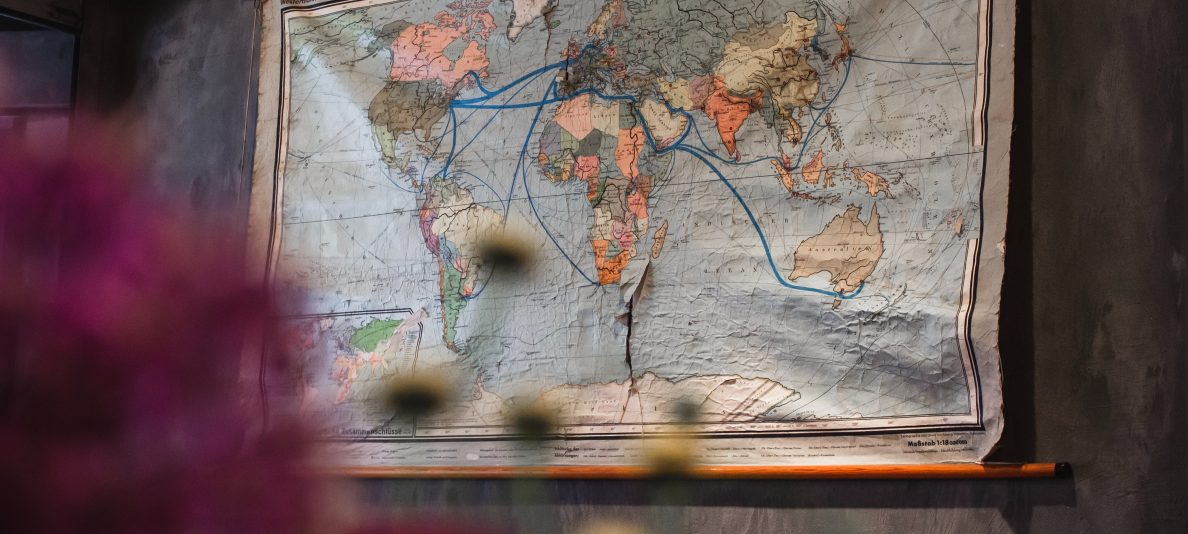

An Open Letter to the Kind People in My Host Country [—at A Life Overseas]

518803063_75cf6d6dc1_b

Dear neighbors:

When my wife and I and our four children stepped off the plane in your country, with our 12 carry-on bags—and all our plans, enthusiasm, expectations . . . and naiveté—you welcomed us. In fact, the customs agent greeted us with a smile. And during the following years that we lived among you, we lost count of your kindnesses.

We weren’t refugees, we didn’t arrive on your shores having been forced out of our homes, we weren’t stranded. We had chosen to come. You didn’t find us naked and bloodied at the side of a road, but still you were often good Samaritans to us. When you saw us sitting on the curb, so to speak, facing roadblocks or not sure where we were headed, so many of you did not simply walk by on the other side.

For this we thank you.

To our language teachers who patiently, ever so patiently, led us through vocabulary lessons and guided us on the nuances of your culture, laughing with us but not at us, thank you.

To the food-cart vendors who listened to us practice the names of what they were selling and cheerfully rewarded us with wonderful tasting snacks and meals, sometimes putting something extra in with our order, thank you.

To the policeman who loaded up our family in his patrol car and took us home after we got lost on a walk, even though we ended up being only three blocks away from our apartment building, thank you.

And to the people near our home who didn’t think the worst of a family, who, for some reason, was riding in a police car, thank you.

Finish reading at A Life Overseas. . . .

[photo: “Post Office Shoot8,” by Bryan Pearson, used under a Creative Commons license]
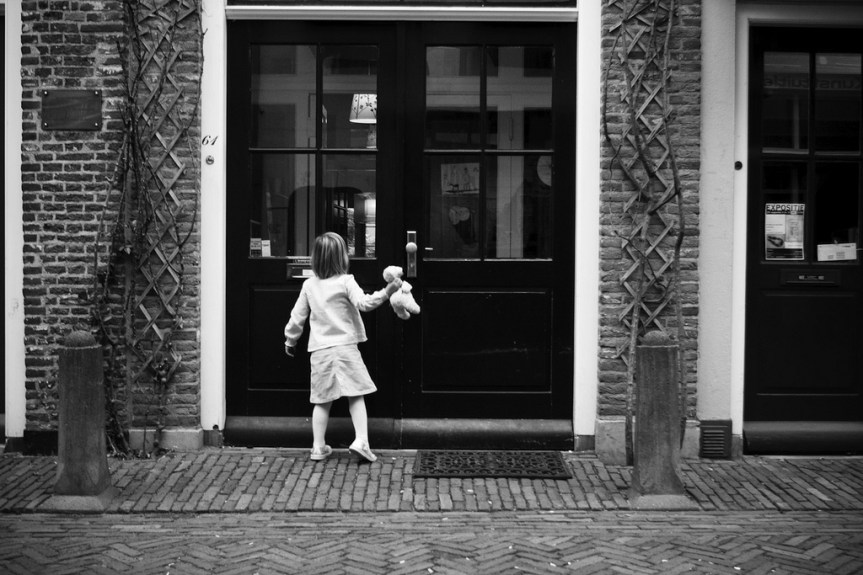
So, What Does God Look Like to You? [—at A Life Overseas]

3984772746_7cd6b66c64_b

Imagine getting a handwritten invitation from God the Father requesting your presence for a meeting. You quickly get ready, and you’re on your way. When you arrive at his door, you knock twice and hear, “Come in.” You turn the knob, push the door open slowly . . . and there he is.

But before you enter, let’s back up a second. How’s your imagination? What kind of invitation did God send? What about his handwriting? What sort of clothes are you wearing to your meeting? Formal? Business casual? Shorts and flip flops? And his door, is it simple or ornate? What kind of voice does he have? And what does God look like?

For many years, I could most easily picture God sitting on a throne, an ancient sculpture come to life. He had long hair and a long beard, and he must have been at least 10-feet tall, as he was large enough for me—even as an adult—to crawl up onto his lap and burrow my face into the billowy robes that flowed down from his shoulders.

I like that image, and it still gives me comfort. But it’s not always the one that now first comes to my mind. Instead, I sometimes think of God standing before me with his arms crossed, a disappointed look on his face. On a particularly bad day, he uncrosses his arms to shake a finger at me. This change in how I view God seems to have come about sometime overseas, when I realized that my accomplishments and abilities weren’t matching my own expectations and what I thought were the expectations of others.

What does God look like to you? I’m not talking about God appearing in a bona fide vision. I’m thinking of how your imagination pictures him being present—right in front of you. It’s an interesting question for missionaries, relief workers, and the nationals next door. It’s an interesting question for all of us, because the answers we give tell a lot about who God is to us and about how we see our relationship with him—about how we see ourselves and think God sees us. Does he resemble your father, president, prime minister, or king? Does he look like a church leader or a boss you’ve known? Does he give you his full attention, or is he busy with the crowds around him? Does he have your features, or is he a foreigner?

Continue reading at A Life Overseas. . . .

[photo: “Peek,” by Wesley de Ridder, used under a Creative Commons license]

Thank You, Dear Shepherds [—at A Life Overseas]

8620484592_b8eb57ed79_k

I have a soft spot in my heart for nativity sets. I think it’s because the cast is familiar and recognizable, so much so that it can be altered to fit any culture and we still know what it is. It’s kind of like hearing “Silent Night” sung in many languages. We may not understand it, but we understand it. Variations on a theme.

But, of course, not all cultures know the significance of the nativity figures. While we were living in Asia, a few blocks away from our house there was a knick-knack store that during Christmastime was filled with Western decorations. Here’s what I wrote about that in a newsletter, 13 years ago:

Amongst the jumble of holiday odds and ends are the scattered pieces of a few nativity sets. On one shelf is a shepherd standing next to a Christmas tree. On another is a stable with only a wise man and Joseph. Without the infant Jesus, there’s no nativity, and the figures become just people staring at the ground, elbowing for space in between the rows upon rows of Santa Clauses.

[photo: “Nativity,” by thrufireandthruwater, used under a Creative Commons license]

Finish reading at A Life Overseas. . . .

Are We Complaining Too Much? [—at A Life Overseas]

6899771379_0c7dbece04_b

Authenticity. It’s a big buzzword today, popular among millennials, pastors to millennials, mom bloggers, and . . . missionaries. Sharing shortcomings and struggles has many benefits, not the least of which is showing other imperfect people that they’re not alone.

But where that sharing grows and grows, there is bound to be pushback. One person’s honesty is another person’s whining. One person’s transparency is another’s self-centeredness. One person’s telling it like it is is another’s pity party. One person’s authenticity is another’s complaining.

So, are we complaining too much?

I think about that quite a bit. I believe it’s important to share our struggles, openly and honestly, but when I get ready to do just that, Philippians 2:14 often comes to mind. Actually, it’s not the verse itself but the children’s song based on it: “Do everything without complaining / Do everything without arguing / So that you may become blameless and pure children of God.”

Maybe it’s not enough to ask, Are we complaining too much? Can we, in fact, complain at all?

Continue reading at A Life Overseas. . . . 

[photo: “Frustration,” by Jason Bolonski, used under a Creative Commons license]

Looking for Mic-Drop Methods in Missions [—at A Life Overseas]

3400482826_4debaa6b18_b

I don’t much trust stories that end with “And they all lived happily ever after.” That’s because experience has taught me that princes often turn out to be less than charming and fairy-tale princesses turn out to be, well, only in fairy tales. Of course, we don’t hear “happily ever after” a lot any more, not because we no longer hope for happy endings, but because our vocabulary has changed. Now, we’re more apt to end our stories with something more modern, more definitive, more in your face . . . something more like a mic drop. You know, that’s where you extend your arm and let your live microphone fall to the floor. It’s an exclamation mark with attitude. It’s the walk-off home run of speech making and story telling. It’s “Game over.” It’s “‘Nuf said.” It’s . . . “Boom!”

When it comes to mission work, are you looking for a method that will produce a mic-drop moment? Are you in search of a fool-proof plan that is the perfect answer to the question “What would Jesus do?” Are you hoping for a newsletter story that emphatically tells how you’ve unlocked the secret to soul-winning?

I don’t much trust those stories either.

And that’s because when it comes to mission strategies, after the boom of the microphone hitting the floor, you can expect some kind of a bounce and a clatter and a roll. Those are simply the sounds of real life.

Continue reading at A Life Overseas. . . .

[photo: “Mic,” by Robert Bejil, used under a Creative Commons license]

Little-h heroes [—at A Life Overseas]

5976828707_66a470665a_b

In a university class I’m teaching, I started the semester by having the students answer some questions about themselves: What scares you? (Spiders, heights, and death were popular—or unpopular, as it were.) What is your hometown, or where else have you lived? (See how I phrased that one, in case we had some TCKs in the group?) Who is your hero and why?

In answer to that last question, a few said Jesus—with a couple adding, “Because he’s, um, Jesus.” Some chose a famous athlete or a figure from history. But for most, their heroes aren’t well-known. They’re personal heroes: my father, because he works three jobs to support our family; my grandma, because she raised my sisters and me by herself; my teacher, because she never gave up on me.

Last year, Amy Peterson wrote a wonderful article for Christianity Today entitled “Farewell to the Missionary Hero.” In it she talks about how missionary biographies of the past have portrayed missionaries as larger-than-life “saints,” often moving from one glorious adventure to another. She contrasts that with the approach of many missionaries today who are more willing to present the hardships and mundane routines of missionary life, as well as their own shortcomings. Peterson even mentions A Life Overseas and some of the authors here as examples of this new openness and honesty.

As I reread Peterson’s article, I am even more a fan, and I’m glad that she has extended the conversation outside the missionary community. So it might surprise you to hear me say that I actually don’t think we should say “farewell to the missionary hero.” I’m not arguing against her premise. No, mine is only a semantic concern. I just want to take the word hero and look at it from a different direction. . . .

The complete post is at A Life Overseas. Finish reading it there.

[photo: “Solitude,” by G.S. Matthews, used under a Creative Commons license]

Sorry: Another Difficult, but Necessary, Word [—at A Life Overseas]

5191991519_33c4c398f3_b

The following is adapted from “Sorry: No Ifs, Sos, or Buts” for A Life Overseas. The original was posted here.

Last month, I wrote about the difficulties of saying goodbye, something faced over again by those living overseas. Today I’d like to discuss another word that can come up during times of transition: Sorry. It, too, is hard to say, at least in the right way.

R is for Reconciliation

When it comes to transitions between countries, it can be easy to feel as if we’re drowning in all the emotions, responsibilities, and stressors. That’s why David Pollock and Ruth Van Reken, in their landmark book, Third Culture Kids: Growing Up among Worlds, talk about building a “RAFT” to keep your head above water. The four parts of that raft are

  • Reconciliation
  • Affirmation
  • Farewells, and
  • Think Destination

“Reconciliation,” say the authors, “includes both the need to forgive and to be forgiven.” And this forgiveness is especially important preceding a move across time zones and oceans.

When transitions approach, those leaving—and those staying—have a small window of opportunity for a face-to-face healing of wounded relationships, a window that gets smaller as the departure gets closer. That’s why apologies become more and more necessary, even at a time when they may seem more and more difficult.

But simply deciding to say “I’m sorry” isn’t enough, because not all apologies are created equal. In fact, we live in the age of the “non-apology apology.” When you say, “I’m sorry,” do you add on any qualifiers? Do extra words reveal your true feelings?

Or do your words of remorse stand on their own? Do you say Sorry, with no ifs, sos, or buts?

Go to A Life Overseas to finish reading. . . .

(David C. Pollock and Ruth E. Van Reken, Third Culture Kids: Growing Up among Worlds, Boston: Nicholas Brealey, 2009)

[photo: “More Fun with Sorry,” by Erin Kohlenberg, used under a Creative Commons license]

Goodbye: Making a Hard Word Easier [—at A Life Overseas]

IMG_7628

From my post this month at A Life Overseas –

goodbye /gə(d)-ˈbī/ excl. / salutation spoken at a departure, extremely unpopular for certain English-speaking tribes, such as cross-cultural workers, TCKs, their loved ones, and the like.

Many of us know from experience that saying goodbye can be hard, really hard. And practice doesn’t make perfect. In fact, it often makes it worse.

But what makes goodbye so tough to voice? It’s not because it’s hard to pronounce. That’s simple enough. Rather, it’s the meaning behind the word that’s difficult. Is that because we don’t actually know the definition of goodbye? To quote that great linguist/philosopher Inigo Montoya, “You keep using that word. I do not think it means what you think it means.”

Goodbye actually comes from God be with you, which, in it’s older form, was God be with ye. From there, it morphed into such shortened versions as God be wy youGod b’w’yGodbwyeGod buy’ ye, and good-b’wy. The replacement of God with good was influenced by the similar phrases good day and good night, which takes it even further from the original. Seen in this way, goodbye is related to the French adieu and the Spanish adios, which mean “to God,” as in “I commit you to God.”

So what’s so hard about saying, “God be with you”? What’s so difficult about giving someone a blessing? Why do we so often hear, “I don’t want to say goodbye”?

Maybe it’s because we do actually know what it means—at least for those who move far away. . . .

Continue reading

[photo: “Goodbye Summer 2011,” by deargdoom57, used under a Creative Commons license]