When the “Perfect!” Fit Isn’t [—at A Life Overseas]

There seems to be an awful lot of Perfect! going on these days, at least in my part of the world. I told my server at a restaurant that I wanted fries and steamed broccoli to go with my entree. “Perfect!” he said. A nurse read off my blood pressure. “Perfect!” again. When I offered 8:30 as a possible time for an appointment, I heard “Perfect!” over the phone.

And then I was at a hotel not long ago and saw an advertisement for “Perfect Pizza.” I really, really wanted to run up to the hostess and yell, Elf-style, “You did it! Congratulations! The perfect pizza! Great job everybody! It’s great to meet you!”

I know it’s just a trendy shorthand for “good” or “fine” or “sounds OK to me,” but Perfect! sure bumps things up a notch. It sounds so comforting, so . . . exciting. And while it’s not my go-to expression (“Great!” is my over-the-top adjective of choice), I still see myself hoping for perfection, and wanting to claim it when I think I’ve found it.

For instance, “Please, Lord, bless us with just the right apartment, in just the right quiet neighborhood, with just the right opportunities for outreach, with just the right distance from the preschool and bus stop, and just the right rent for our budget” is like something I might have prayed while we were looking for a new place to live overseas. And when we’d found a new home that checked all the boxes, we’d declare it a Perfect! fit and would tell our supporters as much in our next newsletter.

A Perfect! fit.

Pardon the detour, but have you heard of “wire electrical discharge machining”? . . .

Read the rest of my post at A Life Overseas.

[photo: “A few pieces are still out of place,” by Nic McPhee, used under a Creative Commons license]

For Those of Us Who Aren’t Fluent in a Second Language, Even in Our Dreams [—at A Life Overseas]

I’ve heard it’s the holy grail of fluency: dreaming in your target language—walking around in your dream world, saying whatever you want to say and understanding everything that’s said. Sounds pretty cool.

Has that ever happened to me? Nope. I do sometimes dream that I’m back in Taiwan, but the people around me tend to say a lot of nonsense words, and when I open my mouth, I can only say the most basic of sentences. Sometimes I’m lost in the city, late for a meeting. I can’t remember the address of where I’m headed, can’t find the subway station, and have no money for a cab. It’s the cross-cultural equivalent of dreaming that I’m standing in my high school’s hallway, finding out I have a test I haven’t studied for and not knowing my locker combination. Oh yeah, and when I look down I’m not wearing pants. I think my dreams have found me pantsless on the streets of Taiwan a few times, too.

Or what about daydreaming about complete fluency, gleefully imagining the moment you take your seat as a translator for the UN? That, too, is a nope for me.

If your dreams are filled with fluent encounters in a second (or third or fourth) language, if language learning is your forte, if it’s as easy as ahbaytsay, or if it’s simply a piece of gâteau, this post probably isn’t for you.

But if your language learning has been a struggle, if you’re disappointed in your progress, or if you’ve reached a wall with no door in sight, read on . . . at A Life Overseas.

[photo: “Sunny Spot of Greenery,” by Timothy Krause, used under a Creative Commons license]

Chesterton’s Fence: Understanding the Why of the Status Quo before Seeking Change [—at A Life Overseas]

The traveller sees what he sees; the tripper sees what he has come to see. —G. K. Chesterton (Autobiography)

G. K. Chesterton, the turn-of-the-20th-century English author, journalist, and Christian apologist, first came to my attention through quotations on travel taken from his writings. Along with the one above, there’s also

The whole object of travel is not to set foot on foreign land; it is at last to set foot on one’s own country as a foreign land. (—Tremendous Trifles)

and

They say travel broadens the mind; but you must have the mind. (—said by the character Gabriel Gale in “The Shadow and the Shark”)

While these aphorisms apply to travelers and “trippers,” they also are relevant to movers and shakers, those who relocate to other countries and cultures in order to make a difference there. In that vein, I’ve recently found another idea from Chesterton—often referred to as “Chesterton’s fence”—that can relate to the life of cross-cultural workers. Before explaining it, here’s a little background.

Chesterton, born in 1874, was well known in his day as an influential defender and explainer of the Christian faith. C. S. Lewis, a major Christian apologist in his own right, credits Chesterton for impacting his conversion from atheism. In his memoir, Surprised by Joy: The Shape of My Early Life, Lewis writes that in reading Chesterton’s Everlasting Man, he “for the first time saw the whole Christian outline of history set out in a form that seemed to me to make sense.” And the prolific Christian author Philip Yancey writes that if he were stranded on a desert island and could have “only one book, apart from the Bible, I may well select Chesterton’s own spiritual autobiography, Orthodoxy.”

Chesterton began his faith as an Anglican, later converting to Roman Catholicism, with this conversion being the subject of his book The Thing: Why I Am a Catholic. It’s in this work that we find Chesterton’s fence. That concept in a nutshell is this:

When you come across something that you think needs to be changed, you should first find out why it is the way it is. Only after understanding why it came to be can you then follow through with the change.

To read the rest of this post, go to A Life Overseas. . . .

(C. S. Lewis, Surprised by Joy: The Shape of My Early Life, Geoffrey Bles, 1955; Philip Yancey, Soul Survivor: How My Faith Survived the Church, Doubleday, 2001)

[photo: “The Fence Line,” by Alan, used under a Creative Commons license]

Ba Da Ba Ba Ba—I’m Learnin’ It: Lessons from McDonald’s Abroad [—at A Life Overseas]

Not long after we landed in Taipei in 2001, the head of our church’s missions-ministry team asked about our first impressions. Here’s what we sent to him:

people-people-people, stinky tofu, cell phones, smog, construction, dogs, Hello Kitty, noise, taxis, temples, night markets, McDonald’s, squatty potties, ATMs, squid on a stick, scooters, 7-11s, people-people-people

McDonald’s, an icon of American culture, played a big part in our time overseas, whether a familiar place for meeting with friends, a safe(ish) place to practice our Mandarin, or a dependable place for getting a meal. It was also a place for learning—or reinforcing—some valuable lessons. Here are some of them:

Language Acquisition Is as Easy as 1, 2, 3

Before moving abroad, as a family of six we’d become adept at saving money at McDonald’s using our savvy ordering skills: building our own meals out of single hamburgers or fish sandwiches, small fries, and waters. All that went out the window in our new home. Since we didn’t have the vocabulary for separate items, we just ordered by number, which meant each of us got a full meal, even our four year old (I guess we couldn’t say “Happy Meal” either). Ease of ordering trumped frugality. Bring on the giant cups of Coke.

Pride Goeth before the Spill

Most of the McDonald’s in Taiwan are multilevel, so after getting your food, you can then walk upstairs to eat. One day we were on a trip and stopped at McDonald’s and ordered our regular six number ones (or twos, or whatevers). That meant six burgers, six orders of fries, and six sodas. I was nervously carrying all the sodas on a tray up two (or was it 10?) flights of stairs, with extreme care. Then as I got to my family, I mimicked being out of breath and struggling to make it to the table. And of course, my theatrics made all the cups tip . . . and fall over . . . and hit the floor. I’m pretty sure it was all in slow motion. So I had to trudge back downstairs and try to explain what happened, using my book-one, chapter-five-or-so language skills, along with some extremely clever hand signals.

It’s the Little Things

I guess Coke at McDonald’s has given me a lot of memories, but not all of them were bad. . . .

For the rest of my post, go to A Life Overseas.

[photo: “Taiwan Mcdonald’s 台湾マクドナルド,” by yahiramatu, used under a Creative Commons license]

A Life Overseas: Send Us Your Photos . . . Yes, for Real

This post appears at A Life Overseas.

I got several responses to my post last month, “Photographers, Can You Do Us Cross-Cultural Bloggers a Favor?” One of my favorites is “We are debating whether your plea for more photos is an actual plea for more photos or if it was written with sarcasm in mind.”

I replied, “I’ll admit I wrote the post tongue in cheek. I was wanting to point out my own tendencies in photo selection as much as anyone else’s. But on the other hand, I meant it when I said we need more and better photos, so I’m happy that people are asking how they can contribute to the cause. I think it’s great that people with photographic skills are looking for ways to use their talents and creativity for A Life Overseas, and we’re brainstorming ways to help make that happen.”

Well, our brainstorming has led to a solution—a place for storing your pics (in Flickr) where they’ll be available to authors at A Life Overseas but not accessible by others.

So consider this an unambiguous plea: If you’d like to share your photos with us, please send them to alifeoverseasblog@gmail.com. (A maximum width/height of 1000 pixels should do.) By submitting your pics, you’re giving ALO writers permission to use them, but you’ll retain your copyright, and we’ll credit you when your photos appear. If you’d like, label your pics with any important information, and make sure you’re not sending us any images that shouldn’t be posted in public spaces.

Thanks to those who’ve already sent pics our way, to those who’ve asked about next steps, to those who’ve already taken photographs inspired by my suggestions, and to those who will continue to add to the collection. Thinking about all that makes me happy.

When I wrote my post, I wanted to think I could bring smiles to some faces. Your response is bringing a much bigger smile to mine.

[photo: “The Photographer,” by Nathan Rupert, used under a Creative Commons license]

Photographers, Can You Do Us Cross-Cultural Bloggers a Favor? [—at A Life Overseas]

From a recent edition of the weekly web journal Brigada Today, I found out that there’s a photography conference, “Depth of Field,” coming up, February 7 and 8. It’s designed for pro photographers, but I’m thinking that means amateurs could learn even more from it. And it’s in New York, but the “Main Stage” and “Exposure Stage” presentations will be live streamed. (By the way, if you’re not familiar with Brigada, you might want to check it out. It’s a great place for receiving and sharing all things related to cross-cultural work.)

Why is a conference for photographers relevant to you, dear readers? Because I know some of you like to take photos, and some of you are rather good at it, too. And for those of you, I have a favor to ask. Could you help out us cross-cultural bloggers? It’s not easy finding good photos for the kind of topics that show up in our writing, and, frankly, it can end up adding a last level of stress before we hit the publish button. (Is it really what I’m looking for? Is it appropriate? Has it been used here before?!!)

Take, for instance, the picture at the top of this page. You may have noticed that it’s the same photo as the one I used for my post in July. Or you may just be thinking, “Ugh, another generic plane-wing-out-the-window shot.” Either way, it’s not ideal.

But that’s what we need, some “ideal” photos of, by, and for cross-cultural workers. You may already have your own ideas. If not, let me plant some seeds in the fertile field of your creativity. You’ll no doubt recognize some of these tried-and-true images, but I’m asking for an increase in quantity and quality: quantity, so that we don’t have to reuse the same photos again and again (see above), and quality, so that it doesn’t seem as if we’re using photos again and again (ditto). So when you read “more” below, think “more and better.”

Oh yeah, and free. Free, as in creative commons or public domain.

So more and better . . . and free.

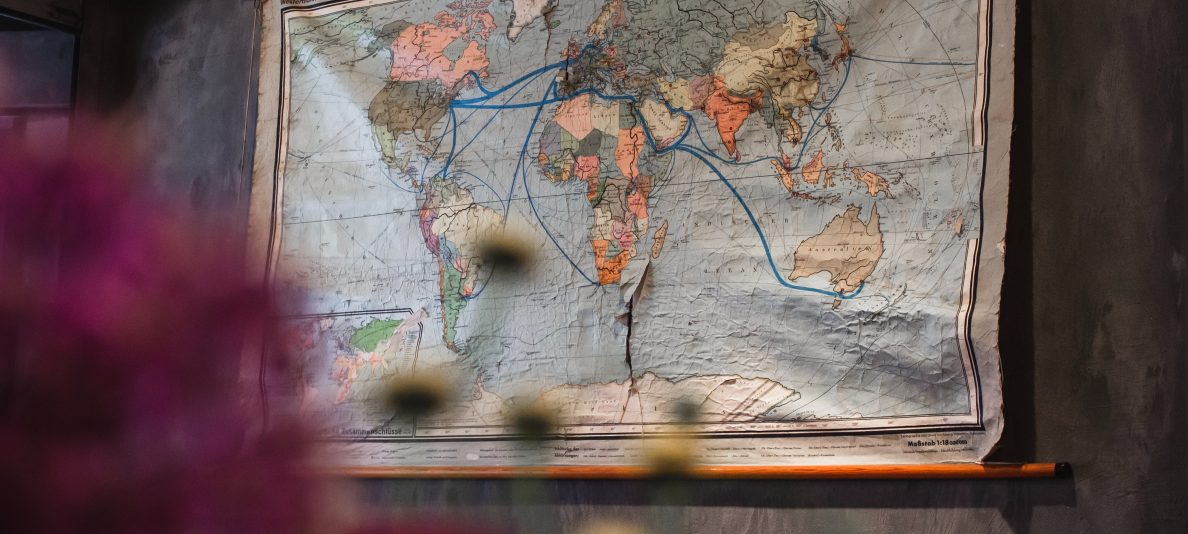
For instance, there aren’t enough photos of world maps and globes. We need more photos of unique maps and globes, antique maps and globes, and maps and globes labeled in non-English languages.

We need more photos taken of . . .

You can read the rest of my post at A Life Overseas.

[photo: “Fight over Slovenia,” by (Mick Baker)rooster, used under a Creative Commons license]

What’s Your “Fancy Like . . .”? [—at A Life Overseas]

If I were to say that I was “fancy like Applebee’s” you might make some assumptions about me. For instance, I might be an American, not the richest guy in the world, and someone who listens to country music in his pickup truck.

And if you don’t fit into all those categories, you might wonder what “fancy like Applebee’s” even means. If that’s the case, two step over to YouTube to hear Walker Hayes’ top-ten country-western song from last year. In “Fancy Like,” Hayes sings that his “low maintenance” lady is usually content with eating at Wendy’s, 

But every now and then when I get paid
I gotta spoil my baby with an upgrade

Yeah, we fancy like Applebee’s on a date night
Got that Bourbon Street steak with the Oreo shake
Get some whipped cream on the top too
Two straws, one check, girl, I got you

Similes (those “like” and “as” phrases) show what we know. They reveal what we identify with and how we use that to describe the things around us, things that are new, or old things that we want to help others see in a new way. Sometimes they get it. Sometimes they don’t. That’s the way it is for country-music stars, and for cross-cultural workers, too.

So if you’re fancy like Applebee’s, it might be because that’s where you go for a a Bourbon Street Steak during your once-a-year trip to the city to get your documents approved or to make a supply run. Or you could be fancy like Swedish meatballs in the IKEA cafeteria. Or fancy like a hotdog combo, with extra sauerkraut, at the Costco snack bar. Or fancy like a Caffè Mocha at the window table in Starburks, (yes, I do mean Starburks).

That’s how we do, how we do, fancy like . . .

In that spirit, here are a few similes I’ve come up with. Some are based on my own experiences overseas, and some I just imagine might be true for others. I hope they make sense to you, but more than that, I hope they inspire you to come up with your own. Give it a try. . . .

See the rest of my post at A Life Overseas. . . .

[photo: “Applebee’s,” by Mike Mozart, used under a Creative Commons license]

Don’t Just Missionary On [—at A Life Overseas]

Onward, Christian soldiers.

Soldier on, Christians.

These don’t mean the same thing, at least not to me.

Paul uses the word soldier to describe someone faithfully acting in obedience to God when he exhorts Timothy, “Join with me in suffering, like a good soldier of Christ Jesus” (2 Timothy 2:3 NIV). It’s a good thing to be Christian soldier.

But when we use soldier as a verb, such as in soldier on, it can take on a different meaning. Around the early 1900s, to soldier on the job was introduced, meaning, oddly enough, to act as if you’re working hard while only putting in minimal effort. And then the mid 1900s gave us the shorter to soldier on, which means to keep going in the face of difficulty or trouble.

In this latter sense, soldiering on, too, is a good thing. But that’s not how the phrase often comes across today. When I hear “soldiering on,” I think of a joyless trudge, just putting one foot in front of the other without resting, without taking time for reflection, without asking questions, without sharing heartfelt emotions, without asking for help or relief or sympathy or grace.

That’s how the best soldiers do it, right?

To read the rest of this post, go to A Life Overseas. . . .

[photo: “boot,” by eltpics, used under a Creative Commons license]