Vulnerability: Letting Others See What Is Hard to Look at Ourselves

15235354063_768ba96bf8_z

I recently wrote about Steve Saint’s travels with Mincaye, when Steve—the son of martyred missionary Nate Saint—was logging thousands of miles on his way to speak to thousands. But that was before an accident in 2012, while testing an experimental wing at I-TEC, that left him as an incomplete quadriplegic.

Since then, Steve has openly shared about his struggles and pain. In a post he wrote last month at the I-TEC blog, Steve talks about his feelings of insignificance. “It is hard to feel very important when Ginny has to help dress me and when I need a bib at dinner time,” he writes. “But then when I’m lamenting that I no longer count I’ll get a letters from someone thanking me now for trusting God in suffering. Go figure.”

I’d like to add my vote saying that Steve still counts. I am so grateful for his honesty, for his willingness to be vulnerable. He is truly serving through his scars.

Here is how he begins his post:

About half of the time I can only function at about 4 on a scale of 1 to 10. Then, with no warning I crash to about 1 or 2 in 10. I lose the tiny bit of feeling in my hands, the bands around my body begin to clamp down so tightly that I go into spasms just trying to stand up. But worse than the physical torment I struggle with, the increased pain is accompanied by an involuntary hardening in my “heart”.  I sing along in church and hear preaching that used to move me, and I feel nothing. 

But, the physical pain and spiritual feelings take second place to an almost constant sense that my life has no significance anymore. But I’m not the only one struggling to have my life count. . . .

I hope you’ll take the time to read the rest of “No Count People?

And on the topic of letting others see us as we are—if you haven’t watched it yet (or if you’d like to watch it again), here’s Brené Brown’s TED Talk entitled “The Power of Vulnerability,” in which she says,

I know that vulnerability is the core of shame and fear and our struggle for worthiness, but it appears that it’s also the birthplace of joy, of creativity, of belonging, of love.

(I’m sure this makes me a prude, but before you gather the kids around the computer to listen to a video that Uncle Craig recommended, please note that it has a touch of PG language.)

(Steve Saint, “No Count People?” I-TEC Blog, November 29, 2016)

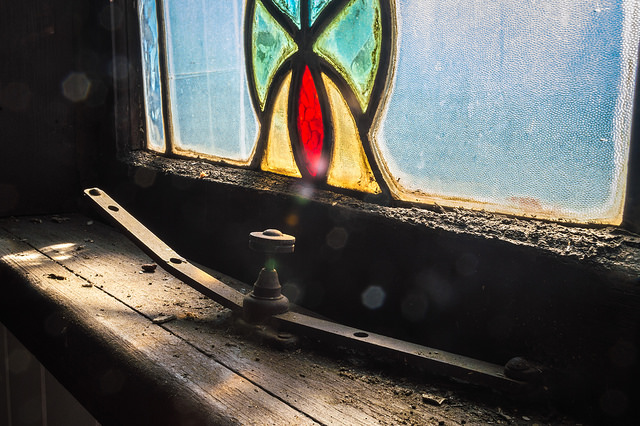
[photo: “Let There Be Urbex,” by darkday, used under a Creative Commons license]

Are We Complaining Too Much? [—at A Life Overseas]

6899771379_0c7dbece04_b

Authenticity. It’s a big buzzword today, popular among millennials, pastors to millennials, mom bloggers, and . . . missionaries. Sharing shortcomings and struggles has many benefits, not the least of which is showing other imperfect people that they’re not alone.

But where that sharing grows and grows, there is bound to be pushback. One person’s honesty is another person’s whining. One person’s transparency is another’s self-centeredness. One person’s telling it like it is is another’s pity party. One person’s authenticity is another’s complaining.

So, are we complaining too much?

I think about that quite a bit. I believe it’s important to share our struggles, openly and honestly, but when I get ready to do just that, Philippians 2:14 often comes to mind. Actually, it’s not the verse itself but the children’s song based on it: “Do everything without complaining / Do everything without arguing / So that you may become blameless and pure children of God.”

Maybe it’s not enough to ask, Are we complaining too much? Can we, in fact, complain at all?

Continue reading at A Life Overseas. . . . 

[photo: “Frustration,” by Jason Bolonski, used under a Creative Commons license]

A Soldier’s Letter, Unopened and Unread

5615283857_36bac4645a_z

To the men and women in the armed forces, thank you for serving our country. The sacrifices you make are more than I will ever truly know.

I just listened to a re-airing of a 2012 NPR interview with Brian Castner, author of The Long Walk: A Story of War and the Life That Follows. Castner served as commander of Explosive Ordnance Disposal units in Iraq. The entire conversation is well worth listening to, but one part that jumped out to me was when Terry Gross asked Castner about a letter he’d written.

When groups visited us on the mission field, we’d have them write letters to themselves before they left, and we’d mail them the letters several months later. The idea was that the notes would be a reminder of what they had felt and experienced—sort of an encouragement to their future selves. We also think this is a great thing to do with missionaries who come off the field as a way to help them process the changes that they are going through.

Castner’s letter is one he wrote to his sons before he went to Iraq, a letter that they were to read if he didn’t come back, a letter that still sits in a safe, a letter that now frightens him. It’s not always easy to get a message from the person you used to be.

“You haven’t read it since you’ve gotten back,” says Gross, “and you don’t even remember what you wrote. So I guess I’m wondering why you kept it, and yet why you haven’t read it.”

Castner replies,

You know, as a bomb tech, you don’t spend a lot of your life being scared, but I’m scared to read that letter. I don’t want to read it, because I don’t know what I put in. And I’m afraid that it’s going to just be full of bravado and flag and country and this is my great purpose and a lot of the things that I felt that just don’t make a lot of sense anymore.

I kept it because it is honestly who I was, and either when my sons are older or after I’m gone, it’ll give some insight, I suppose. I feel like I can’t throw it out unless I read it first. And since I’m too scared to read it, it’s still sitting there.

The host on NPR says that Castner recently came across the letter, and he reports that it remains unread.

(“‘The Life That Follows’ Disarming IEDs in Iraq,” “Fresh Air,” NPR, July 8, 2012)

[photo: “Envelope,” by skeptical view, used under a Creative Commons license]

Goodbye: Making a Hard Word Easier [—at A Life Overseas]

IMG_7628

From my post this month at A Life Overseas –

goodbye /gə(d)-ˈbī/ excl. / salutation spoken at a departure, extremely unpopular for certain English-speaking tribes, such as cross-cultural workers, TCKs, their loved ones, and the like.

Many of us know from experience that saying goodbye can be hard, really hard. And practice doesn’t make perfect. In fact, it often makes it worse.

But what makes goodbye so tough to voice? It’s not because it’s hard to pronounce. That’s simple enough. Rather, it’s the meaning behind the word that’s difficult. Is that because we don’t actually know the definition of goodbye? To quote that great linguist/philosopher Inigo Montoya, “You keep using that word. I do not think it means what you think it means.”

Goodbye actually comes from God be with you, which, in it’s older form, was God be with ye. From there, it morphed into such shortened versions as God be wy youGod b’w’yGodbwyeGod buy’ ye, and good-b’wy. The replacement of God with good was influenced by the similar phrases good day and good night, which takes it even further from the original. Seen in this way, goodbye is related to the French adieu and the Spanish adios, which mean “to God,” as in “I commit you to God.”

So what’s so hard about saying, “God be with you”? What’s so difficult about giving someone a blessing? Why do we so often hear, “I don’t want to say goodbye”?

Maybe it’s because we do actually know what it means—at least for those who move far away. . . .

Continue reading

[photo: “Goodbye Summer 2011,” by deargdoom57, used under a Creative Commons license]

Standing Up Crooked Together [—at A Life Overseas]

640px-Nowe_czarnowo-krzywy_las
The Crooked Forest outside Gryfino, Poland

Here’s an intro to my post this week at A Life Overseas.

Standing Up Crooked

There’s a tree near Colorado Springs that I admire. It’s a pine tree sitting on the property of The Hideaway Inn and Conference Center, where I and my family attended MTI’s Debriefing and Renewal several years ago.

This tree is surrounded by other pines, but this one’s different. While its trunk starts out on a vertical path, after a several feet, it breaks to the side at a ninety-degree angle. Then, over a few more feet, it makes a slow curve, working again on an upward climb.

Near the end of the retreat, we were told to find a place to be by ourselves, and I knew where I wanted to be, sitting in front of that tree. I must not be the only one who appreciates it, since there’s a bench facing it close by.

I don’t know what trauma caused the tree’s shape. Maybe it was a storm, maybe a disease, maybe the blade of an axe. Or maybe it was more of a heart thing—a promise unkept, a hope deferred, a joy shattered.

Regardless of the cause, the reason I admire this tree is that though having faced trouble, it still reaches upward. It’s “persecuted, but not abandoned; struck down, but not destroyed;” wrecked, but not ruined. No, not ruined at all.

Can you identify with this tree?

Have you ever had your feet knocked out from under you because of some tragedy?
Have you ever tried to take hold of something beyond your reach and fallen in the trying?
Have you ever been bent to the point of brokenness?
Have you ever been laid low by the realization that you are the cause of someone else’s pain?
Have you ever wrestled with God, refusing to let go until you get a blessing, and walked away limping?

[photo: “Krzywy Las w Nowym Czarnowie,” by Artur Strzelczyk, used under a Creative Commons license]

Finish reading at A Life Overseas.

Tiny Doors, Big Story

9139154652_41343f0eb4_z

The first handcrafted “fairy door” appeared in the Wayford Woods near Crewkerne, England, around the year 2000. But later, what had begun as a quaint novelty grew into a headache for the locals, with over 200 doors installed on tree trunks and too many visitors coming to have a look. So a few months ago, the trustees of the charity that owns the woods stepped in and removed all the doors. Like Love Locks in France, when small gestures go viral, their days often become numbered.

In Overland Park, Kansas, much closer to my home, another fairy-door story has unfolded with less attention—at least until now. Maybe you’ve seen the recent link at CNN.com: a photo of a tiny door with the title “A great big beautiful act of kindness.”

If you follow the link, it will take you to The Gnomist, a video made by Great Big Stories and CNN Films. To save you some time I’ve embedded it below.

It’s a story about much more than little doors. It’s about transitions, home, dreams, loss, grief, compassion, anger, endings, and beginnings. Are you familiar with any of these?

Grab a cup of tea or coffee and drink this in.

You can visit the blog The Firefly Forest for updates on the gnome community in Overland Park and to read the story of the blogger shown in the video.

(Steven Morris, “Wayford Woods Closes Its Fairy Doors after Attracting Too Many Visitors,” The Guardian, August 21)

[photo: “Otley Chevin,” by Alice Hutchinson, used under a Creative Commons license]

Harmonizing Sadness and Joy [—at A Life Overseas]

5389355486_8ae3459399_oIn 2012 I wrote “Can Grief and Joy Coexist?” In light of our own recent sadness, I’ve adapted it and posted it at A Life Overseas. Go there to read it all (and to hear the song at the end.)

Let me add my voice to those who are praising Pixar’s Inside Out as a great movie for the cross-cultural community. I think we’ll be showing clips of it to expats, repats, and TCKs for a long time to come. (If you’ve not seen it and don’t know what it’s about, I suggest you read Kay Bruner’s discussion of the movie, from a counselor’s point of view.)

I hope that someday Inside Out is made into a Broadway musical. I’d like to hear Sadness and Joy sing a duet at the end.

Dealing with Loss

My wife and son and I saw the film in the theater a few weeks ago. It was rather cathartic, as the past several months have been a time for us, like Riley in the movie, to deal with our emotions—while our emotions learn how to deal with each other. It’s been an especially difficult time for my wife. Her father died in March, and then a brother died last month.

Those events have brought back memories of difficulties we faced while we lived overseas. During our time outside our passport country, we experienced the deaths of my wife’s mother and another brother and of my father.

When you lose loved ones, it can trigger so much emotional confusion. When you live far away from them, a whole other set of complications come into play.

It’s not just losing someone we love, it’s often losing the opportunity to say Goodbye or the ability to grieve together when traveling with the whole family isn’t possible.

When should we go back? Who should make the trip? How long should we stay? What if we don’t meet others’ expectations? What are the rules?

And when sadness comes into the life of the missionary, it is so easy to ask, “Where is my joy?”

Read the rest at A Life Overseas.

[photo: “Golden Hearts on Blue,” by Lea Wiertel, used under a Creative Commons license]

 

To Sit, to Be Silent, to Listen

3841717181_337a4e37bb_z

At the beginning of 2013, Ryan Anderson, power forward for the New Orleans Pelicans, and reality-TV star Gia Allemand were living out the perfect romance. At least that’s the way it looked to those who saw their photos in magazines and on celebrity news sites.

But those who only saw the glamorous images didn’t know the true story. They didn’t know that Allemand struggled with depression. And they were shocked when, in April, she committed suicide.

Though Anderson knew about the ups and downs in Allemand’s life, he, of course was shocked, as well. And he was devastated by grief. What has helped lift him out of his grief are those who are able to offer him silence, who let him share in the silence . . . or fill it up with his own words.

[To see why a blog about cross-cultural issues is interested in the topics of grief and listening, go here.]

In a video by the non-profit To Write Love on Her Arms, Anderson tells how the day Allemand died he turned to his coach, Monty Williams, for help. Williams pulled him away from Allemand’s condo and rode with him in a car:

He didn’t say anything. He just sat there with me. And I . . . there’s nothing more he could have done. . . . He stayed up the entire night. I remember . . . I just leaned down, I leaned on his shoulder and I just cried the whole night, and he just sat there, you know, and he was just there with me.

For Anderson, an important part of the healing process has been therapy, but it took a lot of convincing to get him there. And before he became comfortable with his therapist, he thought the sessions were pointless, because he wasn’t getting “the right advice.” But then he realized that getting advice wasn’t the point of his therapy:

The most important thing is you pouring yourself out to somebody. That’s what it was about for me. It was about talking to this guy and letting everything in . . . that’s going on in my mind and in my heart and everything  out.

Looking back, he says about therapy, about talking openly to a good listener, “I can’t describe to you how valuable it was.”

To Write Love on Her Arms (TWLOHA), the organization that produced this video of Anderson’s story, makes it their work to connect those who are struggling—with depression, addiction, self-injury, suicidal thoughts, eating disorders, and anxiety—with the help they need.

Lauren Gloyne, intern program director and benefit coordinator for TWLOHA, writes her perspective on the group’s work on their Tumblr blog. She quotes lines from the song “Flags,” written by New Zealand singer Brooke Fraser, sharing her thoughts inspired by the words:

Come, tell me your trouble
I’m not your answer
But I’m a listening ear

Maybe it’s not about having all the answers. Maybe it’s about taking someone by the hand and sharing in their honesty. Meeting them in their pain. Lending our ears. Getting in the trenches with them and saying, “I don’t know why this is. But I’m with you. Let’s walk through this uncertainty together.

Reality has left you reeling
All facts and no feeling
No faith and all fear

. . . . . .

You who mourn will be comforted
You who hunger will hunger no more
All the last shall be first, of this I am sure

You who weep now will laugh again
All you lonely, be lonely no more
Yes, the last will be first, of this I am sure

[photo: “A Drop of Silence,” by Thanh Mai Bui Duy, used under a Creative Commons license]