It’s What’s Inside That Counts, Right? Here’s a Resource to Help Us Live That Way [—at A Life Overseas]

Inside-JobCome join me at A Life Overseas for my full post on a helpful book written by a friend and former missionary.

Stephen W. Smith wrote Inside Job for leaders, leaders who find themselves trying to “climb the slippery, treacherous slope of success” and too often falling with a crash, landing in a heap below.

Stephen was once among them. When he began life after graduate school, he says, “I developed an addiction to work that was applauded by every organization I worked for in my career. I was hooked—as every addiction hooks a person.” For Stephen, that work included his service on the mission field.

The solution, he writes, is to redefine success and to prioritize the care of one’s soul, what he calls “the work within the work.” Using the “Great Eight Virtues” listed in 2 Peter 1 as his foundation, in Inside Job Stephen presents the need for emotional and spiritual transformation and fleshes out what must be done to bring it about—”a process of learning, adjusting, repenting and starting anew with courageous convictions.”

The work within the work includes finding rhythm (not balance) in life, saying “no” in light of our limitations, recognizing the need for Sabbath rest, and understanding and managing transitions.

For many of us, this will require a nearly 180-degree turnaround. . . .

Finish reading at ALifeOverseas.com.

Gifts without Bows: Telling and Receiving Stories as They Are

12074234425_016ab3e97d_z

This is a time of gift giving. It’s a time of buying and making and choosing and wrapping.

In our family, we tend toward minimalism when it comes to wrapping gifts. From my father I inherited the practice of using newspaper. When your package carries the latest headlines, there’s no need for bows or ribbons. And if you’re feeling extra festive, you always have the Sunday comics.

We all know it isn’t the paper on the outside that matters, but we sure do act like it sometimes.

I think that one of the best gifts to give and receive—any time of the year—is the gift of our stories, our feelings, our truths. Sometimes they come in worn-out shoeboxes, in paper bags with the tops folded down, or in cardboard boxes marked “Kitchen” from the last move. They’re offered with trepidation and best received with reverence. They’re precious, authentic gifts, rugged and unedited.

And without a bow.

Are we willing to receive such gifts, or do we prefer presents wrapped neatly in shiny paper, with colorful ribbons curled just so? Do we want only the stories that have tidy, happy endings, tied up with a platitude or moral or lesson? Do we carry our own supply of bows in case the gift givers are lacking?

Are we willing to give those gifts as well? Do we hold back the deep realities of our lives, the honest hurts, waiting until we can decorate them with a “that’s when I knew it all happened for a reason,” an “I learned so much,” or a “now I can see it was all part of God’s plan”? In the waiting there is sorrow and pain.

I can’t help but think of my missionary friends, and other cross-cultural workers, too often feeling the need to adorn their stories so that no one will “misunderstand,” too often saying what is expected or what is easier to hear. I can’t help but think of myself when I’ve done the same thing.

Not all gifts are meant to be shared in the open. Some are too personal. Some can only be given in a private, safe, accepting space. Can you create a space like that for your friends, for their parents, for their children? Without such a place, their precious gifts stay hidden away. And hidden gifts are often forgotten and remain ungiven . . . simply for lack of a bow.

The decorations aren’t necessary. Give your gifts without bows, we’re listening. Receive our gifts without bows, we’re talking.

Merry Christmas.

[photo: “Project365-Day21,” by Farouq Taj, used under a Creative Commons license]

That One Safe Friend [—at A Life Overseas]

337964609_40bf770760_z

Here’s the intro to my post today at A Life Overseas

Do you have that one safe friend?

When I went overseas, I didn’t. In fact, I didn’t even know I needed one.

Don’t get me wrong. I had a lot of friends, good friends, but I didn’t have one particular person who was committed to the role of being that one safe friend. Since then I’ve come to the conclusion that all missionaries—and other cross-cultural workers—need someone whom they trust to be devoted to them because of who they are, not because of what they do, someone who will reach out to them consistently, someone who will encourage them, comfort them, laugh with them, and weep with them.

It’s not that there won’t be several people who could do this for you, but without someone specific to take on that responsibility, you may find yourself with no one. When you have your home church, your sending agency, your family, your coworkers, and your supporters behind you, it’s easy for each individual to think that you’re more than taken care of. At a Parents of Missionaries gathering I recently attended, Dr. Dorris Schulz, director for missionary care for Missions Resource Network, said that if she’s ever drowning, she hopes there’s only one person around. That’s because people in a crowd too often do nothing, assuming that someone else will step in.

Being that one safe friend, doesn’t take an exotic skill set. It’s not someone who has all the answers. And it doesn’t need to be someone with experience living abroad. But it does need to be someone who is a good listener, someone who is caring and empathetic, someone who understands you and understands the core challenges of life, regardless of the setting. It’s not an exotic skill set, but neither is it common to everyone.

You’ll need to be proactive in asking someone to be that friend. Don’t assume that people will come knocking, maybe because they doubt your need or their ability. So if you’re looking, what should you look for? What should you expect from that friend? Here are some suggestions:

Continue reading at A Life Overseas.

[Photo by Magnus Wrenninge, used under a Creative Commons license]

Harmonizing Sadness and Joy [—at A Life Overseas]

5389355486_8ae3459399_oIn 2012 I wrote “Can Grief and Joy Coexist?” In light of our own recent sadness, I’ve adapted it and posted it at A Life Overseas. Go there to read it all (and to hear the song at the end.)

Let me add my voice to those who are praising Pixar’s Inside Out as a great movie for the cross-cultural community. I think we’ll be showing clips of it to expats, repats, and TCKs for a long time to come. (If you’ve not seen it and don’t know what it’s about, I suggest you read Kay Bruner’s discussion of the movie, from a counselor’s point of view.)

I hope that someday Inside Out is made into a Broadway musical. I’d like to hear Sadness and Joy sing a duet at the end.

Dealing with Loss

My wife and son and I saw the film in the theater a few weeks ago. It was rather cathartic, as the past several months have been a time for us, like Riley in the movie, to deal with our emotions—while our emotions learn how to deal with each other. It’s been an especially difficult time for my wife. Her father died in March, and then a brother died last month.

Those events have brought back memories of difficulties we faced while we lived overseas. During our time outside our passport country, we experienced the deaths of my wife’s mother and another brother and of my father.

When you lose loved ones, it can trigger so much emotional confusion. When you live far away from them, a whole other set of complications come into play.

It’s not just losing someone we love, it’s often losing the opportunity to say Goodbye or the ability to grieve together when traveling with the whole family isn’t possible.

When should we go back? Who should make the trip? How long should we stay? What if we don’t meet others’ expectations? What are the rules?

And when sadness comes into the life of the missionary, it is so easy to ask, “Where is my joy?”

Read the rest at A Life Overseas.

[photo: “Golden Hearts on Blue,” by Lea Wiertel, used under a Creative Commons license]


Encountering God: A Tale of Two Bushes [—at A Life Overseas]

[I’ve written a post for today at A Life Overseas. The introduction is below. Come join me there, finish the post, and stay awhile.]

11432576575_fc04ffc019_z
A fresco by Raphael, in the Vatican Museums

I want to hear God. I want to know his specific will for my life. I want him to tell me what to do next. I want . . .

A Burning Bush

It worked for Moses. When he was on Mt. Horeb and saw the bush that burned but didn’t burn up, he went over to get a closer look. That’s when God spoke to him in an unmistakable, clear, audible voice.

God called him by name.
He announced who he was.
He told Moses the overall plan.
He answered Moses’ questions.
He promised to be with him.
He gave Moses a sign to show that he had sent him.
He revealed his name to him.
He gave him step-by-step directions.
He told him what to expect.
He gave him the ability to perform three miraculous signs.
He promised his help.
And he responded to Moses’ fears by allowing him a helper.

Yeah, a burning bush. That’ll do it.

As a former missionary—oh, forget that—as a believer in God, I’ve faced many times when I’ve wanted him to communicate with me through a miracle. I’ve even been tempted to let my imagination wring meaning out of not uncommon occurrences: The supermarket is selling spagghetti 50% off? Surely that means that God want’s me to move to Italy . . . and I can leave with only half the money raised . . . right?

But when it comes to hearing from God, I think there’s another kind of Old Testament bush that we should look for—

A Broom Bush . . .

Go to A Life Overseas to continue reading.

[photo: “O Adonai,” by Lawrence OP, used under a Creative Commons license]

Steve Saint: Serving with Scars

8628515338_c776ab1942_mAfter hearing the news of Elisabeth Elliot’s death, I went back to the post I had written in 2013 about her and Steve Saint.

That led me to look for an update on Saint, as it’s been three years since he suffered a severe spinal-cord injury, leaving him an “incomplete quadriplegic.” What I found was another “next chapter” video produced last year by his Indigenous Peoples Technology and Education Center (I-TEC).

In it he talks about the value of using our suffering, our scars, to help others who are suffering in the same way. He refers specifically to Christians ministering to those who don’t know about Christ’s love, but his advice can also be applied to Christians sharing honestly with each other, not hiding the hurts they have faced, not “with makeup over all their wounds.”

People want to see Christ followers who have scars where they have wounds, so that they know that, hey, this person has been where I am, and then they trust us. So it’s time to take the makeup off, time to quit buttoning our collars up to our throats and wearing masks. People want to see that we have hurt.

I appreciate Saint’s willingness to show us how he is doing, even when he’s not doing as well as he, or the rest of us, would like. The whole of “God Doesn’t Waste Hurts” is well worth watching.

A few months before this video was posted, Saint spoke at the 2013 Global Missions Health Conference. During his presentation he fell, and used that moment as an opportunity to talk about North American missionaries. As people from the audience rushed to his aid, he said, “Wait a minute. I can do this.” And as he worked to get himself into a chair, he added,

You know, this is like missions. Whenever something happens that we don’t expect, we North Americans  always want to run in and fix it. And sometimes what we need to do is we need to just wait and give the people there a chance. . . . I can do this, I just need a chance.

You can watch his complete presentation on YouTube. It’s titled “Let God Write Your Story (But What If We Don’t Like the Next Chapter).”

[photo: “Cracks,” by Jamie Johnson, used under a Creative Commons license]

Humanitarian Aid: Caring for Those Who Care for Others

8025828509_cf94e8dc5c_z

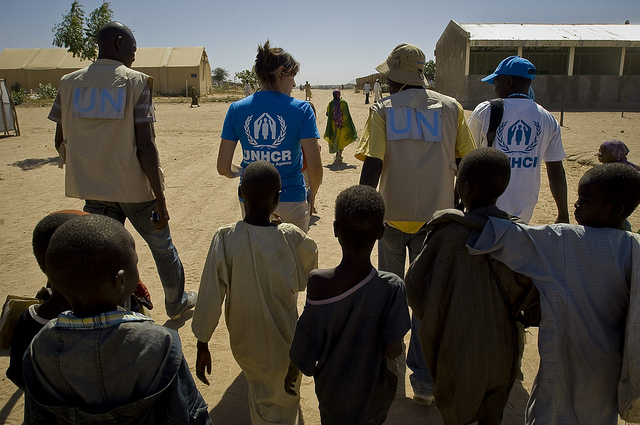
My hat goes off to humanitarian aid workers serving in the world’s neediest places as they face the very threats that call for their help: war, terrorism, poverty, disease, famine, natural disasters, and the list goes on.

My heart goes out to them, too, as they face not only those dangers, but mental and emotional stresses, as well.

Outer Turmoil

In their latest “Aid Worker Security Report,” Humanitarian Outcomes announced that 2013 marked an all-time high for the number of civilian aid workers who were victims of violence. The 460, an increase of 66% over the previous year, were the targets of 251 separate attacks, including shootings, kidnappings, bodily assaults, and explosives.

Those working in their own countries accounted for the vast majority, 87%, of the victims, but the 13% who were expats represented a greater rate of attack, as they made up less than 8% of workers in the field.

A study by the Johns Hopkins Bloomberg School of Public Health, looking at 18 humanitarian organizations for the period between 2002 and 2005, found that deaths, medical evacuations, and hospitalizations due to violence occurred at the rate of 6 per 10,000 aid worker person-years.* Of all deaths reported by the organizations, 55% were caused by intentional violence. Coincidental illness accounted for 27% of the deaths, and accidents made up 15%.

In another study, researchers from Geneva University Hospitals surveyed expats returning from their missions with the International Committee of the Red Cross (ICRC). They found that 36% reported having worse health than when they began, 16% said that they had been exposed to violence, and 10% reported injury or accidents.

A look at these numbers highlights the real need for physical care for aid workers. But the risks of humanitarian work also takes its toll on mental and emotional health. Another finding of the Geneva survey was that 40% of the ICRC workers reported that their service had been more stressful than they had expected. Certainly, attention to mental and emotional well being is also an ongoing need.

*Simply put, a “person-year” is a unit of measure representing the number of people involved in a study multiplied by each individual’s time spent in that study.

(Abby Stoddard, Adele Harmer, and Kathleen Ryou, “Unsafe Passage: Road Attacks and Their Impact on Humanitarian Operations,” Aid Worker Security Report 2014, Humanitarian Outcomes, August 2014; E.A. Rowley, et al., “Violence-Related Mortality and Morbidity of Humanitarian Workers,” American Journal of Disaster Medicine, Jan-Feb 2008; A.H. Dahlgren, et al., “Health Risks and Risk-Taking Behaviors among International Committee of the Red Cross (ICRC) Expatriates Returning from Humanitarian Missions,” Journal of Travel Medicine, Nov-Dec 2009)

Inner Turmoil

The causes of stress on humanitarian aid workers are many and varied. There are acute stressors, such as those from the events shown above, as well as chronic stressors, relating to day-to-day pressures and environmental and workplace factors.

When UNHCR, the UN Refugee Agency, surveyed aid workers in Pakistan and Bangladesh in 2012, they asked them which of the following items were “a common cause of stress.”

  • Exposure to suffering of persons of concern
  • Exposure to incidents when you were seriously injured or your life was threatened
  • Political situation in the county where you are presently working
  • Relationship with supervisors
  • Relationship with work colleagues
  • Family concerns
  • Health concerns
  • Safety concerns
  • Financial concerns
  • Feeling undervalued
  • Feeling unable to contribute to decision making
  • Status of employment contract
  • Workload
  • Working hours
  • Ability to achieve work goals and objectives

While no one would argue that exposure to suffering, violence, and threats are not legitimate stressors, the aid workers’ responses showed that more-mundane factors played a greater role in harming their mental health. The top-five stressors they reported were

  1. Workload
  2. Status of employment contract
  3. Feeling undervalued
  4. Family concerns
  5. Feeling unable to contribute to decision making

Respondents were also asked about symptoms that commonly show up with depression and post-traumatic stress disorder (PTSD). At least half reported “feelings of sadness, unhappiness, or ’emptiness'” (57%), “irritability or frustration, even over small matters” (54%), and “fatigue, tiredness and loss of energy” (50%).

In a study published in 2012 (referred to by UNHCR), researchers from the U.S. Centers for Disease Control and Prevention (CDC), among other organizations, asked participants from 19 international NGOs about their mental health before and after their period of service. Before deployment, 3.8% of respondents reported symptoms of anxiety; immediately after they returned from deployment that figure had risen to 11.8%; and a follow-up 3-6 months after deployment showed 7.8% with symptoms. Before deployment, 10.4% reported symptoms of depression, 19.5% post-deployment, and 20.1% at the follow up. And finally, in the area of psychological distress, the rates were 6.5%, 14.7%, and 17.6%, respectively.

Another study from 2012 looked at national aid workers serving in northern Uganda with 21 humanitarian-aid agencies. The researchers, from Columbia University, Fuller Theological Seminary, and the CDC, found that 68% of respondents reported symptom levels associated with a high risk for depression, 53% for anxiety disorders, and 26% for PTSD.

What Can Be Done?

What steps can be taken to help humanitarian aid workers facing threats to their physical and mental well-being?

Giving a comprehensive list of protocols for tackling the threats of violence is well beyond my abilities, but I can point in the direction of a few resources.

For instance, on the subject of combating violent situations, Humanitarian Outcomes’ annual “Aid Worker Security Report” tackles specific threats, such as kidnappings (2013) and road attacks (2014). Staying Alive: Safety and Security Guidelines for Humanitarian Volunteers in Conflict Areas, written by a decorated member of the British Army and former operational security advisor for the ICRC, gives a comprehensive look at avoiding threats. And “To Stay and Deliver: Good Practice for Humanitarians in Complex Security Environments,” published by the United Nations Office for the Coordination of Humanitarian Affairs/Policy Development and Studies Branch, was written for “aid practitioners and their organisations seeking practical solutions to gain, maintain, and increase secure access to assist populations in a range of complex security environments.”

While the physical and mental consequences of traumatic events has long been recognized, as the UNHCR report points out, only recently have the debilitating effects of chronic stressors for aid workers begun to come into focus. “Humanitarian agencies,” it states, “are increasingly concerned about the potential impact of staff stress on effectiveness and efficiency of service delivery.”

In developing their study and evaluating their organization’s reduction of and response to worker stress, UNHCR used stress-management guidelines formulated by the Antares Foundation. Antares, a Netherlands-based non-profit providing staff care to humanitarian and development organizations, was also involved in the two 2012 studies previously cited here. Its eight guidelines for agencies are

  1. Having a written and active policy to prevent or mitigate the effects of stress.
  2. Systematically screening and/or assessing the capacity of staff to respond to and cope with the anticipated stresses of a position or contract.
  3. Ensuring that all staff have appropriate pre-assignment preparation and training in managing stress.
  4. Ensuring that staff response to stress is monitored on an ongoing basis.
  5. Providing training and support on an ongoing basis to help its staff deal with their daily stresses.
  6. Providing staff with specific and culturally appropriate support in the wake of critical or traumatic incidents and other unusual and unexpected sources of severe stress.
  7. Providing practical, emotional and culturally-appropriate support for staff at the end of an assignment or contract.
  8. Having clear written policies with respect to the ongoing support offered to staff who have been adversely impacted by exposure to stress and trauma during their assignment.

After assessing UNHCR’s shortcomings in these areas, the writer of the UN agency’s report presented four recommendations for improvement. Each of these is presented in greater detail in the publication:

  • Ensure appropriate response and follow up for survivors of critical incidents
  • Increase availability and utilization of formal mental health and psychosocial support
  • Encourage informal social support amongst staff
  • Enhance accountability of staff welfare related services through regular rigorous evaluation, clear staff welfare policies, and role distinction between sections

As a result of their own findings, the researchers behind the first CDC study above also present a list of recommendations for aid organizations, designed to “diminish the risk for experiencing mental illness or burnout during deployment”:

  • Screen candidates for a history of mental illness and family risk factors pre-deployment and provide expatriate employees psychological support during deployment and after the assignment is completed. Although possibly controversial given the considerable stigma associated with mental illness, screening allows organizations to alert candidates to the risks associated with deployment and to consider means for managing and supporting such workers during and after their employment.
  • Staff should be informed that a history of mental illness and family risk factors may create increased risk for psychological distress during deployment.
  • Provide the best possible living accommodations, workspace, and reliable transportation.
  • Ensure, when possible, a reasonable workload, adequate management, and recognition for achievements.
  • Encourage involvement in social support and peer networks.
  • Institute liberal telephone and Internet use policies, paid by the organization [to] help increase social support networks of deployed staff.

If only all of these could be implemented. Maybe they can. But even if that happens, care for humanitarian aid workers needs to go beyond what their organizations might be willing or able to provide. Care needs to extend beyond the workers’ time with the organization, and it needs to aim for the health of the workers for the workers’ sake, not just for the sake of the service they are providing.

This will take more groups and individuals who can provide the “formal mental health and psychosocial support” (see UNHCR’s list). To this I would add spiritual support, as well. It will also take groups and individuals who can become part of the “social support networks” (see the CDC list).

Both of these will require those groups and individuals, and the workers themselves, to be proactive in implementing the necessary relationships.

May we continue to document and understand the problem, may we continue to draw attention to the risks faced by humanitarian aid workers, and may we continue to seek solutions. These workers are a valuable resource for a needy world. They are also deserving of help when they become the ones with needs.

May we provide them with safe people and safe places in the midst of the dangers.

(Courtney E. Welton-Mitchell, “UNHCR’s Mental Health and Psychological Support for Staff,” United Nations High Commissioner for Refugees, July 2013; Barbara Lopes Cardozo, et al., “Psychological Distress, Depression, Anxiety, and Burnout among International Humanitarian Aid Workers: A Longitudinal Study,” PLoS One, September 2012; Alastair Ager, “Stress, Mental Health, and Burnout in National Humanitarian Aid Workers in Gulu, Northern Uganda,” Journal of Traumatic Stress, December 6, 2012; Managing Stress in Humanitarian Workers: Guidelines for Good Practice, Third Edition, Antares Foundation, March 2012)

[photo: “Darfurian Refugees in Eastern Chad,” by European Commission DG ECHO, used under a Creative Commons license]
Food for the Soul, Just around the Corner

32175260_17a1662ace_o-2

I may have to stop reading Dave Lewis’s blog at Paracletos.org. Sure, it’s an amazing resource for gleaning insights from around the Web on member care and cross-cultural life, but it’s starting to get in the way of my originality. I’m particularly frustrated with his “Casual Friday Resources.” Lately, it seems as if when I come up with a new idea to write about, the same idea pops up on Casual Friday, and I see that others have thought my thoughts before me . . . often in more complete and coherent ways.

Take for instance, my last post on missionary expectations. Since I was focusing on Sue Eenigenburg and Robynn Bliss’s Expectations and Burnout: Women Surviving the Great Commission, I knew that what I had to say would more or less be a reworking of their research and observations. But I wanted to bring attention to the topic and their book, because, you know, not enough people are getting the word out.

As I was putting my thoughts together, Dave linked to a post by Bliss on the blog Velvet Ashes, “an online community of women serving overseas.” In “Burnout: A Retrospect,” Bliss writes, “Looking back on it now, I can honestly say that burnout is the best thing that ever happened to me.” That link inspired me. The folks at Velvet Ashes and I are thinking in the same direction.

But then, just yesterday, Dave linked to Velvet Ashes again, this time to an interview with Eenigenburg, the other author of Expectations and Burnout. Come to find out, Velvet Ashes is doing a two-month series on the book as they read through it one or two chapters at a time. Come on, guys! What am I going to do?

All joking aside, here is what I’m going to do.

Many times I’ve heard variations on the well-known words of D. T. Niles, a Methodist evangelist from Ceylon, who wrote,

Evangelism is witness. It is one beggar telling another beggar where to get food. The Christian does not offer out of his bounty. He has no bounty. He is simply a guest at his Master’s table, and, as evangelist, he calls others, too.

I figure it’s much the same with promoting member care. I’m just a beggar letting other beggars know that food is out there for hungry souls. So head on over to Paracletos.org and Velvet AshesThere’s some great feasting going on at each of these. And as I find more resources, I’ll continue to let you know about them, joining others who are doing the same.

And as far as originality goes, there can be all sorts of room for creativity in how we point others in the right direction.


(Robynn Bliss, “Burnout: A Retrospect,” Velvet Ashes, March 8, 2015; D. T. Niles, That They May Have Life, Harper, 1951)

[photo: “EAT,” by mst7022, used under a Creative Commons license]