

Study Prep: Getting Your Kids Ready for College back in the US

143186839_5c9fad13cd_z

Now that your kids’ school year has started, it’s time to take in a big breath, let it out slowly . . . and start thinking about graduation. Ready or not, college is just around the corner.

Hear that sound? Listen closely. It’s the sound of time marching by.

While we can’t slow down the passage of time, we can prepare ourselves, and our children for what lies ahead. And if going to college in the US is part of your child’s future, then take a look at these tips for getting ready. They’re based on my experience sending two children back to the States for college while we were overseas, putting two into high school in the US (after home schooling and having them attend school abroad), and working in a university admissions office. Do you have anything to add? Let me know in the comments.

  1. Academics
    Before your child begins high school (or as soon as possible thereafter), find out the college-prep requirements and recommendations for the state in which she plans to continue her education. Each state will have its own list of required coursework for entrance into its public institutions, with courses in English, math, science, social studies, and fine arts. The list may also include classes in such areas as foreign language or personal finance. You’ll also want to check with individual colleges, public and private, to find out what additions or exceptions their requirements might have in comparison to the state’s core curriculum.
  2. Homeschoolers
    Most colleges welcome the addition of home-schooled students to their campuses, but homeschoolers will want to find out what documentation is needed and any hoops that they might need to jump through for admission. Students with diplomas from unaccredited high schools may have additional requirements, as well. Also, if students will be transferring to a Stateside high school before graduating, make sure you know the school’s policy on what courses they will give credit for towards graduation.
  3. AP
    For students taking AP (Advanced Placement) courses, check with potential colleges to see what level of test scores they accept. Also, find out if successful completion of an AP course will earn advanced placement (taking the place of a college-level course), credit (hours toward graduation), or both. While you’re at it, see if the school will allow a bilingual child to test out of foreign-language courses. This may or may not be part of CLEP (College Level Examination Program) testing. Testing out of classes not only can help meet degree requirements but can also be an easy way to add a minor.
  4. PSAT/NMSQT
    Students can take the PSAT/NMSQT (Preliminary SAT/National Merit Scholarship Qualifying Test), during their junior year. The test, from the College Board, is used for awarding National Merit Scholarships. High-scoring students who receive semifinalist status can apply to be finalists. Interested students outside the US will need to find a local school that is administering the test. To help with this, the College Board offers a PSAT school search form.
  5. SAT and ACT
    While some institutions don’t require SAT or ACT scores, the majority do. But which one should your child take? There are differences between the two exams. For instance, the SAT emphasizes vocabulary more than the ACT, and the ACT has a science section while the SAT does not. Other differences are more subtle. For a helpful comparison of the tests, see “The SAT vs. the ACT,” from The Princeton Review. You can find international test centers for the SAT here, and ACT’s international sites here. Contact your target schools to see if they “superscore.” Superscoring combines section subscores from two or more test dates, using the highest from each section instead of using only the scores from one date.
  6. Deadlines
    Don’t forget to keep track of deadlines: deadlines for submitting university and scholarship applications, for filling out housing contracts, for making payments or setting up payment plans, etc. Check early, as some will be much sooner than you might think.
  7. FAFSA
    Another big deadline is for filing out the FAFSA (Free Application for Student Aid), found at fafsa.ed.gov. The FAFSA is used to determine how much a family is expected to contribute to a student’s college education and, thus, how much will be offered in financial aid and loans. Results are reported to up to 10 colleges at a time. The application period opens January 1 for the following school year, but each state has its own deadline, found here. Individual colleges may have earlier deadlines, as well. Tax data is necessary for completing the form, but updated information can be supplied later by amending the application. Even if students know that their family won’t qualify for federal or state financial aid, they should submit the FAFSA anyway, as it is often used for scholarship selection. It is important to remember that filling out the FAFSA is free, so if a site asks for payment, it’s not the official FAFSA.
  8. Scholarships
    When it comes to scholarships, there are those offered by individual colleges, and there are many, many more out there that are looking for qualified recipients. Some students treat scholarship application as if it were a job, and it can pay very well, with funds adding up well beyond the cost of school. For reviews on five top scholarship websites, take a look at Blake Sander’s article at MoneySavingPro. Remember that any scholarship or grant money that goes beyond paying qualified education expenses (tuition, fees, and books, but not room and board) is considered taxable.
  9. Transcripts
    Students will need to submit high-school transcripts to colleges as part of the admission process. For most schools, the transcripts will need to arrive in a sealed envelope from the high school in order to be considered official. Some will accept faxed copies from the high school. Foreign transcripts that are not from US accredited schools will need to be evaluated for authenticity, for diploma validation, and for determining a US GPA equivalent. Some colleges will do this in house, while others will require you to send the transcript to a third-party evaluation agency. If the transcript isn’t in English, it may be necessary to have it translated, as well.
  10. Campus visits
    Many colleges offer online virtual tours to help you get a good feel for their campus. Look at the institution’s web site, but you’ll also find a number of schools represented at YouVisit’s college site. If you’re in the States, it’s beneficial to have an in-person visit. If you give a school enough notice before you arrive, they should be able to arrange a tour for you.
  11. In-state tuition
    Back to finances: One of the biggest concerns for out-of-country parents is the issue of in-state tuition for public schools. Even if you’ve previously lived in a state your whole life, the fact that you don’t now means that your child will have to prove he deserves in-state status. The final decision will come from the university, and it will depend on such things as parents’ owning a house there (though that by itself is not enough), living there for a number of years, having ties to the state and other factors that show a probability the student will remain there after graduation, filing state income tax, registering a vehicle, registering to vote, having a library card, etc. Schools have widely varying rules on how students can gain in-state status on their own, such as living in the state as a financially independent adult for a period of time. Some schools offer in-state rates to children of alums or to residents of neighboring states or states with regional student exchanges. Words such as dependentresident, home, and domicile are important to define. (Hint: They may not mean what you think they mean.)
  12. Admissions office
    Make a friend in the admissions office of the colleges you’re serious about, someone you can email, or call, to get answers to your questions. You might get in touch with someone in international admissions, as well, for help with issues that are unique to students living outside the US.
  13. FERPA
    Understand that even if you want to stay in control of your child’s education, you will be limited in the information you can get from the school. Under FERPA (Federal Educational Rights and Privacy Act), the college cannot give you such things as grades, class schedule, or billing information without the students written consent—even if you’re the one paying the bills.
  14. Orientation
    Make plans for your child to arrive in the US in time for student orientation. The earlier she enrolls, the more classes will be available for filling out her schedule. Orientation is a good time for parents, if you’re able to come, to hear first-hand the details of college life. It’s also good time for releasing your child toward independence. (That’s why you’ll probably be sent to a different room while your child picks classes.)
  15. On campus
    You’ll want your children to find community when they relocate. Some campuses will have a residence hall set aside for honors students or a floor designated for students with common educational interests. You can contact local churches and campus ministries (some of which will offer housing). Maybe there’s a Mu Kappa chapter (for missionary kids) on campus. Or maybe the school has a recognized group for Third Culture Kids (TCKs). International student clubs may offer a good fit as well.
  16. Transition
    Our two sons who came back to the US for college while we were overseas attended reentry programs. These were very valuable in helping them understand the transitions they were facing and giving them practical advice for acclimating to US culture. The two seminars we used are sponsored by Barnabas International (they also offer one in partnership with the Narramore Christian Foundation) and Interaction International. For help in understanding the TCK mindset and how to navigate cultural changes, get a copy of Third Culture Kids: Growing Up among Worlds (by David Pollock and Ruth Van Reken) or The Global Nomad’s Guide to University Transition (by Tina Quick).

The kids really are growing up. It’s never too early to get ready. Hear that sound?

[photo: “Graduation Cake Guy,” by David Goehring, used under a Creative Commons license]
Humanitarian Aid: Caring for Those Who Care for Others

8025828509_cf94e8dc5c_z

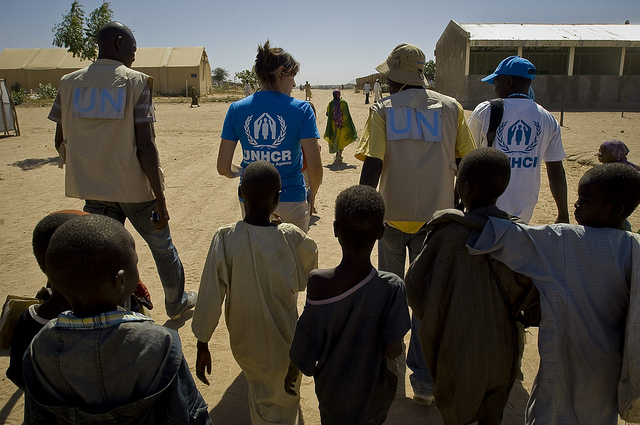
My hat goes off to humanitarian aid workers serving in the world’s neediest places as they face the very threats that call for their help: war, terrorism, poverty, disease, famine, natural disasters, and the list goes on.

My heart goes out to them, too, as they face not only those dangers, but mental and emotional stresses, as well.

Outer Turmoil

In their latest “Aid Worker Security Report,” Humanitarian Outcomes announced that 2013 marked an all-time high for the number of civilian aid workers who were victims of violence. The 460, an increase of 66% over the previous year, were the targets of 251 separate attacks, including shootings, kidnappings, bodily assaults, and explosives.

Those working in their own countries accounted for the vast majority, 87%, of the victims, but the 13% who were expats represented a greater rate of attack, as they made up less than 8% of workers in the field.

A study by the Johns Hopkins Bloomberg School of Public Health, looking at 18 humanitarian organizations for the period between 2002 and 2005, found that deaths, medical evacuations, and hospitalizations due to violence occurred at the rate of 6 per 10,000 aid worker person-years.* Of all deaths reported by the organizations, 55% were caused by intentional violence. Coincidental illness accounted for 27% of the deaths, and accidents made up 15%.

In another study, researchers from Geneva University Hospitals surveyed expats returning from their missions with the International Committee of the Red Cross (ICRC). They found that 36% reported having worse health than when they began, 16% said that they had been exposed to violence, and 10% reported injury or accidents.

A look at these numbers highlights the real need for physical care for aid workers. But the risks of humanitarian work also takes its toll on mental and emotional health. Another finding of the Geneva survey was that 40% of the ICRC workers reported that their service had been more stressful than they had expected. Certainly, attention to mental and emotional well being is also an ongoing need.

*Simply put, a “person-year” is a unit of measure representing the number of people involved in a study multiplied by each individual’s time spent in that study.

(Abby Stoddard, Adele Harmer, and Kathleen Ryou, “Unsafe Passage: Road Attacks and Their Impact on Humanitarian Operations,” Aid Worker Security Report 2014, Humanitarian Outcomes, August 2014; E.A. Rowley, et al., “Violence-Related Mortality and Morbidity of Humanitarian Workers,” American Journal of Disaster Medicine, Jan-Feb 2008; A.H. Dahlgren, et al., “Health Risks and Risk-Taking Behaviors among International Committee of the Red Cross (ICRC) Expatriates Returning from Humanitarian Missions,” Journal of Travel Medicine, Nov-Dec 2009)

Inner Turmoil

The causes of stress on humanitarian aid workers are many and varied. There are acute stressors, such as those from the events shown above, as well as chronic stressors, relating to day-to-day pressures and environmental and workplace factors.

When UNHCR, the UN Refugee Agency, surveyed aid workers in Pakistan and Bangladesh in 2012, they asked them which of the following items were “a common cause of stress.”

  • Exposure to suffering of persons of concern
  • Exposure to incidents when you were seriously injured or your life was threatened
  • Political situation in the county where you are presently working
  • Relationship with supervisors
  • Relationship with work colleagues
  • Family concerns
  • Health concerns
  • Safety concerns
  • Financial concerns
  • Feeling undervalued
  • Feeling unable to contribute to decision making
  • Status of employment contract
  • Workload
  • Working hours
  • Ability to achieve work goals and objectives

While no one would argue that exposure to suffering, violence, and threats are not legitimate stressors, the aid workers’ responses showed that more-mundane factors played a greater role in harming their mental health. The top-five stressors they reported were

  1. Workload
  2. Status of employment contract
  3. Feeling undervalued
  4. Family concerns
  5. Feeling unable to contribute to decision making

Respondents were also asked about symptoms that commonly show up with depression and post-traumatic stress disorder (PTSD). At least half reported “feelings of sadness, unhappiness, or ’emptiness'” (57%), “irritability or frustration, even over small matters” (54%), and “fatigue, tiredness and loss of energy” (50%).

In a study published in 2012 (referred to by UNHCR), researchers from the U.S. Centers for Disease Control and Prevention (CDC), among other organizations, asked participants from 19 international NGOs about their mental health before and after their period of service. Before deployment, 3.8% of respondents reported symptoms of anxiety; immediately after they returned from deployment that figure had risen to 11.8%; and a follow-up 3-6 months after deployment showed 7.8% with symptoms. Before deployment, 10.4% reported symptoms of depression, 19.5% post-deployment, and 20.1% at the follow up. And finally, in the area of psychological distress, the rates were 6.5%, 14.7%, and 17.6%, respectively.

Another study from 2012 looked at national aid workers serving in northern Uganda with 21 humanitarian-aid agencies. The researchers, from Columbia University, Fuller Theological Seminary, and the CDC, found that 68% of respondents reported symptom levels associated with a high risk for depression, 53% for anxiety disorders, and 26% for PTSD.

What Can Be Done?

What steps can be taken to help humanitarian aid workers facing threats to their physical and mental well-being?

Giving a comprehensive list of protocols for tackling the threats of violence is well beyond my abilities, but I can point in the direction of a few resources.

For instance, on the subject of combating violent situations, Humanitarian Outcomes’ annual “Aid Worker Security Report” tackles specific threats, such as kidnappings (2013) and road attacks (2014). Staying Alive: Safety and Security Guidelines for Humanitarian Volunteers in Conflict Areas, written by a decorated member of the British Army and former operational security advisor for the ICRC, gives a comprehensive look at avoiding threats. And “To Stay and Deliver: Good Practice for Humanitarians in Complex Security Environments,” published by the United Nations Office for the Coordination of Humanitarian Affairs/Policy Development and Studies Branch, was written for “aid practitioners and their organisations seeking practical solutions to gain, maintain, and increase secure access to assist populations in a range of complex security environments.”

While the physical and mental consequences of traumatic events has long been recognized, as the UNHCR report points out, only recently have the debilitating effects of chronic stressors for aid workers begun to come into focus. “Humanitarian agencies,” it states, “are increasingly concerned about the potential impact of staff stress on effectiveness and efficiency of service delivery.”

In developing their study and evaluating their organization’s reduction of and response to worker stress, UNHCR used stress-management guidelines formulated by the Antares Foundation. Antares, a Netherlands-based non-profit providing staff care to humanitarian and development organizations, was also involved in the two 2012 studies previously cited here. Its eight guidelines for agencies are

  1. Having a written and active policy to prevent or mitigate the effects of stress.
  2. Systematically screening and/or assessing the capacity of staff to respond to and cope with the anticipated stresses of a position or contract.
  3. Ensuring that all staff have appropriate pre-assignment preparation and training in managing stress.
  4. Ensuring that staff response to stress is monitored on an ongoing basis.
  5. Providing training and support on an ongoing basis to help its staff deal with their daily stresses.
  6. Providing staff with specific and culturally appropriate support in the wake of critical or traumatic incidents and other unusual and unexpected sources of severe stress.
  7. Providing practical, emotional and culturally-appropriate support for staff at the end of an assignment or contract.
  8. Having clear written policies with respect to the ongoing support offered to staff who have been adversely impacted by exposure to stress and trauma during their assignment.

After assessing UNHCR’s shortcomings in these areas, the writer of the UN agency’s report presented four recommendations for improvement. Each of these is presented in greater detail in the publication:

  • Ensure appropriate response and follow up for survivors of critical incidents
  • Increase availability and utilization of formal mental health and psychosocial support
  • Encourage informal social support amongst staff
  • Enhance accountability of staff welfare related services through regular rigorous evaluation, clear staff welfare policies, and role distinction between sections

As a result of their own findings, the researchers behind the first CDC study above also present a list of recommendations for aid organizations, designed to “diminish the risk for experiencing mental illness or burnout during deployment”:

  • Screen candidates for a history of mental illness and family risk factors pre-deployment and provide expatriate employees psychological support during deployment and after the assignment is completed. Although possibly controversial given the considerable stigma associated with mental illness, screening allows organizations to alert candidates to the risks associated with deployment and to consider means for managing and supporting such workers during and after their employment.
  • Staff should be informed that a history of mental illness and family risk factors may create increased risk for psychological distress during deployment.
  • Provide the best possible living accommodations, workspace, and reliable transportation.
  • Ensure, when possible, a reasonable workload, adequate management, and recognition for achievements.
  • Encourage involvement in social support and peer networks.
  • Institute liberal telephone and Internet use policies, paid by the organization [to] help increase social support networks of deployed staff.

If only all of these could be implemented. Maybe they can. But even if that happens, care for humanitarian aid workers needs to go beyond what their organizations might be willing or able to provide. Care needs to extend beyond the workers’ time with the organization, and it needs to aim for the health of the workers for the workers’ sake, not just for the sake of the service they are providing.

This will take more groups and individuals who can provide the “formal mental health and psychosocial support” (see UNHCR’s list). To this I would add spiritual support, as well. It will also take groups and individuals who can become part of the “social support networks” (see the CDC list).

Both of these will require those groups and individuals, and the workers themselves, to be proactive in implementing the necessary relationships.

May we continue to document and understand the problem, may we continue to draw attention to the risks faced by humanitarian aid workers, and may we continue to seek solutions. These workers are a valuable resource for a needy world. They are also deserving of help when they become the ones with needs.

May we provide them with safe people and safe places in the midst of the dangers.

(Courtney E. Welton-Mitchell, “UNHCR’s Mental Health and Psychological Support for Staff,” United Nations High Commissioner for Refugees, July 2013; Barbara Lopes Cardozo, et al., “Psychological Distress, Depression, Anxiety, and Burnout among International Humanitarian Aid Workers: A Longitudinal Study,” PLoS One, September 2012; Alastair Ager, “Stress, Mental Health, and Burnout in National Humanitarian Aid Workers in Gulu, Northern Uganda,” Journal of Traumatic Stress, December 6, 2012; Managing Stress in Humanitarian Workers: Guidelines for Good Practice, Third Edition, Antares Foundation, March 2012)

[photo: “Darfurian Refugees in Eastern Chad,” by European Commission DG ECHO, used under a Creative Commons license]

McDonald’s, You’re like Framily

13988001407_c5579a5d5d_z

Growing up on a farm, we didn’t eat out much, but I seem to remember enjoying a few Quarter Pounders with fries during my high-school days.

Then, during my time as a student at the University of Missouri-Columbia, my go-to lunch was a salad with a side of fries at the basement McDonald’s on Lowery Mall, across from the library. When I took my daughter for a campus visit to MU a few weeks ago, our student tour guide (who did an excellent job, I might add) pointed out where the McDonald’s used to be. He said at one time it was the highest-grossing McDonald’s location in the US. In the 80s, when I was there, we heard it was the busiest McDonald’s in the world. I think both statements are part of a Columbia urban legend—though I’d love someone to prove me wrong with some documentation.

When my family lived in Taiwan, we found McDonald’s in every city. That was especially welcome when we first arrived and couldn’t speak Chinese. It’s a lot easier to ask for a “Number 5” than to learn the vocabulary for ordering à la carte.

655846832_58ee159407_zMcDonald’s was popular with the locals, too, especially high school kids. It was common to see them gather there to study or work on class projects. It was a new experience for us to see young people in that group-centered culture pour all their french fries into a pile and share them together.

McDonald’s certainly is a global juggernaut. According to the company website, their more than 33,000 restaurants in over 100 countries serve over 69 million people each day. But there’s more to McDonald’s than just huge numbers. In honor of the chain’s 75th anniversary this year, Reader’s Digest ran a list of “75 Mind-blowing Facts.” Here are my favorites:

#2. The first McDonald’s drive-thru—in Sierra Vista, Arizona—didn’t open until 1975.

#22-22. French fries, McDonald’s best-selling item, were added to the menu in 1949. Before that, it was potato chips.

#50. As the result of a 1973 lawsuit, McDonald’s paid Sid and Marty Kroftt $1 million because the brothers claimed that McDonaldland had stolen the “concept and feel” of their Saturday-morning TV show H.R. Pufnstuf. (Remember that one?)

#58. Giving away (selling?) 1.5 billion toys each year in its Happy Meals makes McDonalds’ the largest distributer of toys in the world. (OK, that’s one of those “huge numbers.”)

#60. One out of every eight workers in the U.S. has at some time had a job at McDonald’s.

#66. Have you heard of the “Big Mac Index”? It was developed by The Economist in 1986 to use the local cost of a Big Mac to compare economies around the world.

I used to tell my Asian college-age friends that I don’t actually like McDonald’s, that most people in the US don’t actually like McDonald’s. But here’s what happens: You’re in a van with a bunch of young people on a trip and you ask them where they want to stop and eat and they say “Anywhere but McDonald’s” and they name other possibilities but when you exit the highway you don’t see any of the places they suggested and you’re running out of time and you decide to eat at the next place you see and—guess what?—it’s a McDonald’s. There’s always a McDonald’s close by, so that’s where you stop. It’s just too convenient.

This guy notwithstanding, McDonald’s burgers don’t garner much praise. In fact, when readers of Consumer Reports rated the hamburgers of 21 fast-food chains, they put the ones from McDonald’s dead last. The magazine called them a “Mc-disappointment.” When our local McDonald’s in Taipei ran out of hamburgers one day (I kid you not), maybe it wasn’t such a bad thing after all.

But there are those “world-famous fries.” McDonald’s calls them “golden on the outside, soft and fluffy on the inside.” I don’t disagree. And a whole lot of other people seem to be on board, as well.

Mark Eichenlaub, a graduate student in physics, decided to figure out just how many french fries McDonald’s has sold. He used the formula

equation

and came up with the figure “4 trillion, give or take a few.” I have a hard time following his detailed explanation (he lost me when I saw that squiggly S-thing before the numbers), but I’m pretty sure his estimate doesn’t even count fries sold outside the US.

Of course, McDonald’s gets knocked for a lot of things besides what’s on their menu. For instance, right now they’re the target of protests over low wages. Sometimes their negatives are symptomatic of the ills of American culture, but they’re magnified with McDonald’s because of the franchise’s large scale. And abroad, their ubiquity and visibility often make them a symbol of Western encroachment.

McDonald’s does give us plenty of reasons not to be “Lovin’ it.”

But again . . . there are those fries.

My second oldest son graduated from university last week. He drove about seven hours round trip to pick up my mother so she could attend the ceremony. The next day I took her back home, with an extra hour added on each way. After I dropped her off, she was worried that I’d fall asleep on the way back, but I told her I’d pull over and rest if I got tired.

4011734182_dc8d2f9bde_zA couple hours from home, in Lebanon, MO, I decided to stop and get something to eat. I parked at a McDonald’s, to go inside and stretch my legs and to use the free wifi. That and I got an order of fries.

The lady at the counter greeted me with “Welcome back.” How many businesses can say that to every customer and rarely, if ever, be wrong?

Sounds like framily. And when I say “framily,” I’m thinking of the Sprint commercials with their odd collection of characters—Ronald McDonald, Grimace, Hamburglar, Mayor McCheese, Captain Crook and the rest of the citizens of McDonaldland. It’s an imperfect, dysfunctional framily at times, but it’s still framily.

In the Lebanon McDonald’s, the fries were good, as they nearly always are.

There’s something to be said about consistency. And there’s something to be said about always being close by.

Framily.

(Daryl Chen and Brooke Wanser, “75 Mind-Blowing Facts about McDonald’s to Celebrate Its 75th Anniversary,” Reader’s Digest; “Best and Worst Fast-Food Restaurants in America,” Consumer Reports, July 2014; Mark Eichenlaub, “How Many Fries Has McDonald’s Served?Quora)

[photos: “McDonald’s,” by Mike Mozart, used under a Creative Commons license; “4 Combos Fries Mix,” by Shippou, used under a Creative Commons license; “plexi • burger.dude,” by Don Shall, used under a Creative Commons license]

Let’s Hear It for Mundaneness!

4524690685_6a89580df5_z

You’ve seen those images of all the fish swimming in one direction with one fish swimming agains the flow. The message: That one fish is the only one going the right way, despite the crowd.

It’s not always a lot of fun being that fish, especially when it seems as if you’re the one going in the wrong direction.

During what would become our last State-side service, I and my wife had decided that our time as missionaries would come to an end. But before making that public, I attended a missionary convention held by our fellowship of churches. I remember sitting with several thousand others in Lexington’s Rupp Arena, listening to a plenary speaker give a passionate call to the audience of potential missionaries. “Let someone else build the houses,” he said. “You follow Christ, go into ministry.”

Let someone else be a doctor or an attorney and argue cases in court. You go follow Christ. Let someone else teach in the public schools. You follow Christ. Listen, there will always be people who will go into all those other occupations. But there are a rare few who will say, “I’ll follow my Christ wherever he leads me.”

I’d said similar things, at least to myself. I should be on the front lines. Others would fill in behind. I’d told myself I could never settle for regular work. How could I ever be satisfied living a commonplace life in the US?

And yet, here I was traveling in the opposite direction, burned up and burned out. I was leaving the mission field, not heading to it. I was stepping away, hoping someone might hire me to build that house or teach that class. . . and in time, hoping just to get hired, for just about any job.

Five years ago, David Platt, mega-church pastor and now president of the Southern Baptist Convention’s International Mission Board, wrote Radical: Taking Back Your Faith from the American Dream. I have a copy on my bookshelf, but I’ve never read it. I’ve heard good things about Platt’s book, and I’m sure it’s challenging. But it’s not the kind of challenge I’m looking for right now. The book I chose to read instead has a different kind of title. It’s The God of the Mundane: Reflections on Ordinary Life for Ordinary People.

Pastor Matt B. Redmond wrote The God of the Mundane as a response to what he had heard himself preach many times:

Change your world. Change the world of someone. Anyone. Sell everything. Sell anything. Give it away. Do something crazy. Be radical. Make people stand up and notice. Take a risk. Jesus moved from heaven to earth and gave up his life and yet you—you just go about your daily life.

But in time, his ponderings, expressed in his blog, Echoes and Stars, led him to ask if there is a God for the bulk of people who live out their lives performing mundane tasks. “Is there a God, for instance, for those who are not changing anything but diapers?”

In his book, Redmond answers the question with a “Yes,” writing to and about stay-at-home moms, dental hygienists, plumbers, children taking care of elderly parents, and bankers. In a blog post, he addresses the youth of a church where he once ministered:

Don’t be afraid of being small. Too often I probably made it sound like if you were really serious about your faith, you should think about ministry. Being a teacher or doctor or farmer was not worthy of your time. Well, that’s just stupid. Don’t be afraid to be in a “small” part of the kingdom. Be ordinary and unknown and be content. That’s more radical than anything else you will hear in the church today.

When he wrote The God of the Mundane, one of the images in Redmond’s mind was of a banker, frustrated and stuck in a job he doesn’t love. After writing his book, he left his career in ministry and became that frustrated banker.

Before reading his book, I had left my position as a missionary and had become frustrated, too. So often in Christian circles, the missionary life is considered the opposite of mundaneness. Redmond refers to it that way, too. But he doesn’t believe that a mundane life, lived in devotion to God, is unimportant.

Neither does he believe that we should stop asking people if they are “willing to give it all and go overseas as a missionary.” “It’s not a bad question to ask,” he says. “There is no question in my mind that this question needs to be out there.” But he also wants other questions asked:

[A]re you willing to be numbered among the nameless believers in history who lived in obscurity? Do you have the courage to be forgotten by everyone but God and the heavenly host? Are you willing to be found only by God as faithful right where you are? Are you willing to have no one write a book about you and what you did in the name of Christ?

When someone studying for a non-missionary career asked him his advice on selecting a missionary biography, Redmond suggested she begin by reading one about a Christian banker.

By that I meant she needed to read a book about a Christian living a mundane life. She told me she could not find one. Figures.

I would characterize Redmond as someone who is trying to be content in his present occupation, but who is not satisfied. He struggles with wanting to do something that better fits who he is, but he doesn’t want to turn his back on those like him who are not doing the BIG THING. He admits that it’s often hard for him to accept his own advice with confidence.

I find myself in the same place. I miss so much of being a missionary and still want to be a part of that work and community. And yet I don’t believe that God loved me more, valued me more then than he does now.

I still have my copy of Radical. I plan to read it someday. Someday, but not today. Today I’m reading and rereading Redmond’s book.

Maybe he’s written the closest thing you’ll find to a biography about a “Christian banker.” But rather than writing about something he’d lived, he wrote it first and now he’s living it. And as he’s been writing in his blog, it’s the living of it that has given him a real understanding of his own words.

Life often works out that way. Figures.

(Barry Cameron, closing session, National Missionary Convention, Lexington, KY, November 21, 2010; Matt B. Redmond, The God of the Mundane: Reflections on Ordinary Life for Ordinary People, Kalos, 2012; Matt B. Redmond, “Tuesday’s 10: What I’d Like to Tell My Former Youth,” Echoes and Stars, August 13, 2012)

[photo: “Fish Vane,” by Mike Gifford, used under a Creative Commons license]

What Is a Bridge but a Paradox?

5078301307_31b7f7a46a_z

What do you see when you see a dock?

A place for studying the horizon?
For dipping a toe in the water?
For casting off?

Or a place for lowering your sails?
For stepping onto dry land?
For coming ashore?

Is it a place for setting out or coming back? Much depends on the compass of your heart.

If for you, the dock is too short, out of desire or necessity, you build it forward, step by step, plank by plank, as you go—through the spray and the mist and the fog. And when you’ve built till you’re more coming than going, you see another shore—build, step, build, step. You are there.

This is crossing cultures. This is creating a bridge. This is going from home to home.

Then, at some point, out of desire or necessity, you step back onto the bridge. You must have been gone a long time, because what was once a complete span is now incomplete. You need to build to close the gaps. And at times you’re simply on a dock again, building to a shore you cannot yet see. Strange. It was a bridge before.

This time while you’re crossing, you find that in the mist there are others with you, and when they talk, you understand them, because they are speaking your language.

“Where are you from?” you hear someone ask, and the answer, “That’s an interesting question.” “You, too?” one says. “Me, too,” another replies. You understand them, not because you use the same words, but because when you speak those words you agree on the impreciseness of their meanings: near, far, hot, cold, friends, enemies, rich, poor, family, strangershere, there, hello, goodbye. Their meanings are slippery, like the damp boards beneath your feet. And the slipperiness is comfortable.

In time, you cross the bridge again and again, sharing familiar greetings with those in the misty middle. But never do you set out without having to repair what was built before. You continue . . . build, step, build, step.

What is a bridge, but a paradox, leading from home to home, from not-home to not-home? Your heart’s compass spins. The shores, they push and pull, they give hugs at arms length, they don’t plan on changing, but they do. The same can be said of you.

And then, out of desire or necessity, you settle down farther inland. You put down roots in loose soil. There’s a dock over the next, next hill. You go to visit from time to time and walk its length. You listen to the slap of the waves. You breathe in the smell of the ocean. You taste the salt in the air . . . and you remember the sounds and the smells and the bitter-sweet flavors of where you used to be.

What do you see when you see a dock?

You put down roots in loose soil, but you still speak the language of the bridge.


These thoughts are inspired by Mission Training International‘s “Pair of Ducks.” MTI uses two rubber ducks—a “yay duck” and a “yuck duck”—to show cross-cultural workers and their kids that all the places where they’ve lived have their good and bad parts.

[photo: “Harbour Bridge,” by D.Reichardt, used under a Creative Commons license]

Reverse Culture Shock: What It Looks Like from Between

If you were to draw a picture of reverse culture shock, what would it look like? What images would you show? What colors would you use?

If you were to make a video, what kind of video would it be?

30a781c45c859eecc26383ae27dc0c2aPhotographer and visual artist Jenna Rutanen was born in Finland, attended university in London, and now is continuing her studies and working in the Netherlands. She has turned her experience in crossing cultures into an art installation, consisting of two videos projected on opposite walls of a room. She calls it “Waiting to Belong,” and here’s how she describes what she is representing:

I am experiencing reverse culture shock during each visit to my home country, Finland. In the past, all the winters that I had spent in some sort of hibernation, would now start to suffocate me because of the darkness. As a child, I spent my time playing in the forests, making tree houses and snow castles but now I can hardly venture going into the forest on my own after being away from it for such a long time. It seems as if I have lost the ability to adapt to the surroundings that I used to belong in and as of yet, I haven’t been able to adapt to my current surroundings either, which has kind of left me stuck between two different worlds. All I can do is wait to belong.

Installation art often seems pretentious to me, and this may strike you that way. You may say, “I could have done that.” You may wonder why Rutanen in her “portrait” is so glum. You may wonder what the big deal is.

But watching the two videos of “Waiting to Belong” is very thought provoking to me, and I think it would be even more interesting if I could stand between them, turning from one to the other.

It’s the anticipation—and tedium—of waiting for something to happen, and (spoiler alert, if you haven’t watched the videos yet) nothing does. That’s one of the things that makes reverse culture shock difficult. It’s the nomad gazing at the horizon, waiting for herself to adapt or for her surroundings to become more accommodating, or waiting for both to re-become what they used to be. And it’s the pale landscape waiting itself, staring back at a daughter who has returned a stranger. It seems to say, “I am what I am. It’s up to you.”

These are frustrating feelings to have. And if you become impatient watching the videos, maybe that’s part of the point.

(Jenna Rutanen, “Artist Statement: Waiting to Belong,” jennarutanen.com)

[illustration from Bechance, at bechance.net, used under a Creative Commons license]

When Does a House Become a Home?

8346095057_9d01a36d6e_z

When does a house become a home?

I asked that question of some friends a while ago. One answered, “When your mess is everywhere.” Another said, “When you feel part of the neighborhood.” My wife said, “When you hang your pictures on the wall.”

When we first moved to Taipei, another missionary family let us live in their apartment for a few months while they were back in the States. We needed a house to stay in while we looked for a place of our own. But it wasn’t our home; it was theirs. Their clothes were in the closets. Their books were on the shelves. Their beds were in the bedrooms.

Later, we found that place of our own. It was on the 17th floor of a 21 story building. While we enjoyed living there, the family who owned the apartment had left some of their furniture there, so we always knew it was someone else’s place, and sure enough, after about two years, they told us they wanted it back for themselves.

When we moved, we ended up in a great apartment with a huge balcony . . . and a hovering landlord. She wouldn’t let us forget that we were in her house, like the time she dropped by on Sunday morning to prune the plants on our balcony so that their leaves wouldn’t clog the drain. The next day she saw me at the post office and commented on the strong odor in our house. It was my wife’s cooking, I said. Spaghetti. Not a good smell, she replied, frowning and shaking her head.

So when we got ready to move back to Joplin, Missouri, we should have been ready, right? Well, while we were busy moving from house to house in Taipei, the city itself had become our home. We had developed routines there. We had made friends there. We had a found a purpose there.

But we needed to move, and move we did. Though that was over three years ago, Joplin doesn’t yet feel like home again and neither does the house we’re in now. We’re renting, and we’re not making long-term plans to stay here.

Actually, it’s the third non-home house we’ve been in since our return. The first was a residence that our church had purchased for visiting and returning missionaries. We were there for about six months and are very grateful that it was available. We certainly weren’t the only ones in Joplin in transition at that time. It was June of 2011 and we were living across from the parking lot of the church property where two “tents” stood, distributing food and prayers to those affected by, as everyone here calls it, the tornado.

While we were there, the items that we’d had shipped from Taiwan arrived and we unloaded  them into the garage. From there we moved to a rental house, with me still looking for full-time work and all of us wondering what the future would bring, praying about where we’d land.

In Taiwan, I remember reading news about the recession in the States, but I didn’t anticipate how much it would affect my ability to find a job once we returned. Ask anyone looking for work and they’ll tell you how difficult it is right now. Add to that the fact that being out of the country makes a person out of sight and out of mind for potential employers. With so many people looking for employment, those doing the hiring hold most of the cards, and they’re reluctant to take chances on someone who could do the job. Rather, they’re looking for someone who’s already doing the job. And the risk is much lower if they choose someone whom they’ve known for a while.

Since our arrival, I’ve worked at a number of money-making ventures, often overlapping. They include being a janitor and a paraprofessional at an elementary school, cleaning at another school, working at a multi-media ministry, teaching ESL, driving a delivery truck for an auto-parts store, recruiting international students at a university, and donating plasma.

We’re still not sure if we’ve landed yet or if that will come later. And the pictures aren’t on the walls. Instead, they’re still packed up, stored under our bed. When we finally do open them up, I think we’ll find some that we forgot we have.

When I asked my question about a house becoming a home, another friend had this response: “It’s when you can go to the bathroom at night without turning the lights on.”

That reminds me of a passage in a book I read several years ago. It was discussing people who had been blind for a long time and then had regained their sight. Now that they could see, navigating their surroundings obviously should be much easier. Yet when they needed to move through their house—their home—quickly in an emergency, they would close their eyes. That was more familiar to them.

When we’re under stress, we rely on the familiar to help us find our way.

That’s home . . . the familiar place, the comfortable place, the place where we can close our eyes and know we belong.

[photo: “The Travel-House,” by Shena Tschofen, used under a Creative Commons license]

Translating Overseas Experience into a Successful Resumé

7695987818_6c5443289c_zLived overseas?

You’ve been there, done that, and designed and marketed the t-shirt. But how can that get you a job now that you’re back?

The key is articulating your transferrable skills.

“It is simply not enough to seek an international experience—the experience itself has little value for an employer,” writes Cheryl Matherly, Assistant Dean of Student Affairs for Career Services, Scholarships, and Fellowships at Rice University. “The savvy job seeker must be able to speak about this experience in terms of the transferable skills that he or she developed while abroad and how they can be applied to the workplace.”

While Matherly’s comments are aimed at students who study abroad, they apply to anyone who has spent time living in another country. And when she says that selling one’s international experience “can be an enormous challenge,” that caution fits non-students, too.

It can be difficult to find new employment when returning to your passport country. Not only can you be out of the loop when it comes to networking, but many employers don’t see living overseas as a plus—and some see it as a negative.

It’s up to you to show employers how your cross-cultural experience has added to your skills portfolio, in ways that they may not have considered. In fact, your experiences may have have benefited you in ways that you yourself haven’t considered.

To help, I’ve pulled together several lists, from various sources, of job skills and qualities that can be gained from living outside your passport country. They’re not guaranteed, so you may not have them all. But neither are they all-inclusive, so consider this a jumpstart for creating your own list.

First, Matherly says that students should be able to share experiences showing their ability to

  • Creatively solve problems by applying familiar concepts to unfamiliar situations
  • Contribute to an ethnically diverse team
  • Be self-confident, yet able to listen and learn from people whose value systems are different
  • Take personal risks and act independently
  • Be flexible and adaptable to rapidly changing situations
  • Have a basic command of the local language, and be able use it in practical situations
  • Imagine, forecast, analyze or address business situations from a different cultural frame of reference.

(Cheryl Matherly, “Effective Marketing of International Experiences to Employers,” Impact of Education Abroad on Career Development, Volume 1, Martin Tillman, editor, American Institute for Foreign Study, 2005)

Researchers at Michigan State University found that the following traits were chosen by 35% or more of responding employers as “where recent hires with international experience stood out.”

  • Interacting with people who hold different interests, values, or perspectives
  • Understanding cultural differences in the workplace
  • Adapting to situations of change
  • Gaining new knowledge from experiences
  • Ability to work independently
  • Undertaking tasks that are unfamiliar/risky
  • Applying information in new or broader contexts
  • Identifying new problems/solutions to problems
  • Working effectively with co-workers

(Phil Gardner, Linda Gross, and Inge Stieglitz, “Unpacking Your Study Abroad Experience: Critical Reflection for Workplace Competencies,” Collegiate Employment Research Institute, Michigan State University, March 2008)

The Learning Abroad Center at the University of Minnesota offers this list of “skills that professionals with international experience cite as being particularly useful in their careers.”

  • Enhanced cultural awareness and sensitivity to customs and cultural differences
  • Foreign language proficiency
  • Adaptability
  • Ability to identify and achieve goals
  • General improvement in communications skills
  • Increased confidence, initiative, and independence
  • Greater flexibility and sense of humor
  • Awareness of global economic and political issues and realities
  • Ability to maintain an open mind and be tolerant of others
  • Clarification of goals and improved self-awareness
  • General travel skills
  • Resource management
  • Organization
  • Problem solving and crisis management
  • Patience
  • Listening and observation
  • Specific professional skills or knowledge base

(Resumé Tips, Learning Abroad Center, University of Minnesota)

When some question the value of overseas work experience, Graduate Prospects, offers “a whole host of benefits that these doubters seem to have failed to consider.”

  • Culture and community – working abroad shows your desire to get stuck in and work alongside local people, rather than stand back and take in the culture from afar while you drift through the country as a tourist.
  • Sink or swim – demonstrate to potential employers that you can cope in a multicultural, multilingual working environment and produce great work in the process. Even if you go to work in an English-speaking country, employers will see that you can rise to the challenge and succeed despite being out of your comfort zone, away from your friends and family.
  • Language skills – these are hugely valuable to employers and spending time abroad and working alongside non-English speakers will help them improve. Remember, though, that languages are most valuable alongside another specialism, so don’t pin all your hopes of employment on your new-found linguistic finesse.
  • Get up and go – moving abroad and finding work experience shows motivation, independence, maturity and adaptability – all extra ticks on your job application forms.
  • Travel – this is usually a secondary motive for many people, but it is quite a nice bonus.

(“Work Experience and Internships: Experience Abroad,” Prospects)

And at StudyAbroad.com, Martin Tillman suggests that job seekers “may want to think of concrete examples from your experience abroad that demonstrate your development of some of these characteristics:”

  • Independence/Self-reliance
  • Self-knowledge
  • Self-confidence
  • Flexibility
  • Perseverance
  • Ability to cope with stress, rejection
  • Assertiveness
  • Inquisitiveness
  • Awareness of lifestyle choices and global consequences
  • Adaptability to new environments
  • Appreciation for diversity
  • Ability to establish rapport quickly
  • Open-mindedness
  • Understanding and appreciation of other perspectives
  • Suspend judgment about people and their actions
  • Concern/knowledge of international issues and politics
  • Learn quickly
  • Greater focus on career interests
  • Handle difficult situations
  • Critical thinking skills
  • Function with a high level of ambiguity
  • Achieve goals despite obstacles
  • Take initiatives and risks
  • Communicate despite barriers
  • Learn through listening and observing
  • Time management skills

(Martin Tillman, “Effective Marketing of Your Study Abroad Experience to Employers,” StudyAbroad.com, February 4, 2014)

Did you know you had so much going for you?

Welcome back, and happy job hunting.

[photo: “Vintage Leather Suitcase w Travel Stickers,” by Lynn Friedman, used under a Creative Commons license]