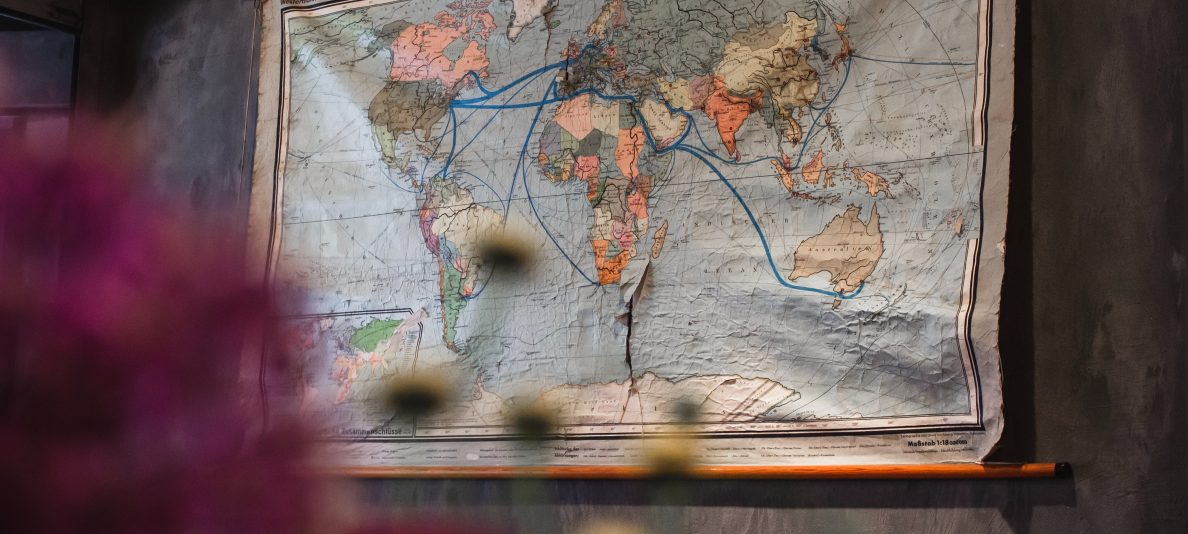
Departures and Repatriations: Crossing the Great Divide

“Never die in Taiwan.”

That’s what the poor man at the American Institute in Taiwan said. AIT serves as a de facto US embassy in Taiwan, and I was there taking care of some routine matters. Others, like the student I met who had been so excited about navigating the city in a taxi by himself that he left his backpack and passport in the cab, had more pressing issues.

The man who turned away from the window in despair, who told us all, “Never die in Taiwan,” had just presented documentation concerning his recently deceased wife. He needed to prove that she had died to show that he wasn’t trying to remove his children from the country against her wishes. This was his second or third visit, and the person behind the window was sending him back for translated copies—from Chinese to English, or from English to Chinese—or for some other paperwork that seemed impossible to obtain. The man looked so defeated. The death of a loved one overseas must truly be a distressing experience, in so many ways. I can only imagine how hard it is.

Recently I was jumping around the Web and looked up repats just to see what was out there on the repatriation process, say, for returning cross-cultural workers. One of the top sites listed was repats.com. That seemed like just what I was looking for, but the text underneath wasn’t what I expected:

Funeral Repatriations – Rapatriements funéraire – Funeraire repatriëring

So repats.com is a funeral site. That means, I thought, that repatriation must refer to sending a person’s spirit back “home,” to heaven. What an interesting use of the word. But as it turns out (as most of you probably already knew), for funeral operators, repatriation means returning the deceased’s remains to the country of origin.

Obviously, there is a lot to take care of in this kind of repatriation process: There are laws to follow, the paperwork, the physical aspect of transporting the body, the expense, the disruption of normal day-to-day life overseas, the stress and grief, and the coordination of cultural and religious customs. Avalon Repatriation Services, located in the United Kingdom, gives the following overview of some of the varied practices around the world:

  • In France for example, a body must be embalmed and placed in a wooden coffin 24 hours after death.
  • In Islamic countries, it is the widely-held belief that the deceased should be buried before sundown or within 24 hours, without embalming.
  • In the United States, embalming is common practice. In many countries—when embalming does take place—it is a qualified embalmer’s job, whereas in some countries, for example Portugal and Spain, it is against the law for anyone but a qualified doctor to undertake this procedure.
  • Those of Jewish faith believe that the body should be returned to the earth it came from and are therefore against cremation.
  • Hindus cremate their dead, believing that the burning of a dead body signifies the release of the spirit and that the flames represent Brahma, the creator.

My misunderstanding the meaning of repatriation reminds me of the Japanese film Departures, winner of the 2009 Academy Award for Best Foreign Language Film. It tells the story of an unemployed cellist, Daigo, who answers a newspaper ad titled “Departures.” He thinks he’s applying for a travel-agency job but instead ends up taking a job as a nokanshi, someone who ceremonially prepares bodies for burial. Daigo learns the trade from Sasaki, his boss, who becomes his mentor. And Daigo learns also to overcome opposition from his family and friends and to face his own fears, finding deep meaning in his new vocation.

This is a great film. It’s been one of my family’s favorites ever since my son brought home a copy. Just listening to the theme song in the trailer reminds me of the deep emotions that are explored in the story. I think it’s about time I watched it again.

(“Catering for Different Religions,” Avalon Repatriation Services)

[photo: “Go West,” by halfrain, used under a Creative Commons license]

Jeremy Lin Takes to Taipei Streets in Hello Kitty Head

Jeremy Lin recently took a trip to Hong Kong and Taiwan and has pretty much mapped out a solution to the whole “hidden immigrant” problem. Lin—for those who don’t follow the NBA and aren’t conversant about “Linsanity”— is the 24-year-old Taiwanese-American who became an overnight sensation as a point guard with the New York Knicks and who now plays for the Houston Rockets.

If you’re a cross-cultural kid who travels back to your “homeland” but finds that you don’t quite fit in, you might want to follow Lin’s lead to make things easier: First, become wildly popular in a professional sport that’s wildly popular around the globe. That way, people will know all about you before you arrive, and they won’t care about your language skills or your grasp of local culture. They’ll simply want to get your autograph and snap your photo. Next, when you realize that your celebrity makes you a prisoner in your hotel room, and you want to escape to play some streetball, borrow a giant Hello Kitty head for the perfect disguise. (At least that seemed to work with the Taipei paparazzi.)

Watch the video below to see a scripted look at Lin’s adventures in Taipei, including his airport arrival, his hotel escape, and his evening of playing basketball on public courts in the city. It was put together as a promo for an upcoming 60 Minutes segment on Lin, scheduled for this fall:

I assume 60 Minutes will delve into Lin’s cross-cultural experiences. I hope they also ask him about the role his Christian faith has played in his outlook on life. It’s a big part of his story. In fact, Lin closed out his 9-day trip to Taiwan by sharing about his beliefs at an event titled “Jeremy Lin’s Miracle Night.”

Here’s what I wrote about Lin for a newsletter back when he first came on the scene in the NBA two years ago, followed by a video from NBA.com detailing his rise to stardom:

Jeremy Shu-how Lin, a second-generation Taiwanese American has become the first person of Taiwanese descent to play in the NBA. Even though he was undrafted coming out of college, the Golden State Warriors signed him to a two-year contract before the current season began, making the 6’ 3” Lin the first Harvard graduate to join the NBA in 57 years. In 2009, Time featured Lin in an article, discussing his faith in reference to his calm demeanor in the face of racial taunts from opposing fans:

Lin’s maturity could lead him to the ministry. A devout Christian, Lin, who is an economics major, is considering becoming a pastor in a church near his Palo Alto home. “I’ve never really preached before,” Lin says. “But I’m really passionate about Christianity and helping others. There’s a beauty in seeing people change their lifestyles for the better.”

(Jeff Schapiro, “‘Jeremy Lin’s Miracle Night’ Marks End of Star’s Tour of Taiwan,” Christian Post, September 3, 2012; Sean Gregory, “Harvard’s Hoops Star Is Asian. Why’s That a Problem?” Time, Dec. 31)

[photo: “Hello Missy,” by Nawal, used under a Creative Commons license]

Pop Quiz: World Religions

In 2010, The Pew Forum on Religion and Public Life conducted a phone survey of over 3,000 Americans, asking them factual questions on a variety of topics, including religion. Eleven of those questions dealt with “world religions other than Christianity.”

Answers were tracked by the religion of those surveyed, showing that the group with the highest score on the world-religions questions were Jewish (with 7.9 correct answers), followed by Atheist/Agnostic (7.5) and Mormon (5.6). Catholics as a whole answered 4.7 questions correctly, while Protestants were right on 4.6.

To see how you compare, take a look at the 11 questions below. Do not click on the answer you choose (that will simply reload this page). Rather, hover your pointer over your selection and wait for the verdict to appear. Hovering over the correct answer will also show the percentage of participants in the original survey who answered correctly.

  1. Is Ramadan the Hindu festival of lightsthe Islamic holy month, or a Jewish day of atonement?
  2. Do you happen to know the name of the holy book of Islam? (answer)
  3. Which religion aims at nirvana, the state of being free from suffering? HinduismIslam, or Buddhism?
  4. Is the Dalai Lama Buddhist, Hindu, Jewish, Catholic, or Mormon?
  5. In which religion are Vishnu and Shiva central figures? TaoismHinduism, or Islam?
  6. What is the religion of most people in India? Buddhist, MuslimChristian, or Hindu?
  7. What is the religion of most people in Pakistan? HinduBuddhistMuslim, or Christian?
  8. What is the religion of most people in Indonesia? ChristianMuslim, Hindu, or Buddhist?
  9. Who is the king of Gods in Greek mythology? MarsZeus, or Apollo?
  10. When does the Jewish Sabbath begin? Friday, Saturday, or Sunday?
  11. Was Maimonides Catholic, MormonBuddhist, Jewish, or Hindu?

(“U.S. Religious Knowledge Survey,” The Pew Forum on Religion and Public Life, September 28, 2010)

[photo: “The Prayer,” by Connor Tarter, used under a Creative Commons license]

About Your Passport, from Past to Future

The number of US passports in circulation continues rising steadily, which makes sense, as the population is rising steadily, too. In 2011, there were over 109 million valid passports, putting the percentage of US citizens with passports at about 35%. But while the overall number is growing, the number of passports issued last year dropped by over 2 million from 2010. And last year’s total of 12.6 million (including passport cards) is well below the record year of 2007, when more than 18 million passports were issued as new laws were enacted that began requiring passports for travel to and from Mexico, Canada, the Caribbean, and Bermuda.

Passports of the Stars

If you’d like to see some passports from days gone by, go to Tom Topol’s site at Passport-Collector.com, where he has a gallery of celebrity passports, including those belonging to the likes of Marilyn Monroe, Muhammad Ali, Sammy Davis, Jr., and Ernest Hemingway. Topol also has a page showing the prices paid for celebrity passports at auction, the top three being Monroe ($115,000), James Joyce ($98,696), and Albert Einstein ($93,000).

And Indiana Jones, Too

Film and theater prop maker, Anthony “Indy” Magnoli, has his own gallery of vintage passports. But his aren’t of celebrities, they’re of fictional characters, such as Charlie Chan, MacGyver, and, of course, Henry “Indiana” Jones (young and old). Each replica is complete with stamps and details corresponding to the character’s time period and global travels.

Future Tech

While all that gives a glimpse at where passports have been, where are they going? One possibility comes from the German company Bundesdruckerei, which two years ago rolled out an e-passport containing an AMOLED display. The thin, flexible display, showing a rotating headshot, does not need batteries, but instead the image begins moving when the card is placed close to an RF power source.

This does look cool, and I’m sure it provides increased security, but if (when?) something like this goes into effect, I’ll miss the look and feel of the “old” passports: the visa stamps, the weathered pages, the memories.

(“Passport Statistics,” U.S. Department of State; Juniper Foo, “E-Passport Gets AMOLED Screen,” CNET News: Crave, March 11, 2010)

[photo: “Passport User’s Manual,” by Cowtools, used under a Creative Commons license; chart courtesy of U.S. Department of State, public domain]

Live and Learn Abroad to Boost Creativity

You’ve been overseas and you’re back in the US looking for work. Not many job descriptions say that the “ideal candidate will have lived outside the US.” So what transferable qualities or skills have your experiences developed in you? How about adaptability, flexibility, resilience, and empathy?

Here’s something else you can add to your qualifications, and there’s research to back up the claim: creativity.

Finding the Relationship between Creativity and Living Cross-Culturally

A few years ago, William Maddux and Adam Galinsky conducted a series of experiments that demonstrate the link between living abroad and creativity.

  1. In the first, the pair showed that the more time a subject had spent living (though not traveling) abroad, the more likely it was for him to solve a particular puzzle. But the cause-effect relationship wasn’t clear. What if it’s simply because creative people choose more often to live abroad?
  2. The second experiment verified the results, this time using built-in controls for personality factors that are linked to creativity in order to isolate the effects of living abroad.
  3. The third study had subjects who had previously lived abroad think and write about their experiences. They were then tested, showing a temporary increase in creativity.
  4. Study number four looked at adaption to a new culture as the main driver of increased creativity. It showed that the more a person adapted, immersing herself in a culture, the higher the creativity.
  5. And, finally, the fifth study followed up by showing that subjects with past living-abroad experience who then imagined and wrote about adapting to a foreign culture exhibited higher levels of creativity in a subsequent exercise.

(William Maddux and Adam Galinsky, “Cultural Borders and Mental Barriers: The Relationship between Living Abroad and Creativity,” Journal of Personality and Social Psychology, May 2009)

Wanting to Live Abroad Isn’t the Same

As described in a recent article in Pacific Standard, researchers at the University of Florida, Gainesville, further validated the idea that studying abroad increases creativity, rather than vice versa. The study, by Christine Lee, David Therriault, and Tracy Linderholm, looked at three groups of students: those who had studied abroad, those who were planning to study abroad, and those who had not nor were planning to study abroad. The first group scored higher than the other two in levels of creative thinking, suggesting that it’s the actual experience of living overseas, rather than a personality type that is inclined to do so.

(Tom Jacobs, “To Boost Creativity, Study Abroad,” Pacific Standard, August 6, 2012; Christine Lee, David Therriault, and Tracy Linderholm, abstract of “On the Cognitive Benefits of Cultural Experience: Exploring the Relationship between Studying Abroad and Creative Thinking,” Applied Cognitive Psychology, July 2012)

Diversification and Flexibility

In the abstract to their research published in the Journal of Experimental Social Psychology, researchers from the Netherlands and California note that “past research has linked creativity to unusual and unexpected experiences, such as early parental loss or living abroad.” Their experiments suggest that it is the “diversifying” aspect of these experiences that brings about great “cognitive flexibility.”

(Simone Ritter, et al., abstract of “Diversifying Experiences Enhance Cognitive Flexibility,” Journal of Experimental Social Psychology, July 2012)

Learning the Whys of Culture Helps Even More

Back to Maddux and Galinsky, this time joined by Hajo Adam. Working on the idea that adapting to a new culture brings about novel ways of thinking, the researchers asked, “What is it about adaptation to foreign environments that is critical for facilitating the creative process?” They hypothesized that it is learning about a foreign culture in a multicultural setting that boosts creativity, To test this, the researchers assembled a group of university students in Paris who had previously lived abroad. They then “primed” part of the group by having them think and write about a time when they had learned about another culture. Others in the group did the same about a time of learning about their own culture. As predicted, the first group scored higher in a followup test of creativity.

The three then focused on “functional learning,” or “learning about the underlying reasons for observed foreign rituals, rules, and behaviors.” Subsequent experiments showed that creativity increased even more when the priming focused on not only on learning something new about another culture but learning when the subjects were actually able to find out the reason behind the cultural differences.

(William Maddux, Hajo Adam, and Adam Galinsky, “When in Rome . . . Learn Why the Romans Do What They Do: How Multicultural Learning Experiences Facilitate Creativity,” Personality and Social Psychology Bulletin, June 2010)

Boosting Your Resume in a Globalized World

So, in review, if you want to develop your creativity, here’s the plan:

  1. live overseas
  2. adapt to another culture
  3. learn about that culture
  4. and learn why a culture is the way it is

In an article posted by the Kellogg School of Management, Maddux tells the American Psychological Association that their research

may have something to say about the increasing impact of globalization on the world, a fact that has been hammered home by the recent financial crisis. Knowing that experiences abroad are critical for creative output makes study abroad programs and job assignments in other countries that much more important, especially for people and companies that put a premium on creativity and innovation to stay competitive.

(Audrey Hamilton, “Living Outside the Box: New Research by Kellogg Professor Adam Galinsky Suggests That Living Abroad Boosts Creativity,” Kellogg School of Management, April 23, 2009)

[photo: “Globeism,” by Joel Ormsby, used under a Creative Commons license]

Silences, by Carla Williams

During our time in Taipei, my family and I served as missionaries with Team Expansion. Carla Williams, Team Expansion’s Creative Arts Writer, wrote the following a couple years ago for Window’s into the World, and she has allowed me to reprint it here. It is a reflection on years of meetings with missionaries, and on one conversation in particular. It speaks for those of us who often run out of words but still have much to say. 

I want to talk about the silences. I want to talk about the pained glances shared between husband and wife when I asked questions that hurt just a little too much. I want to talk about what faith looks like in the failures. Not in the everyday, stumble-and-move-on failures, but in the ones that knock you to your knees and change the course of the rest of your life.

I want to talk about the silence that filled the room when I asked the young couple sitting in front of me what they thought they did well while they were in the country they’d just left. The silence of insecurity. The silence of painful memories. The silence of doubt.

I want to talk about the silence that was the result of the question, “How is God affirming you right now?” The silence of seeking. The silence of uncertainty. The silence of battered hope.

Those silences are honest. They are full of all that is not being said. They are almost too loud.

I’ve heard countless stories of victory.  God calls people out of the complacency of their lives and pushes them toward a fruitful life of adventure and faith.  They have their struggles and their challenges, and even some very dark times, but in the end, those are stories of hope—of knowing what God called them to do and faithfully pursuing it. And there’s affirmation and joy and a sense of purpose. These are beautiful stories—stories that should be told over and over. These stories inspire and encourage.

But these aren’t the only stories.

There are also stories of bitterness, burnout, and arrogance. Sometimes, people sit in front of me angry, tired, and frustrated. But their stories are not full of silences. They are overflowing with words—issues to be talked out and resolved, fingers to be pointed, faults to be listed, and hopefully—peace to be restored. These stories are hard, but they’re not the ones I want to talk about.

I want to talk about the quiet couple who sat in front of me, with their eyes looking intently at the floor, their very presence conveying the wounds they were suffering. They’d eagerly and prayerfully moved where they wholeheartedly believed God wanted them to be. They’d fallen in love with an unreached people group. They’d invested years of their life into pioneering a ministry in one of the most spiritually dark parts of the world. They had been obedient and faithful. And they’d failed. Or, at least, that’s how it seemed to them.

And so, they sat in front of me. Cautiously and painfully looking behind, as if looking at a fresh wound under a thin bandage. And even more carefully peering into the future. Not knowing how yesterday’s pain was going to shape tomorrow’s journey.

With all the pain of having sought the will of God and having it bring them to an unspeakable valley, they answered my gentle questions. But it wasn’t in their words that I learned about their persistent hope in the face of the raging storm. It wasn’t in their words that I discovered their unfaltering desire to keep going. It wasn’t their words that revealed the faithfulness of the broken.

It was in the silences.

(Carla Williams, “Silences,” Windows into the World: True Stories about Team Expansion Workers around the World,” June 15, 2010)

[photo: “Simple Silhouette—Busy Delancey,” by leonem, used under a Creative Commons license]

Samsara and Baraka, Our World in Film

Coming soon to a theater near you. We’ve all heard those words. (At least I think we have. Do movie advertisements say that any more?) But for a lot of the movies I’d like to see, it’s not true. That’s because my community doesn’t have a local venue for foreign films and documentaries. We do, though, have a library that does a pretty good job of keeping up with off-the-beaten-path movies. For these kinds of films, maybe the slogan should be “Coming later to a library near you.”

That brings me to a new production that premiers today in New York and Seattle. The title is Samsara, which the production’s website says is “a Sanskrit word that means ‘the ever turning wheel of life.'” It’s a series of video clips filmed in 25 countries over a period of nearly five years. With a musical score but no dialogue or commentary, it is director Ron Fricke’s followup to his earlier Baraka (1992). Both follow the same format, and both were shot on high-resolution 70 mm film. Baraka, a word present in several languages, means “blessing.”

Of Baraka, Chicago Sun-Times film critic Roger Ebert writes, “Of course there is a ‘message’ somewhere in ‘Baraka’—the same message we have heard before, about how man must love and respect the planet.” But Mark Magidson, who produced and co-edited Samsara and worked on Baraka as well, tells The New York Times that with Samsara, “We’re not trying to say anything.”

Maybe the editing of Samsara will end up showing an obvious message, but it looks to me right now that the film is a video Rorschach test, with the meaning varying from viewer to viewer. In fact, I envision getting a copy and showing it to some groups—for instance, college students or potential missionaries or veteran cross-cultural workers—and asking them, “What do you think the filmmakers are trying to say? What one-word title would you give to the movie? What does it mean to you?”

In 2008, Baraka was digitally restored and released on Blu-ray (it’s also available on DVD). In response to the restoration, Ebert writes, “If man sends another Voyager to the distant stars and it can carry only one film on board, that film might be “Baraka.” And as for the Blu-ray version:

[It] is the finest video disc I have every viewed or ever imagined. . . . It is comparable to what is perceptible to the human eye, the restorers say. “Baraka” by itself is sufficient reason to acquire a Blu-ray player.

While I’m waiting for Samsara to come to my library, I think I’ll check out—or buy—a copy of Baraka. And maybe both will be aboard Voyager 3, going soon to a galaxy far, far away.

(Nicolas Rapold, “Planetary Poetry, Woven into a Movie,” The New York Times, August 18, 2012; Roger Ebert, “Baraka,” November 12, 1993; Ebert, “Baraka [1992],” October 16, 2008)

[photo: “holi amusedness!” by Elijah Nouvelage, used under a Creative Commons license]
Chris Jodan’s Art Helps Us “Feel” Some “Enormous Statistics”

Chris Jordan produces some really big artwork to represent some really big numbers. For example, this first piece below “depicts 92,500 agricultural plant seeds, equal to one hundredth of one percent of the number of people in the world today who suffer from malnutrition.”

This next one “depicts 240,000 plastic bags, equal to the estimated number of plastic bags consumed around the world every ten seconds.”

And this one “depicts 270,000 fossilized shark teeth, equal to the estimated number of sharks of all species killed around the world every day for their fins.”

All are part of the collection “Running the Numbers II: Portraits of Global Mass Culture.” Click on the thumbnails above and you’ll go to Jordan’s site, where you can see what makes these images so interesting. By clicking on the selected photos there, you’ll zoom all the way in to see the tiny parts—the seeds, the plastic bags, the shark teeth—that make up the larger whole.

In the TED Talk below, Jordan discusses the motivation behind his work, as he talks specifically about his earlier “Running the Numbers: An American Self-Portrait,” which looks at excesses and issues in US culture, such as personal bankruptcy, deaths caused by smoking, and the country’s high rate of incarceration.

“Now I want to emphasize that these are just examples,” Jordan tells the TED audience. “I’m not holding these out as being the biggest issues. They’re just examples. And the reason that I do this . . . it’s because I have this fear that we aren’t feeling enough as a culture right now. There’s this kind of anesthesia in America at the moment.”

Using his creative talents, Jordan’s goal is, as he says, to take “gigantic numbers” and “enormous statistics” and “translate them into a more universal visual language that can be felt.”

It makes me think about what numbers I’d like to see shown in this way, such as those representing worldwide refugees and displaced people, abortions, human trafficking, and child soldiers, to name a few. I’m sure that we each have our own list of statistics that we believe need to be heard, seen . . . and felt.

And finally, we can see Jordan’s ability to challenge and educate using more traditional images in Ushirikiano: Building a Sustainable Future in Kenya’s Northern Rangelands. This book chronicles, in words and photographs, “the Nakuprat-Gotu Conservancy in Northern Kenya, an initiative led by tribal Elders, which aims to bring peace and prosperity to a region ravaged by violence and climate change.” Go here to see over 70 stunning photos from the collection, including many beautiful portraits of Kenya’s Turkana, Samburu, Borana, and Meru people.

[all images are by Chris Jordan, used under a Creative Commons license]