If all the world’s a stage, then one of the best seats is at the arrivals gate at an international airport.
And if you’re like me, you’ve spent quite a bit of time waiting to pick up travelers, watching the cast of thousands walk by.
In 2009, British author Alain de Botton was selected to spend a week at London’s Heathrow Airport as its “writer-in-residence.” In the resulting book (appropriately titled A Week at the Airport), he says that “Entry into the vast space of the departures hall heralded the opportunity, characteristic in the transport nodes of the modern world, to observe people with discretion, to forget oneself in a sea of otherness and to let the imagination loose on the limitless supply of fragmentary stories provided by the eye and ear.”
The arrivals hall, I would contend, is no less filled with potential stories.
Your time at the airport may not produce a book, but you nonetheless can record in your mind the many vignettes playing out before you. As you witness the newly deplaned begin to pour into the arrival area, signaling that another flight has landed, as you catch glimpses backstage of pilgrims gathering their luggage, as you see the crowds readying themselves for whatever lies beyond the exit doors . . . as you watch and wait at the airport, do you recognize these travelers?
A businessman, head down, shouting into a Bluetooth earpiece, power walking past you to get to someplace very important before it’s too late to take care of a very important thing.
The foreign family with two small children, dazed and wide eyed, looking for someone who looks like them to reassure them that they’ve arrived at the right place. Is it you?
Not long after we landed in Taipei in 2001, the head of our church’s missions-ministry team asked about our first impressions. Here’s what we sent to him:
people-people-people, stinky tofu, cell phones, smog, construction, dogs, Hello Kitty, noise, taxis, temples, night markets, McDonald’s, squatty potties, ATMs, squid on a stick, scooters, 7-11s, people-people-people
McDonald’s, an icon of American culture, played a big part in our time overseas, whether a familiar place for meeting with friends, a safe(ish) place to practice our Mandarin, or a dependable place for getting a meal. It was also a place for learning—or reinforcing—some valuable lessons. Here are some of them:
Language Acquisition Is as Easy as 1, 2, 3
Before moving abroad, as a family of six we’d become adept at saving money at McDonald’s using our savvy ordering skills: building our own meals out of single hamburgers or fish sandwiches, small fries, and waters. All that went out the window in our new home. Since we didn’t have the vocabulary for separate items, we just ordered by number, which meant each of us got a full meal, even our four year old (I guess we couldn’t say “Happy Meal” either). Ease of ordering trumped frugality. Bring on the giant cups of Coke.
Pride Goeth before the Spill
Most of the McDonald’s in Taiwan are multilevel, so after getting your food, you can then walk upstairs to eat. One day we were on a trip and stopped at McDonald’s and ordered our regular six number ones (or twos, or whatevers). That meant six burgers, six orders of fries, and six sodas. I was nervously carrying all the sodas on a tray up two (or was it 10?) flights of stairs, with extreme care. Then as I got to my family, I mimicked being out of breath and struggling to make it to the table. And of course, my theatrics made all the cups tip . . . and fall over . . . and hit the floor. I’m pretty sure it was all in slow motion. So I had to trudge back downstairs and try to explain what happened, using my book-one, chapter-five-or-so language skills, along with some extremely clever hand signals.
It’s the Little Things
I guess Coke at McDonald’s has given me a lot of memories, but not all of them were bad. . . .
From a recent edition of the weekly web journal Brigada Today, I found out that there’s a photography conference, “Depth of Field,” coming up, February 7 and 8. It’s designed for pro photographers, but I’m thinking that means amateurs could learn even more from it. And it’s in New York, but the “Main Stage” and “Exposure Stage” presentations will be live streamed. (By the way, if you’re not familiar with Brigada, you might want to check it out. It’s a great place for receiving and sharing all things related to cross-cultural work.)
Why is a conference for photographers relevant to you, dear readers? Because I know some of you like to take photos, and some of you are rather good at it, too. And for those of you, I have a favor to ask. Could you help out us cross-cultural bloggers? It’s not easy finding good photos for the kind of topics that show up in our writing, and, frankly, it can end up adding a last level of stress before we hit the publish button. (Is it really what I’m looking for? Is it appropriate? Has it been used here before?!!)
Take, for instance, the picture at the top of this page. You may have noticed that it’s the same photo as the one I used for my post in July. Or you may just be thinking, “Ugh, another generic plane-wing-out-the-window shot.” Either way, it’s not ideal.
But that’s what we need, some “ideal” photos of, by, and for cross-cultural workers. You may already have your own ideas. If not, let me plant some seeds in the fertile field of your creativity. You’ll no doubt recognize some of these tried-and-true images, but I’m asking for an increase in quantity and quality: quantity, so that we don’t have to reuse the same photos again and again (see above), and quality, so that it doesn’t seem as if we’re using photos again and again (ditto). So when you read “more” below, think “more and better.”
Oh yeah, and free. Free, as in creative commons or public domain.
So more and better . . . and free.
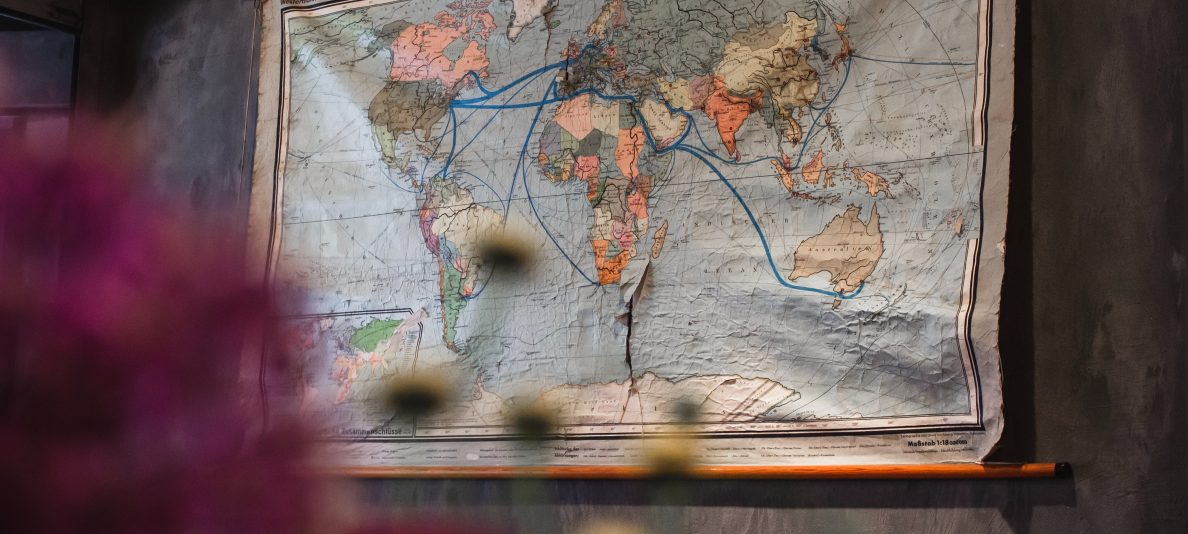
For instance, there aren’t enough photos of world maps and globes. We need more photos of unique maps and globes, antique maps and globes, and maps and globes labeled in non-English languages.
Ask a Third Culture Kid, “Where are you from?” and in response you might get a deep sigh or a quizzical look . . . or a quick, simple answer that staves off more questions. There are other ways to ask for the same information. There’s “Where’s home?” A better question might be “Where have you lived?” Or if you’re a fan of quizzical looks, you could ask, “Where do you hail from?” Hmmmmm. What does that even mean?
Ask no more. (I’m referring to the question, “What does that even mean?” not “Where are you from?”)
According to Douglas Harper of the Online Etymology Dictionary, hail is a
salutation in greeting, c. 1200, from Old Norse heill “health, prosperity, good luck,” or a similar Scandinavian source, and in part from Old English shortening of wæs hæil “be healthy.”
The dictionary goes on to say that around the same time the verb heilen appeared, meaning “to call from a distance.” Then it tackles to hail from, referencing The Dictionary of Americanisms, which, in 1848, called it “a phrase probably originating with seamen or boatmen . . . meaning to come from, to belong to.”
The same entry gives the date of origin for to hail from as 1841. But I did some searching of my own, using Google Books, and found an occurrence (same wording, same meaning) from March 27, 1832. It was spoken by US representative Franklin E. Plummer of Mississippi, during a House debate on a bill concerning the sale of public lands:
Who are the citizens of the old States, that they should be envious of the growing prosperity of their younger sister States? Are we not from the same common stock and origin; and ought not our interests and feelings to be the same? We participated equally with the present population of the old States in the battles of the revolution. It is not the gentleman from New York, nor his constituents, to whom we are indebted for the achievement of those glorious victories of which he so loudly boasts, and of which we all have reason to be proud. It was not the gentleman on my right, [Mr. Briggs,] who hails from the ancient commonwealth, and represents my native district, that fought those battles which secured to us that independence and that liberty which we all in common enjoy; but it was his grandsire and mine, who fought, side by side, at the memorable battles of Lexington and Bunker’s Hill.
The 1841 date comes from the Oxford English Dictionary, which is one of Harper’s sources. Does that mean I’ve scooped the OED? Is a Netflix movie with the title The Publisher and the Blog Guy in my future?
I doubt you’ll get the reference, so let me explain. I’m thinking about the 2019 film The Professor and the Madman, starring Mel Gibson and Sean Penn. The story, based on true events, goes like this: In the late 1800s, James Murray (the “professor”) became the editor of a work that would in time grow into the OED. In order to tackle the massive project, he enlisted volunteers to scour English literature to find the oldest usages of words. One of those volunteers was an American, William Chester Minor (the “madman”). Minor had been a surgeon in the Union army during the Civil war, moved to England, and, suffering from mental illness, shot and killed a man. He was deemed insane and placed in an asylum, and it was there, surrounded by his collection of books, that he became one of the OED‘s major contributors. He was befriended by Murray, and their story became the subject of Simon Winchester’s 1998 novel The Surgeon of Crowthorne: A Tale of Murder, Madness, and the Love ofWords, later published as The Professor and the Madman.
I’m thinking that Steven Spielberg could direct my biopic, highlighting my new efforts in updating the OED. And Tom Hanks would probably do a decent job portraying me. My story wouldn’t be as dramatic as Minor’s, but who knows what Spielberg and Hanks could do with some poetic license. Yes, I can almost smell the popcorn. . . .
Well, maybe not. It’s awfully hard to imagine floating among the cinematic stars when others keep pulling you down to earth. There’s Douglas Harper, for one. I found an interview he did with the Institute for Multi-Sensory Education, in which he says “I can go trace modern words and usages (post-1700) using digital archives.” Hey, that’s what I did! And then he puts me in my place with “I can back-date the OED 5 times in 10 minutes.”
OK, OK, he’s got me beat . . . by a long shot. I guess I’ll humbly step aside and let Harper be the subject of the next blockbuster movie on word etymologies. But I still went ahead and sent in my finding to the OED, using their online submission form. And for that I received the following message:
Thank you for submitting your word or evidence!
Yes, it was in red. And, yes, it ended with an exclamation mark.
If that isn’t encouraging, then I don’t know what is. I’m not giving up yet. I hail from a long line of dreamers, after all.
The following is a compilation of several posts that I wrote for ClearingCustoms.com. I gathered them together to publish them at A Life Overseas:
Over the years I’ve created a collection of new terms for old things—things that are common to traveling and living overseas but that haven’t had common labels. Most of them have come to me while I’m in the air, looking out the window or thumbing through an inflight magazine.
I’ve posted these before on my blog, but I’ve yet to hear anyone use a single one in casual conversation, so I’m thinking they need a broader audience. I hope that some of these can make their way into your vocabulary. I’ll keep my ears open.
bait and glitch You find a cheap plane ticket online and go through all the steps to buy it, double and triple checking all the details, and then when you select “confirm,” you get that encouraging message that says, “The fare you’ve selected is no longer available.” Maybe it’s because the search site wasn’t up to date or because someone else recklessly grabbed the last seat while you were prudently making up your mind. If it’s the latter, it just proves the old standard, “Time flies when you’re choosing flight times” (or something like that).
direct flight to the dog house This is what you receive after you proudly show the money-saving itinerary—that you just booked—to your spouse, and said spouse points out that it includes a 14-hour layover (also known as a “wayover”) and that you and your four children will need to collect all checked baggage between each of the five connecting flights. Travel to the doghouse does accumulate frequent-flyer miles, but they can only be redeemed for undesirable trips, such as to overnight stays on the living-room couch.
metapacking Carrying a suitcase in a suitcase so that you can bring back more stuff than you take. This can be as simple as a duffle bag inside another piece of luggage, but in its purest form, it is a checked bag precisely fitting inside another checked bag. The term metapacking can be extended also to encompass using a cheap or broken suitcase to transport items one way and then disposing of that suitcase after you arrive. Seasoned travelers always keep a broken suitcase lying around.
eurekathing Something you find inside your luggage when you start packing—something you haven’t seen since your last trip. Discovering it brings out such responses as “Oh, that’s where that is,” or “I do have one of those.” A wad of ten-dollar bills is eurekaching, a piece of jewelry, eurekabling.
tetrisness The feeling of accomplishment one feels after packing every necessary item just right in a suitcase. A landmark study out of the University of Gatwick-Hempstead shows that tetrisness activates the same portion of the brain as when one successfully folds a fitted sheet.
TSAT The TSAT (pronounced Tee Ess Ay Tee or Tee-Sat) is an oral exam in which family members yell questions and answers from room to room concerning Transportation Security Administration regulations:
Is it the 3-1-1 rule or 1-1-3 . . . or 3-2-1 or 9-1-1? Does deodorant count as a liquid? What about wet wipes? Or snow globes? Or chocolate-covered cherries? Can I take nail clippers in my carry-on? What about tweezers? Duct tape? Scotch tape? Chopsticks? Toothpicks? Javelins?
fortnightlies Countless requests—for coffee, a get-together, or a meal—made by friends who have just realized that your departure for a long or permanent stay is only. two. weeks. away.
vontrappish How you feel when you’re ready for bed the night before a morning flight, with all your luggage placed neatly (more or less) next to the door—lined up like the von Trapp family ready to sing “So Long, Farewell.” You may have mixed feelings, and you may or may not sleep. In extreme cases, you hear yourself humming the tune.
flotsam and jetsam and thensam The abundance of things that people give you and your children right before you leave for the airport or get on the plane. This includes gifts, souvenirs, snacks, word-find and sudoku books, coloring books with a four-pack of crayons, and those faces with metal shavings that you form into a beard with a magnet.
disafearance Leaving your tightly locked up (?) house thinking you might have left the iron on (even though you don’t remember having done any ironing) is one thing, but watching your hand zip your passport into the front pocket of your backpack and then just two minutes later checking to see if it’s actually there because you’re afraid that you didn’t in fact zip your passport into the front pocket of your backpack but instead, due to a muscle spasm, may have opened the car window and tossed your passport onto the shoulder of the highway—or what if it just spontaneously combusted, leaving no smoke or ashes? That’s disafearance.
duffling Upon hearing the counter agent at the airport say that your checked bag is three pounds overweight, you feign frantic action by grabbing zippers, patting your pockets, turning in circles, and saying things such as “I could . . . ,” “Well, I . . . ,” and “What can . . . ,” hoping that the ticket agent will take pity on you and say it’s OK. Be careful that your duffling isn’t too aggressive or the agent will actually let you follow through on solving the problem.
terminal fowliage Birds that have somehow gotten into an airport and fly around amongst the rafters and indoor trees. Birds stuck inside a place where people come to fly. Sense the irony?
flaggle A flaggle of tourists is a group of middling to senior travelers, led by a tour guide with a flag and bullhorn. The flag is akin to the kind I and my friends used to bolt onto our banana-seat bikes when we were kids. Oh, if only we’d had megaphones, too. You can tell that the flaggle is on the return leg of their trip when you see them bringing home food and souvenirs packed in large, branded gift bags or boxes with tied-on handles.
making a this-line’s-not-for-you-turn After standing patiently in an airport line for fifteen minutes and realizing that it doesn’t lead where you need to go, you nonchalantly walk away—as if standing in lines is simply your hobby and you’re now looking for another place to queue up for more pleasant amusement. (Aren’t you glad you came early?)
shuftle The standing-room-only shuttle bus at some airports that shuffles passengers on the tarmac from plane to airport terminal (or vice versa). This word can also be used as a verb.
Sadow-Plath effect Happens in the moment when you accidentally kick a pulled carry-on with your heel and it flips onto one wheel and mo.men.tar.i.ly balances before flipping completely over or wobbling back to both wheels. This brief pause at the top of the carry-on’s arc is actually a tiny breach in the space-time continuum, caused by the rapid upturn of the luggage in combination with the forward motion. The effect is named after Bernard D. Sadow, inventor of the wheeled suitcase, and Bob Plath, creator of the rollaboard.
glizing Glizing is the act of experiencing the wonderfully smooth exponential forward motion as you stride confidently on an airport’s moving walkway. This only happens when you’re not in a hurry, in part because, as studies show, the walkways do little to speed you up, and often slow you down.
BlackNSquare When you try to describe your piece of luggage at the lost-luggage counter, all you can remember is that it’s part of the BlackNSquare line made by the Yuno company. Question: “What Kind of luggage do you have?” Answer: “Yuno, BlackNSquare.” Yuno also makes the upscale models BlackNSquare with Handle and BlackNSquare with Wheels.
preseating To sit down, with plenty of time before boarding, able to relax because your bags are checked, you’re definitely at the right gate, and a quick look shows that your passport is right where it’s supposed to be. You take a deep breath and contemplate the hopeful possibilities of your trip. You can charge your phone, read, or people watch. You’re free to walk about and might grab a cup of coffee, browse the bestsellers in the bookstore, or window shop expensive luggage and watches . . . and on the way, you can go glizing.
passenger of imminent domain This is the person directly in front of you on a plane who, upon sitting down, immediately pushes their seat back as far as it will possibly go. Intuiting that something must be hindering it, they try to force it back farther, again and again. There. Must. Be. Something. Keeping. The. Seat. From. Reclining completely flat (possibly your knees). Finally, leaving the seat fully back, they lean forward to watch a movie.
chipillow The bag of snacks that you bring from home that bloats up once you reach higher altitudes. With care, it can be used to rest your head on, due to the fact that it’s in the same food group as the neck croissant.
FASL Flight Attendant Sign Language. Includes such specialized hand maneuvers as indicating the exits by extending the arms to the side, palms forward, pointing with two fingers, Boy Scout style, and mimicking the pulling of life-vest inflation cords using the crook of the thumb and first finger with the other fingers fanned out, subliminally showing that everything will be “OK.”
single-entré seating The rows in the far back of the plane where you no longer get a choice between the brazed beef medallions over a wild-rice pilaf and the broiled fish and mashed potatoes. You get the fish.
cartnering This is the act of hovering next to the food cart as it’s making its way down the aisle. Timing a trip to the bathroom with the distribution of meals is truly an art form, and it is best done passive-aggressively (such as by wearing a smile while dancing from one foot to the other).
Silent Gotcha Port The “SGP” is the small screw hole on the seat armrest that looks as if it must be the place where you plug in your earphones.
Queen Ramona’s Veil The dark mesh curtain that separates business class from coach. Its main purpose is to protect those in the front of the plane from projectiles thrown by the riotous mob behind, who are known to catapult dinner rolls at each other using slingshots fashioned from their airline-provided sleep masks and who sometimes divide into teams for prolonged games of ultimate Frisbee. In small planes, the curtain, only a few inches across and resting next to the cabin wall, is known as Queen Romana’s Veilette. Its purpose is purely psycho-social.
The term “Queen Ramona’s Veil” comes from the name commonly used for the wood-and-iron gate employed by the overly paranoid and little-known British Queen Ramona II to separate her highness from the filthy hordes sometimes present in the steerage portion of her royal sailing ship. Mention of the barrier is made in the English dirge “The Death of Queen Ramona at the Hands of the Filthy Hordes.” (Can you tell that I rarely get to fly business class?)
seatemic (pronounced see-uh-tehm-ic) Your connecting flight is delayed and you have no time to spare so when it lands you run as fast as you can (and by “as fast as you can” I mean a combination of running, jogging, speed walking, walking, stopping, and wheezing) across the airport and arrive at your gate just as they’re closing the door and you speed down the gangway and board the plane and force your carryon into something close to an available slot and find your seat and quickly strap in so the plane can take off. . . . Now all you can do is sit still, sweating, with your heart racing and your veins coursing with adrenaline. Your body is in a fight-or-flight response but something tells you this is a different kind of flight. If you are suffering from these symptoms, you are seatemic.
no-watch list Movies on this list are not allowed to be shown in-flight. The list includes Red Eye, Airborne, Non-Stop, Flightplan, Snakes on a Plane, Quarantine 2: Terminal, and Plane of the Living Dead. And, yeah, some of these shouldn’t be shown on the ground, either.
altivism Gazing out of an airplane window, seeing the new landscape below, and feeling joyfully overcome with the real and imagined possibilities.
post-ping che-klatches The sound of seatbelt buckles popping open the instant the plane stops at the gate and passengers hear the OK-now-you-can-get-up tone. This allows those in window seats to immediately grab their carryons, put them where they were just sitting, and wait, hunching under the overhead bins.
welwelwel-ke-come This is the glorious sound of the immigration agent thumbing through your passport looking for an empty page—and then adding the stamp that says you’re free to enter.
dyslistening The condition by which your over preparation for answering an expected question in another language overwhelms your auditory senses and you answer the query you’ve anticipated, no matter what is actually said, as in responding to “How many would you like?” with “Yes, but no ice, please.”
visatrig The act of trying to predict which agent in the office will be the most likely to give you your visa or other important document and then conducting complex calculations concerning the number of people in line in front of you to see if you will get the agent you hope for. A domestic version of this is sometimes encountered in the DMV.
unchewing The physical and mental reaction that occurs when you realize that the chocolate-covered, cream-filled donut that you just took a bite of in your host country is in fact not a donut and that’s not chocolate and the filling might very well have gristle in it.
“The Polar Night Is the Blue Time in Northern Norway”
Imagine nights that last 20 hours, and weeks without seeing the sun. That is real life in large areas of Northern Norway. And just imagine, many people who live in the north think that this is the finest time of the year, with fantastic skyscapes and magical lights. A visit during the dark months is a warming experience!
. . . . .
The Polar Night can last days to months depending on your location.
On the North Cape, the sun remains under the horizon for more than two months, while in Tromsø the phenomenon lasts for six weeks or so. In Lofoten, the dark period is short, just under four weeks. From Bodø and farther south, the sun does actually appear even in the deepest mid-winter, lighting up the winter landscape briefly around midday. At the other end of the scale is Svalbard, where the sun disappears completely for almost four months!
A friend of mine once joked that if you listen to prayer requests in church long enough, you’ll come to the conclusion that traveling is the most dangerous endeavor known to Christians. Whether it’s for a drive across the state or a plane ride to another country (with an occasional cruise thrown in), we long for God’s blessing of safety, or, as it’s often phrased, “travel mercies.”
Where does that come from? Not the desire for safety. I get that, though I don’t understand why a four-hour trip to St. Louis seems so risky. Maybe it’s a testament to just how safe we are otherwise in our daily lives.
No, I’m referring to the phrase travel mercies itself. A quick Google search shows that some link it back to Southern Baptists, but a more thorough search shows that it (or a similar phrase) predates the establishment of that group. Others tie it to early Protestant missionaries, but it predates them as well.
The first usage I can find for travel mercies is from 1914, in John Faris’s Book of Answered Prayer (published by Hodder & Stoughton). Actually, what I found was an ad in The Herald & Presbyter, stating that in the book (sold by the Presbyterian Board of Publication for $1) the author “gives simply and without argument seventy striking instances of answers. These have been gathered from both home and foreign sources.” “Travel Mercies” is listed as one of the book’s ten chapter headings.
Some twenty years earlier, the similar phrase traveling mercies appeared in the Minutes of the Second Biennial Convention of the World’s Woman’s Christian Temperance Union. In their meeting on the morning of October 17, 1893, the group held a memorial service for Mary Allen West, their former “round-the-world missionary to Japan,” who had died in Japan there promoting temperance. Chika Sakurai spoke during the service, saying,
My Dear Sisters: You cannot tell with what joy I meet you this morning, and as I look upon you I feel that we are friends and not foreigners. (This is my first journey from my native land, and it is no easy matter for one to leave the scene of her childhood days, and the many friends and loved ones. But one always feels that leaving home, friends and beloved ones to work for God is no loss). I feel thankful to God for his goodness and mercy to me. He has blessed me with traveling mercies and allowed me to come here to try to do something for him. I trust my efforts will be blessed by God.
And before that? Well, we’ll need to expand the search to include travelling, with two Ls, the way the British spell it. That led me to a result from 1770, when British philanthropist and prison reformer John Howard wrote it in his journal, while en route from Holland to Paris:
I would acknowledge it is thro’ the goodness of God alone that I enjoy so many travelling Mercies, such comfortable degrees of health and strength with such an easy calm flow of spirits.—
Howard knew something of the need for God’s help during travels. In 1756, while sailing to Portugal, he was captured as a prisoner of war by a French privateer.
Today, I’m not sure which is more popular in the lexicon of prayer groups, travel mercies or traveling mercies (with either spelling), though travel mercies is what I hear more often in my part of the world. But traveling mercies might have a PR advantage, as it’s the title of a memoir by the best-selling author Anne Lamott. As the book’s full title suggests —Traveling Mercies: Some Thoughts on Faith—the journey that Lamott recounts is not a road trip but a spiritual pilgrimage as she works out her belief in God (with a capital G). She writes that she started out as an unbelieving daughter of an unbelieving missionary kid:
My father’s folks had been Presbyterian missionaries who raised their kids in Tokyo, and my father despised Christianity. He called Presbyterians “God’s frozen people.” My mother went to midnight mass on Christmas eve at the Episcopal church in town, but no one in our family believed in God—it was like we’d all signed some sort of loyalty oath early on, agreeing not to believe in God in deference to the pain of my father’s cold Christian childhood. I went to church with my grandparents sometimes and I loved it. It slaked my thirst. But I pretended to think it was foolish, because that pleased my father. I lived for him. He was my first god.
Fast forwarding to Lamott as an adult attending St. Andrew Presbyterian, we come to the place where she shares what became the inspiration for her book’s title, writing about a time when the church’s preacher went on a vacation:
“Traveling Mercies,” the old people at our church said to her when she left. This is what they always say when one of us goes off for a while. Traveling mercies: love the journey, God is with you, come home safe and sound.
So for whatever trek you are on, I leave you with the following benediction, a combining of the old and the new:
May you have “such comfortable degrees of health and strength with such an easy calm flow of spirits.”
“Love the journey, God is with you, come home safe and sound.”
The winners of the 2021 Wildlife Photographer of the Year awards have been named, in all sorts of categories. You can see the entire gallery here, and Wow! there are some great photos.
My favorite pic didn’t win the top prize (that went to Laurent Ballesta’s image of spawning camouflage groupers), but it was tagged “Highly Commended” by the judges. It’s Jaime Culebras’s “Animal Magnetism,” described on the competition’s website this way:
Jaime was shocked to see this tarantula hawk wasp dragging its prey across his kitchen floor. He rushed to get his camera. By the time he returned, the giant wasp was hoisting the spider up the side of the refrigerator.
You may disagree, but I think it would be pretty cool to see a wasp and tarantula locked in a life-and-death struggle, even inside my house. And if I had time to get my camera, and then the wasp posed inext to all the travel magnets on my fridge door for a photo op, that would be awesome. I guess I would have one concern, though—where was the wasp headed?
Spiders are a common theme in this year’s contest, and the photo that beat out “Animal Magnetism” for first place in the Urban Wildlife category caught my eye. “The Spider Room” was taken by Gil Wizen. Again, from the website:
After noticing tiny spiders all over his bedroom, Gil looked under his bed. There, guarding its brood, was one of the world’s most venomous spiders. Before safely relocating it outdoors, he photographed the human-hand-sized Brazilian wandering spider using forced perspective to make it appear even larger.
I liked the photographer “using forced perspective to make it appear even larger,” because, well, being the size of a human hand just wouldn’t look big enough, would it?
The photo at the top of this post isn’t from the competition, but I thought it only fair to show a spider winning a battle, since one lost in “Animal Magnetism.” I haven’t included any images from the competition because of copyright, so I hope you take the time to click on the links above.





 Clearing Customs