Personality Tests Can Be Functional and Fun, or Pass Me the Ball, Cinderella, We’re on the Same Team

10165669286_aa86507bd4_z

What are you? An ISFJ? Hmm. Me? I’m an INFP. Hmmmmmmmm.

Many people, including current and potential missionaries and other church-worker types, have taken the popular personality test the Myers-Briggs Type Indicator (MTBI). And many of them have their four-letter label memorized. This gives them the ability to carry on quite a conversation based on their combination of characteristics. It also gives them the ability (or at least some think it does) to announce their letters as a way to say, “Don’t blame me, that’s just the way I am.” Take, for instance, what Sarah Condon, blogging at Mockingbird, has to say about the MBTI:

As a J, I can tell you that it was the fastest way to sort out the weirdos from the weirdest. And also, it was a great way to preemptively excuse your bad behavior. Once I learned my Myers Briggs, I could say whatever I wanted. It was like the “God put it on my heart to tell you . . .” of liberal Christianity. As long as I reminded people that my INFJ plight makes me “decisive and strong-willed” or “easily mistaken for an extrovert,” I could dole out all kinds of insistent and unwanted opinions.

Don’t judge Ms. Condon too harshly. She later repented of her ways.

In the missionary world, agencies and churches often use the MBTI to learn about candidates and to help them learn about themselves. The test can also be a tool for building teams and for giving team members insights on how to deal with each other. In addition to the MBTI, other useful tests include the Sixteen Personality Factor Questionnaire, the Minnesota Multiphase Personality Inventory, and the Color Code.

But is there a better test for looking at team dynamics? I think I may have found one. It’s ESPN’s new-just-last-week Which NBA Team Are You? quiz. Of course, you’ll have to care about professional basketball to get into this one, but what better way could there be to analyze teamshipfulness? Come on, the quiz even has Team in its title! (A word of caution: Before you take the quiz, please understand that we all can’t be Warriors.)

Not a basketball fan? Then try the Major League Baseball Fan Compatibility Test or Which NFL Team Should You Really Be Cheering For?

Obviously I’ve gone from “useful” personaly tests to simply fun (which can be useful in its own way). So, in that spirit, here are some charts for your MBTI type.

Who are you? Hermione, or Dumbledore? Superman, or Batman? Or are you a great dane, or a chihuahua?

Which Disney Princess or Heroine Are You?
Which Disney Prince or Hero Are You?
Which Saint Are You?

Which Star Wars Character Are you?
Which Battlestar Galactica Character Are You?
What Dr. Who Character Are You?
Which Harry Potter Character Are You?
Which Downton Abbey Personality Are You?
Which Avengers Character Are You?
What Marvel Characters Are You?
Which Hobbit Character Are You?
Which Lord of the Rings Character Are You?

For some more stand-on-their-own tests, ones that don’t require an MBTI code, here are

Which Superhero Are You?
Which Bible Character Are You?
What Shakespeare Character Are You?
Which Disney Character Are You?
Which Zootropolis Character Are You? (I guess Zootopia is called Zootropolis in the UK.)
Which Force Awakens Character Are You?
Which Hunger Games Character Are You?
Which John Hughes Character Are You?
Which Children’s Book Character Are You?
Which Dessert Are You?

What Kind of Car Are You?
What Cat Are You?
What Dog Breed Are You?
What Tree Are You?
What Instrument Are You?
What Animal Are You?

OK, on those last two. . . . For team building, I know that a complete orchestra needs all kinds of instruments, but when it comes to animals, would you want a pride full of lions, or should there be a couple sheep around for mealtime balance?

(Sarah Condon, “Personality Assesmentss: Grace and Neurosis,” Mockingbird, Marh 24, 2016)

[photo: “Cinderella | Soundsational,” by chris.alcoran, used under a Creative Commons license]

US Passports: Things to Know So You’ll Stay Ahead of the Game

4097092685_cd75ff7679_z

Your passport is easy to take for granted . . . unless you need it and you can’t find it, or it’s stolen, or it’s expired. But the US Department of State doesn’t take it for granted. Here are some ways that they’re working on improving your passport, as well as tips on how to keep your travel headaches to a minimum.

No more adding pages
As of this January, passport holders are no longer able to add pages to an existing passport so that it can hold more entry and exit stamps. Travelers previously could add 24 pages to a full passport, but now, with that no longer an option, passport applicants outside the US are issued a 52 page book, while those in the US can choose between 23 and 52 pages.

(U.S. Department of State, “Extra Visa Pages No Longer Issued Effective January 1, 2016,” November 19, 2015)

Why carrying copies is a good idea
 At “Lost or Stolen Passports Abroad,” the Department of State advises travelers overseas to take along a photocopy of their passport ID page. I recently had the chance to ask a foreign service officer what purpose that serves and here’s what he said: While US embassies and consulates have the ability to replace a lost or stolen passport without you providing any documents or ID, there are other reasons for having copies. The passport copies are most helpful to carry with you while you leave the real thing in a safe location. If someone asks to see your passport while you’re out, you can show your copy; or if a place such as a hotel asks to hold your passport, you can offer your copy instead. He suggested carrying two color copies for this purpose. While officers can give you a new passport without presenting any documents or identification,  it’s better, according to the Department website, if you have a photo ID, a police report (or, says the officer, the ability to say that you tried to get one), your passport copy, and your travel itinerary (to document that you need the new passport quickly.)

img_passport_stats_chart_issued_2014
Click to see larger image

What about a passport card?
 Whenever I see a passport application, I wonder about the advantages of getting a passport card. Now I know why I probably don’t need one. A passport card is not a replacement for a passport book for general international travel. Instead, the card can be used only for land and sea travel between the US and Canada, Mexico, Bermuda, and the Caribbean. The card could be useful in any country in place of a color photocopy for getting a replacement passport (see above), but it won’t work for air travel, regardless of your destination. Even in the countries where the card can be used, without your passport book you’ll be in trouble if an emergency occurs and you need to fly back to the US. Also, if you’re on a cruise and for some reason miss the boat (literally), you won’t be able to use your card to fly—to catch up with the ship or to go back home.

(Ned Levi, “Passport Card: Does It Make Sense to Purchase One?” May 10, 2010)

Don’t get below 6 months
While many countries require you to have at least 6 months left on your passport before they’ll let you enter, the Department of State suggests you replace your passport when you cross the one-year-left mark. Not only will this keep you from being caught unprepared, but if you enter a country with only six months left on your passport, stay for a while and then decide to go to another country with the six-month restriction, you’ll be denied entry.

Expect more changes
US passports are scheduled for a big design update this year. The security updates will include an information page with a polycarbonate coating and containing an embedded data chip, the number laser-cut through pages, raised designs, and ink that shows multiple colors when viewed from different angles.

(Katherine LaGrave, “U.S. Passports to Get a Makeover in 2016,” Condé Nast Traveler, February 22, 2016)

Registering is easy
 This one isn’t directly related to passports, but it does apply to international travel. (Consider it a bonus.) The Department of State encourages citizens to register with them when traveling abroad, but what does that entail? It’s as easy as going to step.state.gov and signing up for the Smart Traveler Enrollment Program (STEP). You can also enroll to receive advisories and alerts, even when you’re not the one traveling, so that you can keep up to date while others are outside the country.

[photo: “Let’s Go! – Passport,” by Lucas, used under a Creative Commons license]

All the World’s a Drum

One thing often leads to another. . . .

While I was working on the topic of Yo-Yo Ma and the Silk Road Ensemble, I found the Global Musician Workshop, which led me to Maeve Gilchrist, which led me to Nic Gareiss. Scotland-born Gilchrist is an improvisational folk-jazz-fusion harpist. Gareiss is a Michigan-born percussive dancer.

I didn’t know there was such a thing as a percussive dancer. Not only do I like the clapping and the stepping, but I’m impressed with a harpist who can play so beautifully and push her hair off her face without missing a note.

So what other kinds of percussive dancers are there?

Well, there’s Step Africa!

There’s Riverdance, here gearing up for their 20th anniversary tour.

There’s Flamenco dancing—with Maria Pages.

And finally, I found the Egyptian group The Percussion Show.

To percussive feet, all the world’s a drum.

I’m Not a Tourist, See?

11255321773_296334dbde_z

When you’re a tourist, it’s mostly fun to be a tourist. Most people like to help you and you’re treated as a guest. Sure, when you go to buy something you might get taken advantage of, but you don’t know any better, so you can still think that you got a bargain. And if you break a cultural rule—or even a law—you can play the I-didn’t-know-I-don’t-live-here-maybe-even-get-out-of-jail-free card.

But when you do live in a new country, you don’t want to be treated like a tourist. You want to be treated like “one of us,” or at least ignored. So how do you look as if you belong? Maybe it’s the language, but you’ll have to talk first, and that could hurt more than help.  Maybe it’s your clothes, but it’s easy to go overboard on that one. Or maybe it’s what you’re carrying around. Of course, it’s what you’re not carrying, as well, for example, a camera or a souvenir bag that says “I ♥ (name of country).”

In my post yesterday at A Life Overseas, I quoted author Tahir Shah’s views on acclimating to a new culture, from his book In Arabian Nights: A Caravan of Moroccan Dreams. Shah had moved to Casablanca, and he didn’t want to be treated like an outsider. He writes that one day his maid, Zohra, overheard him talking about getting “eaten alive” by the salesmen in the vegetable market, and she gave him some great advice.

“Tsk! Tsk! Tsk!” she snapped. “Of course the salesmen trouble you. It’s because they think you are a tourist.”

“But there aren’t any tourists in Casablanca!”

“Well, they don’t know that!”

“So what am I supposed to do?”

Zohra motioned something with her hands. It was round, about the size of a dinner plate. “You have to carry a sieve.”

What?

“No tourist would ever be carrying a sieve,” she said.

That’s it. A sieve. Gotta get you one of those.

17325027255_de281b747d_z

(Tahir Shah, In Arabian Nights: A Caravan of Moroccan Dreams, Bantam, 2008)

[photo: “I ♥ Tourists,” by Lain, used under a Creative Commons license; “Markthal Rotterdam” by Kattebelletje, used under a Creative Commons license]

Culture Stress, when There’s No Hook to Hang It On [—at A Life Overseas]

Head over to A Life Overseas to read my complete post.

6854846176_3b16e91b22_k

When most people open up their closets in the morning, they usually ignore the out-of-style shirts on the edge, the wrong-color sweaters, the too-tight pants. Instead, as much as they can, they grab something that looks right, something that fits right, something that feels right.

When you transition between countries, your cultural closets get switched. Your choices become limited, and you often have to put on things you’d rather not wear. You’ve given up comfort for other purposes. Some of this discomfort is just an annoyance, like a scratchy tag inside the collar of your shirt. But some can seem unworkable, like that same shirt two sizes too small.

It’s the Water and the Dirt

When I and my family moved overseas, we weren’t surprised by culture stress. We may not have been fully prepared, but we weren’t surprised. What did surprise us, though, was that we couldn’t always identify the causes of our irritation and pain.

For many stressors, you know just what hook to hang them on. Singing at church feels a little off? It’s because everybody’s clapping on a different beat than you are. Can’t sleep? That’s because of the all-night traffic outside your window. Nagging cough? Pollution.

Being able to name a problem helps us sort things out. It gives us vocabulary for talking about it with others. It helps us better understand our new home and ourselves. It helps us find solutions. It helps us cope.

But sometimes, there is no hook, at least not an obvious one.

A few months after we landed in Taipei, my wife developed a “cold,” a cold that lasted on and off for over a year. Our doctor couldn’t find a solution and none of his remedies helped (one medicine caused her heart to race). Finally, he diagnosed her with shui tu bu fu, which can be translated as “not acclimated to the water and soil.” That’s odd, because we didn’t drink the water, and with all the concrete, and we rarely saw the soil. . . .

Continue reading . . .

[photo: “038,” by glassghost, used under a Creative Commons license]

To Augustine the World Is a Book, but Is It a Travel Book?

7544403302_cde12b749f_z

One of my father’s favorite jokes was to say a phrase of dubious meaning, and often questionable grammar, and tag William Shakespeare as the source. It went something like this:

No matter where you go, there you are . . . Shakespeare.

Seems that Dad was ahead of his time. All over the Interwebs, there are oft-used quotations attributed to oft-quoted people—Mark Twain, Martin Luther, Martin Luther King, Jr., Winston Churchill, Erma Bombeck . . . and Shakespeare. The trouble is, the pairings are oft-wrong.

Take, for instance, this popular quotation:

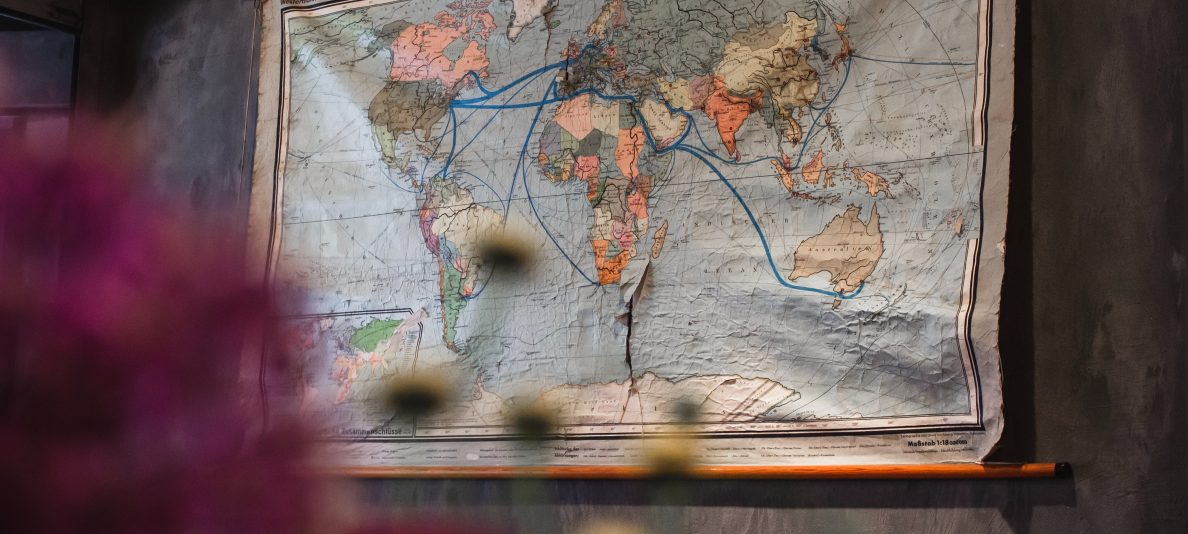
The world is a book and those who do not travel read only one page.

Nearly every online citation says it comes from the pen of St. Augustine, but as far as I can tell, no one has been able to find it in his writings.

The closest I’ve seen is in his Letter 43, written circa 397. While discussing schisms in the church in Africa and recounting some church history, he refers to the world as a book. But rather than using that as a metaphor to promote travel, he is proclaiming that the world shows the working out of biblical principles. Translated from Latin, he writes,

If, after all that you have read, you are still in doubt, be convinced by what you see. By all means let us give up arguing from ancient manuscripts, public archives, or the act of courts, civil or ecclesiastical. We have a greater book—the world itself. In it I read the accomplishment of that of which I read the promise in the Book of God: “The Lord hath said unto Me, and I shall give Thee the heathen for Thine inheritance, and the uttermost parts of the earth for Thy possession.

Jump ahead to 1750, and Louis-Charles Fougeret de Monbron writes Le Cosmopolite ou le Citoyen du Monde (The Cosmopolitan or the Citizen of the World), which opens with the following paragraph (as translated into English):

The universe is a sort of book, whose first page one has read when one has seen only one’s own country. I have leafed through a great many that I have found equally bad. This inquiry has not been at all unfruitful. I hated my country. All the oddities of the different people among whom I have lived have reconciled me to it. Should I gain no other benefit from my travels than this, I will have regretted neither the pains nor the fatigues.

British travel writer John Feltham joins our discussion with his publication of English Enchiridion in 1700. His collection of “apothegms, moral maxims. &c” includes one that seems to tie together Augustine and the thoughts of Fougeret de Monbron (it is not a direct quotation of either), and attempts to bring the early church father into the travel-writing fold:

St. Augustine, when he speaks of the great advantages of travelling, says, that the world is a great book, and none study this book so much as a traveller. They that never stir from their home read only one page of this book.

A few years later, Le Cosmopolite caught the attention of the young poet Lord Byron. In a letter to R. C. Dallas in 1811, he writes, “I send you a motto” and quotes the work’s opening paragraph. He tells Dallas, “If not too long, I think it will suit the book.” The book turned out to be his Childe Harold’s Pilgrimage, published in installments from 1812 to 1818, and the passage, still in French, became the work’s epigraph.

And finally, in 1824, Thomas Fielding gave us a more familiar rendering of the phrase in his Selected Proverbs of All Nations, crediting it to Augustine:

“The world is a great book, of which they that never stir from home read only a page.”

Simplify the language and you have “The world is a book and those who do not travel read only one page.” Oversimplify the authorship and you have Augustine.

Bring on the inspirational photos.

16791158072_73f7c8bd5d_z


[photos: “Atlas,” by Ian Carroll, used under a Creative Commons license; “Dyrhólaey Arc,” by Andrés Nieto Porras, used under a Creative Commons license]

Clocks, 2, 3, 4

“New Optical Single-Ion Clock Is Most Accurate Timepiece Ever Built”

A new optical single-ion clock in Germany has now dethroned JILA’s optical lattice atomic clock as the world’s most accurate timepiece ever built.

With an unprecedented level of accuracy, the optical single-ion clock works by measuring the vibrational frequency of ytterbium ions as they swing back and forth hundreds of trillions times per second.

The ytterbium ions are trapped within an optical “web” of laser beams that allows physicists to count the number of “ticks” per second, determining time so accurately that the single-ion clock won’t gain or lose a second in several billion years.

Alyssa Navarro, Tech Times, February 11, 2016

Airport Voices: Two Friends Who Help You Get Where You Want to Go

11521252453_360dba9f8d_z

I know of a man who has an airport ministry. All day long he tells traveller’s that The End Is Near. You’d think that the authorities would silence him, but not only is he tolerated, he’s openly encouraged. In fact, airport officials around the world let him use their PA systems.

Of course, “The End” that Jack Fox is talking about isn’t the Second Coming. It’s a much more mundane finale. Close you’re eyes and imagine a voice saying, “Caution. The moving walkway is ending.” That’s him. Jack’s is the calm, helpful voice behind the announcements in hundreds of airports across the globe.

Why do I call it a ministry? Because Jack does. When he prepares for a recording session, he tells The Verge, “I picture someone standing on a moving sidewalk and I’m talking to that person with a friendly quality to my voice, so it won’t be so cold and sterile.” And then he adds, “My father was a minister, and I think of this as my airport ministry.”

Fox is not alone in his airport exhortations. His good friend, Carolyn Hopkins, has been lending her voice to announcements even longer than he has. Both work for Louisville’s Innovative Electronic Designs (IED), which supplies computerized paging systems for airports and other transit systems the world over. The Verge article describes them as “two cheerful, church-going retirees who also happen to be longtime buddies.”

Like Fox, Hopkins started in radio before joining IED, and like Fox, she was influenced in her career by a parent: “I got into it because my father had a magnificent, deep voice,” she tells the Bangor Daily News (she lives in Maine, now). “I loved to listen to it, so I liked doing that kind of thing. I would practice. I would create radio programs, with intros and segues. I did voices. It was a lot of fun.”

So that you can put faces with their voices, below is an interview of Fox on WHAS11 and a “CBS This Morning” story on Hopkins.

Now that I know who these two are, I’m going to appreciate their suggestions more the next time I’m thinking about parking in the unloading zone.

Jack Fox and Carolyn Hopkins: two of the best-known yet least recognized people in the world . . . kind of like this guy:

(Lesley Anderson, “The Speakers: How Two People Became the Voice of 110 Airports and the NYC Subway,” The Verge, July 18, 2013; Abigail Curtis, “From a Tiny Studio in Maine, Her Voice Is Heard around the World,” January 11, 2016)

[photo: “Faces in Dublin Airport,” by Giuseppe Milo, used under a Creative Commons license]