
Documentary Shows Adoptees’ Journeys from China to the US to “Somewhere Between”


In the process of sharing in the story of her daughter, adopted from China, Linda Goldstein Knowlton decided to tell the story of four other girls, Chinese adoptees living in the United States. The vehicle for her storytelling is the documentary Somewhere Between. On the film’s website, Goldstein Knowlton says,

I am making this film for everyone. For the girls, so they can see their experiences in connection with each other, and for everyone who grapples with issues of race, culture, identity, and being “different.” By necessity, we must all try to comprehend the experience of being “other” in America, to see how each individual finds his or her own way in society. This film explores the emotional and psychological fallout on our daughters and our selves, and our cultural experience when stereotypes and assumptions collide.

The film follows the experiences of four young teenagers:

  • Jenna Cook, a 13 year old in New Hampshire (now a student at Yale). “As strong as she is, she breaks down discussing the word ‘abandonment’ and its effect on her life. . . . The film documents her courage and commitment to facing her past as she volunteers for summer work at the very Chinese orphanage that housed her as an infant.”
  • Haley Butler, 13 years old in Nashville, TN (currently studying at Nashville School of the Arts). While she is on a trip to China to find her birth parents, “miraculously, a man comes forward and claims her as his biological daughter, which sends Haley on a rollercoaster ride of excitement, trepidation, and self doubt until, at the end of the film, Haley discovers some surprising and shocking truths about herself and her history.”
  • Ann Boccuti, 14 years old, living in a Philadelphia, PA, suburb (now a student at Indiana University of Pennsylvania). “She loves her life and has little desire to know anything about where she came from. . . . Her attitude, however, shifts when she meets other adopted girls in the CAL/Global Girls organization, and signs up for a trip to Europe with them. Once she is exposed to the innermost thoughts of other girls like her, girls who admit they have a nagging desire to find their roots, her world cracks open.”
  • Fang “Jenni” Lee, a 14-year-old in Berkely, CA (currently a student at Mt. Holyoke). “Her adopted parents divorce, and Fang must relive the ‘abandonment’ she faced as a small child. Amid this emotional turmoil, Fang travels to China and sees a little girl in a Chinese foster home, unmoving because of her cerebral palsy. Touched, Fang becomes determined to find the little girl a home.”

“This film is about these four girls,” says Goldstein Knowlton, “and the 79,562 girls growing up in America.  Right now.”

The award-winning Somewhere Between has screenings scheduled in several cities, but if there isn’t one near you, join me in waiting for the DVD. Having adopted a boy from Taiwan, I think we could learn some things from these girls. As our son grows up, he’ll be asking more and more questions, and we want to do our best to help him find the right answers.

[photo: “Bridge,” by Andrew Hefter, used under a Creative Commons license]

Comfort vs Encouragement: Jesus’ Responses to Mary and Martha

The past few weeks have been kind of tough for my wife and me. Not long ago, we marked the one year anniversary of our return to the States after living in Taiwan for 10 years. We assumed that by this time we’d have this next stage of our life on track, but instead, we’ve got a lot of loose ends, still looking for full-time work and long-term housing. As Ruth Van Reken says (talking about Third Culture Kids, but it has broad applications), “Every time there’s transition, there is loss,” and then she adds that “where there’s loss, there’s grief.”

One of the ways I’ve dealt with our losses is by attending a “grief group.” While most of the other people in the meetings have lost loved ones, I have found it very helpful to hear their stories and learn general principles for dealing with grief.

The more I hear the experiences of those who are going through difficult times, the more I’m convinced that good listeners are hard to find—and I’m sure I don’t always fall into that category, myself. Too many people would rather offer quick-fix cliches than to share in another person’s grief. In fact, we even have a hard time accepting our own grief. Grief counselor Dr. Alan Wolfelt, in The Journey through Grief: Reflections on Healingwrites about the grieving process,

I must keep opening and changing through it all until I become the unique person who has transcended the pain and discovered self-compassion—a vulnerable yet grounded me who chooses to live again.

“Self-compassion” is an interesting concept, as compassion comes from the Latin com and pati, meaning “with” and “suffer,” respectively. So according to Wolfelt, we must discover how to “suffer with” ourselves.

In a previous post, I quoted Van Reken as saying,

There is a proper place for encouragement (“you’ll do fine,” “just think about others who have so much less,” etc.) but when it happens too soon, it can also abort the grieving process. Comfort is simply acknowledging the loss, validating its reality, and giving the person space to grieve properly before pushing him or her to move on or past it.

She elaborated on this idea in a presentation I heard her give several years ago, citing a wonderful example from the New Testament: When Jesus traveled to Bethany after the death of his friend Lazarus, Lazarus’s sister Martha came out to meet him:

“Lord,” Martha said to Jesus, “if you had been here, my brother would not have died. But I know that even now God will give you whatever you ask.”

Jesus said to her, “Your brother will rise again.”

Martha answered, “I know he will rise again in the resurrection at the last day.”

Jesus said to her, “I am the resurrection and the life. He who believes in me will live, even though he dies; and whoever lives and believes in me will never die. Do you believe this?”

“Yes, Lord,” she told him, “I believe that you are the Christ, the Son of God, who was to come into the world.”

(John 11:221-27 NIV 1984)

This, says Van Reken, is an example of encouragement, given by Jesus because he knew the needs of Martha. But Van Reken sees herself more as a Mary, Lazarus’s other sister. According to Van Reken, Mary didn’t need encouragement, she needed comfort:

When Mary reached the place where Jesus was and saw him, she fell at his feet and said, “Lord, if you had been here, my brother would not have died.”

When Jesus saw her weeping, and the Jews who had come along with her also weeping, he was deeply moved in spirit and troubled. “Where have you laid him?” he asked.

“Come and see, Lord,” they replied.

Jesus wept.

(John 11:32-35 NIV 1984)

While both sisters said the same thing to Jesus, he responded to them in different ways. Van Reken, in an e-mail discussion by the SIM AMK Task Force, says that while Jesus “appealed to [Martha’s] reason and gave her truth as information,” with Mary

Jesus entered into her experience with the truth of his compassion and comfort. Words to her would have bounced like icicles on her heart. Didn’t anyone CARE? And He showed, He cared. I love it that Jesus knows us well enough to meet us as the people He made us to be. I love it when He meets others in their way—but sometimes when they try to meet ME in their way, or I try to meet them in MY way, we can clash. I think they don’t care because they aren’t on the floor crying with me, and they think I’m a basket case who needs to look at the facts a little more clearly and I’ll be “just fine.”

I think that many of us are Marys. We need tears of compassion rather than words of reason. And I would suggest that, lacking the insight of the Son of God, we would do well to start with the kind of comfort that comes alongside those who are grieving, instead of trying to pull them out of their grief with our words or actions. There will be time for encouragement, when the griever is ready. For many of us, it’s not that we don’t understand the encouraging truths, it’s just that other truths, of loss and pain and sadness, are demanding our attention, and we push them away too soon at our own peril.

“My process has been hard at times because so much of our system of faith precludes the simplicity of the ‘Jesus wept’ verse,” says Van Reken. “And for whoever I am, those kinds of tears will change more for me than anything else. The problem with a quick spiritual answer is I actually KNOW the answer; I’m just not there yet.”

(Peter Katona, “More and More Americans Consider Themselves ‘Hidden Immigrants,’” Columbia News Service, February 27, 2007; Alan Wolfelt, The Journey through Grief: Reflections on Healing, Fort Collins: Companion Press, 1997, p 42; Ruth Van Reken, “Mary and Martha,” Simroots Open Dialogue)

[photo: “The Eye of Eliza,” by Augusto Serna, used under a Creative Commons license]

Eight Olympic Facts for Impressing Your Friends

Since you’re probably not competing in the London Games, your best bet for standing out from the crowd may be in the area of Olympics trivia. With that in mind, here are eight facts that you can slip into conversation at the water cooler. Hurry, while there’s still time.

  1. Frenchman Pierre de Coubertin is considered the founder of the modern Olympics, which began in 1896 in Athens, Greece. Coubertin pushed for the inclusion of an arts competition, which became part of the games in 1912. From that time until 1948, 151 medals were awarded in the areas of sport-themed architecture, music, painting, sculpture, and literature.
  2. Women first joined the Games in Paris in 1900, with 22 females competing in tennis and golf.
  3. In the 1904 Olympics, held in St. Louis, Missouri, in conjunction with the World’s Fair, George Eyser won gold for the vault, parallel bars, and rope climbing, all after having lost his left leg in a train accident when he was a child. He competed with a wooden prosthesis.
  4. The 1912 Games in Stockholm, Sweden, were the first to include athletes from all five continents.
  5. The five rings on the Olympic flag represent the five continents, while their five colors—blue, black, red, yellow, and green—plus the white of the background, includes at least one color from the flag of every country in the world. The flag was first used in 1920.
  6. In the 1924 Paris Olympics, Dr. Benjamin Spock, author of the famous Baby and Child Care, won a gold medal as part of the US rowing team.
  7. At the 1964 Tokyo Games, the final torchbearer was Yashinori Sakai, who was born in Hiroshima on the day that the US dropped an atomic bomb on the city.
  8. The 2012 Summer Games in London mark the first time every participating country has sent at least one female athlete, with Brunei, Qatar, and Saudi Arabia adding women to their delegations.

And to round it all off, you’ll also want to have the following ready for when someone asks, “Where will next Olympics be?”

(How Well Do You Know the Olympic Games? The Olympic Museum; “Factsheet: The Games of the Olympiad,” International Olympic Committee, May 2012 update; “‘Sporting Art’ An Olympic Event Left by the Wayside,” National Public Radio, July 27, 2012; “Test Your Olympic Trivia Knowledge,” National Public Radio, July 28, 2012; Scott Stump, “For First Time, Women from Every Nation Ready to Rock Olympics,” TODAY in London, July 24, 2012)

[photo: “Olympic Rings,” by Danny Nicholson, used under a Creative Commons license]

You Remember You’re a Repat when . . . (Part 1)

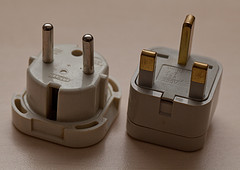
In the hallowed tradition of “You Know You’re an Expat / Third Culture Kid / Missionary when . . .” lists, I offer my own version for repats. This is for the times when you’re reminded that your plug doesn’t always fit the outlet.

Since I’m a former missionary to Asia who’s repatriated back to the US, a lot of my list leans in that direction, but I hope there’s something here for repats of every stripe (or voltage, as it were).

You remember you’re a repat when . . .

1. Your passport is your preferred form of ID.
2. You comment on how cheap gas is in the US.
3. You ask your friends who they’re picking to win the World Cup.
4. Your CNN web page is set on “International.”
5. You accidentally try to pay for something with the strange coins from the top of your dresser.
6. You don’t trust your friends when they say they’ve found a “good” Italian restaurant.
7. You ask the clerk at the convenience store if you can pay your electric bill there.
8. You don’t know how to fill out taxes without Form 2555.
9. You think Americans are loud.
10. You talk about Americans overseas and call them “foreigners.”
11. You find out that living overseas is not the top qualification employers are looking for.
12. You learn to stop talking about the nanny and groundskeeper you used to employ.
13. You have to ask how to write a check.
14. You forgot how many numbers to dial for a local phone call.
15. You tell your toddler, “No seaweed until you finish all your hamburger.”
16. You try to order fried chicken at Burger King.
17. You check prices by converting from what a similar item cost overseas.
18. People say, “football,” and you ask, “Which kind?”
19. You don’t know how to respond when people say, “I bet you’re glad to be back home.”
20. You prefer to hear news reports from someone with a British accent.
21. You wonder why all the commentators on TV are yelling.
22. You wish you’d brought back ten of your favorite kitchen utensil because you didn’t know it’s not sold in the States.
23. You realize international students are you’re kind of people.
24. You ask where you can get a late-model, low-mileage Toyota for around $2000.
25. You turn on the subtitles on an English movie because you don’t want to miss anything.
26. You ask the clerk at the video store if they have VCDs.
27. You wonder if organization should be spelled with an s.
28. You load up your suitcase and you try not to “pack like an American.”
29. You stop bringing your bi-lingual Bible to church.
30. You just smile at people who say, “So I guess you’re all settled in now.”

(Part 2Part 3)

[top photo: “Electrical Outlet,” by grendelkhan, used under a Creative Commons license; bottom photo: “Having It Both Ways,” by Keith Williamson, used under a Creative Commons license]

You Remember You’re a Repat when . . . (Part 2)

(Part 1)

You remember you’re a repat when . . .

31. You stock up on Mountain Dew because you never know when it won’t be available again, and you check the expiration dates.
32. You think the public schools are great because the teachers are all proficient in English.
33. You read all your junk mail because it looks important.
34. You don’t hang pictures on the wall in case you’ll be moving again soon.
35. You still have unopened boxes shipped from overseas, and you don’t have a clue what’s inside them.
36. For Christmas, you open up one of those boxes.
37. Even though you own a house, you still catch yourself turning the music down so you won’t “bother the neighbors downstairs.”
38. You’re invited to a bar-b-que and your first thought is “I hope they don’t give me the fatty part of the goat’s tail.”
39. You hand the cashier at Wal-Mart your credit card instead of swiping it yourself.
40. You put your hand lotion in 3 oz. containers just to drive to visit grandma.
41. You’re frustrated that you have to ask for chopsticks in a Chinese restaurant.
42. You have to ask what’s the right amount to spend on a wedding gift.
43. You give up trying to decide which shampoo to buy.
44. You ask your friends to take off their shoes when they enter your home.
45. People ask where you’re from and you just answer with the name of the city where you live now.
46. You skip reading the Facebook posts of your former coworkers overseas because it’s just too hard.
47. When you buy clothes, you check to see that the brand name is spelled correctly.
48. You stop telling stories about your old host country because people stop asking for them.
49. Now that you’ve returned, your family members can tell you they didn’t know why you went over there in the first place.
50. People who knew you before you left ask if you’ve “gotten that out of your system.”
51. You go to the hospital for surgery and you take your own towels and gauze.
52. Your high schooler is pulled over for a routine traffic stop and gets out of the car before the policeman approaches.
53. You question the waitress’s math skills until you remember she simply added tax.
54. You realize that Taco Bell isn’t quite as good as you remembered it.
55. Your daughter calls herself an “African American” because she was born in Africa.
56. You look forward to mowing the lawn, because you have a lawn.
57. You say “here” and you mean the US, not the town you’re in.
58. You take an umbrella outside when the sun is shining.
59. “Made in Taiwan” labels fill you with nostalgia.
60. People correct you when you pronounce foreign names the way they’re supposed to sound.

(Part 3)

[top photo: “Electrical Outlet,” by grendelkhan, used under a Creative Commons license; bottom photo: “Having It Both Ways,” by Keith Williamson, used under a Creative Commons license]

You Remember You’re a Repat when . . . (Part 3)

(Part 1, Part 2)

You remember you’re a repat when . . .

61. You describe a city as “small” because it has only a million residents.
62. You hear yourself saying at the dinner table, “Where’s the garlic?”
63. You pull out the winter coats when the temperature gets below 70 degrees; or you pull out the shorts when it gets above 40.
64. You get a bill from the doctor and you call to see whose clerical error made the amount so high.
65. Glade’s “Ocean Breeze” scent isn’t any substitute for the real thing.
66. You assume everyplace in the US has WiFi, just like in the city you used to live in.
67. Wearing your traditional ethnic shirt isn’t as much fun now that you’re not going back again.
68. You ask at the grocery store if they have KLIM powdered milk. When they say “No,” you ask when they expect it to be in.
69. You buy three cartons of Hagen Dazs ice cream because it’s one third of the price of Hagen Dazs in your old host country. When you get home, your spouse reminds you it’s still too expensive.
70. You reset your new computer’s clock to military time.
71. You need to convert to the metric system to make sure of distances and temperatures.
72. You get fully dressed to sit in your living room because someone may be peeking in the window.
73. Airports feel like home.
74. The thought of moving again sends you into a panic attack. But your spouse feels the same way about staying put.
75. Your college-age children resent that you took away their opportunity to go “home” for the summer.
76. You can’t remember why anyone would like pineapple from a can, the same for orange juice from concentrate.
77. You understand why the restrooms in LAX have signs saying, “Do not stand on the toilets.”
78. People say, “football,” and you ask, “Which kind?”
79. A friend sends funds to a scammer who sent out an e-mail saying he’s you, stranded abroad, and your friend believes it because, hey, you travel all the time and you’re always needing money.
80. You don’t know what to buy your parents for Christmas now that you can’t give them souvenirs.
81. You shed a tear after finally eating the last package of dried fruit that you brought back with you.
82. You do your happy dance when you find another package of dried fruit in the outside pocket of your carry-on bag a year later.
83. You cringe because you hear someone say she’s “starving to death.”
84. You realize that all the documents on your computer are formatted for A4 paper.
85. You tell your waiter, “I’d like my water with ice . . . if you have any.”
86. You get nervous about buying tickets at the movie theater, because you forgot what the “rules” are.
87. You still can’t drink water straight from the faucet.
88. Your children are happy to see that the US has Costcos, too.
89. You miss the familiar sound of the daily call to prayer . . . or a rooster crowing . . . or late-night traffic . . . or the song the trash truck plays.
90. You show up at a party 2 hours late because you don’t want to be the first one there.
91. You put your favorite DVD in the player and it says, “Region Unsupported.”
92. You understand that some things just take a lot of time.

[top photo: “Electrical Outlet,” by grendelkhan, used under a Creative Commons license; bottom photo: “Having It Both Ways,” by Keith Williamson, used under a Creative Commons license]

6 Sites for Great Global Photos

If you’re someone who likes good photography from around the world, here are six websites I’ve run across that will give you a daily or weekly fix. All are for your viewing enjoyment, and some are hoping for your contributions:

  1. National Geographic photo of the day
  2. National Geographic travel photo of the week
  3. Smithsonian Magazine photo of the day
  4. CNN travel photo of the day
  5. Condé Nast photo of the day
  6. Lonely Planet photo of the week contest

The accompanying photo is of the Empire State Building, named by Cornell University scientists the most photographed landmark in the most photographed city on earth. Number 2 on the list is London and Trafalgar Square, which, given the drawing power of the Olympics, is probably solidifying its position over San Francisco and Union Square, at number 3.

Go here for Budget Travel’s slideshow of the complete top-25 places, with tips on how to capture the best photographs of them.

[photo: “Sun Falls on New York City,” by Thomas Hawk, used under a Creative Commons license]