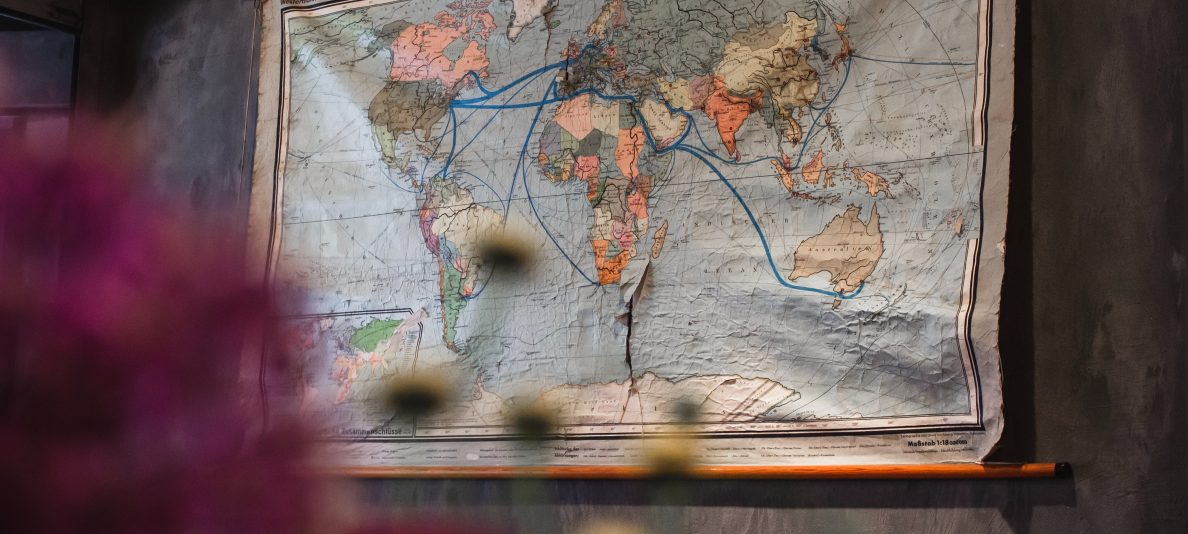
Bilingual Brain Boost

Here are a couple related lists. The first one is under the heading “How Learning a New Language Makes You Smarter“:

– The interference caused by having two languages in your head “forces the brain to resolve internal conflict, giving the mind a workout that strengthens its cognitive muscles.”
– Bilingualism improves the brain’s “executive function,” including the ability to focus on more important things while ignoring what else might get in the way.
– The need, and ability, to switch languages develops the ability to better “monitor the environment,” or track changes in one’s surroundings more efficiently.
– Infants raised in a bilingual setting show increased cognitive skills over those raised with one language, even before they learn to speak.
– High-level bilingual skills in elderly adults correlate with a higher resistance to dementia.

(Yudhijit Bhattacharjee, “Why Bilinguals are Smarter,” The New York Times, March 17, 2012)

And now, under the heading “Learning What New Language Will Make You Feel Dumber?

According to the United States Department of State’s Foreign Service Institute, the hardest languages for English speakers to learn are

– Arabic
– Cantonese
– Japanese
– Korean
– Mandarin

These are in no particular order, but the FSI believes Japanese to be the hardest of all.

Published by the National Virtual Translation Center, the complete list of 63 languages includes their estimated learning times. It is no longer available at NVTC, but you can see a copy from October 2007 at The Internet Archive Wayback Machine.

[photo: “Beach Volleyball,” by monstro, used under a Creative Commons license]

Volleyball and Football: New Dress Codes

Up until  two weeks ago, female beach volleyball players were required by the International Federation of Volleyball (FIVB) to wear a one-piece body suit or a bikini . . .  and not just any bikini, but one “with a maximum side width of 7 cm [2.76 inches].” Who knew? But now that’s all changed, as the FIVB has changed its rules to allow for “shorts of a maximum length of 3 cm [1.18 inches] above the knee and sleeved or sleeveless tops.” This new rule will be applied in all official beach-volleyball tournaments, including the 2012 Olympic Games, which will take place this summer in London. The reason behind the change, as stated on the FIVB site “is to respect the custom and/or religious beliefs.” While it is easy to think of countries with customs and religious beliefs that would have kept them from competing in revealing swimwear, the US as a whole would not be included in that category. But it will be interesting to see if individual senses of modesty will affect American uniforms. It will also be interesting to see if anyone is challenged or disqualified during an extremely close match for wearing too-long shorts. Where exactly does the knee start, anyway?

(“Uniform Change for All Beach Volleyball Events,” Fèdèration Internationale de Volleyball, March 18, 2012)

This isn’t the only recent change in women’s sports uniforms. The International Federation of Association Football (FIFA), has now decided to allow women to wear head coverings during football games (soccer games for us Americans). In June of last year, the Iranian team was disqualified from playing its Olympic-qualifying games against Jordan and Vietnam because they refused to remove their hijabs. FIFA considered the head coverings, which also wrap around the neck, as choking hazards. (Three Jordinian players were also banned for wearing hijabs, but the rest of their team stayed in the competition.) But now, following an effort begun by FIFA vice president, Prince Ali Bin Al Hussein of Jordan, and the development of a newly designed hijab, which uses Velcro instead of pins, the rule has been changed. Willfried Lemke, the UN secretary general’s Special Adviser on Sport for Development and Peace, praised the decision, saying it will give everyone “an equal chance to participate in football, without any barriers and regardless of gender, race, ability, age, culture or religious beliefs.”

(Jens Juul Petersen, “Football Now a Game of Inclusion for Muslim Women,” Common Ground News Service, March 20, 2012; Graham Dunbar, “Hijab Scarf Rule Comes to a Head as Iranian Women’s Soccer Team Banned,” Toronto Star, June 6, 2011)

[photo: “Beach Volleyball,” by Blake Bokky Bentley, used under a Creative Commons license]

T-Shirts Redux

In an earlier post I talked about sports leagues giving  losing-team t-shirts to the poor in Africa and other places around the world through World Vision. Turns out there was a long online debate about whether these kinds of “gifts in kind” help or hurt the recipients. One article that seems to give a pretty straightforward overview of the situation is “What Happens to All Those Super Bowl T-Shirts?: A Guest Post by Dean Karlan” (Freakonomics, February 15, 2011). Karlan is co-author of More Than Good Intentions: How a New Economics Is Helping to Solve Global Poverty.

I say this article seems to give a pretty straightforward overview because the issue is complicated,  and while I think I understand the problem (the biggest negative is the possible impact on the local textile economy) , I don’t know nearly enough to take sides or figure out a solution. Actually, what led me to this discussion was the serendipity of the Internet: I was searching for repat to see if it’s a legitimate abbreviation for repatriate, like expat for expatriate. (Answer: Not sure, but it should be.) That led me to the ProjectRepat site. ProjectRepat raises money for nonprofits by buying back used American T-shirts in Africa and then reselling them in the US. They explain that most of the shirts donated to non-profits in the US are baled up and sold for “pennies on the pound” and shipped to places like Africa to be resold in local markets. (I remember that as a college student I volunteered at the local Salvation Army, helping bundle up similar bales of clothing.) ProjectRepat then buys some of them back, adds their own screen-printed label, and resells them to US customers for $25 apiece. It’s an ironic and hip way to raise funds and draw attention to the situation. They also sell bags, scarves, and other items made by Kenyans from upcycled T-shirts. It was when I clicked on some of the news articles about their work that I found one at UN Dispatch: “Fighting Bad Aid by Selling Second-Hand T-Shirts Back to Americans” (May 17, 2011), in which Penelope Chester writes about the World Vision controversy and then draws attention to ProjectRepat. It’s interesting to note that on ProjectRepat’s FAQ page, they address the question of whether used T-shirts in Africa are destroying local markets:

This is an interesting question, and one that we will continue to explore as we grow as a company. We’ve heard a lot of different arguments. On the one hand, an abundance of inexpensive secondhand clothing does prevent local entrepreneurs and textile companies from starting their own businesses. On the other, it has created millions of small businesses (from clothing vendors, to seamstresses, to those packaging the clothing), and provides inexpensive clothing for those who otherwise might not be able to afford it at full price.

[the photo was taken in San, Mali: “San Market” by Janet Goldner, used under a Creative Commons license]

No McAloo Tiki for You!

Back in October, MainStreet came out with a list of 10 glocalized items—from American-based fast-food chains—that aren’t available in the US. Among the food that the author writes “we wish we could have” are McDonald’s McVeggie (India), Burger King’s Meat Monster (Japan), Pizza Hut’s Chunky Loaded Pizza (Malaysia), Wendy’s Rugby Combo (New Zealand), and McDonald’s Bubur Ayam McD (Malaysia)—”juicy chicken strips in mouth-watering porridge, garnished with spring onions, sliced ginger, fried shallots and diced chilies . . . just like mum’s cooking!”

(Matt Brownell, “10 Fast Food Items You Can’t Have,” MainStreet, October 11, 2011)

By the way, did you know that since late 2010 Burger King has been owned by a Brazilian investment firm? At the time of the purchase, for $3.26 billion, 3G Capital planned to increase BK’s international presence, including opening 500 new restaurants in Latin America by 2015.

(“Brazilian-Owned 3G Capital Buys Burger King,” Business Pundit, October 11, 2011)

[the photo is of a lady enjoying McDonald’s fried chicken in Thailand: “IMG_7529 by weenie dog, used under a Creative Commons license]

Stories on a Bus

When we ride public transportation, we are simultaneously moving and stuck. As an American traveling in Israel, I have started to use this time to become unstuck—to understand more about the people living there instead of relying on stereotypes.

So begins a wonderfully written article by Ariel Katz, an American now living in England, who previously worked in Israel for three years in Israel-Arab relations. She tells about her conversation with a young Israeli military captain sitting next to her on the bus to Tel Aviv, and then with an older man who next claimed the seat. Words between the two men told Katz that the second man had “a story to tell about his relationship to the army, one of gratitude and guilt.” “Now I am determined to unearth the story of the man sitting next to me,” she writes. His answers to her questions revealed that his name was Roni, he was an ex-soldier, his father was a Syrian-born Jew, and his mother’s parents were from Iran. As a university student, his major had been Middle Eastern studies (the same as Katz), and he had later served as a Hebrew/Arabic translator in Taba, Egypt. Katz calls Roni “a living bridge between the two cultures.” “In him, Arabness and Jewishness resided respectfully.” She closes the article with the following thought, one that each of us could personalize by substituting Arab-Jewish with the names of people from other cultures, people with whom we often walk past but rarely rub shoulders.

I wonder if we relied less on conventional narratives of Arab-Jewish relations, and instead became interested in the person sitting next to us on the bus or train, that we might also move forward together metaphorically to arrive at our desired destinations.

I also learned a phrase from Roni, a phrase that I’d like to use someday in conversation. When Katz asked him his thoughts on the topic of Arabs in Israel, he replied with what she calls “the classic diplomatic Israeli answer”: “We are all sons of Adam,” he said. “We are all human.”

(Ariel Katz, “A Conversation Creates a Bridge between Arabs and Jews,” Common Ground News Service, March 20, 2012)

[photo: “Traveling by Egged Bus from Jerusalem to Tel Aviv” by David King, used under a Creative Commons license]

Of Mobile Phones and Commodes

One of the biggest changes in technology over the last few years has been the global explosion of cell phones. In many communities, lagging behind the developed world in land-line phone infrastructure, the people have completely skipped that step and have jumped directly to cell phone use. Two years ago, Keith Williams and Leith Gray wrote an article highlighting the potential of using mobile phones in cross-cultural Christian evangelism. Though the numbers have changed some since 2010, here are a few interesting points they collected for their article:

• There are more than 5 billion cell phone subscriptions in the world.

• Today’s smart phone is thousands of times more powerful than the computers that sent Apollo astronauts to the moon.

• The CEO of Google predicts that smart phone sales will surpass those of PCs by 2013, and by the same year, cell-phone data traffic will increase 66 times.

• Leading up to 2009, cell-phone use by Africans grew 550% in 5 years.

• In India, 20 million people each month get new cell-phone lines, in fact, “the people of India now have better access to mobile phones than to toilets.”

(Williams and Gray, “The Little Phone That Could: Mobile-Empowered Ministry,” International Journal of Frontier Missiology, Fall 2010)

I found these statistics to back up that last statement: A recent survey in India shows that while 53.2% of the people have cell phones, only 46.9% have toilets inside their homes. This means that the majority of the population must use public latrines (3.2%) or simply relieve themselves outside (49.8%).

(P. Sunderarajan, “Half of India’s Homes Have Cellphones, but Not Toilets,” The Hindu, March 14, 2012)

India is not the only country with this problem, and it’s a serious problem. According to Toilet Twinning,

2.6 billion people—that’s 40% of the world’s population—don’t have somewhere safe, clean and hygienic to go to the loo. The human impact of this scandalous stat is enormous: nearly one in five child deaths each year is due to diarrhea.

What is Toilet Twinning? It’s a partnership between UK-based charities Cord and Tearfund that allows donors to “twina toilet in their own home by paying for a new one to be built in Burundi, the Democratic Republic of Congo, or Cambodia. The cost for each one is £60 (about  US$100) and payments can be made from outside the UK using PayPal. Donors receive a framed certificate showing the new latrine, along with its GPS coordinates.

And just to bring this post full circle . . . Toilet Twinning reports that 1/4 of the people in Great Britain are serious multi-taskers, using their cell phones—for talking, texting, emailing, Facebooking, or Tweeting—while sitting on the commode.

(“Lifting the Lid on Britain’s Toilet Habits,” Toilet Twinning, November 19, 2010)

[photo: “toilet-phone,” by jan zeschky, used under a Creative Commons license]

Ken and Barbie, Not Welcome in Iran

Back in 1996, religious leaders in Iran declared Mattel’s Barbie un-Islamic because of “destructive cultural and social consequences,” but toy sellers largely ignored their edict. Starting in December of last year, though, Iran’s morality police initiated an official ban on the doll (and her companion, Ken). Who will fill the empty shelves? Enter Sara and Dara, created by the Iranian government’s Institute for the Intellectual Development of Children and Young Adults in 2002 “to promote traditional values, with their modest clothing and pro-family backgrounds.” The pair of dolls are modeled after eight-year-old children, and even though that is young enough for Sara not to have to wear a headscarf in public under Islamic law, one is provided with each of her outfits. Quoted in Islam for Today, Masoumeh Rahimi, a toy seller in Iran, welcomes Sara and Dara’s arrival. “I think every Barbie doll is more harmful than an American missile,” she said. Another shop owner, agreed, calling Sara and Dara “an answer to Barbie and Ken, which have dominated Iran’s toy market.” But a Reuter’s report quotes a toy seller in Tehran who has a different opinion of the changes: “We still sell Barbies but secretly and put [dolls covered with veils and wearing loose-fitting clothes] in the window to make the police think we are just selling these kinds of dolls.” And Famaz, a 38-year-old mother, said, “My daughter prefers Barbies. She says Sara and Dara are ugly and fat.” Made in China, a Sara doll sells in Iran for about US$15, compared to US$40 for a real Barbie, and US$3 for a copy.

(Mitra Amiri, “Iran: Morality Police Cracking Down on Barbie Dolls,” Huffpost World, January 16, 2012; “Dara and Sara—Iran’s Islamic Alternative to Ken and Barbie,” Islam for Today)

[the photo is of girls in Iran with a Barbie backpack: “Picture 980” by cordelia_persen, used under a Creative Commons license]

That’s What You Are, but What Am I?

We in America know what we think about Europeans, and we think we know what they think about us, but do we know what they think about each other? An interactive site at The Guardian shares the stereotypes that Europeans hold about their neighbors and then lets the labeled parties respond. In answering what the French, Germans, Italians, Poles, and Spaniards have to say about them, the Britons reply, “Despite everything, Britain is not broken. And if that’s hard for some of our European neighbours to accept, then they should hear what we say about them.”

(“European Stereotypes: What Do We Think of Each Other and Are We Right?” The Guardian, January 26, 2012)

[photo: “A Man from English Uniform Store,” by Yunchung Lee, used under a Creative Commons license]