A Modest List of Invented Expatisms, Inspired by the Dictionary of Obscure Sorrows

822518337_839b806a79_z

My son pointed me to The Dictionary of Obscure Sorrows, where John Koenig creates words to name before-unnamed emotions and ideas. Many of them are melancholy, such as amenuerosis, “the half-forlorn, half-escapist ache of a train whistle calling in the distance at night”; and chrysalism the amniotic tranquility of being indoors during a thunderstorm. . . .”

Others are more on the humorous side. For instance, a reverse shibboleth, is “the practice of answering a cellphone with a generic ‘Hello?’ as if you didn’t already know exactly who was calling . . .”; and lalalalia is “the realization while talking to yourself that someone else is within earshot, which leads you to crossfade into mumbled singing. . . .”

Expats have their own feelings and experiences that are yet to be named, and I think this needs to be remedied. So while I don’t have Koenig’s talent, here are a few of my offerings:

dyslistening
the condition by which your over preparation for answering an expected question in another language overwhelms your auditory senses and you answer the query you’ve anticipated, no matter what is actually said, as in responding to “How many would you like?” with “Yes, but no ice, please.”

welwelwel-ke-come
the glorious sound of the immigration agent thumbing through your passport looking for an empty page—and then adding the stamp that says you’re free to enter.

altivism
gazing out of an airplane window, seeing the new landscape below, and feeling joyfully overcome with the real and imagined possibilities.

visatrig
the act of trying to predict which agent in the office will be the most likely to give you your visa or other important document and then conducting complex calculations concerning the number of people in line in front of you to see if you will get the agent you hope for. A domestic version of this is sometimes encountered in the DMV.

unchewing
the physical and mental reaction that occurs when you realize that the chocolate-covered, cream-filled donut that you just took a bite of is in fact not a donut and that’s not chocolate and the filling might very well have gristle in it.

Finally, here’s one more from Koenig: onism

[photo: “The Dictionary,” by Bethany King, used under a Creative Commons license]

When Does a House Become a Home?

8346095057_9d01a36d6e_z

When does a house become a home?

I asked that question of some friends a while ago. One answered, “When your mess is everywhere.” Another said, “When you feel part of the neighborhood.” My wife said, “When you hang your pictures on the wall.”

When we first moved to Taipei, another missionary family let us live in their apartment for a few months while they were back in the States. We needed a house to stay in while we looked for a place of our own. But it wasn’t our home; it was theirs. Their clothes were in the closets. Their books were on the shelves. Their beds were in the bedrooms.

Later, we found that place of our own. It was on the 17th floor of a 21 story building. While we enjoyed living there, the family who owned the apartment had left some of their furniture there, so we always knew it was someone else’s place, and sure enough, after about two years, they told us they wanted it back for themselves.

When we moved, we ended up in a great apartment with a huge balcony . . . and a hovering landlord. She wouldn’t let us forget that we were in her house, like the time she dropped by on Sunday morning to prune the plants on our balcony so that their leaves wouldn’t clog the drain. The next day she saw me at the post office and commented on the strong odor in our house. It was my wife’s cooking, I said. Spaghetti. Not a good smell, she replied, frowning and shaking her head.

So when we got ready to move back to Joplin, Missouri, we should have been ready, right? Well, while we were busy moving from house to house in Taipei, the city itself had become our home. We had developed routines there. We had made friends there. We had a found a purpose there.

But we needed to move, and move we did. Though that was over three years ago, Joplin doesn’t yet feel like home again and neither does the house we’re in now. We’re renting, and we’re not making long-term plans to stay here.

Actually, it’s the third non-home house we’ve been in since our return. The first was a residence that our church had purchased for visiting and returning missionaries. We were there for about six months and are very grateful that it was available. We certainly weren’t the only ones in Joplin in transition at that time. It was June of 2011 and we were living across from the parking lot of the church property where two “tents” stood, distributing food and prayers to those affected by, as everyone here calls it, the tornado.

While we were there, the items that we’d had shipped from Taiwan arrived and we unloaded  them into the garage. From there we moved to a rental house, with me still looking for full-time work and all of us wondering what the future would bring, praying about where we’d land.

In Taiwan, I remember reading news about the recession in the States, but I didn’t anticipate how much it would affect my ability to find a job once we returned. Ask anyone looking for work and they’ll tell you how difficult it is right now. Add to that the fact that being out of the country makes a person out of sight and out of mind for potential employers. With so many people looking for employment, those doing the hiring hold most of the cards, and they’re reluctant to take chances on someone who could do the job. Rather, they’re looking for someone who’s already doing the job. And the risk is much lower if they choose someone whom they’ve known for a while.

Since our arrival, I’ve worked at a number of money-making ventures, often overlapping. They include being a janitor and a paraprofessional at an elementary school, cleaning at another school, working at a multi-media ministry, teaching ESL, driving a delivery truck for an auto-parts store, recruiting international students at a university, and donating plasma.

We’re still not sure if we’ve landed yet or if that will come later. And the pictures aren’t on the walls. Instead, they’re still packed up, stored under our bed. When we finally do open them up, I think we’ll find some that we forgot we have.

When I asked my question about a house becoming a home, another friend had this response: “It’s when you can go to the bathroom at night without turning the lights on.”

That reminds me of a passage in a book I read several years ago. It was discussing people who had been blind for a long time and then had regained their sight. Now that they could see, navigating their surroundings obviously should be much easier. Yet when they needed to move through their house—their home—quickly in an emergency, they would close their eyes. That was more familiar to them.

When we’re under stress, we rely on the familiar to help us find our way.

That’s home . . . the familiar place, the comfortable place, the place where we can close our eyes and know we belong.

[photo: “The Travel-House,” by Shena Tschofen, used under a Creative Commons license]

Death by Envelope, and Other Tragic Postal Tales

8029186137_cf6ca85955_zI was wanting to mail a letter to our friends back in the US, but I had a problem. I had just been to the front counter at the post office and told the postal worker my plans. She pointed over my shoulder and said something about “over there.” I turned around, trying to act as if I knew what she’d said. (I’d only been in Taipei a few weeks, and the only thing I understood clearly was her pointing.)

Behind me, against the wall, was a table with a couple bowls of what looked like wall-paper paste, with a small brush in each one. They were for sealing envelopes, since the envelope flaps in Taiwan—and I assume, most of Asia—don’t have adhesive on them. I’ve been told this is because in the high humidity, the envelopes would glue themselves shut while waiting to be used. That explanation sounds perfectly plausible to me.

Behind the paste were two slots in the table. Each had a sign with a few Chinese characters on it. I went to the table and pretended to sort my mail for a while, pondering what I should do. What did the signs say? “Local Mail”? “Air Mail”? But the only time I’d ever seen slots like those were in the tables at the bank where you can fill out deposit slips—you know, the slots for throwing away your trash. So maybe the signs said, “Place Wastepaper Here,” and “Not for Mail.”

Beside the table was the door. Maybe the postal worker had pointed outside—to some mailboxes I hadn’t seen.

I made my decision, tossing my letter into one of the slots. I didn’t look back. I didn’t want to see the lady at the counter shaking her head at me. Instead, I hurried home and emailed our friends: “Let me know if you get a letter from us. Either I mailed one to you or just threw it away.”

A week later, they wrote back and said it had arrived. Sometimes, in spite of myself, I got things right.

It took me quite a while to get over my nervousness going to the post office. For expats, it can be a pretty scary place—in large part because there’s so much at stake. You’re often sending important documents or valuable parcels (like hand-drawn pictures to Grandma and Grandpa). And once you stick on the postage and drop them in the mailbox, there’s no do over.

Lick at Your Own Risk

Not long ago, here in the safety of the US, I was helping a friend from Asia prepare some papers for mailing. I handed him the envelope, and seeing that there wasn’t any paste available, he tried to peel the backing off the self-stick flap. The trouble was, the flap wasn’t peel-and-seal. When he realized he needed to lick it, he laughed and said he’d heard about people putting poison on the adhesive. I told him that’s never happened, because . . . uh . . . that’s never happened . . . right?

Well, I did some research, and I’m sticking by my assertion, but it seems that my friend is more up on American pop-culture than I am. How about you?

First, there’s this cautionary tale that began circulating by email in 1999:

Whenever you go to an automatic teller machine to make deposits, make sure you don’t lick the deposit envelopes. A customer died after licking an envelope at a teller machine at Yonge & Eglinton. According to the police, Dr. Elliot at the Women’s college hospital found traces of cyanide in the lady’s mouth and digestive system and police traced the fatal poison to the glue on the envelope she deposited that day. They then did an inspection of other envelopes from other teller machines in the area and found six more. The glue is described as colourless and odourless. They suspect some sickco is targeting this particular bank and has been putting the envelopes beside machines at different locations. A spokesperson from the bank said their hands are tied unless they take away the deposit function from all machines. So watch out, and please forward this message to the people you care about . . . Thanks

Completely false, says the urban-legend site Snopes.com. But when has that ever stopped an internet fable from gaining traction?

Snopes also tackled another email that made its debut in 2000. It’s about poor lady number two falling victim to the dangers of envelope glue:

This lady was working in a post office in California, one day she licked the envelopes and postage stamps instead of using a sponge.

That very day the lady cut her tongue on the envelope. A week later, she noticed an abnormal swelling of her tongue. She went to the doctor, and they found nothing wrong. Her tongue was not sore or anything. A couple of days later, her tongue started to swell more, and it began to get really sore, so sore, that she could not eat. She went back to the hospital, and demanded something be done. The doctor, took an x-ray of her tongue, and noticed a lump. He prepared her for minor surgery.

When the doctor cut her tongue open, a live roach crawled out. There were roach eggs on the seal of the envelope. The egg was able to hatch inside of her tongue, because of her saliva. It was warm and moist. . . .

This is a true story. . . . Pass it on.

Actually not true, but extra points for the graphic detail.

The Website TV Tropes reports that over the years, the poison-envelope theme has occurred in several TV crime shows. But the most famous example was part of the comedy Seinfeld, when George’s fiancée died after licking the toxic adhesive on some 200 cheap wedding invitations.

So no wonder my friend didn’t want to lick the envelope. Oh, sure, I could tell him his fears are based on urban legends, ridiculous story lines, and misguided fear. I could tell him that expats are especially susceptible to rumors and fantastic stories. But still . . . there was Mr. Fechheimer, mentioned in the 1895 New York Times:

S. Fechheimer, formerly a merchant of New-York, died here yesterday from blood poisoning as a result of cutting his tongue while licking an envelope. He was a rich man until a few years ago, when the panic came and brought ruin. He was the senior member of the firm of Fechheimer, Rau & Co., New-York shirt manufacturers.

So please be careful. And the next time you have to mail a letter, you might want to use a sponge.

(Barbara Mikkelson, “Dial ATM for Murder,” Snopes.com, September 2, 2006; Barbara Mikkelson, “Cockroach Eggs,” Snopes.com, January 22, 2014; “Finger-Licking Poison,” TV Tropes; “Poisoned by Licking an Envelope,” The New York Times, May 4, 1895)

[illustration: “Lick the Envelope,” by Rick & Brenda Beerhorst, used under a Creative Commons license]

The Faith of a Bicycle

60328782_d8ad8b40c9_z

When we first moved to Taipei, we lived across the street from a park. One day, in that park, I was approached by three college-age students who asked me in English, “Do you know Jesus?”

“Yes,” I said.

“OK,” they replied. “But do you really know him?” This was a logical question, because while English has the one word for knowing someone, Chinese has two. The first would be the one in “I know who he is,” while the second means “I know him personally.”

I had the perfect response. Not only was I a Christian, but I was a missionary . . . and I’d been studying Chinese, too. So, I told them, somewhat smugly, in their language, “Yes, I know him. I’m a . . . bicycle.”

I wish I could say that the Chinese words for missionary and bicycle sound just alike, but they don’t. The first is chuan jiao shi, and the second is jiao ta che. I think I must have learned them on the same day, because they are forever confused in my mind. The young people in the park laughed with me and let me correct myself. “Chinese is hard,” they said. I didn’t argue.

Over the years, that encounter became a symbol to me for the good and bad times in Taiwan: Some days I was a missionary. Some days I was just a bicycle.

Flat Tires and Slipped Chains

In an article published by Christianity Today this month, John Wilson interviews British author Francis Spufford about defending the Christian faith in a post-Christian culture. Spufford talks about a chapter in his latest book, Unapologetic: Why, Despite Everything, Christianity Can Still Make Surprising Emotional Sense, that gives a summary of the New Testament:

[T]he reason why I have Yeshua, my de-familiarized Christ, saying, “Far more can be mended than you know,” which I think is actually true to the New Testament, is that I want mending. Not flying free, not transformation, but humble, ordinary, everyday, get-you-back-on-your-feet mending, to be at the center of the Christian story.

When the book was being translated into Dutch, the translator sent me an email: “This word mend, I’ve looked it up in the dictionary, and it seems to be the same word you use for repairing bicycles. You must mean something else.”

I wrote back, “No. No. No. I want the bicycle-repair word.” What I absolutely want is to suggest that before it’s anything else, redemption is God mending the bicycle of our souls; God bringing out the puncture repair kit, re-inflating the tires, taking off the rust, making us roadworthy once more. Not so that we can take flight into ecstasy, but so that we can do the next needful mile of our lives.

We all need that kind of mending from God. I guess being a bicycle isn’t so far from being a Christian—and a missionary—after all.

(John Wilson, “Faith for the Post-Christian Heart: A Conversation with Francis Spufford,” Christianity Today, April 3, 2014)

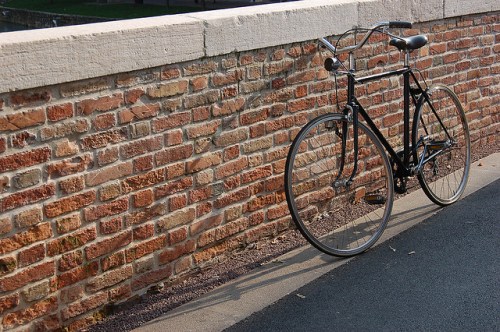
[photo: “Bicycle,” by Marcella, used under a Creative Commons license]

Park-Bench Conversations

[I’ve written a new “page” to point readers to posts in this blog that are the most meaningful to me. It’s called “park bench,” and it’s linked in the banner above. And to save you a click, here it is below.]

The posts on this blog, while all under the umbrella of cross-cultural issues, cover an array of topics. All of these are interesting to me, but some of the most important to me are on the subject of transitioning between cultures.

142023581_52b616759aIt’s often a difficult process and lasts well beyond the plane ride. Though there are many voices telling us about the challenges of redefining “home,” many of the stories are not shared eagerly or in public. Rather, they come out in safe places and only in response to careful and gentle prodding.

There are several images that conjure up thoughts of those conversations: a kitchen table, side-by-side cups of coffee, the corner booth in a cafe, a front porch.

For me, it’s a park bench.

I’m not always comfortable with talking face-to-face. It’s easier for me to sit next to someone, with the option of staring into the distance or getting up for a walk. Some of my deepest conversations, with people and with God, have taken place on park benches—at the edge of a mountain trail, in a park, next to a playground, in the courtyard of an apartment complex, at a bus stop on a busy street.

At Clearing Customs, the park-bench talks center on the difficulties of transition, on the grief that comes from losses associated with moves, on finding confidants who are able to listen without judgment. If those topics are relevant to you, too, please follow the category links below.

All of the topics in this blog are interesting to me, but these are some of the most important to me.

[photo: “City Park in Fall,” by Michael Williams, used under a Creative Commons license]

Doing the Culture Slide: Living with the Confusing Effects of Globalization

5043651435_3d6a657c89
Donald McDonald at an iCon’Chicken event in Japan

The culture slide. It’s not a dance for expats—though sometimes it may feel like it.

Culture slide is the name I’ve given to the confusion and shifts in thinking brought about by globalization.

It’s when your kids grow up in Taipei and think that Giordano clothing stores must be from Italy (they’re actually from Hong Kong) and they must have outlets in the US (they don’t). Likewise, Napoli sounds Italian, but the pizza chain is Taiwanese. Then there’s NET (from Taiwan), Fnac (from France), and B&Q (from the UK). And as much as they may feel like GAP, Best Buy, and Home Depot, the kids didn’t find any of them when they traveled to the US.

It cuts the other way, too. Back in the States, we think we should be able to order corn soup and extra-spicy extra-crispy chicken at KFC. . . and tuna and peas should be available as toppings at Pizza Hut. And we’re pleasantly surprised to find out that IKEA and Yoshinoya are in the good ol’ US of A, too—even if they haven’t made it to our part of the country yet.

That last part reminds me of a story attributed to Den Fujita, founder of McDonald’s in Japan. In Asian Brand Strategy: How Asia Builds Strong Brands, Martin Roll writes about Fujita saying, “Once a group of Japanese Boy Scouts visited the United States and were asked by a local television station what their impression of America was. One boy replied, ‘I didn’t know that they had McDonald’s in the United States, too.’” Maybe you’ve heard that story before, but that time it was a Japanese boy in Florida or a Japanese girl in Los Angeles or a French girl in Times Square or a European boy or a little boy from Indonesia. It’s all so confusing.

Donald McDonald

Ahhh, McDonald’s, the king of globalization, and the instigator of so much culture slide.

Not only does McDonald’s localize their menus wherever they go—which might make Germans think that all the world’s restaurants have McCurrywurst—but they’re selections also cross borders in some fairly strange ways. A couple years ago, Germany’s McDonald’s introduced bubble tea, a drink with chewy tapioca balls that was invented in Taiwan. Here’s the commercial:

As others have pointed out, why is the actor yelling, “Bubblezzaaiii”? Is he trying to sound Japanese?

So that brings us back to Japan, the country with the second most McDonald’s restaurants, next to the US. Fujita brought “Donald McDonald” (it’s easier to pronounce that way) to his country in 1971, writes John Love in McDonald’s: Behind the Arches, with the idea that the restaurants would have to look “100 percent Japanese.” Love quotes Fujita as saying, “If I insisted that this was something that came from America, the Japanese would say, ‘This is American, and we don’t like it because we don’t like Americans.'” It seems that in Fujita’s eyes, they didn’t disdain all things Western, as he’s also credited in Love’s book with telling reporters,

The reason Japanese people are so short and have yellow skins is because they have eaten nothing but fish and rice for two thousand years. If we eat McDonald’s hamburgers and potatoes for a thousand years, we will become taller, our skin will become white, and our hair blond.

It will be some time before that can be proven or disproven, but it didn’t take nearly as long for McDonald’s in Japan to warm up to its American roots. Right now it’s in the middle of a campaign with throwback menus featuring “American Vintage” food from the ’50s, ’70s, and ’80s—or at least it features what some in Japan think is vintage American food. The offerings include a burger with two beef patties, an egg, and mashed potatoes between the buns (’50s), “Hot & Groovy” chicken sandwiches topped with salsa (’70s), and sandwiches with the addition of BBQ sauce (’80s).

Now that’s the way, uh-huh, uh-huh, I like it, uh-huh, uh-huh.

Sing Along with Me: “Baseball, Hot Dogs . . .”

I’m just glad that here in the US, we’ve got a pretty good handle on who we are and what is ours. We know that McDonald’s is a genuine American export, even if the menu changes around the globe. We also know that no matter how much the world tilts on its cultural axis, we’ll always be able to count on things like baseball, hot dogs, apple pie, and Chevrolet. Remember that chorus from the Chevy commercial in 1975?

To review, that’s baseball (where all the balls used in the Major Leagues are made in Costa Rica), hot dogs (which originated in Germany), apple pie (first made in England), and Chevrolet (which is the third-best-selling auto brand in the US, behind Toyota).

In 2006, Chevrolet came out with a new version of their song, once again advertising America’s “favorite brand.” The chorus was updated with several new versions, such as “stolen bases, goat-cheese pizza, bottled water, and Chevrolet.” The commercial ended with the tagline “The world has changed. But the love affair continues.”

I can’t attest to the love affair, but, boy, the world sure has changed.

Step, two, three, four. Doing the culture slide.

(Martin Roll, Asian Brand Strategy: How Asia Builds Strong Brands, New York: Palgrave Macmillan, 2006; John F. Love, McDonald’s: Behind the Arches, New York: Bantam, 1995; Michelle Lynn Dinh, “McDonald’s Japan Serving ‘American Vintage’ Burgers Starting This January,” RocketNews24, December 28, 2013)

[photo: “iCon’ Chiken FES._064,” by TAKA@P.P.R.S, used under a Creative Commons license]

Sorry—No Ifs, Sos, or Buts

139499559_0248586250_nIf you were following the news a couple weeks ago, you got to hear a great example of a straightforward, unequivocal apology from MSNBC host Melissa Harris-Perry. Earlier, on her show, she and her guests had made fun of a photograph showing Mitt and Ann Romney with their 21 grandchildren. The subject of their jokes was that everyone in the photo was white, except for the adopted African-American baby sitting on Mr. Romney’s knee.

In a tweet following the show, Harris-Perry wrote, “I am sorry. Without reservation or qualification. I apologize to the Romney family.”

That kind of an apology is hard to come by. It’s hard to get, and it’s hard to give. But it’s the kind of apology necessary for healthy repentance and healthy relationships—and for healthy good-byes.

R is for Reconciliation

In their book, Third Culture Kids: Growing Up among Worlds, Third Culture Kid experts David Pollock and Ruth Van Reken advise that those transitioning from one country to another should build a “RAFT.” The four parts of that raft are

  • Reconciliation
  • Affirmation
  • Farewells, and
  • Think Destination

“Reconciliation,” say the authors, “includes both the need to forgive and to be forgiven.” And this forgiveness is especially important preceding a move across time zones and oceans.

When transitions approach, those leaving—and those staying—have a small window of opportunity for a face-to-face healing of wounded relationships, a window that gets smaller as the departure gets closer. That’s why apologies become more and more necessary, even at a time when they may seem more and more difficult.

But simply deciding to say “I’m sorry” isn’t enough, because not all apologies are created equal. In fact, we live in the age of the “non-apology apology.” When you say, “I’m sorry,” do you add on any qualifiers? Do extra words reveal your true feelings?

Or do your words of remorse stand on their own, with no ifs, sos, or buts?

No Ifs

The “If” apology is probably the most popular way to get out of a full confession. It goes something like this: “I’m sorry if my choice of words offended you.” What that says is “If my words offended you, then you must be very thin skinned. You should not be offended by what I said, because it wasn’t really offensive. But because you are upset, I would like you to know that had I known I was dealing with someone as sensitive as you, I would not have said what I said . . in your presence.” When this kind of apology is given, is there any real doubt in the speaker’s mind that someone is offended, hurt, etc.?

No Sos

Sos aren’t usually spoken—unless we’re particularly brazen—but they appear when we require something in return for our apologies. If they were actually to emerge from the recesses of our hidden motives and be vocalized, we might say, “I’m sorry . . . so now I’ll listen while you tell me there’s nothing to apologize for,” or “I’m sorry . . . so you need to stop blaming me,” or “I’m sorry . . . so you’re sorry too, right? (I’m more than willing to meet you halfway. That is the way it works, isn’t it?)”

No Buts

By definition, but means that what comes second is going to contrast with what came first. Sometimes the I’m sorry is just a way to softly introduce the “truth”: “I’m sorry, but you had it coming to you.” The but can also announce excuses: “I’m sorry, but I was really tired.” It can spread around the blame: “I’m sorry, but I’m not the only guilty party here.” Or it can even pass the buck on to all of humanity: “I’m sorry, but anyone else in my situation would have done the same thing. (And any reasonable person would agree.)”

Sorry Does Seem to Be the Hardest Word

It’s difficult to apologize without tacking on a weasel word or two, to just let our “I’m sorry” resonate in silence. I should know, as I’m guilty of using every kind of disclaimer above myself, several times. I’ve also left apologies unsaid.

So why is it so hard?

Maybe it’s habit. It’s easy to fall into old patterns, in particular when we’re under stress. And few things are more stressful than voicing an apology that’s been a long time coming. If you don’t want it to come out wrong, you might need to practice beforehand.

Maybe it’s self preservation. A real apology leaves us truly vulnerable. We have to drop our guard and be willing to take our licks.

Or maybe it’s because of the word sorry itself, coming from the Old English sarig, meaning “full of sorrow.” Today, sorry can range from a deep, sorrowful regret over something said or done to a simple usage that means “excuse me,” such as when we’re walking through a crowded hallway. And we also use it to express our sympathy for someone else’s sorrow, as in “I’m sorry for your loss.” I think it’s this last usage, in the context of an apology, that often get’s us in trouble. As with several examples above, our words sound less like “I’m sorry that I wronged you” and more like “I’m sorry you feel that way.”

Regardless of why it’s hard, it’s worth the effort. We need to mend relationships, and we need to bring healing to our own hearts. And we need to do it as soon as possible, so we don’t have to try to work it in at the airport.

And one more thing. There’s no guarantee that the person on the other end of an apology will forgive us. In fact, the deepest apologies come when we don’t think we deserve to be forgiven. And the greatest relief comes when we receive forgiveness anyway.

A Final Disclaimer

Maybe I’ve stepped on some toes with this post. I apologize if you’re bothered by what I’ve written, but sometimes I have a hard time getting my real meaning across, so please don’t think that any of it was on purpose.

I guess what I’m trying to say is “I’m sorry.”

Well, no. Not really.

(Melissa Harris-Perry, “An Apology from Melissa Harris-Perry,” MSNBC, January 4, 2014; David C. Pollock and Ruth E. Van Reken, Third Culture Kids: Growing Up among Worlds, Boston: Nicholas Brealey, 2009)

[photo: “Sorry!” by Andrew Yee, used under a Creative Commons license]
“An Extraordinary Theory of Objects”: A TCK in Paris and the Things That Keep Her Sane, Sort of

31703109_4ad6f7ce2c_nI just finished reading a cool little book entitled An Extraordinary Theory of Objects: A Memoir of an Outsider in Paris. It was a Christmas gift from my son, the one who got a Moleskine Journal from me.

An Extraordinary Theory of Objects is a series of vignettes by Stephanie LaCava about her move to France as a twelve-year-old in 1993, her years there growing up, and then her visits back again after attending college in the States.

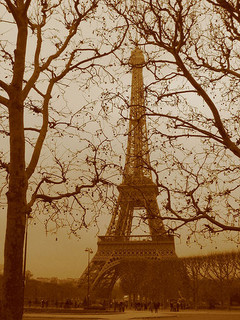
On the cover of my copy of the book are romantically filtered and tinted photos of the Eiffel Tower, and on the pages inside, her writing style evokes the same kind of mood. If stories could be sepia-toned, this is how they might sound.

Actually, the filter through which LaCava encounters the world is her attachment to things. First, there are the small, curious relics—a skeleton key, a mushroom, an opal necklace found in the mud—that she gathers and places on her windowsill. Initially they replace her old collection, “everything that represented [her] past life and its predictable ways,” which is on a container ship making its way across the ocean from New York.

And then there are the objects she encounters from day to day, common things that she illuminates in copious footnotes often taking up more than half a page. Cataloging these objects gives her security and makes sense of her life in a new city . . . as she faces depression and what she calls her own “kind of crazy.”

Some might find her footnotes distracting, but they cover just the kind of obscure topics that intrigue me, such as a Japanese smuggler of black-market butterflies, a photo book dedicated to Salvador Dali’s mustache, and the origins of the tea bag. And they are replete with references to a variety of figures, from Pliny the Elder to Kurt Cobain, from Anne Boylen to Kate Moss.

Much of LaCava’s narrative is about time spent with her father, often searching flea markets for items to fulfill their eccentric tastes. At other times, she talks about her classmates at the international school. She says she was “mostly alone” her first year there. Even among these other outsiders, she doesn’t fit in.

I rode the bus to school and listened to my Discman while the girl in the back row threw gum wrappers at my head. The girls at school didn’t like me very much. They had never given me a chance, decided immediately that I didn’t belong, which was funny, as they didn’t either—at least not in France. They made me feel as if I had done something wrong, and they spoke badly about me to each other. Through my own odd rationalization, I decided excommunicating me meant they belonged to something, simply because I did not. . . .

Come the new academic year, the old class would be replaced with another set of students who had just moved overseas. Only a few remained year after year—and still the same insensitivity.

One day, a classmate tells her that she looks like Angela from the TV series My So-Called Life.

“I haven’t seen it,” she replies.

“Everyone’s seen that show,” he says. “Don’t you have friends in the States? They can send it to you.”

In a footnote, LaCava delves into the significance of the series, quoting Matt Zoller Seitz of The New York Times, who writes, “What the series’ narration does best: it shows how teen-agers try to control their chaotic inner lives by naming things, defining them, generalizing about them.”

That’s what LaClava does, as well—controlling the inner chaos of her life in a Paris suburb by naming the objects she encounters. Then, years later, she examines them even more closely and writes about them so that she can share with us her own kind of strange . . . and her own kind of normal.

(Stephanie LaCava, An Extraordinary Theory of Objects: A Memoir of an Outsider in Paris, New York: Harper Perennial, 2013)
[photo: “Eiffel Tower,” by charley1965, used under a Creative Commons license]