That One Safe Friend [—at A Life Overseas]

337964609_40bf770760_z

Here’s the intro to my post today at A Life Overseas

Do you have that one safe friend?

When I went overseas, I didn’t. In fact, I didn’t even know I needed one.

Don’t get me wrong. I had a lot of friends, good friends, but I didn’t have one particular person who was committed to the role of being that one safe friend. Since then I’ve come to the conclusion that all missionaries—and other cross-cultural workers—need someone whom they trust to be devoted to them because of who they are, not because of what they do, someone who will reach out to them consistently, someone who will encourage them, comfort them, laugh with them, and weep with them.

It’s not that there won’t be several people who could do this for you, but without someone specific to take on that responsibility, you may find yourself with no one. When you have your home church, your sending agency, your family, your coworkers, and your supporters behind you, it’s easy for each individual to think that you’re more than taken care of. At a Parents of Missionaries gathering I recently attended, Dr. Dorris Schulz, director for missionary care for Missions Resource Network, said that if she’s ever drowning, she hopes there’s only one person around. That’s because people in a crowd too often do nothing, assuming that someone else will step in.

Being that one safe friend, doesn’t take an exotic skill set. It’s not someone who has all the answers. And it doesn’t need to be someone with experience living abroad. But it does need to be someone who is a good listener, someone who is caring and empathetic, someone who understands you and understands the core challenges of life, regardless of the setting. It’s not an exotic skill set, but neither is it common to everyone.

You’ll need to be proactive in asking someone to be that friend. Don’t assume that people will come knocking, maybe because they doubt your need or their ability. So if you’re looking, what should you look for? What should you expect from that friend? Here are some suggestions:

Continue reading at A Life Overseas.

[Photo by Magnus Wrenninge, used under a Creative Commons license]

Study Prep: Getting Your Kids Ready for College back in the US

143186839_5c9fad13cd_z

Now that your kids’ school year has started, it’s time to take in a big breath, let it out slowly . . . and start thinking about graduation. Ready or not, college is just around the corner.

Hear that sound? Listen closely. It’s the sound of time marching by.

While we can’t slow down the passage of time, we can prepare ourselves, and our children for what lies ahead. And if going to college in the US is part of your child’s future, then take a look at these tips for getting ready. They’re based on my experience sending two children back to the States for college while we were overseas, putting two into high school in the US (after home schooling and having them attend school abroad), and working in a university admissions office. Do you have anything to add? Let me know in the comments.

  1. Academics
    Before your child begins high school (or as soon as possible thereafter), find out the college-prep requirements and recommendations for the state in which she plans to continue her education. Each state will have its own list of required coursework for entrance into its public institutions, with courses in English, math, science, social studies, and fine arts. The list may also include classes in such areas as foreign language or personal finance. You’ll also want to check with individual colleges, public and private, to find out what additions or exceptions their requirements might have in comparison to the state’s core curriculum.
  2. Homeschoolers
    Most colleges welcome the addition of home-schooled students to their campuses, but homeschoolers will want to find out what documentation is needed and any hoops that they might need to jump through for admission. Students with diplomas from unaccredited high schools may have additional requirements, as well. Also, if students will be transferring to a Stateside high school before graduating, make sure you know the school’s policy on what courses they will give credit for towards graduation.
  3. AP
    For students taking AP (Advanced Placement) courses, check with potential colleges to see what level of test scores they accept. Also, find out if successful completion of an AP course will earn advanced placement (taking the place of a college-level course), credit (hours toward graduation), or both. While you’re at it, see if the school will allow a bilingual child to test out of foreign-language courses. This may or may not be part of CLEP (College Level Examination Program) testing. Testing out of classes not only can help meet degree requirements but can also be an easy way to add a minor.
  4. PSAT/NMSQT
    Students can take the PSAT/NMSQT (Preliminary SAT/National Merit Scholarship Qualifying Test), during their junior year. The test, from the College Board, is used for awarding National Merit Scholarships. High-scoring students who receive semifinalist status can apply to be finalists. Interested students outside the US will need to find a local school that is administering the test. To help with this, the College Board offers a PSAT school search form.
  5. SAT and ACT
    While some institutions don’t require SAT or ACT scores, the majority do. But which one should your child take? There are differences between the two exams. For instance, the SAT emphasizes vocabulary more than the ACT, and the ACT has a science section while the SAT does not. Other differences are more subtle. For a helpful comparison of the tests, see “The SAT vs. the ACT,” from The Princeton Review. You can find international test centers for the SAT here, and ACT’s international sites here. Contact your target schools to see if they “superscore.” Superscoring combines section subscores from two or more test dates, using the highest from each section instead of using only the scores from one date.
  6. Deadlines
    Don’t forget to keep track of deadlines: deadlines for submitting university and scholarship applications, for filling out housing contracts, for making payments or setting up payment plans, etc. Check early, as some will be much sooner than you might think.
  7. FAFSA
    Another big deadline is for filing out the FAFSA (Free Application for Student Aid), found at fafsa.ed.gov. The FAFSA is used to determine how much a family is expected to contribute to a student’s college education and, thus, how much will be offered in financial aid and loans. Results are reported to up to 10 colleges at a time. The application period opens January 1 for the following school year, but each state has its own deadline, found here. Individual colleges may have earlier deadlines, as well. Tax data is necessary for completing the form, but updated information can be supplied later by amending the application. Even if students know that their family won’t qualify for federal or state financial aid, they should submit the FAFSA anyway, as it is often used for scholarship selection. It is important to remember that filling out the FAFSA is free, so if a site asks for payment, it’s not the official FAFSA.
  8. Scholarships
    When it comes to scholarships, there are those offered by individual colleges, and there are many, many more out there that are looking for qualified recipients. Some students treat scholarship application as if it were a job, and it can pay very well, with funds adding up well beyond the cost of school. For reviews on five top scholarship websites, take a look at Blake Sander’s article at MoneySavingPro. Remember that any scholarship or grant money that goes beyond paying qualified education expenses (tuition, fees, and books, but not room and board) is considered taxable.
  9. Transcripts
    Students will need to submit high-school transcripts to colleges as part of the admission process. For most schools, the transcripts will need to arrive in a sealed envelope from the high school in order to be considered official. Some will accept faxed copies from the high school. Foreign transcripts that are not from US accredited schools will need to be evaluated for authenticity, for diploma validation, and for determining a US GPA equivalent. Some colleges will do this in house, while others will require you to send the transcript to a third-party evaluation agency. If the transcript isn’t in English, it may be necessary to have it translated, as well.
  10. Campus visits
    Many colleges offer online virtual tours to help you get a good feel for their campus. Look at the institution’s web site, but you’ll also find a number of schools represented at YouVisit’s college site. If you’re in the States, it’s beneficial to have an in-person visit. If you give a school enough notice before you arrive, they should be able to arrange a tour for you.
  11. In-state tuition
    Back to finances: One of the biggest concerns for out-of-country parents is the issue of in-state tuition for public schools. Even if you’ve previously lived in a state your whole life, the fact that you don’t now means that your child will have to prove he deserves in-state status. The final decision will come from the university, and it will depend on such things as parents’ owning a house there (though that by itself is not enough), living there for a number of years, having ties to the state and other factors that show a probability the student will remain there after graduation, filing state income tax, registering a vehicle, registering to vote, having a library card, etc. Schools have widely varying rules on how students can gain in-state status on their own, such as living in the state as a financially independent adult for a period of time. Some schools offer in-state rates to children of alums or to residents of neighboring states or states with regional student exchanges. Words such as dependentresident, home, and domicile are important to define. (Hint: They may not mean what you think they mean.)
  12. Admissions office
    Make a friend in the admissions office of the colleges you’re serious about, someone you can email, or call, to get answers to your questions. You might get in touch with someone in international admissions, as well, for help with issues that are unique to students living outside the US.
  13. FERPA
    Understand that even if you want to stay in control of your child’s education, you will be limited in the information you can get from the school. Under FERPA (Federal Educational Rights and Privacy Act), the college cannot give you such things as grades, class schedule, or billing information without the students written consent—even if you’re the one paying the bills.
  14. Orientation
    Make plans for your child to arrive in the US in time for student orientation. The earlier she enrolls, the more classes will be available for filling out her schedule. Orientation is a good time for parents, if you’re able to come, to hear first-hand the details of college life. It’s also good time for releasing your child toward independence. (That’s why you’ll probably be sent to a different room while your child picks classes.)
  15. On campus
    You’ll want your children to find community when they relocate. Some campuses will have a residence hall set aside for honors students or a floor designated for students with common educational interests. You can contact local churches and campus ministries (some of which will offer housing). Maybe there’s a Mu Kappa chapter (for missionary kids) on campus. Or maybe the school has a recognized group for Third Culture Kids (TCKs). International student clubs may offer a good fit as well.
  16. Transition
    Our two sons who came back to the US for college while we were overseas attended reentry programs. These were very valuable in helping them understand the transitions they were facing and giving them practical advice for acclimating to US culture. The two seminars we used are sponsored by Barnabas International (they also offer one in partnership with the Narramore Christian Foundation) and Interaction International. For help in understanding the TCK mindset and how to navigate cultural changes, get a copy of Third Culture Kids: Growing Up among Worlds (by David Pollock and Ruth Van Reken) or The Global Nomad’s Guide to University Transition (by Tina Quick).

The kids really are growing up. It’s never too early to get ready. Hear that sound?

[photo: “Graduation Cake Guy,” by David Goehring, used under a Creative Commons license]

Harmonizing Sadness and Joy [—at A Life Overseas]

5389355486_8ae3459399_oIn 2012 I wrote “Can Grief and Joy Coexist?” In light of our own recent sadness, I’ve adapted it and posted it at A Life Overseas. Go there to read it all (and to hear the song at the end.)

Let me add my voice to those who are praising Pixar’s Inside Out as a great movie for the cross-cultural community. I think we’ll be showing clips of it to expats, repats, and TCKs for a long time to come. (If you’ve not seen it and don’t know what it’s about, I suggest you read Kay Bruner’s discussion of the movie, from a counselor’s point of view.)

I hope that someday Inside Out is made into a Broadway musical. I’d like to hear Sadness and Joy sing a duet at the end.

Dealing with Loss

My wife and son and I saw the film in the theater a few weeks ago. It was rather cathartic, as the past several months have been a time for us, like Riley in the movie, to deal with our emotions—while our emotions learn how to deal with each other. It’s been an especially difficult time for my wife. Her father died in March, and then a brother died last month.

Those events have brought back memories of difficulties we faced while we lived overseas. During our time outside our passport country, we experienced the deaths of my wife’s mother and another brother and of my father.

When you lose loved ones, it can trigger so much emotional confusion. When you live far away from them, a whole other set of complications come into play.

It’s not just losing someone we love, it’s often losing the opportunity to say Goodbye or the ability to grieve together when traveling with the whole family isn’t possible.

When should we go back? Who should make the trip? How long should we stay? What if we don’t meet others’ expectations? What are the rules?

And when sadness comes into the life of the missionary, it is so easy to ask, “Where is my joy?”

Read the rest at A Life Overseas.

[photo: “Golden Hearts on Blue,” by Lea Wiertel, used under a Creative Commons license]


Mom and Dad, Thanks for Letting Us Go without Letting Go of Us [Repost]

[In honor of Parents’ Day, July 26, I am reposting an open letter from my wife and me to all parents of missionaries. We wrote it during our time serving in Taiwan.]

Dear Mom and Dad:

Thank you for raising us to know about God and his love for the world.

Thank you for letting us go without letting go of us.

Thank you for forgiving late birthday cards.

Thank you for praying for us.

Thank you for giving up time with your grandchildren.

Thank you for your e-mails and letters and calls.

Thank  you for sending Barbie Dolls, Tic Tacs, Koolaid, socks, Reader’s Digests, and Lucky Charms cereal.

Thank you for your questions about our new home and work.

Thank you for being patient and understanding when we tell you how exciting it is to live in another part of the world.

Thank you for being patient and understanding when, two days later, we complain about living in that same place.

Thank you for not making us feel selfish for wanting to go.  Sometimes we feel that way on our own.

Thank you for listening to our stories about people you’ll never meet with names you can’t pronounce.

Thank you for being our ambassadors.

Thank you for sending clippings from our hometown newspaper.

Thank you for telling us about our neighbors, classmates, and cousins—all the stories that don’t make the news.

Thank you for letting our brothers and sisters stand in for us when we’re too far away to do our part in the family.  (They really should get their own letter.)

Thank you for loving us.

Thank you for trusting Jesus to take care of us when you can’t.

Thank you for being proud of us.  We are proud of you.

We chose to be a missionary family, not you, and we understand that our move has meant many sacrifices for you.  You are not only a part of our family but an invaluable part of our team.

With all our love,

Your children

[photo: “leaving us,” by Petras Gagilas, used under a Creative Commons license]

A Modest List of Invented Expatisms, Inspired by the Dictionary of Obscure Sorrows

822518337_839b806a79_z

My son pointed me to The Dictionary of Obscure Sorrows, where John Koenig creates words to name before-unnamed emotions and ideas. Many of them are melancholy, such as amenuerosis, “the half-forlorn, half-escapist ache of a train whistle calling in the distance at night”; and chrysalism the amniotic tranquility of being indoors during a thunderstorm. . . .”

Others are more on the humorous side. For instance, a reverse shibboleth, is “the practice of answering a cellphone with a generic ‘Hello?’ as if you didn’t already know exactly who was calling . . .”; and lalalalia is “the realization while talking to yourself that someone else is within earshot, which leads you to crossfade into mumbled singing. . . .”

Expats have their own feelings and experiences that are yet to be named, and I think this needs to be remedied. So while I don’t have Koenig’s talent, here are a few of my offerings:

dyslistening
the condition by which your over preparation for answering an expected question in another language overwhelms your auditory senses and you answer the query you’ve anticipated, no matter what is actually said, as in responding to “How many would you like?” with “Yes, but no ice, please.”

welwelwel-ke-come
the glorious sound of the immigration agent thumbing through your passport looking for an empty page—and then adding the stamp that says you’re free to enter.

altivism
gazing out of an airplane window, seeing the new landscape below, and feeling joyfully overcome with the real and imagined possibilities.

visatrig
the act of trying to predict which agent in the office will be the most likely to give you your visa or other important document and then conducting complex calculations concerning the number of people in line in front of you to see if you will get the agent you hope for. A domestic version of this is sometimes encountered in the DMV.

unchewing
the physical and mental reaction that occurs when you realize that the chocolate-covered, cream-filled donut that you just took a bite of is in fact not a donut and that’s not chocolate and the filling might very well have gristle in it.

Finally, here’s one more from Koenig: onism

[photo: “The Dictionary,” by Bethany King, used under a Creative Commons license]

Humanitarian Aid: Caring for Those Who Care for Others

8025828509_cf94e8dc5c_z

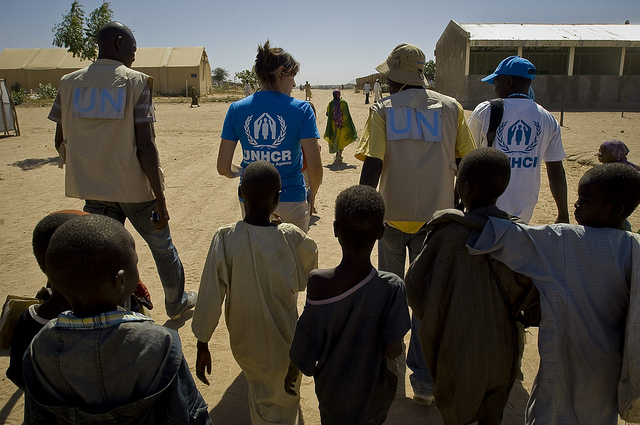
My hat goes off to humanitarian aid workers serving in the world’s neediest places as they face the very threats that call for their help: war, terrorism, poverty, disease, famine, natural disasters, and the list goes on.

My heart goes out to them, too, as they face not only those dangers, but mental and emotional stresses, as well.

Outer Turmoil

In their latest “Aid Worker Security Report,” Humanitarian Outcomes announced that 2013 marked an all-time high for the number of civilian aid workers who were victims of violence. The 460, an increase of 66% over the previous year, were the targets of 251 separate attacks, including shootings, kidnappings, bodily assaults, and explosives.

Those working in their own countries accounted for the vast majority, 87%, of the victims, but the 13% who were expats represented a greater rate of attack, as they made up less than 8% of workers in the field.

A study by the Johns Hopkins Bloomberg School of Public Health, looking at 18 humanitarian organizations for the period between 2002 and 2005, found that deaths, medical evacuations, and hospitalizations due to violence occurred at the rate of 6 per 10,000 aid worker person-years.* Of all deaths reported by the organizations, 55% were caused by intentional violence. Coincidental illness accounted for 27% of the deaths, and accidents made up 15%.

In another study, researchers from Geneva University Hospitals surveyed expats returning from their missions with the International Committee of the Red Cross (ICRC). They found that 36% reported having worse health than when they began, 16% said that they had been exposed to violence, and 10% reported injury or accidents.

A look at these numbers highlights the real need for physical care for aid workers. But the risks of humanitarian work also takes its toll on mental and emotional health. Another finding of the Geneva survey was that 40% of the ICRC workers reported that their service had been more stressful than they had expected. Certainly, attention to mental and emotional well being is also an ongoing need.

*Simply put, a “person-year” is a unit of measure representing the number of people involved in a study multiplied by each individual’s time spent in that study.

(Abby Stoddard, Adele Harmer, and Kathleen Ryou, “Unsafe Passage: Road Attacks and Their Impact on Humanitarian Operations,” Aid Worker Security Report 2014, Humanitarian Outcomes, August 2014; E.A. Rowley, et al., “Violence-Related Mortality and Morbidity of Humanitarian Workers,” American Journal of Disaster Medicine, Jan-Feb 2008; A.H. Dahlgren, et al., “Health Risks and Risk-Taking Behaviors among International Committee of the Red Cross (ICRC) Expatriates Returning from Humanitarian Missions,” Journal of Travel Medicine, Nov-Dec 2009)

Inner Turmoil

The causes of stress on humanitarian aid workers are many and varied. There are acute stressors, such as those from the events shown above, as well as chronic stressors, relating to day-to-day pressures and environmental and workplace factors.

When UNHCR, the UN Refugee Agency, surveyed aid workers in Pakistan and Bangladesh in 2012, they asked them which of the following items were “a common cause of stress.”

  • Exposure to suffering of persons of concern
  • Exposure to incidents when you were seriously injured or your life was threatened
  • Political situation in the county where you are presently working
  • Relationship with supervisors
  • Relationship with work colleagues
  • Family concerns
  • Health concerns
  • Safety concerns
  • Financial concerns
  • Feeling undervalued
  • Feeling unable to contribute to decision making
  • Status of employment contract
  • Workload
  • Working hours
  • Ability to achieve work goals and objectives

While no one would argue that exposure to suffering, violence, and threats are not legitimate stressors, the aid workers’ responses showed that more-mundane factors played a greater role in harming their mental health. The top-five stressors they reported were

  1. Workload
  2. Status of employment contract
  3. Feeling undervalued
  4. Family concerns
  5. Feeling unable to contribute to decision making

Respondents were also asked about symptoms that commonly show up with depression and post-traumatic stress disorder (PTSD). At least half reported “feelings of sadness, unhappiness, or ’emptiness'” (57%), “irritability or frustration, even over small matters” (54%), and “fatigue, tiredness and loss of energy” (50%).

In a study published in 2012 (referred to by UNHCR), researchers from the U.S. Centers for Disease Control and Prevention (CDC), among other organizations, asked participants from 19 international NGOs about their mental health before and after their period of service. Before deployment, 3.8% of respondents reported symptoms of anxiety; immediately after they returned from deployment that figure had risen to 11.8%; and a follow-up 3-6 months after deployment showed 7.8% with symptoms. Before deployment, 10.4% reported symptoms of depression, 19.5% post-deployment, and 20.1% at the follow up. And finally, in the area of psychological distress, the rates were 6.5%, 14.7%, and 17.6%, respectively.

Another study from 2012 looked at national aid workers serving in northern Uganda with 21 humanitarian-aid agencies. The researchers, from Columbia University, Fuller Theological Seminary, and the CDC, found that 68% of respondents reported symptom levels associated with a high risk for depression, 53% for anxiety disorders, and 26% for PTSD.

What Can Be Done?

What steps can be taken to help humanitarian aid workers facing threats to their physical and mental well-being?

Giving a comprehensive list of protocols for tackling the threats of violence is well beyond my abilities, but I can point in the direction of a few resources.

For instance, on the subject of combating violent situations, Humanitarian Outcomes’ annual “Aid Worker Security Report” tackles specific threats, such as kidnappings (2013) and road attacks (2014). Staying Alive: Safety and Security Guidelines for Humanitarian Volunteers in Conflict Areas, written by a decorated member of the British Army and former operational security advisor for the ICRC, gives a comprehensive look at avoiding threats. And “To Stay and Deliver: Good Practice for Humanitarians in Complex Security Environments,” published by the United Nations Office for the Coordination of Humanitarian Affairs/Policy Development and Studies Branch, was written for “aid practitioners and their organisations seeking practical solutions to gain, maintain, and increase secure access to assist populations in a range of complex security environments.”

While the physical and mental consequences of traumatic events has long been recognized, as the UNHCR report points out, only recently have the debilitating effects of chronic stressors for aid workers begun to come into focus. “Humanitarian agencies,” it states, “are increasingly concerned about the potential impact of staff stress on effectiveness and efficiency of service delivery.”

In developing their study and evaluating their organization’s reduction of and response to worker stress, UNHCR used stress-management guidelines formulated by the Antares Foundation. Antares, a Netherlands-based non-profit providing staff care to humanitarian and development organizations, was also involved in the two 2012 studies previously cited here. Its eight guidelines for agencies are

  1. Having a written and active policy to prevent or mitigate the effects of stress.
  2. Systematically screening and/or assessing the capacity of staff to respond to and cope with the anticipated stresses of a position or contract.
  3. Ensuring that all staff have appropriate pre-assignment preparation and training in managing stress.
  4. Ensuring that staff response to stress is monitored on an ongoing basis.
  5. Providing training and support on an ongoing basis to help its staff deal with their daily stresses.
  6. Providing staff with specific and culturally appropriate support in the wake of critical or traumatic incidents and other unusual and unexpected sources of severe stress.
  7. Providing practical, emotional and culturally-appropriate support for staff at the end of an assignment or contract.
  8. Having clear written policies with respect to the ongoing support offered to staff who have been adversely impacted by exposure to stress and trauma during their assignment.

After assessing UNHCR’s shortcomings in these areas, the writer of the UN agency’s report presented four recommendations for improvement. Each of these is presented in greater detail in the publication:

  • Ensure appropriate response and follow up for survivors of critical incidents
  • Increase availability and utilization of formal mental health and psychosocial support
  • Encourage informal social support amongst staff
  • Enhance accountability of staff welfare related services through regular rigorous evaluation, clear staff welfare policies, and role distinction between sections

As a result of their own findings, the researchers behind the first CDC study above also present a list of recommendations for aid organizations, designed to “diminish the risk for experiencing mental illness or burnout during deployment”:

  • Screen candidates for a history of mental illness and family risk factors pre-deployment and provide expatriate employees psychological support during deployment and after the assignment is completed. Although possibly controversial given the considerable stigma associated with mental illness, screening allows organizations to alert candidates to the risks associated with deployment and to consider means for managing and supporting such workers during and after their employment.
  • Staff should be informed that a history of mental illness and family risk factors may create increased risk for psychological distress during deployment.
  • Provide the best possible living accommodations, workspace, and reliable transportation.
  • Ensure, when possible, a reasonable workload, adequate management, and recognition for achievements.
  • Encourage involvement in social support and peer networks.
  • Institute liberal telephone and Internet use policies, paid by the organization [to] help increase social support networks of deployed staff.

If only all of these could be implemented. Maybe they can. But even if that happens, care for humanitarian aid workers needs to go beyond what their organizations might be willing or able to provide. Care needs to extend beyond the workers’ time with the organization, and it needs to aim for the health of the workers for the workers’ sake, not just for the sake of the service they are providing.

This will take more groups and individuals who can provide the “formal mental health and psychosocial support” (see UNHCR’s list). To this I would add spiritual support, as well. It will also take groups and individuals who can become part of the “social support networks” (see the CDC list).

Both of these will require those groups and individuals, and the workers themselves, to be proactive in implementing the necessary relationships.

May we continue to document and understand the problem, may we continue to draw attention to the risks faced by humanitarian aid workers, and may we continue to seek solutions. These workers are a valuable resource for a needy world. They are also deserving of help when they become the ones with needs.

May we provide them with safe people and safe places in the midst of the dangers.

(Courtney E. Welton-Mitchell, “UNHCR’s Mental Health and Psychological Support for Staff,” United Nations High Commissioner for Refugees, July 2013; Barbara Lopes Cardozo, et al., “Psychological Distress, Depression, Anxiety, and Burnout among International Humanitarian Aid Workers: A Longitudinal Study,” PLoS One, September 2012; Alastair Ager, “Stress, Mental Health, and Burnout in National Humanitarian Aid Workers in Gulu, Northern Uganda,” Journal of Traumatic Stress, December 6, 2012; Managing Stress in Humanitarian Workers: Guidelines for Good Practice, Third Edition, Antares Foundation, March 2012)

[photo: “Darfurian Refugees in Eastern Chad,” by European Commission DG ECHO, used under a Creative Commons license]
When Grandma’s Lap Is Far Away

8263620238_4df2a740c8_z

Diane Stortz knows a thing or two about being separated from family. She’s the co-author of Parents of Missionaries: How to Thrive and Stay Connected when Your Children and Grandchildren Serve Cross-Culturally.

She also knows a thing or two about children’s books, having written Words to Dream OnThe Sweetest Story Bible, and a couple for Roman Downey’s Little Angels series, among others.

By my reckoning, that means that she knows two things or four about finding books to send to grandchildren overseas.

If you’d like some good advice, go to her blog and read her five points on what to look for when choosing the right storybook for children.

And at Christian Children’s Authors, she puts in a plug for recordable children’s books. Maybe it’s because I don’t have grandchildren yet, but I never knew there was such a thing. What a great idea for staying in touch with faraway granddaughters and grandsons, nieces and nephews.

In this post, Stortz mentions three publishers that produce recordable books: Hallmark, DaySpring, and Publications International. Using that as my starting point, here’s a sampling of what I found (it includes lots of grandmas and lots of bears)—

Conversations to Keep: Grandma and Me
That’s What Grandmas Do
My Grandpa and Me
Guess How Much I Miss You

Guess How Much I Love You
Under the Same Moon
What Aunts Do Best/What Uncles Do Best
I Love You So Much

I Love You Head to Toe
Wherever You Are: My Love Will Find You
Bright and Beautiful
All Day Long with Jesus

Bedtime Prayers and Promises
Sesame Street, Together at Heart
If . . . 

And here are a couple for sending back the other way—

I Love You Grandma
My Grandma Is Special

Susan Adcox, “Grandparents Expert” at About.com, writes that Hallmark recordable books are “pure magic.” “What child wouldn’t be entranced to open a storybook and hear it read in a grandparent’s voice?” she asks.

She goes on to compliment the recording process, calling it “practically foolproof.”

What Is a Bridge but a Paradox?

5078301307_31b7f7a46a_z

What do you see when you see a dock?

A place for studying the horizon?
For dipping a toe in the water?
For casting off?

Or a place for lowering your sails?
For stepping onto dry land?
For coming ashore?

Is it a place for setting out or coming back? Much depends on the compass of your heart.

If for you, the dock is too short, out of desire or necessity, you build it forward, step by step, plank by plank, as you go—through the spray and the mist and the fog. And when you’ve built till you’re more coming than going, you see another shore—build, step, build, step. You are there.

This is crossing cultures. This is creating a bridge. This is going from home to home.

Then, at some point, out of desire or necessity, you step back onto the bridge. You must have been gone a long time, because what was once a complete span is now incomplete. You need to build to close the gaps. And at times you’re simply on a dock again, building to a shore you cannot yet see. Strange. It was a bridge before.

This time while you’re crossing, you find that in the mist there are others with you, and when they talk, you understand them, because they are speaking your language.

“Where are you from?” you hear someone ask, and the answer, “That’s an interesting question.” “You, too?” one says. “Me, too,” another replies. You understand them, not because you use the same words, but because when you speak those words you agree on the impreciseness of their meanings: near, far, hot, cold, friends, enemies, rich, poor, family, strangershere, there, hello, goodbye. Their meanings are slippery, like the damp boards beneath your feet. And the slipperiness is comfortable.

In time, you cross the bridge again and again, sharing familiar greetings with those in the misty middle. But never do you set out without having to repair what was built before. You continue . . . build, step, build, step.

What is a bridge, but a paradox, leading from home to home, from not-home to not-home? Your heart’s compass spins. The shores, they push and pull, they give hugs at arms length, they don’t plan on changing, but they do. The same can be said of you.

And then, out of desire or necessity, you settle down farther inland. You put down roots in loose soil. There’s a dock over the next, next hill. You go to visit from time to time and walk its length. You listen to the slap of the waves. You breathe in the smell of the ocean. You taste the salt in the air . . . and you remember the sounds and the smells and the bitter-sweet flavors of where you used to be.

What do you see when you see a dock?

You put down roots in loose soil, but you still speak the language of the bridge.


These thoughts are inspired by Mission Training International‘s “Pair of Ducks.” MTI uses two rubber ducks—a “yay duck” and a “yuck duck”—to show cross-cultural workers and their kids that all the places where they’ve lived have their good and bad parts.

[photo: “Harbour Bridge,” by D.Reichardt, used under a Creative Commons license]