International Students—They Come to Study but Do They Stay?

5562359204_9ec9cbe5d5_n
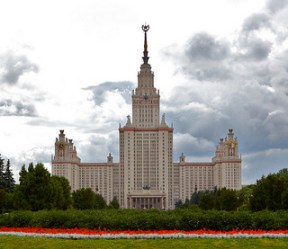
Moscow State University’s main building

Russia wants its future scientists, teachers, engineers, and medical personnel to attend the world’s top graduate schools. In fact, reports the Russian-language Begin, they want it so much that the government is offering to subsidize the cost. The program, recently signed into effect by President Vladimir Putin, aims to send out about 1,000 students a year, each with an average yearly grant of 1.5 million rubles (about US$44,000).

But there’s a catch. The students must return and work in Russia for three years, or they will have to pay back the grant plus a 200% fine.

This is just one salvo in the battle for bright young minds that’s going on around the globe. Sending countries, like Russia, are worried about “brain drain,” so they want their citizens to come back with their new-found knowledge and training. And their worries aren’t unfounded, as host countries are striving to increase “stay rates,” wanting the visiting students to make themselves at home and stick around for good.

No Need to Rush Off

According to the Organisation for Economic Co-operation and Development (OECD), made up of 34 countries, the average stay rate for international students is 25%. Here, “staying” is defined as foreign nationals’ changing their visa status to something other than “student,” as opposed to not renewing their student permits and leaving.

Using data from 2008 and 2009, OECD further reports that in most member countries, over 20% of visiting students remain in their host countries. In Australia, Canada, the Czech Republic, and France, the stay rate is over 30%.

In the US, an OECD-member country, the rates among those receiving doctorates in science and technology is much higher. Michael Finn, of the Oak Ridge Institute for Science and Education, writes that in 2007, the one-year stay rate (counting 2006 graduates) for those in this group was 73%. The two-year stay rate was 67%; the five-year rate was 62%; and the 10-year rate was 60%. Finn’s study shows that the five sending countries with the highest five-year stay rates were China, India, Romania, Yugoslavia, and Ukraine.

Why are countries striving to increase their stay rates? One reason is economics. The ICEF Monitor reports on a study from the Netherlands showing that if 20% of their international student population (more than 58,000, compared to 819,000 in the US) stays, it would help the economy by about €740 million (approximately US$1 billion). But the immigration of foreign graduates also helps in “the development of competitive knowledge economies.” This is especially important in developed countries, which have mismatches of jobs and skills and where low birth rates are producing aging populations.

Brain Drain vs Brain Gain
6805412174_5aa12464f6_n
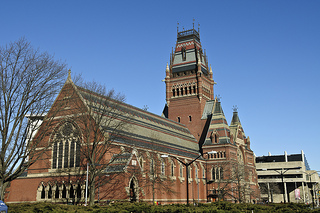
Harvard’s Memorial Hall

As the competition to attract and keep the world’s scholars heats up, countries around the globe are loosening immigration restrictions to allow more international students to stay after graduation. This is especially true for graduates in the highly prized STEM fields: Science, Technology, Engineering, and Mathematics.

The US is no exception, with plans to attract foreign-born STEM graduates as a significant factor in several current immigration-reform proposals. For instance, President Barack Obama’s plan calls for giving a green card to PhD and master’s degree graduates in STEM fields who find work in the US. He calls it “stapling” green cards to their diplomas. In January of last year, the president described the goal this way:

If you’re a foreign student who wants to pursue a career in science or technology, or a foreign entrepreneur who wants to start a business with the backing of American investors, we should help you do that here. Because if you succeed, you’ll create American businesses and American jobs. You’ll help us grow our economy. You’ll help us strengthen our middle class.

Sounds like one more thing for Putin and Obama to spar over.

(Sergey Titov and Gregory Milov, [Google translation of Russian article] “The State Is Ready to Pay for Training Russians in Foreign Universities,” Begin, January 14, 2014; “How Is International Student Mobility Shaping Up,” Education Indicators in Focus, OECD, July, 2013; Michael G. Finn, “Stay Rates of Foreign Doctorate Recipients from U.S. Universities, 2007,” Oak Ridge Institute for Science and Education, January 2010; “Increasing the ‘Stay Rate’ of International Students,” ICEF Monitor, May 30, 2013; “Creating an Immigration System for the 21st Century,” The White House)

[photos: “Moscow State University,” by Steve Jurvetson, used under a Creative Commons license; “Harvard University – Memorial Hall,” by Chen Yen Lai, used under a Creative Commons license]

Repost – Merry Christmas, Colonel Sanders-san

Here’s a repost of something I wrote back in March of 2012—it was only my fifth entry—back when I had no followers and very few readers. It’s an interesting and timely story, and helps give me a break during the busyness of the holidays. May you enjoy the blessings of Christmas, wherever you are in the world.

SONY DSCIn the early 1970s, a Christian missionary school in Tokyo was looking for turkey for Christmas dinner. Finding none, a representative contacted the local Kentucky Fried Chicken and ordered chicken instead. A KFC employee suggested the company turn the request into an ad campaign, and Japan has never been the same since. Today, KFC’s Christmas Party Barrels are so popular that sales for December 23rd, 24th, and 25th usually equal half of what is sold during a normal month, and Christmastime customers wait in long lines to pick up their orders, placed as early as October. Very few in Japan celebrate Christmas for its religious meaning, as less than 2% of Japanese even call themselves Christian. Instead, consumerism is emphasized, and the focus is on gifts, decorations . . . and chicken from the Colonel.

(Lindsay Whipp, “All Japan Wants for Christmas Is Kentucky Fried Chicken,” Financial Times, Dec. 19, 2010)

[photo: “KFC Colonel Santa” by Kleemo, used under a Creative Commons license]

Fair Trade: This Christmas, Give a Gift That Comes with a Story

4947581304_acf10471ff
A handmade nativity set from Ten Thousand Villages is an example of fair-trade gifts available online.

Tasha Simons tells about meeting Tavi, cofounder—along with Center for Global Impact—of byTavi, a “faith-based micro-enterprise initiative . . . [that] teaches at-risk, impoverished women how to sew handbags and other accessories”:

She shared her heart, telling me how she lost both her husband and daughter to AIDS and how Center for Global Impact (CGI) had helped her learn a skill. Now with the income from making purses, she could send each of her kids to school and purchase needed medicine to help her stay well as she also has AIDS. Tavi also shared about the pride she has in her home. She was able to replace her mud floor with a cement one, which significantly improved her living conditions. When we finished talking, she asked: “Will you be my sister?”

Along with Tavi, there are currently over 40 Cambodian women in the byTavi workshop. Another one of them is Sreymao, who serves as a manager and designer. One of her creations is the “Wave Bag,” a large multi-purpose bag with four slip pockets hidden in a colorful wave design.

I learned about byTavi last week when I spent a day at the International Conference on Missions (ICOM) in Kansas City and got to see some of their products firsthand. It is certainly not the largest organization selling “fair-trade” gifts and crafts online, but it’s on my list of online retailers with which I’ve had some sort of personal connection. Maybe you’ll see something you like, or maybe you’ll be spurred on to look for other outlets. (If you want something much more extensive—and maybe a little overwhelming—try the Fair Trade Federation’s searchable online shopping site.)

So here you go, four sources for gifts with stories:

  • byTavi
    Besides the Wave Bag, byTavi also sells handcrafted elephant coin purses, scarves, totes, and quite a bit more. You can even see photos of the Cambodian seamstresses—and read about many of them—at their site.
  • Rapha House’s Freedom Store
    Rapha House International is a ministry that fights child trafficking and sexual exploitation by, among other things, providing safehouses for girls in southeast Asia and by helping them move beyond residential care through emotional support and vocational training. Rapha House’s first safehouse was established in Cambodia, and their home office is located in Joplin, Missouri (where I live). Their Freedom Store includes such items as bracelets, cosmetic bags, and backpacks.
  • Saffron Coffee
    The Saffron Coffee Company sells “100% shade grown organic Arabica coffee” from the mountains of northern Laos and processed outside the city of Luang Prabang. It was started by a friend of mine and his Laotian wife (whom I just met at ICOM) to give hilltribe farmers a sustainable cash crop, replacing the opium poppies that they used to grow. The company sells bags of several types of coffee—ground and as beans—as well as green coffee beans by the pound.
  • Ten Thousand Villages
    OK, this is one of the largest fair-trade organizations.. But I’d never heard about it until I read that a group of college students and academic and business leaders in nearby (to me) Pittsburg, Kansas, had opened up a store selling their wares from around the globe. Started in 1946, Ten Thousand Villages offers a wide variety of  “unique handmade gifts, jewelry, home decor, art and sculpture, textiles, serveware and personal accessories,” fashioned by “disadvantaged artisans” in 38 countries. (Info about these artisans is included throughout their Website.) They even have a clearance section, featuring more Christmas ornaments than you can shake a handmade chopstick at.

(Tasha Simons, “My Sister Tavi,” byTavi, May 2, 2013; Kristen Baynai, “byTavi Spurs Creativity,” byTavi, May 21, 2013)

 [photo: “Village Festival 7,” by pennstatenews, used under a Creative Commons license]

Al Jazeera America Launches Today—Are You Watching?

321612084_f897d0c516_nAsk Americans what Al Jazeera is, and my guess is that more than a few will assume that it must be an organization of terrorist fighters. Even among those who know that it’s a news outlet, many remember it for the videos it aired from Osama bin Laden following the 9/11 attacks and view it with suspicion.

Those are viewpoints that Al Jazeera hopes to change as it launches its cable channel, Al Jazeera America, today. Al Jazeera gained its foothold in the US market in January when it purchased Al Gore’s Current TV for around half a billion dollars.

Overcoming perceived prejudices and misconceptions, as well as accusations of bias—the organization is owned by the government of Qatar—might be an uphill battle in the US, but Al Jazeera America CEO Ehab Al Shihabi believes its winnable. He told NPR’s Sarah Abdurrahman that Al Jazeera was already rated as the “number five strongest brand in the world” in 2010. (I couldn’t find a reference to a 2010 ranking, though in 2004, Al Jazeera did place number five in Brandchannel’s Readers’ Choice Awards for brands with the most global impact, one spot behind IKEA and Starbucks and in front of Mini cars and Coca-Cola. Al Jazeera didn’t appear in the top ten in 2005 or 2006, the last years for results on Brandchannel’s website.)

The company has no plans to change the name, and Abdurrahman is confident that if viewers simply try it out, Al Jazeera America will win them over.

Ali Velshi, formerly of CNN, will host the new network’s show “Real Money.” He told NPR that he likens the appearance of Al Jazeera America to the arrival of Japanese cars to the US in the 60s and 70s. Even though Japan had recently been America’s enemy, in time, Toyota and Honda became top brands.

One way that Al Jazeera America is Americanizing its image is by hiring reporters, anchors, and other staff known for their work on familiar networks. Besides Velshi, these include Soledad O’Brien and Sheila MacVicar, from CNN; John Seigenthaler, from NBC and MSNBC;  David Shuster from Fox and MSNBC;  and Joie Chen, formerly with CNN and CBS. Kate O’Brian, former vice president of ABC News, has taken the role of president of Al Jazeera America, as well.

The new channel is also taking steps to prepare more American staffers to join its ranks, with Al Jazeera America planning to partner with Northwestern University’s Medill School of Journalism to offer internships to Medill students. Northwestern has had a campus in Qatar, awarding degrees in communications and journalism, since 2008.

So, what happens after today? Ten years from now, will Al Jazeera America have passed into history? Will it struggle to gain viewers, propped up by grants from the emir of Qatar? Or will it have taken its place as a major competitor on the cable landscape, becoming as American as baseball, hot dogs, apple pie, and . . . Toyota?

(Sarah Abdurrahman, “Al-Jazeera America Will Have to Work Hard to Win Viewers,” NPR, August 16, 2013; “Readers’ Choice: Global Top Votes,” Brandchannel; Roger Yu, “Al Jazeera America: Will US Viewers Buy It?USA Today, August 11, 2013; Don Kaplan, “Al Jazeera America Prepares to Make Big News with Hires Including Soledad O’Brien and Joie Chen,” New York Daily News, August 15, 2013; Matt Paolelli, “Al Jazeera America Announces Plans,” Northwestern University News, April 30, 2013

[photo: “The Nerve Centre,” by Laika slips the lead, used under a Creative Commons license]

Related Post:
Fake News: You Can Fool All of the World Some of the Time

The Changing Face of the World, with or without Plastic Surgery

1341534683_634ca4e8e2_mIn 2011, when National Geographic reported on the global population reaching 7 billion, it determined that the “most typical” person in the world is a 28-year-old Han Chinese male.

But that doesn’t mean that the East Asian look is the most popular. Many Asians, such as those in South Korea, are using cosmetic surgery to gain a more Westernized appearance. While Americans have the most plastic-surgery procedures each year, on a per-capita basis, South Korea comes out on top, with 16 procedures per 1,000 people in 2010. Here is the complete list of the top-10 countries:

  1. South Korea
  2. Greece
  3. Italy
  4. Brazil
  5. Colombia
  6. US
  7. Taiwan
  8. Japan
  9. France

In South Korea, as in many East Asian countries, popular procedures—aimed toward an idealized Western appearance—include narrowing and sharpening the nose, adding double creases to eyelids, lightening skin, slimming round faces, and reducing calf size.

But using surgery to chase the features of another culture carries “complex psycho-social implications,” says Mario Dini, director of the University of Florence’s School of Plastic and Aesthetic Surgery. “A foreign patient who wants to westernize their face, which is universally considered ‘successful,’” he tells La Stampa, “hopes that the scalpel will change their culture too—but this isn’t possible.”

Anthropologist and journalist, Geneviève Makaping, from Cameroon, agrees:

The risk of unconditionally accepting to operate on patients and respond “yes” to all of their requests is to leave them in a cultural limbo. The people who want to erase, or minimize, their physical origins usually aren’t completely assimilated with Westerners, and are turned away from their own social groups who criticize and stigmatize this choice because they feel their faces are being discriminated against.

Of course, global norms and ideals continue to change. Watch this National Geographic video  and you’ll see that by 2030, the most typical person will be from India.

Given time, though, due to  intermarrying across cultures, we all my end up looking like Brazilians. Stephen Stearns, an ecology and evolutionary biology professor at Yale, tells LiveScience that since the invention of the bicycle the distance between potential spouses has continually increased. Bring in paved roads, automobiles, and airplanes, and our wold has become even smaller when it comes to finding a mate. This means that recessive traits will become fewer and fewer, and other traits that separate us now will blend together. What will this look like? In a few hundred years, according to Stearns, it will look Brazilian.

But why stop at a few hundred years? What about in 100,000 years? Artist Nickolay Lamm teamed up with Alan Kwan, a computational genomicist, to illustrate what they think future humans might look like. Published two weeks ago at MyVoucherCodes.co.uk, Lamm’s renderings show features brought on by increased brain size and life in space colonies. Maybe those old movie images of aliens with large foreheads and oversized eyes were on to something.

100000-Years_feature


(“A Cut Above,” The Economist, April 23, 2012, using information from the International Society of Aesthetic Plastic Surgery; Rosalba Miceli, “Plastic Surgery as a Way to Look Less ‘Ethnic’—and Get Ahead?” Worldcrunch, April 15, 2013, translated from “La chirurgia plastica ‘etnica’ può cancellare i pregiudizi razziali?” La Stampa, April 2, 2013; Natalie Wolchover, “Will Humans Eventually All Look like Brazilians?” LiveScience, September 18, 2012; Nickolay Lamm, “What Will Humans Look Like in 100,000 Years?What’s Hot, MyVoucherCodes, June 7, 2013)


[photo: “Eyes,” by XracZ, used under a Creative Commons license; illustration by Nickolay Lamm, used with permission]

Exporting Fast Food: The Biggest American Chains

Ronald McDonald in Thailand

You already know that McDonald’s is the global king of fast-food success, but do you know which US chains are next in line outside of America’s borders?

Well, the answer depends on how you define success. If overall non-US sales is important to you, then number two is KFC, followed by Burger King (according to figures from 2011).

But if you’re more of a How-many-international-restaurants-do-they-have? kind of person, then Subway comes after the Golden Arches and KFC.

Or maybe you care about who’s expanding the most. In that measurement, McDonald’s isn’t in the top five. The three American companies that opened the most non-US units—from 2009 to 2010—are Subway, Dunkin’ Donuts, and KFC.

All this information comes from QSR‘s “Global 30,” a sortable list ranking the top American “quick-service” restaurants outside the US.

Below are the ten American chains with the most restaurants outside the US. That’s the list I’m most interested in, since that gauges your chance of running into one of them overseas. Most are in Taiwan, so I’m adding embellishments from my experiences during my time in Taipei. We had more than our fair share of American fast-food outlets in the capital city, but there were still some gaps. I mean, how can a city of 6 million be Taco Bell-less?

  1. McDonald’s – 18,710 units
    When we first arrived, we didn’t have the vocabulary to order individual items, so we just ordered meals by number. This meant a soda for even our smallest child, and we had four children. One day I walked up three flights of stairs (most McDonald’s in Taiwan are vertical) balancing 6 Cokes on a tray. I was pretty proud that I’d made it and pretended to stumble when I got to our table . . . and spilled the whole tray. . . . On another day we went to our local McD’s to find out that they’d run out of hamburger. I didn’t know that was possible.
  2. KFC – 11,798
    The extra crispy chicken at Taiwan’s KFCs is spicy hot, which we grew to like more than its American counterpart. And because the Taiwanese like dark meat better than white meat, when we ordered a bucket of chicken, we could substitute white for dark at no extra cost. One negative is that their KFCs don’t have slaw. I love KFC’s slaw.
  3. Subway – 10,109
    You could almost replace your vegetable-vocabulary unit in language learning with several trips to Subway. If you want the right toppings on your sandwich, you simply have to learn the words. Pointing at “that green thing” won’t do. Building a sandwich at Subway is like a chapter test. . . . By the way, a Subway near us in Taipei also ran out of meat. For a few days it was a salad shop.
  4. Pizza Hut – 5,890
    We had a Pizza Hut around the corner from our last apartment in Taiwan. Loved their pepperoni pizza. Not so crazy about toppings with peas or corn . . . or squid . . . or tuna.
  5. Starbucks – 5,727
    Most of what I have to say about Starbucks I’ve already said here. The chain has made a big enough impact on the tea-drinking island of Taiwan that several coffee shops have sprung up with circular green logos and/or copycat names (ecoffee, for example). My favorite was the shop that had a sign that said, in a small font, something like, “We’re Not,” over the very large, “STARBUCKS.”
  6. Burger King – 4,998
    For a while, my absolute favorite sandwich was a bacon cheeseburger from the Burger King in Keelung next to the train station, eaten on the train as I and a teammate rode back to Taipei after our evening Bible studies with students at the National Taiwan Oceanic University. My second favorite sandwich near the station was a da chang bao xiao chang, or “big sausage wrapped around a small sausage” (the outer “sausage” was made from sticky rice).
  7. Domino’s – 4,422
    After serving for two years as a Mormon missionary in Taiwan, Scott Oelkers returned to Minnesota and double majored in Chinese and economics. Following his graduation, he got a job as a buyer for Domino’s Pizza International and worked his way up to vice president. He sold franchise rights in Taiwan to a private equity firm, and the firm asked him to run the business for them. He did, and in the process became a minor celebrity in Taiwan with his humorous TV commercials. Now Oelkers is president and CEO of Domino’s in Japan. He’s still making commercials, like the one below that just came out last month. Betsy Isaacson of the Huffington Post calls it “the most awkward ad in the universe.” I guess one man’s awkward is another man’s profitable.
  8. Dunkin’ Donuts – 3,005
    When the first Mister Donut opened in Taipei in 2004, the lines were so long that there was a sign a ways back on the sidewalk that read, “240 minutes from this point.” Dunkin’ Donuts came not long after, and we were glad to see one open in our neighborhood. We held our team meetings there for a while because we usually had the upstairs mostly to ourselves. Not a good sign. It closed.
  9. Dairy Queen – 802
    There’s no DQ in Taiwan that I know of (and we usually heard about those kind of things). I do see from an article in Taiwan Today that one was slated for opening in 1986 “located near Church’s Texas Fried Chicken and Lotteria in Taipei.” Someone else with a longer history in Taiwan would have to say whether it ever opened its doors.
  10. Papa John’s – 755
    We’re getting farther down on the list, and neither is there a Papa John’s in Taiwan. But that doesn’t mean there’s not room for another pizza franchise, or room for some other kind of fast-food chain. The question is, which one should it be? . . .

For those of you living outside the US, are there any restaurants that you long for? For you American expats, what tastes do you miss, and what do you think would go over well among the locals?

Wendy’s? It comes in at number 11. Taipei used to have at least one. I’ve heard stories from my former coworkers, and a Taipei Wendy’s is even the setting for a short scene in Ang Lee’s 1994 movie, Eat Drink Man Woman.

Or how about Long John Silver’s? It didn’t make the Global 30. One came to Taipei for a short time. We ate there a couple times just to try it out. As I recall, it didn’t last more than a year.

Oh, yeah. There’s Taco Bell (#19). Why can’t you find more Taco Bell’s overseas? I can’t count how many times I heard American expats say that when they get back home the first thing they want to do is eat at a Taco Bell.

I asked a good Taiwanese friend—who had studied at a US university—if he thought Taco Bell would do well in Taiwan. He wasn’t sure that it would, as Mexican flavors don’t always fit the Asian palate. Then I asked him about Arby’s (#21). It seems to me that roast-beef sandwiches could fit in in a lot of cultures, and I like them a lot, too. He said, no, that he didn’t think that there would be enough room for parking. That seemed strange since most fast-food restaurants in Taiwan don’t have any dedicated parking at all. When I questioned that, he said that Arby’s are just too big for Taiwanese. I was confused. Were we talking about the same thing? They’re too big, he said again. Who in Taipei would have room to park an RV?

Hmmmm. Maybe our miscommunication has birthed an idea. How about setting up a fleet of mobile Arby’s in RVs around the globe. I wonder. . . .

(“The Global 30,” QSR Magazine, April 30, 2013; “Scott Oelkers: Bringing Something Extra to the Table,” College of Liberal Arts, University of Minnesota; “Personality, Pizzaz Mixes with Pizza,” Taipei Times, September 9, 2002; Ashley Chang, Tiffany Huang, and Alan Wu, “Mister Donut—Worth the Wait?” Centered on Taipei, December 2004/January 2005; Betsy Isaacson, “Domino’s Ad Featuring Japanese Computer-Generated ‘Vocaloid’ Hatsune Miku Is Incredibly Awkward,” March 8, 2013; “Dairy Queen Joins American Parade of Food Chains to ROC,” Taiwan Today, December 29, 1986)

[photo: “Sawatdee Khrab!” by iamagloworm, used under a Creative Commons license]

Fake News: You Can Fool Some of the World All of the Time

No matter how you slice it, some people in some countries are just so gullible.

993311118_69e50e8efe_nKim Jong-un, supreme leader of North Korea, has had a busy few weeks. Not only did he watch a basketball game in the company of Dennis Rodman, but he also threatened to launch a nuclear missile at the US. He sure knows how to grab the headlines.

Phony News Is Still News
But the dictator whom Rodman calls “awesome” isn’t new to being in the news. Take for instance when The Onion last year named him the “Sexiest Man Alive.” Of course, you and I know that The Onion is a satirical news outlet, so everything it reports is fake news. But it appears that others outside our borders are not so savvy.

Following the bogus proclamation, the People’s Daily in China jumped on board, running its own story on Kim—including 55-photos of the dictator—and borrowing quotations from The Onion, such as

With his devastatingly handsome, round face, his boyish charm, and his strong, sturdy frame, this Pyongyang-born heart-throb is every woman’s dream come true.

Will Tracy, editor of The Onion, told BBC that he’s not surprised. “I mean, this kind of thing has happened in different forms before,” he said, “so it never totally takes us by surprise, although it’s a total delight whenever it does happen.”

Not the First Time
When has it happened before? Well, 10 years earlier, the Beijing Evening News reworked (without attribution) another story from The Onion, “Congress Threatens to Leave D.C. Unless New Capitol Is Built.”

But China hasn’t been The Onion‘s only victim. Two Bangladeshi newspapers, The Daily Manab Zamin and The New Nation, issued apologies in 2009 after running stories based on an Onion article titled “Conspiracy Theorist Convinces Neil Armstrong Moon Landing Was Faked.”

Last year, the Iranian news agency Fars apologized as well, after publishing a story based on The Onion‘s “Gallup Poll: Rural Whites Prefer Ahmadinejad to Obama.” In the agency’s defense, Fars’ editor-in-chief wrote,

Although it does not justify our mistake, we do believe that if a free opinion poll is conducted in the US, a majority of Americans would prefer anyone outside the US political system to President Barack Obama and American statesmen.

And in December 2012, Ghana’s SpyGhana republished a satirical news story that came from NewsBiscuit, originally titled “Mike Tyson Sex Change Operation ‘a Complete Success’, Say Surgeons.”

Good Thing the US Is Safe
What is it that makes the rest of the world so easily taken in by satire? You’d never read about an American publication believing foreign-born fake news.

For instance, a magazine like Harper’s would never be duped by a report on something like “visual allergies” from, say, the satirical program This Is That of the Canadian Broadcasting Corp. Harper’s, in its “Findings” section last month, wouldn’t have written, “A Canadian student sued her university for failing to accommodate her allergies to cactuses, escalators, tall people, and mauve,” as if it were true and then wouldn’t have had to follow up in its March issue with “We regret the error.” Of course, that kind of thing would never, ever happen here. Right?

(“China Paper Carries Onion Kim Jong-un ‘Heart-Throb’ Spoof,” BBC News, November 28, 2012; Henry Chu, “U.S. Satire Tricks Beijing Paper,” SFGate, June 8, 2002; “Bangladeshi Newspapers Duped by The Onion’s Spoof Moon Landing Story,” The Telegraph, September 4, 2009; “Iran’s Fars Agency Sorry for Running the Onion Spoof Story,” BBC News, September 30, 2012; Sydney Smith, “Mike Tyson Sex Change Hoax, Part 2,” iMediaEthics, January 16, 2013; “Findings,” Harper’s, February 2013)

[photo: “Red Onion Slice,” by Earl, used under a Creative Commons license]

Is This the Africa You Know?

“What do you know about Africa?”

That’s the question that the producers of My Africa Is asked pedestrians on the streets of New York. Not surprisingly, the answers they received showed a lack of knowledge mixed with an abundance of stereotypes. But there was also a desire to learn more about the continent.

To help us all in our education, here are five videos that creatively take on the task of tearing down common misconceptions about Africa and replacing them with a more complete picture:

The first video is from the Kickstarter campaign of My Africa Is, a proposed documentary series. (The campaign ended in July of last year, without reaching its goal.)

My Africa Is Kickstarter Video

“We know what you’ve seen and heard about Africa—what they think is happening, what they think she needs, what they think she is. The four things that come to mind when people think of Africa are population, problems, poverty, and promise unfulfilled . . . but that’s not the whole story.”

The next two come from Mama Hope, part of its video campaign “Stop the Pity. Unlock the Potential.”

African Men. Hollywood Stereotypes

“If people believed only what they saw in movies, they would think we are all warlords who love violence.”

Call Me Hope

“It is only when people are no longer seen through the stereotypes of poverty that we can begin to see we are not so different from each other.”

The following video is from Radi-Aid, inspired by the Live Aid concerts of the mid 1980s.

Africa for Norway

“Imagine if every person in Africa saw the ‘Africa for Norway’-video, and this was the only information they ever got about Norway. What would they think about Norway?”

And finally, here’s a clip from the documentary This Is My Africa, in which interviewees imagine the Africa of the future.

This Is My Africa—Excerpt—Africa 2060

“Created to reveal a more personal vision of the continent  by weaving together the personal memories, tastes and experiences of 21 Africans and Africaphiles, This Is My Africa has been described as a 50-minute crash course in African culture.”

Related Post:
Coca-Cola: Selling Soda and Marketing Global Happiness
T-Shirts Redux