

In Sports and Member Care—Be Safe

8034078799_e3ca406150_n

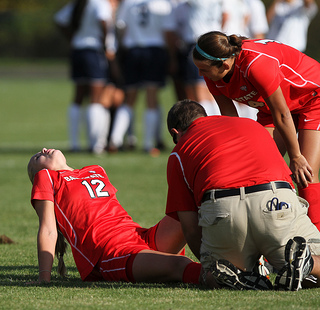
This post is about the need for safe confidants in the lives of cross-cultural workers. But before I address that directly, I’d like to share three relevant stories from the world of sports:

From Major League Baseball
In 1978, All-Star catcher Carlton Fisk played a key role in the Boston Red Sox’s tight pennant race. But he was playing hurt—with injuries that had the potential for long-term harm. In a Sports Illustrated article published the next year, pitcher Bill Lee described Fisk as one of those players who “like to gut it out.” “He’s just going out there because of his puritanical upbringing,” he said, “you know, staunch, quiet, archconservative, play-with-an-arrow-in-your-heart type of thing.”

Even though Lee thought Fisk should take some time off, no one on staff with the Red Sox told him to sit down—not the manager, not the owner, not even the team doctor, Arthur Pappas.

The role of team doctors and “especially the question of where their loyalties lie” was the focus of the SI article. What was Pappas’s top priority, Fisk’s welfare, or the team’s? Should a player expect a team doctor to look out for him the same way a personal physician would? Is there a conflict of interest built into the system?

While Fisk praised the qualifications of Boston’s physician, he also knew that Pappas not only worked for the team’s owners but was a part owner himself. Fisk admitted that the decision to play was ultimately his own, but he wondered if he’d gotten the best advice. “He’d be wanting to get you better,” he said about Pappas, “but not with the players’ interest at heart. He’d want to get you better for the team.”

(William Nack, “Playing Hurt—the Doctors’ Dilemma,” Sports Illustrated, June 11, 1979)

From the NFL
Twenty-nine years later, Sports Illustrated looked at this difficult issue again. (The titles of both articles include the word Dilemma.) This time, reporter Selena Roberts talked to an NFL player who told her about being injured on the field the previous season. When he’d seen his team’s medical staff rushing toward him, he’d wondered, “Whose side are they on?”

Roberts also talked with Andrew Tucker, team physician for the Baltimore Ravens, on the topic of confidentiality concerning “personal matters.” “This is where that unique situation of dual responsibility comes in,” he said. “If a player’s medical issue—like depression—gets to the point where performance is affected, then I have the responsibility to certain people in the club. . . . Now, sometimes players will choose to share that information with other people.”

One answer to the problem, wrote Roberts, is an NFL-wide health-care system that puts doctors under a “league-union cooperative” rather than on the payroll of individual teams. This would increase trust in the patient-doctor relationship and encourage more openness and honesty.

Robert Huizenga, former team doctor for the Oakland Raiders, said that after he left the organization, he was surprised at how many players only then sought him out for help. “How much was hidden from me?” he asked.

(Selena Roberts, “Rx for a Medical Dilemma,” Sports Illustrated, November 3, 2008)

From the NBA
In 2007, Greg Oden was selected by the Portland Trail Blazers as the #1 pick in the NBA draft, but since then things have mostly gone downhill from there. He soon had microfracture surgery on his right knee and missed his entire first season. He played most of the following season, but by his own admission, during that time he “pretty much became an alcoholic.” Before his third year with Portland, he got his drinking under control and got himself into shape, but his season was cut short when he fractured his left kneecap. Then a couple weeks later nude photos he had taken of himself were leaked to the Internet.

Oden was in need of counseling, and he contacted sports psychologist Joseph Carr. Paying for sessions out of his own pocket, Oden met with Carr regularly, but that ended when the Blazers also hired Carr. When Oden saw Carr talking with people from the Blazers’ front office, he was suspicious that Carr was disclosing information from their sessions, and he stopped their meetings. According to Oden, it “seemed like a conflict of interest.”

(Mark Titus, “Oden on Oden,” Grantland, May 9, 2012)

Member Care—Safety First
When athletes don’t feel “safe” with team doctors or counselors, they don’t get the care they need, and they suffer. When cross-cultural workers don’t have safe confidants, they suffer, as well.

We all need safe people to talk to. Safe people care about us as individuals. They accept us for who we are, not for what we can do. They don’t listen to us with competing agendas or loyalties. (For more on what makes a person safe, see Drs. Henry Cloud and John Townsend’s Safe People: How to Find Relationships That Are Good for You and Avoid Those That Aren’t [Grand Rapids: Zondervan, 1995].)

While this safety is important to everyone, it is especially crucial for cross-cultural workers, because they have been removed from their natural support network. That makes safe, trustworthy confidants more difficult to find and often more needed. With fewer and fewer casual and informal relationships, cross-cultural workers must often turn to those in their own organization, who have a vested interest in the organization’s success or who sit in the workers’ line of authority.

In the Christian community, the giving of emotional and spiritual help to missionaries, and other cross-cultural workers, is often called “member care.” Ronald L. Koteskey, in “What Missionaries Ought to Know about Member Care,” writes that it includes many facets:

friendship, encouragement, affirmation, help, and fellowship as well as sharing, communicating, visiting, guiding, comforting, counseling and debriefing.

For some, the person who fulfills these roles is called a “coach” or “mentor.” I am using the term “member-care giver” because it is what I’m more familiar with and because I don’t think that what it represents needs to be limited to the church. Neither does it necessarily carry the meaning of someone with specialized education or training, though those things can sometimes be beneficial.

Using the definition above, I can say that member care is necessary for all cross-cultural workers. But when it comes to safety, not all member care is equal. So what can we do to promote true safety?

Safety is vital to deep, healthy, trusting relationships, the kind of relationships that cross-cultural workers desperately need. Here are some observations to help in making those relationships a reality.

  1. Safety can’t be claimed, it must be earned. We can argue all we want about how someone should be seen as safe, but if the worker doesn’t feel that way, then should doesn’t matter. The doctors and counselors in the sports examples above would say that they are trustworthy, but that doesn’t take away the athletes’ concerns. A member-care giver can take steps to make himself more safe, but he can’t force someone else to see him that way.
  2. Where there is a lack of safety, it is only natural that there will be a lack of openness. And when there is a lack of openness, those giving member care will hear only incomplete stories.
  3. Safety is damaged when the worker is accountable in his job to the member-care giver—or when the member-care giver reports to someone else who has that role of authority. And this authority isn’t always clearly defined. Take, for instance, missionaries, whose emotional and spiritual supporters back home now support them financially. How open will missionaries be with people who are investing in their work? What about the leadership of the sending church, or the member-care professionals on staff with the sending agency? Do missionaries wonder, “Whose side are they on?” Can missionaries even ask this question without feeling disloyal to their church, to God?
  4. Who can honestly say to a cross-cultural worker, “In this relationship, you are my priority. I am more concerned about your physical, emotional, and spiritual wellbeing than I am about the success of your work. If you quit this vocation, I will still support you because I am invested in you”?
  5. We can learn from counselors who begin their sessions by saying, “What you say to me is confidential. I won’t share it with anyone (your boss, your organization, your parents, your coworkers, etc.) without your permission, unless you pose a danger to yourself or someone else.”
  6. If a member-care giver talks to a worker about others’ personal problems, that worker can assume that her problems are being shared with others, as well.
  7. In discussing the situation in the NFL, Selena Roberts suggests the formation of a “league-union cooperative.” To date, the football powers that be haven’t implemented such a system. And while there’s no “league” or “union” for cross-cultural workers, concerned people have come together to form “cooperatives” of sorts to provide safe member care (or coaching or mentoring). There are many of these groups, and a wide range of them can be found in a quick search of the Internet. Among them you’ll find trained member-care givers, professional counselors, people who “get” what cross-cultural workers are going through, those with their own overseas experience, and opportunities for extended care and training, on the field and at dedicated facilities. For those looking for help or training coming from a Christian worldview, or for those just wanting to get a taste of what is out there, here are three groups which I’d recommend:
    – Mission Training International (MTI)
    – Barnabas International
    – Link Care

If you are a cross-cultural worker, don’t go it alone. And don’t simply go through the motions of member care with someone you don’t trust. It is vital—and well worth the effort—to find someone who is truly safe . . . a confidant, an advocate, a friend.

(Ronald L. Koteskey, “What Missionaries Ought to Know about Member Care,” Missionary Care: Resources for Missions and Mental Health)

[photo: “Flashes vs Cardinal Soccer,” by lindsayjf91, used under a Creative Commons license]
Finlandia’s Global Trek from National Anthem to Hymn for the Nations

Found in Western churches today as the tune for “Be Still My Soul” and “This Is My Song,” Finlandia has a rich, globetrotting history.

In 1889, the Finnish composer, Jean Sibelius, wrote a piece of music to be performed at a rally protesting censorship by the Russian Empire, of which Finland was a part. This work became the basis for his symphonic poem Finlandia, completed the next year. Finlandia begins with stirring music, but ends with a more tranquil—and more well-known—section, called the “Finlandia Hymn.” It can be heard, beginning at the 5:33 mark, in this performance:

Later, Sibelius reworked the hymn into a standalone piece, and in 1940, the Finnish poet Veikko Antero Koskenniemi added words, and the “Finlandia Hymn” became a popular, though unofficial, anthem for Finland.

Nearly 150 years before the composition of Finlandia, Katharina Amalia Dorothea von Schlegel had written the words for the German hymn, “Stille meine Wille, dein Jesus hilft siegen,” in 1752. Scottish-born Jane Laurie Borthwick translated the hymn into English in 1855 as “Be Still, My Soul,” and in 1927, Borthwick’s lyrics were put to the tune of  the “Finlandia Hymn,” to form today’s familiar song.

David J. Mitchell writes about meeting the Olympic gold medalist Eric Liddell during World War II when Mitchell entered a Japanese internment camp in China as a child of missionary parents. Liddell, whose story was later told in the movie Chariots of Fire, was in the camp because of his own missionary work in China. Liddell was a great encouragement to his fellow prisoners, including Mitchell, who remembers the Scottsman teaching the children “Be Still My Soul.” The hymn’s first verse is

Be still, my soul: the Lord is on thy side.
Bear patiently the cross of grief or pain.
Leave to thy God to order and provide;
In every change, He faithful will remain.
Be still, my soul: thy best, thy heav’nly Friend
Through thorny ways leads to a joyful end.

“These words were a great comfort to one of our missionaries who was not only separated from her husband throughout the war,” remembers Mitchell, “but whose son was accidentally electrocuted by a bare wire running to one of the searchlight towers.”

Another prisoner, Norman Cliff, played trombone in a band organized by members of the Salvation Army. He recounts that a week before Liddell died while still in the camp, he heard the band and, from his hospital bed, asked them to play the hymn.

Here is a rendition of the song by Kari Job, with the addition of the refrain “In You I Rest.”

Another hymn sung to the Finlandia tune is “We Rest on Thee,” written by Edith G. Cherry, of Plymouth, England, in 1895. The hymn became part of the account of the 1955 martyrdom of five Christian missionaries by the Waroni (Auca) Indians in Ecuador, as the group sang “We Rest on Thee” before leaving to contact the tribe. The first verse is

We rest on Thee, our Shield and our Defender!
We go not forth alone against the foe;
Strong in Thy strength, safe in Thy keeping tender,
We rest on Thee, and in Thy Name we go.
Strong in Thy strength, safe in Thy keeping tender,
We rest on Thee, and in Thy Name we go.

When Elisabeth Elliot, wife of Jim Elliot, one of those who died, wrote the missionaries’ story, she got the title of her book, Through Gates of Splendor, from the song’s fourth verse:

When passing through the gates of pearly splendor,
Victors, we rest with Thee, through endless days.

The “Finlandia Hymn” continued its global trek as the tune for  the Welsh national song, “A Prayer for Wales,” and for “The Land of the Rising Sun,” the national anthem of the African country of Biafra, during its existence from 1967 to 1970.

Among the other church hymns that got their melodies from Finlandia is “This Is My Song,” which, given its global theme, provides a fitting ending for this post. Sung to the “God of all the nations,” it calls for peace and hope for “lands afar and mine.”

The words of the hymn were written in 1934 by the American Lloyd Stone. Additional verses were later added by another American, Georgia Harkness. Here is Stone’s first verse:

This is my song, Oh God of all the nations,
A song of peace for lands afar and mine.
This is my home, the country where my heart is;
Here are my hopes, my dreams, my sacred shrine.
But other hearts in other lands are beating,
With hopes and dreams as true and high as mine.

(David J. Mitchell, “Recollections of Eric Liddell by Dr. David J. Mitchell,” The Eric Liddell Centre; Norman Cliff, “Eric Liddell in Weihsin Camp—1943-1945,” Weihsin; Elisabeth Elliot, Through Gates of Splendor, Carol Stream, Illinois: Tyndale, 1981)

Music for the Unsettled Soul

I re4473073565_3871119347_nally, really, really like the music of Page CXVI (formerly The Autumn Film). This group of three is “re-imagining” classic hymns for new generations, and just by reworking the melody and tempo, they bring new meaning to old songs. My favorite is “Joy,” which I highlighted in a post about dealing with grief.

Maybe there’s a special place for their music in the lives of those facing cross-cultural transition and stress.  Adam, who (like me) travelled with his family from the corn fields of the American Midwest to a “city of millions” overseas, sent an email to Page CXVI last year, and they posted it on their blog.

Adam writes about a “journey of faith” that took him, his wife, and their two-year-old son to “a place where hearts are ripe for harvest but the fields have many fences,” a place where they faced many trials:

Financial difficulties, spiritual conflict, and multiple miscarriages deepened my desire for God’s presence but also created questions for which I did not have answers. There were many nights that seemed very dark. Not the dark you see, but the dark you feel when you don’t have peace. In the midst of our many struggles, I would sit and watch the city lights and listen to Page CXVI.

Adam first heard the band before he went abroad when they led worship at a missions conference he attended.  Then, when he flew to his new home, he carried with him some of the group’s music.

The slow movement of traffic and the colored lights did little to bring comfort when I would sit staring out my window, but the music, with its rich lyrics and calming arrangement, did something nothing else could. When the elements madly around me were raging, God used the music and through the music biddeth them cease, turneth their fury to peace.

Here are two videos of the group performing the hymns “How Deep the Father’s Love” and “Come Thou Fount.” In the third, they sing “Peace Like a River,” from their latest project, Lullabies.

In another video, Page CXVI – Explains the Deeper Meaning of Hymns, lead singer Tifah Phillips, née Al-Attas, smiles and says matter-of-factly, “I grew up in this all-Chinese church. . . .” I bet there’s an interesting story there. I’d like to hear more about her background, about how her cross-cultural experiences have affected her faith and creativity. Maybe her bandmates, Reid Phillips (her husband) and Dann Stockton have their own stories to tell.

Continuing on, Phillips talks about the depth of the hymn “Be Still, My Soul,” noting how the song deals with some important questions:

What does it really look like to trust God? What does it look like to trust God when you’re dealing with anxiety or fear or unrest . . . ? What does he offer us in return? Stillness and peace?

I think these are the kinds of questions that were on Adam’s mind when he looked out his apartment window. I think they are the kinds of questions that a lot of us have on our minds.

(Page CXVI’s web site explains that the group’s name refers to the 116th page of C. S. Lewis’s The Magician’s Nephew, where Aslan “begins to sing Narnia into creation out of a black void.”)

[photo: “Rain,” by Josef Stuefer, used under a Creative Commons license]

 

These Newsletters Aren’t Sent Either

3742918775_f3b2aee5be_mRuth E. Van Reken’s honest revelations in Letter’s Never Sent has me thinking about all the missionary newsletters I’ve written and read. Missionaries are a good group for emphasizing the positives and putting a good spin on the negatives. Newsletters just aren’t a safe place to share deep struggles, especially when many of the readers are current or potential donors.

I’m not saying that every newsletter should be filled with pain. I’m not even saying that every missionary has enough pain to fill a newsletter. What I am saying is that if the only things you know about missionaries come from newsletters, presentations, and answer-the-routine-questions conversations, then you don’t know the whole story. And what I am saying is that if you are a missionary who is hurting, you are not alone in what you’re going through.

In fact, if you’re any kind of cross-cultural worker or a Third Culture Kid or a trailing spouse or an expat or a repat or a soldier overseas or a family member left behind, and if, at one time or another, any of the following could serve as a heading for your next newsletter or blog or prayer update . . . believe me, you are not alone.

Nobody cares.
God has been silent for a long time.
This was a mistake.
I’ve changed, and I don’t like who I’ve become.
I feel betrayed.
I’m overwhelmed.
I don’t care anymore.
I think I’m going crazy.
Where is my joy?
I wish I could die.
I feel like a failure.
I’m afraid.
I’m lonely.
I’m angry.
I’m disappointed in myself, and I think God is, too.
I don’t belong.

Let me say it one more time: If this is where you’re at or where you’ve been, You are not alone.

And I hope you’re never, ever left to feel as if you are.

[photo: “Creativity,” by Mark van Laere, used under a Creative Commons license]

“Letters Never Sent” but, Thankfully, Published Instead

It’s been 25 years since Ruth E. Van Reken125933835_e355fbcad2_m first published Letters Never Sent, but I hope it doesn’t ever become a book rarely read.

Following her experiences as a Third Culture Kid, born to missionary parents in Nigeria, and later as a missionary to Africa herself, Van Reken wrote a series of “letters,” to her mother and father, and to God, expressing feelings that earlier she wasn’t able to fully share.

While it would be easy to assume that the details of Van Reken’s story are dated—the book begins with her trip to boarding school in 1951—her expressions of honest emotions cut through the years and show the wonderings and pleadings of a heart that beats in many missionaries and their children today. But it is a heart that is all too often hidden and quieted.

One of the feelings voiced by the young Ruth Ellen is guilt . . . guilt that her inner thoughts are a betrayal of her parents’ calling. During her high-school years, she and her sister stayed in the States, while their parents returned to their work in Nigeria. As her mother and father’s departure nears, Ruth Ellen fights with her emotions, writing in a “never sent” letter:

If I throw myself into your arms and sob my heart out, it might keep you from going. And even though that’s what I want, how could I ever bear the guilt of being the one who kept you from doing God’s work? I’ve always vowed I wouldn’t be one of “those kids,” the kind that other missionaries talk about in whispers, with a sad shake of their heads. “So-and-so couldn’t come back to the field because of their children.” They must be pretty bad kids, I’ve always figured. I don’t want anyone to say that about me or our family.

And I can’t very well come to God with this because, in a way I feel like it’s all His fault.

Years later, as Ruth Ellen ponders her approaching wedding to David Van Reken, she expresses a distrust of God, developed from many years of having, as a TCK, to let go of what is dear to her:

I can’t believe God will let me keep David. It’s like He’s dangling Dave on a rope, letting him come closer and closer. I’m afraid that at the last moment, when I put out my hand to take him, the string will be jerked back and God will laugh.

“Ha ha. Thought you finally had someone you could keep. Don’t count on it. Whatever you depend on, I will surely take that, so that you’ll depend solely on Me.”

Ruth does get to keep David, and the two are soon joined by a baby daughter. But depression comes to Ruth, seeming to be at odds with the spirituality that she longs to possess. “How many hundreds of testimonies have I heard about the joy that Jesus gives?” she writes. “He surely isn’t giving it to me right now—or maybe I just don’t know how to receive it.”

Her depression becomes deep enough that she thinks about suicide:

I’ve actually wondered what it would be like to take pills and never wake up. But in my heart I know that wouldn’t solve anything. I have a child I’m responsible for, and I want to see her grow up. And I want to live, if I can be the person that I’ve always thought I had the potential to be. But right now that seems like a hopeless dream.

Then, using words that are reminiscent of those penned by the Psalmist in Psalm 13, she writes,

The thread I’m hanging on to is an intellectual belief that God still has a purpose for my life. I can’t imagine how He can ever put all the pieces back together and make me whole, but it’s my only hope. I told Him today that He could forget helping me to do better—there’s nothing left of me to help. If He doesn’t do something new, I’m finished.

But there is hope. There is help for her to do better. And it comes in the form of a new friend, Linda, who opens a path for Ruth by sharing her own personal struggles in a Sunday school class. This is something that Ruth hasn’t experienced before, and it gives her courage. This leads to many conversations with Linda, in which Ruth shares her pain, and Linda listens without judgment.

Within a few years, the Van Rekens are preparing for their own missionary work in Africa, and Ruth continues to learn how to function without hiding behind masks. Sometimes the masks come off gently, as with Linda, but at other times, they are pulled off forcefully, as when a pastor shares from the pulpit about some of her struggles. But to her amazement, she writes, when “[t]he awful, naked ugliness of my soul was exposed, . . . I was still accepted!”

Healing also comes through forgiveness: forgiving her parents for her many separations from them and forgiving “all those who locked me up with pat answers or quick words of encouragement, when what I needed was understanding and a hug.” Following the death of her uncle, Ruth gets a different kind of response from Jesus: “He held me and understood. He acknowledge my pain. He didn’t try to talk me out of my hurt. . . . I’m learning about God as the Comforter and binder of broken hearts.”

But in letters dated less than two years later, as she and David are serving in Liberia, Ruth writes that the depression has returned. She tells God, barring a change in the next month, to let her die. In her conversations with God that follow, she learns that she has not addressed all of the anger that is leading to her depressed feelings. She still needs to “forgive” God.

“Why don’t you leave me alone?” she hears herself say. “Ever since I came to Liberia to serve you, You’ve done nothing but bad things to me. I’m sick and tired of it.” And she hears God say to her that he isn’t at all shocked by her anger. He can handle it. “You can love someone and still be angry at him,” God tells her. Acknowledging this anger is an important step for Ruth, a step that leads to more healing.

One of the final letters penned by Ruth is dated 1984. That’s 24 years after Ruth Ellen had voiced her struggle with guilt because she wasn’t the perfect missionary child. In it, she says, after reading through all of her previous letters, that there still was one more person to forgive:

I can forgive the little girl I was, for not being all she thought she was supposed to be. The greatest joy has been to understand for the first time in my life that God is the “God of all Comfort.” I could not understand that until I recognized how much I needed His comfort.

Ruth’s story is one of faith and anger and hope and fear and sadness and peace, all flowing one into another. It is a story beautifully and sincerely told. It is a story that can speak to generations of TCKs and cross-cultural workers and to those who want to understand them. And it’s a story that continues. Last year, Van Reken published a newly revised edition of Letters Never Sent, containing 30 additional pages, with photos and an epilogue addressing her later life, including a bout with cancer.

It’s been 25 years since Ruth E. Van Reken first published Letters Never Sent, but I hope it doesn’t ever become a book rarely read.

The above quotations are taken from the 1988 edition of Letters Never Sent. The book was first printed in the US in 1987 under the title Letters I Never Wrote.

[photo: “unreachable,” by Daniel Zimmel, used under a Creative Commons license]

“Life Is What Happens . . .” Isn’t a John Lennon Original

3051471866_f12b1460f5_mWho says you can’t learn anything from the comics? (Actually, I’ve never heard anyone say that, but it sounds like something somebody might say.)

Last week, in Jimmy Johnson’s Arlo and Janis comic strip, Arlo is looking at a calendar and ponders, “Life is what happens while you’re making other plans.” He comments that we’ve probably heard that that line came from John Lennon, but it actually originated with Allen Saunders, the writer of the dramatic comic strips Mary Worth and Kerry Drake. Arlo closes with, “Lucky so-and-so never had to be funny!” (See the February 1 strip here.)

While I was a missionary in Taipei, I helped some Taiwanese friends study the Bible with the hopes that they would continue meeting when I wasn’t with them. One group was made up of students at a technology university and another consisted of former university students who had degrees from the US. This second group had started meeting at a McDonald’s for a weekly Bible study even before I met them. During one of my family’s trips to the States, hosts for each group planned to keep the meetings going while we were gone. One group met for two weeks, but then the host had to travel outside the country. And in the other group, the hosts weren’t able to continue organizing the meetings because of an illness in the family. In our monthly newsletter, I wrote,

It reminds us of John Lennon’s famous phrase: “Life is what happens to you while you’re busy making other plans.”  But even though their schedules didn’t work out as well as they, and we, had hoped, we are greatly encouraged by their desire and willingness to try.

I stand corrected by a comic-strip character. Lennon used the “Life is what happens . . .” line in his song “Beautiful Boy” in 1980, but according to Garson O’Toole of the Quote Investigator, that was over 20 years after a nearly identical phrase appeared in the “Quotable Quotes” section of Reader’s Digest. In the January 1957 issue, Saunders was given as the source of “Life is what happens to us while we are making other plans.”

So there you have it. All those quotation sites on the web should replace John Lennon with Allen Saunders.

Life often does get in the way of our plans, doesn’t it? Reminds me of the Yiddish proverb, “Man plans, God laughs.” At least I’m pretty sure it’s a Yiddish proverb. And I guess I’ll stick with that until Dilbert says otherwise.

(Garson O’Toole, “Life Is What Happens to You while You’re Busy Making Other Plans,” Quote Investigator, May 6, 2012)

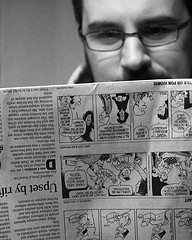
[photo: “Funny Pages,” by summerbl4ck, used under a Creative Commons license]
Speaking of “Coming Home”

2057958540_c80ea35181_m-1Last year I posted Carla Williams’ “Silences,” about how missionaries express themselves without using words, “about what faith looks like in the failures. Not in the everyday, stumble-and-move-on failures, but in the ones that knock you to your knees and change the course of the rest of your life.”

Recently, Carla wrote an article for Team Expansion‘s Tell magazine, titled “Coming ‘Home’: When Missionaries Come off the Field.” This time she used the words of former missionaries to share their thoughts on returning to the States. Here is some of what they came up with:

“We tried to change the factors and could not. I had arrived at the point that I cared more about being a missionary than I cared about my family. Ministering at the expense of your family isn’t really what God had in mind.”

“You know yourself, but you don’t know yourself here.”

“It was difficult to hear some people suggest ideas right away. We were numb and not in a good state to make big decisions.”

“I have to figure out I can explain this to someone who’s never done this and they’re just not going to understand the depths of emotion and the heights and lows that come with coming back.”

“In the moment of everything happening, it feels like such a heavy burden. We felt guilty that we weren’t following through with what we told people we would do. We felt like failures. But in the end, we can appreciate everything that we learned and did and can see how much more effective it has made us in the ways we are able to serve now. Coming back to the US wasn’t the end. In a lot of ways, it was just the beginning.”

Read the entire article in the latest Tell for more, including a discussion of why missionaries leave the field and what can be done to help them once they return.

I’m grateful to Carla for inviting Team Expansion repats—including my wife and me—to give their input for the article. And she even included my poem “Back in the States after Being Gone for a Long Time” as part of the issue.

Sometimes I need someone to listen to my silence. Sometimes I need someone to listen to my words.

(Carla Williams, “Coming ‘Home’: When Missionaries Come off the Field,” Tell, Fall 2012, pp 24-27)

[photo: “Make up chyer mind, please,” by Nikki, used under a Creative Commons license]

Regrets and Remembrances: A Prayer for Those Who Leave Home

With one plane ride the whole world as TCKs have known it can die. Every important place they’ve been, every tree climbed, pet owned, and virtually every close friend they’ve made are gone with the closing of the airplane door.
—David Pollock and Ruth Van Reken, Third Culture Kids

5420666395_e086b79cf9_mThis closing door doesn’t just happen to Third Culture Kids. It’s also the experience of immigrants who leave behind many what-could-have-beens in their old country. Cross-cultural workers feel the door close when they leave their work and return “home.” (What other job requires you to leave the country once you’re no longer on the payroll?) International students close the door with the hopes that new opportunities will open many more. And refugees often see the door slammed and locked by soldiers carrying guns.

5420666545_cd2c078381_mBut while the door is closed, the mind is still open to thoughts about what was left behind. Some thoughts are joyous and life giving. Some are hurtful and life stealing. And often they come intricately, painfully intertwined, called up by a scent, a word, a sound, a flavor, a feeling or a dream. Bittersweet.

For those who find themselves on the other side of a closed door, I offer this prayer, inspired by Reinhold Niebuhr’s “Serenity Prayer.”

God, grant me the confidence to let go of the regrets that I should not hold on to,
The ability to hold on to the memories I should not let go of,
And the wisdom to separate the one from the other. Amen.

(David C. Pollock and Ruth E. Van Reken, Third Culture Kids: Growing Up among Worlds, Boston: Nicholas Brealey, 2009)

[illustrations: (upper) “Joined” and (lower) “Cupped“) by Pete Hobden, used under a Creative Commons license]