Look, in the Airport! It’s a Carry-On! It’s a Scooter! It’s Modobag!

2109920125_7c243f2785_z

Build a better mousetrap, and the world will beat a path to your door.

When Ralph Waldo Emerson said that (or at least something like that*) in the 1800s, a new-and-improved mousetrap was a suitable metaphor for innovation. I would submit to you that today’s mousetrap may very well be the carry-on bag, and the door is an Indiegogo campaign.

Ladies and gentlemen, I give you the Modobag. (Sorry, I mean the Modobag!)

The Modobag, the creation of Kevin O’Donnell, with the help of Boyd Bruner, is a TSA- and FAA-compliant carry-on bag that you can ride around the airport. It has an electric motor, telescoping handlebar with thumb throttle and hand brake, and professional motorcycle-grade foot pegs—and it can carry your clothes, too.

Here are some of the specs from Modobag’s Indiegogo page:

  • two speed settings—5 mph indoors, 8 mph outdoors
  • ability to carry a person up to 260 lbs
  • 8-mile range (for a 180-lb person)
  • two USB charging ports

Pre-orders for the Modobag are available at Indiegogo for $1,000. The campaign was set up with a modest goal of $50,000, and with two weeks left, it has already blown past a quarter of a million dollars.

According to CNN, O’Donnell doesn’t want to limit his invention to the airport. He wants people to ride it to the train and  use it to navigate conference venues. And he takes it for spins himself in the bike lanes of Chicago.

It all sounds like a great idea to me, but I do have a few concerns . . . where the rubber meets the airport walkway, so to speak. But I think each one is fixable with the simple addition of an accessory.

First, there are the images in the video above of riders leaning into tight Modobag turns. I can imagine middle-aged travelers (like myself) wiping out on the way to Gate 26. Solution? The addition of fold-down wheeled outriggers—a fancy way of saying they need training wheels.

I’m also wondering about trying to pull two, or more, pieces of checked bags on your way to an international flight. A guy only has two hands, and one is already busy with steering, throttling, and braking. Solution? Some kind of proprietary linkage system to form a giant super luggage trolley.

And finally, I’m worried that airport authorities will step in to shut down Modobag riders in the name of safety (for example, see “wiping out” above), much the way that the anti-progress lobby has unfairly hampered the would be life-changing Segway revolution around the globe. Solution? A simple beeping mechanism and pop-up flashing light. Hey, it works for those airport carts.

The bottom line for me, though, is I’m not much of an early adopter. I’m more of a late follower. So just as with wearable luggage, carry-on child carriers and follow-along bags, and even pillow head coverings, to all you risk takers, you trend setters, you beta testers, I say, Lead the way! And as long as you don’t look too silly, I’ll be right there jumping on board. (I promise.)

(“Modobag: World’s First Motorized, Rideable Luggage,” Indiegogo; Matt McFarland, “You Can Now Ride Your Luggage around the Airport,” CNN, July 22, 2016)


*[and now, for quote geeks like me . . .] According to Garson O’Toole of Quote Investigator, the earliest form in print of

Build a better mousetrap, and the world will beat a path to your door

is from “Current Comment,” in The Atlanta Constitution. The passage, titled “The Value of Good Work,” is ascribed to Emerson and was published on May 11, 1882, a few weeks after his death:

If a man can write a better book, preach a better sermon or make a better mouse trap than his neighbors, though he builds his house in the woods, the world will make a beaten path to his door.

Giving credence to Emerson’s authorship of the sentence, or at least the thoughts behind it, is a journal entry that Emerson wrote in 1855, under the heading “Common Fame”:

I trust a good deal to common fame, as we all must. If a man has good corn, or wood, or boards, or pigs, to sell, or can make better chairs or knives, crucibles or church organs, than anybody else, you will find a broad hard-beaten road to his house,though it be in the woods.

Sarah S. B. Yule and Mary S. Keene include the “If a man . . .” quotation above, crediting it to Emerson, in their book “Borrowings,” compiled in 1989 and published in 1893. The article “The Mousetrap Quotation: The Verdict,” from 1912, quotes Yule telling how she heard it from the lips of Emerson:

To the best of my memory and belief, I copied it in my handbook from an address delivered long years ago, it being my custom to write everything there that I thought particularly good, if expressed in concise form; and when we were compiling “Borrowings” I drew from this old handbook freely. It will seem strange to you, as it does to me, that Emerson never incorporated this in any of his essays. He did use the thought and similar wording, but never exactly the wording, of the quotation I used in “Borrowings.”

(Garson O’Toole, “If You Build a Better Mousetrap the World Will Beat a Path to Your Door,” Quote Investigator, March 24, 2015; “The Mousetrap Quotation: The Verdict,” West Publishing Co’s Docket, Volume 1, West Publishing Company, 1912)


[photo: “Surprising News,” by Edgardo Balduccio, used under a Creative Commons license]

Goodbye: Making a Hard Word Easier [—at A Life Overseas]

IMG_7628

From my post this month at A Life Overseas –

goodbye /gə(d)-ˈbī/ excl. / salutation spoken at a departure, extremely unpopular for certain English-speaking tribes, such as cross-cultural workers, TCKs, their loved ones, and the like.

Many of us know from experience that saying goodbye can be hard, really hard. And practice doesn’t make perfect. In fact, it often makes it worse.

But what makes goodbye so tough to voice? It’s not because it’s hard to pronounce. That’s simple enough. Rather, it’s the meaning behind the word that’s difficult. Is that because we don’t actually know the definition of goodbye? To quote that great linguist/philosopher Inigo Montoya, “You keep using that word. I do not think it means what you think it means.”

Goodbye actually comes from God be with you, which, in it’s older form, was God be with ye. From there, it morphed into such shortened versions as God be wy youGod b’w’yGodbwyeGod buy’ ye, and good-b’wy. The replacement of God with good was influenced by the similar phrases good day and good night, which takes it even further from the original. Seen in this way, goodbye is related to the French adieu and the Spanish adios, which mean “to God,” as in “I commit you to God.”

So what’s so hard about saying, “God be with you”? What’s so difficult about giving someone a blessing? Why do we so often hear, “I don’t want to say goodbye”?

Maybe it’s because we do actually know what it means—at least for those who move far away. . . .

Continue reading

[photo: “Goodbye Summer 2011,” by deargdoom57, used under a Creative Commons license]

Walter Mitty: Enough Just to Be an Everyman

10279776925_85574f0d70_z

In my last post, I wrote about the missionary life from the perspective of Walter, a character fashioned after Walter Mitty. Created by Jame’s Thurber, Mitty is a daydreamer who imagines himself acting out heroic and larger-than-life scenarios while living out a much more mundane and seemingly smaller-than-life existence.

Mitty is likable because he’s an everyman. There’s a little Mitty in us all.

In 1947, Danny Kaye starred in a film based on Thurber’s short story, “The Secret Life of Walter Mitty.” In it, Mitty isn’t left just to dream about adventure, but he actually joins it in real life as he helps a mysterious woman with a little black book escape a sinister gang of jewel thieves.

The 2013 movie version, this time with Ben Stiller playing the lead, takes a similar approach to the story, with Mitty gathering the courage to travel the world in search of his hero, the globetrotting Sean O’Connell, a photographer for Life, who makes The Most Interesting Man in the World seem rather bland.

I do enjoy the beginning of the newer movie, where Mitty travels back and forth between his real life and his fantasy life—as it plays out the theme of Thurber’s short story. I’m not so fond of the later part, where the author’s work is left behind and Mitty trades in his dreams for more exotic travel—jumping out of a helicopter into the ocean, longboarding in Iceland, and playing soccer in the Himalayas, among other things. The film holds a 51% rating on Rotten Tomatoes, which, as it sounds, is only so-so, so I’m not alone in my less-than-ecstatic view of the film.

It’s not that I’m not happy for Mitty. It’s just that for the true everyman, turning fantasy into reality isn’t so easily done. It seems as if he’s living out the much quoted words of author William Arthur Ward:

If you can imagine it, you can possess it.
If you can dream it, you can become it.
If you can envision it, you can attain it.
If you can picture it, you can achieve it.

. . . words that are more inspirational than they are true.

I agree with A. O. Scott in his review of the 2013 Secret Life of Walter Mitty for The New York Times:

There is a contradiction here: An ordinary fellow should not have to be quite so special to win our admiration. And this version of Walter Mitty undermines some of the democratic whimsy that has made his story such an appealing and durable modern myth. He used to be one of us: a self-deluded dreamer charmed by his unruly creative powers, a willing prisoner of his appetite for escapism. But now our identification gives way to envy, and he is another one of those enchanted people the rest of us can only dream of becoming.

In the six-minute trailer below, you can see the film’s story play out, beginning with a timid Mitty unable to send an eHarmony “wink” to his coworker. The help-desk rep on the phone says he needs to fill out his “Been There Done That” section and asks, “Have you done anything noteworthy . . . mentionable?” Walter, hearing a dog’s faint barking, responds by diving off an outdoor subway platform and  through the window of an adjacent building that promptly explodes—saving the dog.

Cue Queen’s “Bohemian Rhapsody”:

Is this the real life?
Is this just fantasy?
Caught in a landslide
No escape from reality

This second video is a remake of the modern trailer using clips from the 1947 film.

(Barry Popik, “If you can imagine it, you can achieve it. If you can dream it, you can become it,” The Big Apple, Oct. 13, 2015; A. O. Scott,”  “He Can Balance His Checkbook, but Not His Imagination,” The New York Times, Dec. 24, 2013)

[photo: Untitled of Ben Stiller, by Steve Rhodes, used under a Creative Commons license]

what3words: Now Everyone Can Say, “I.Am.Here”

1662165564_d29a0cafa9_z

Growing up on a farm, I didn’t have an address, just rural-route and post-office-box numbers. Our gravel roads weren’t named either, so to tell someone how to find us, we’d have to talk about driving a certain number of miles north, south, east, or west, crossing a bridge, or turning at a red barn.

Oh, how things have changed. Not only do my family members who live in the country now have house numbers and road names, we’ve also got that GPS thing. But there are still plenty of places in the world like the wild, wild midwest of my youth—places without registered addresses.

Take, for instance, Mongolia, a country more than twice the size of Texas, where many of its 3 million people live as nomads. What’s a post office to do? Well Mongol Post, the country’s postal service, recently turned to what3words for help. The London-based what3words has divided the globe into a grid of 57 trillion 3-meter by 3-meter squares, each with a unique 3-word label. So instead of needing a street address or directions or an unwieldy and hard-to-remember set of latitude/longitude coordinates, Mongol Post deliveries can go to places such as “cabdriver.salesclerk.scruff” or “graces.bigwig.pictures.”

According to what3words’ About page, 75% of the world’s population—4 billion people in 135 countries—don’t have adequate addressing systems. This causes difficulties not only in delivering mail but also in such things as reporting crimes, advertising a business, and delivering humanitarian aid.

what3words also solves problems in travel and tourism, and that holds true in even the most-developed countries. That’s because while a particular location may have a usable address, finding a place within that location can be difficult. For instance, you could use it to meet friends at a specific entrance at the airport. Or you could let someone know your place on a hiking trail. Or you could use it in a parking lot to find your car.

The system they developed by what3words currently has versions in 9 languages (English, French, Spanish, Portuguese, Swahili, Russian, German, Turkish, and Swedish), and the organization guarantees that the word combinations pinned to a particular location will never change.

Oh, and there’s another use for what3words that I haven’t heard anyone else mention: naming your garage band. Sure you can use the Band Name Maker, but how much cooler would it be to use three random words that correspond with the garage where your band was born?

(Giles, “Partner: Mongolian Post Adopts what3words as National Addressing System,” what3words, May 24, 2016)

[photo: “In the middle of nowhere,” by Ernesto Graf, used under a Creative Commons license]

Air Mail: Paper Letters and Paper Planes

2246217877_709a49c3f1_z

Milk: It does a body good
Beef: It’s what’s for dinner
Pork: The other white meat
Cotton: The fabric of our lives

And now . . .

Paper: How life unfolds

Maybe you’ve seen the commercial of the boy chucking paper airplanes into the neighbor’s yard. It’s a cute video, about a boy’s love for his dad, serving in the military overseas. But I have to say that one of my first thoughts after watching it was “Doesn’t this family have email, or Skype?” The commercial is part of the Paper & Packaging Board’s How Life Unfolds campaign. I didn’t know that paper and cardboard were in need of an advertising push, but with lots of people promoting “think before you print,” I guess things may be getting a little tough in the paper world. And then there’s that whole email thing.

I just hope my son doesn’t watch this commercial and think that good things will happen if you toss stuff over the neighbor’s fence.

If he keeps at it, there may be a future for this boy in international competition. For several years now Red Bull has been holding a paper airplane world championship, called Red Bull Paper Wings. Last year’s contest crowned champions from Armenia (longest air time), Bulgaria (longest distance), Lebanon (aerobatics), and Hong Kong (top team).

I wonder if Paper & Packaging has thought about getting involved with some sponsorship.

And back to paper-airplane boy. . . . Here’s another story to show the emotional power of sending letters by postal mail rather than electronically. Remember Encyclopedia Brown? Years (and years) ago Donald Sobol, the boy detective’s creator, put together a book of “weird and wonderful facts.” One of the book’s entries tells us to consider

the young man in Taiwan who wrote 700 love letters to his girlfriend in the years 1974-76 trying to woo her into marriage. He succeeded. She married the postman who delivered the letters.

(Donald J. Sobol, Encyclopedia Brown’s 3rd Record Book of Weird and Wonderful Facts, William Morrow, 1985).

[photo: “fly with me,” by Max Elman, used under a Creative Commons license]

US Passports: Things to Know So You’ll Stay Ahead of the Game

4097092685_cd75ff7679_z

Your passport is easy to take for granted . . . unless you need it and you can’t find it, or it’s stolen, or it’s expired. But the US Department of State doesn’t take it for granted. Here are some ways that they’re working on improving your passport, as well as tips on how to keep your travel headaches to a minimum.

No more adding pages
As of this January, passport holders are no longer able to add pages to an existing passport so that it can hold more entry and exit stamps. Travelers previously could add 24 pages to a full passport, but now, with that no longer an option, passport applicants outside the US are issued a 52 page book, while those in the US can choose between 23 and 52 pages.

(U.S. Department of State, “Extra Visa Pages No Longer Issued Effective January 1, 2016,” November 19, 2015)

Why carrying copies is a good idea
 At “Lost or Stolen Passports Abroad,” the Department of State advises travelers overseas to take along a photocopy of their passport ID page. I recently had the chance to ask a foreign service officer what purpose that serves and here’s what he said: While US embassies and consulates have the ability to replace a lost or stolen passport without you providing any documents or ID, there are other reasons for having copies. The passport copies are most helpful to carry with you while you leave the real thing in a safe location. If someone asks to see your passport while you’re out, you can show your copy; or if a place such as a hotel asks to hold your passport, you can offer your copy instead. He suggested carrying two color copies for this purpose. While officers can give you a new passport without presenting any documents or identification,  it’s better, according to the Department website, if you have a photo ID, a police report (or, says the officer, the ability to say that you tried to get one), your passport copy, and your travel itinerary (to document that you need the new passport quickly.)

img_passport_stats_chart_issued_2014
Click to see larger image

What about a passport card?
 Whenever I see a passport application, I wonder about the advantages of getting a passport card. Now I know why I probably don’t need one. A passport card is not a replacement for a passport book for general international travel. Instead, the card can be used only for land and sea travel between the US and Canada, Mexico, Bermuda, and the Caribbean. The card could be useful in any country in place of a color photocopy for getting a replacement passport (see above), but it won’t work for air travel, regardless of your destination. Even in the countries where the card can be used, without your passport book you’ll be in trouble if an emergency occurs and you need to fly back to the US. Also, if you’re on a cruise and for some reason miss the boat (literally), you won’t be able to use your card to fly—to catch up with the ship or to go back home.

(Ned Levi, “Passport Card: Does It Make Sense to Purchase One?” May 10, 2010)

Don’t get below 6 months
While many countries require you to have at least 6 months left on your passport before they’ll let you enter, the Department of State suggests you replace your passport when you cross the one-year-left mark. Not only will this keep you from being caught unprepared, but if you enter a country with only six months left on your passport, stay for a while and then decide to go to another country with the six-month restriction, you’ll be denied entry.

Expect more changes
US passports are scheduled for a big design update this year. The security updates will include an information page with a polycarbonate coating and containing an embedded data chip, the number laser-cut through pages, raised designs, and ink that shows multiple colors when viewed from different angles.

(Katherine LaGrave, “U.S. Passports to Get a Makeover in 2016,” Condé Nast Traveler, February 22, 2016)

Registering is easy
 This one isn’t directly related to passports, but it does apply to international travel. (Consider it a bonus.) The Department of State encourages citizens to register with them when traveling abroad, but what does that entail? It’s as easy as going to step.state.gov and signing up for the Smart Traveler Enrollment Program (STEP). You can also enroll to receive advisories and alerts, even when you’re not the one traveling, so that you can keep up to date while others are outside the country.

[photo: “Let’s Go! – Passport,” by Lucas, used under a Creative Commons license]

I’m Not a Tourist, See?

11255321773_296334dbde_z

When you’re a tourist, it’s mostly fun to be a tourist. Most people like to help you and you’re treated as a guest. Sure, when you go to buy something you might get taken advantage of, but you don’t know any better, so you can still think that you got a bargain. And if you break a cultural rule—or even a law—you can play the I-didn’t-know-I-don’t-live-here-maybe-even-get-out-of-jail-free card.

But when you do live in a new country, you don’t want to be treated like a tourist. You want to be treated like “one of us,” or at least ignored. So how do you look as if you belong? Maybe it’s the language, but you’ll have to talk first, and that could hurt more than help.  Maybe it’s your clothes, but it’s easy to go overboard on that one. Or maybe it’s what you’re carrying around. Of course, it’s what you’re not carrying, as well, for example, a camera or a souvenir bag that says “I ♥ (name of country).”

In my post yesterday at A Life Overseas, I quoted author Tahir Shah’s views on acclimating to a new culture, from his book In Arabian Nights: A Caravan of Moroccan Dreams. Shah had moved to Casablanca, and he didn’t want to be treated like an outsider. He writes that one day his maid, Zohra, overheard him talking about getting “eaten alive” by the salesmen in the vegetable market, and she gave him some great advice.

“Tsk! Tsk! Tsk!” she snapped. “Of course the salesmen trouble you. It’s because they think you are a tourist.”

“But there aren’t any tourists in Casablanca!”

“Well, they don’t know that!”

“So what am I supposed to do?”

Zohra motioned something with her hands. It was round, about the size of a dinner plate. “You have to carry a sieve.”

What?

“No tourist would ever be carrying a sieve,” she said.

That’s it. A sieve. Gotta get you one of those.

17325027255_de281b747d_z

(Tahir Shah, In Arabian Nights: A Caravan of Moroccan Dreams, Bantam, 2008)

[photo: “I ♥ Tourists,” by Lain, used under a Creative Commons license; “Markthal Rotterdam” by Kattebelletje, used under a Creative Commons license]

To Augustine the World Is a Book, but Is It a Travel Book?

7544403302_cde12b749f_z

One of my father’s favorite jokes was to say a phrase of dubious meaning, and often questionable grammar, and tag William Shakespeare as the source. It went something like this:

No matter where you go, there you are . . . Shakespeare.

Seems that Dad was ahead of his time. All over the Interwebs, there are oft-used quotations attributed to oft-quoted people—Mark Twain, Martin Luther, Martin Luther King, Jr., Winston Churchill, Erma Bombeck . . . and Shakespeare. The trouble is, the pairings are oft-wrong.

Take, for instance, this popular quotation:

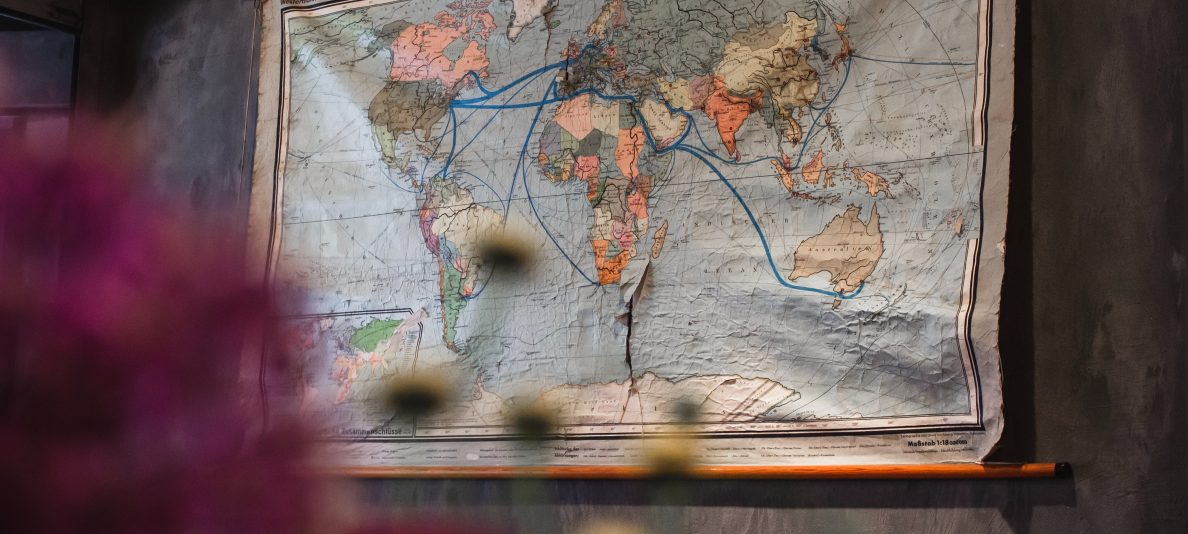
The world is a book and those who do not travel read only one page.

Nearly every online citation says it comes from the pen of St. Augustine, but as far as I can tell, no one has been able to find it in his writings.

The closest I’ve seen is in his Letter 43, written circa 397. While discussing schisms in the church in Africa and recounting some church history, he refers to the world as a book. But rather than using that as a metaphor to promote travel, he is proclaiming that the world shows the working out of biblical principles. Translated from Latin, he writes,

If, after all that you have read, you are still in doubt, be convinced by what you see. By all means let us give up arguing from ancient manuscripts, public archives, or the act of courts, civil or ecclesiastical. We have a greater book—the world itself. In it I read the accomplishment of that of which I read the promise in the Book of God: “The Lord hath said unto Me, and I shall give Thee the heathen for Thine inheritance, and the uttermost parts of the earth for Thy possession.

Jump ahead to 1750, and Louis-Charles Fougeret de Monbron writes Le Cosmopolite ou le Citoyen du Monde (The Cosmopolitan or the Citizen of the World), which opens with the following paragraph (as translated into English):

The universe is a sort of book, whose first page one has read when one has seen only one’s own country. I have leafed through a great many that I have found equally bad. This inquiry has not been at all unfruitful. I hated my country. All the oddities of the different people among whom I have lived have reconciled me to it. Should I gain no other benefit from my travels than this, I will have regretted neither the pains nor the fatigues.

British travel writer John Feltham joins our discussion with his publication of English Enchiridion in 1700. His collection of “apothegms, moral maxims. &c” includes one that seems to tie together Augustine and the thoughts of Fougeret de Monbron (it is not a direct quotation of either), and attempts to bring the early church father into the travel-writing fold:

St. Augustine, when he speaks of the great advantages of travelling, says, that the world is a great book, and none study this book so much as a traveller. They that never stir from their home read only one page of this book.

A few years later, Le Cosmopolite caught the attention of the young poet Lord Byron. In a letter to R. C. Dallas in 1811, he writes, “I send you a motto” and quotes the work’s opening paragraph. He tells Dallas, “If not too long, I think it will suit the book.” The book turned out to be his Childe Harold’s Pilgrimage, published in installments from 1812 to 1818, and the passage, still in French, became the work’s epigraph.

And finally, in 1824, Thomas Fielding gave us a more familiar rendering of the phrase in his Selected Proverbs of All Nations, crediting it to Augustine:

“The world is a great book, of which they that never stir from home read only a page.”

Simplify the language and you have “The world is a book and those who do not travel read only one page.” Oversimplify the authorship and you have Augustine.

Bring on the inspirational photos.

16791158072_73f7c8bd5d_z


[photos: “Atlas,” by Ian Carroll, used under a Creative Commons license; “Dyrhólaey Arc,” by Andrés Nieto Porras, used under a Creative Commons license]