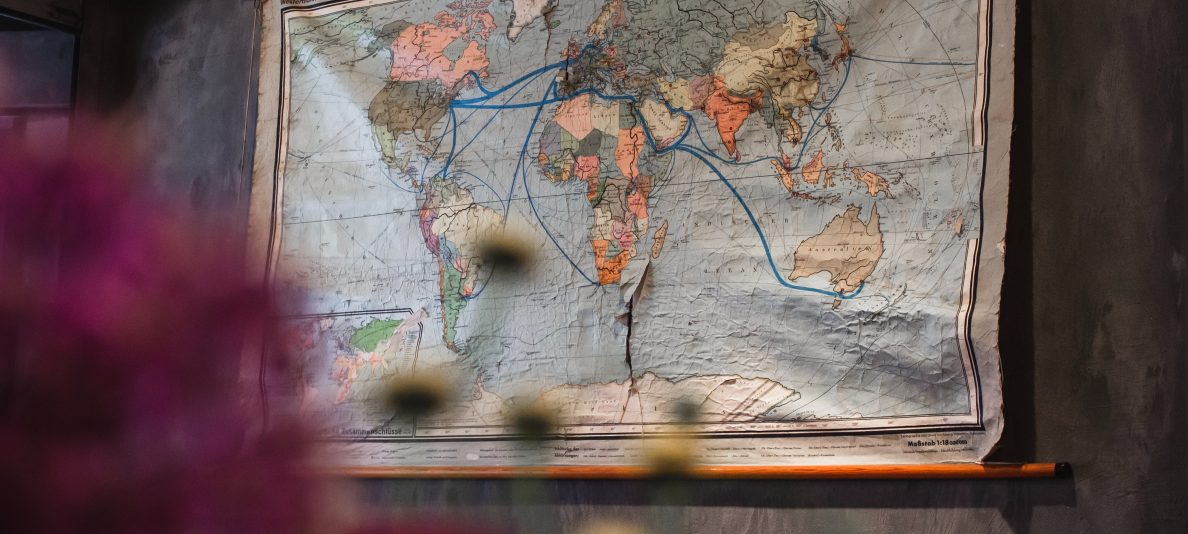
Got a Couple Hours? Take Time for Cairo

When it comes to movies, I’m often late to the game, as I usually catch them on DVD well after they’ve been released in the theaters. So only last week did I bring Cairo Time (2009) home from the library and watch it with my wife. I had not heard about it before and only picked it out because of the title and synopsis on the case. Sometimes that leads to disappointment, but this time, it paid off.

Cario Time is directed by Ruba Nadda, an Arab-Canadian, and stars Patricia Clarkson and Alexander Siddig. Clarkson plays Juliette, the wife of a UN worker who travels to Egypt to meet her husband for a long-awaited vacation. When she arrives, her husband is unable to leave his work in Gaza, so his friend, Tareq (Siddig) picks her up at the airport and introduces her to the city. Tareq is a dashing gentleman, and he and Juliette develop a relationship over the next several days. As several reviewers mention, Cairo is another major character in the story, as Juliette is swept off her feet by a city that also frustrates her. In a way, her relationship with Tareq mirrors how she feels about Cairo, enchanted yet perplexed by her own feelings . . . infatuated by the exotic newness while drawn back by her own “culture.”

Included on the DVD is a “Making Of” segment, in which Nadda says that the reason she became a filmmaker was because she “was desperate to shed light on the common misconceptions the West has of the Middle East.” The segment also includes behind-the-scenes footage from a “very Islamic, very religious” part of Egypt where they filmed a scene. The director was warned not to go there, but they did anyway, and she says it turned out being “one of the best days of [her] life.” They met a poor family there who welcomed them, gave them sodas, and asked about Seinfeld. With accompanying footage, Nadda tells this story:

The man’s wife, she’s veiled, she said “I need to be validated, I need to show the world what I look like.” And she began to unveil. And I was like, “But you’re going to be on camera. The West will see you.” And she said, “I don’t care. I want to show people that I exist.”

Cairo Time is not a fast-paced movie. Rather it moves at a deliberate, thoughtful pace. As Clarkson says in “Toronto Q & A” (also on in the “Bonus” section of the DVD), the director “had the courage to let there be silence.” Nadda adds,

I wanted to show a story that wasn’t about immediate gratification, you know, which is, I find, sometimes, a bit North American. It was “Cairo time.” . . . Cairo is so crazy and chaotic and beautiful, bustling, but it’s also an assault to the senses, and that chips away at your guard and it forces you to slow down whether you like it or not.

[photo: “Pyramids,” by Wilhelm Joys Andersen, used under a Creative Commons license]

TCK Theater

The first video below is one I’ve seen posted recently on a couple TCK blogs. It was made by a student at Georgetown University. Really well done. Then when I went to its Vimeo site, I read the comments section and saw links to the three others here. Some have been around for a while, but they’re all new to me. Enjoy:

So Where’s Home? A Film about Third Culture Kid Identity, Adrian Bautista

A short documentary that “explores the unique perspectives and identities of Third Culture Kids, people who have spent a significant portion of their childhood overseas.”

Teaser for Neither Here nor There, Ema Ryan Yamazaki

This teaser introduces a 35-minute documentary, also by a college student, that “investigates the often overlooked effects on adults who had international upbringings, their struggles to fit in and an eternal search to belong.” The full video is available for purchase here.

Trailer for Les Passagers: A TCK Story, Aga Magdolen

This trailer is for a documentary “about Third Culture Kids and their journey to find where they belong.”

Thoughts on Traveling, Sanii Fiina

By another university student, this is kind of a visual, multi-language poem. It’s an “idea based on identity and how different languages can create one nationality… or something like that!”

Maybe the Best Exotic Marigold Hotel is #19

When it comes to global best-of lists, I gravitate toward ones that point to something cheap (like “10 Fast Food Items You Can’t Have“), rather than pricey (like “The World’s 50 Best Restaurants“). I think that “The 18 Best Places to Retire Overseas” (Kathleen Peddicord, US News & World Report, March 19, 2012) falls closer to that second category, even though the author promises that these locations are places where “an interesting, adventure-filled lifestyle is available for a better-than-reasonable cost.” But I’m printing the list here anyway, if for no other reason than to show that Jaipur, India, didn’t make the cut.

  1. Panama
  2. Belize
  3. Colombia
  4. Uruguay
  5. Ecuador
  6. Nicaragua
  7. Roatan, Honduras
  8. Argentina
  9. Mexico
  10. Chile
  11. France
  12. Italy
  13. Ireland
  14. Spain
  15. Croatia
  16. Thailand
  17. Vietnam
  18. Malaysia

So what’s so special about Jaipur? That’s the destination of the seven British retirees in the movie The Best Exotic Marigold Hotel, which opened in US theaters this past weekend. Maybe if the film does well, the “Pink City” (as Jaipur is called), or Udaipur, where much of the movie was shot, will find a place on future lists.

Good movie? I haven’t seen it yet, but I’ve heard good things about it. One person who saw it and liked it is an adult TCK who grew up in a place not too far culturally from Jaipur. Read her review at Communicating Across Boundaries.

[photo: “Jaipur Lake Palace,” by jkuba!, used under a Creative Commons license]

This Global Footage Comes from Space

In an extreme case of repatriation, three astronauts returned to earth yesterday following nearly 6 months in the International Space Station. The three, Daniel Burbank (USA), Anton Shkaplerov (Russia), and Anatoly Ivanishin (Russia) landed safely in Kazakhstan—inside a Russian Soyuz capsule.

In honor of their arrival, here’s some time-lapse footage of the earth, taken from the ISS from August to October of last year, compiled and edited—complete with inter-galactic-sounding music—by Michael König:

One Day, One Earth, One Film

Just as I was getting ready to publish my last post, I saw this trailer for One Day on Earth, and I couldn’t pass up the connection. The film is from a project called, appropriately enough, “One Day on Earth,” and it’s a collection of footage from every country in the world, all taken on 10/10/2010. It’s debuting today, since April 22 is Earth Day. The group is putting these together yearly, so if videography is your thing, maybe you can get in on helping them create their next movie.

Stephon Marbury, China’s “Political Commissar”

Long before there was “Lin-sanity,” there was “The Year of the Yao.” That would be Yao Ming’s rookie season with the NBA’s Houston Rockets, and the subject of the 2005 documentary of the same name. One of the players who made an appearance in the film was Stephon Marbury. Playing for the Phoenix Suns, Marbury embarrassed Yao with a crossover dribble that made Yao tangle his feet and hit the floor (at 1:09 of the trailer, here). That was a while ago, and now, both players are no longer in the NBA. Yao has retired due to injuries, and Marbury, in an ironic twist, is now playing for the Chinese Basketball Association’s Beijing Ducks. Not only is he playing, but he just led his team to win the 2012 championship.

While playing in the US, Marbury was known for his philanthropy, but he also had a reputation for being selfish and hard to get along with. In fact, Sports Illustrated once named him the “most undesirable teammate” in the NBA. But according to China’s Economic Observer, things are different in China, where Marbury’s image has only an upside. During the 2005-06 season, reporters at the Daily News called Marbury, then a member of the New York Knicks, “the most reviled athlete in New York.” But now, in 2012, the people of China call him by the respectful title zheng wei, meaning political commissar.

For his fans, not only is he a great player leading them to victory, he is also someone who never disappoints them. No matter how long the queue is, he signs every notebook handed to him. . . . He also talks with the old Chinese ladies in his neighborhood, makes Chinese tea for journalists, has learned to use chopsticks and speak Chinese, and he even takes the crowded subway.

Marbury appreciates the fan support and acknowledges the difference that his time in China has made. “China changed the direction of my life,” he said. “I gained a lot of things that I did not have before. Coming to China has been a blessing for me.”

Marbury’s comments in a New York Times article last year echo these thoughts:

It’s just something about the serenity and peace of the country. I can’t really explain it; you’ve got to experience it.

He even gave advice to a fellow former NBA player in China, J.R. Smith, who was facing disagreements with his team:

I spoke with J. R. and I told him to make himself completely vulnerable to love: embrace the culture. You’ve got to acclimate yourself to something different, you’ve got to grow into it—and then you get this stillness and calmness about yourself.

And what are the future plans for the political commissar?

 It ain’t temporary, it’s for good. I’m going to stay here, I’m going to live here. I love it here.

(Zhu Chong, “Former NBA Bad Boy Stephon Marbury Reborn All Warm and Fuzzy in China,” Worldcrunch, from The Economic Observer, April 13, 2012; William C. Rhoden, “Away from N.B.A., Finding Success in China,” December 4, 2011)

If you’d like to see a great film about adjusting to a new culture, I recommend The Year of the Yao. Not only did the 7-foot-6-inch Houston Rockets’ center enter the US, he also stepped into the unique world of the NBA, carrying the hopes and dreams of an entire nation with him. The documentary is also a look into the life of his young translator, himself a “rookie” thrown into the mix.

[photo: “Stephon Marbury,” by Keith Allison, used under a Creative Commons license]

Shanghai Calling: Come “Home”

I just saw a trailer for a new movie coming out. The movie’s called Shanghai Calling, and it’s about an American-born Chinese who is sent “back” to China by his boss. It’s a fish-out-of-water story, with the extra twist that this fish feels more out of place because he looks like he belongs.

When our kids attended a mission school in Taipei, they often had visitors come to talk about Third Culture Kid issues. One year, we were honored to hear from David Pollock, one of the authors of Third Culture Kids: Growing Up among Worlds. He said that, often, the people who have the hardest time fitting in to a new culture are those who look like they should fit in. So in China, an obvious foreigner will get praised for knowing a few Chinese words, while an outsider who looks Chinese may get scolded for not knowing “his own” language and culture.

Here’s the trailer. It’s pretty funny. Reminds my family of some of our experiences, like when the lead character shows an address to a taxi driver and it ends up being only half a block away. The complete film hasn’t been rated yet, so I can’t speak for whether or not it’s family friendly. Here’s hoping it is.

And it sounds like it’s getting a good reception in China from expats and nationals alike. Here’s what Daniel Hsia, the director, wrote in his blog (dated March 23) about preview screenings of Shanghai Calling in Beijing and Shanghai:

Fortunately, the audience loved the film.  After the screenings, American viewers thanked us for making a movie that could finally explain to their friends and families back home the strangeness of their daily lives in China.  Chinese viewers told us how refreshing it was to see a movie about modern China, and not just another ancient martial arts epic.  And both groups were surprised at how funny the movie was.  I guess most expats don’t necessarily see their lives as inherently comedic.

[photo: “Shanghai by Night,” by Sjekster, used under a Creative Commons license]