5 Stat Sites That Eat Pie Charts for Lunch

4434547381_582248cecb_nOne thing I don’t like about statistics is the way they usually look—a list or row or jumble of numbers that just sit on the page in black and white. Of course, there are line graphs and bar graphs and pie charts, but those can only punch the data up so much.

What I need are statistics presented in ways that grab my attention and that help me understand complicated ideas. What I need are number crunchers and artists working together to get a point across. What I need are people like Amanda Cox, a statistician and graphics editor for the New York Times, who told Scott Berinato of the Harvard Business Review,

There’s a strand of the data viz world that argues that everything could be a bar chart. That’s possibly true but also possibly a world without joy.

What I need—and what I found—are the following five sites that take global statistics and get them to stand up and jump off the page. Some combine the data in interesting ways. Some use eye-catching graphics. Some use video to show movement across time. And some let the numbers grow before your eyes.

Here they are. They’re in no particular order, except I’m starting with FlowingData because that’s where I found the above quotation from Amanda Cox.

1 – FlowingData
Nathan Yao’s blog helps us understand data by visualizing data. It’s not all about global statistics, but scrolling through the posts—and getting sidetracked a time or two—is well worth the effort. As an example of the range you’ll find, there’s “A Visual Exploration of Refugee Migrations,” “Average Man Graphic Renderings,”and a mockup of how big a single iPhone screen would be if all the iPhone screens in the world were put together. And Yao’s also created the “World Progress Report,” an infographic with data culled from UNdata’s 60 million records.

2 – Gapminder
Swedish global health expert, Hans Rosling, has an infectious enthusiasm for statistics. You can see it in the site for his Gapminder Foundation, in the Trendalyzer software the foundation developed “to unveil the beauty of statistical time series by converting boring numbers into enjoyable, animated and interactive graphics,” and in Gapminder World, which shows the software in action in over 20 amazing graphs. You can see it, too, in Rosling himself, with this cool demonstration of how he brings statistics to life, “200 Countries, 200 Years, 4 Minutes”:

Rosling, like Cox, is a proponent of the “joy” that can be found in statistics. For proof, watch his entire hour-long documentary on line. The video above is only a short clip from it. It’s entitled, appropriately, “The Joy of Stats.”

3 – NationMaster
Not just a great go-to site for world statistics, it slices, dices, crunches, and expands data from around the globe. It gives you the ability to create maps and graphs that compare countries in a number of categories, such as education, crime, and health, but it doesn’t stop there. You can also hit the “correlate” link to see the relationships between different statistics and how they might affect each other. Bet you didn’t know that the number of judges and magistrates in Russia is nearly twice the number in the United States. The US, on the other hand, has eight times the amount of crime.

And for a new way to see the world, take a look at NationMaster’s graphs that cluster countries based on their similarities in a number of categories.

4 – Worldometers
With Worldometers, you can watch the numbers grow in real time. Its site has 61 counters on such global topics as population, televisions sold, emails sent, amount of oil remaining, and deaths by cancer. For more  info on cyber statistics, go to its Internet Live Stats page. There you can also see a graphical representation of the huge numbers, but no picture is bigger than the one at 7billionworld, where all 7 billion of the world’s population is shown one by one on a single scrollable page.

5 – Poodwaddle World Clock
The World Clock applet at Poodwaddle ups the ante with over 170 real-time counters in nine categories, including one titled “Smile: It ain’t all bad news.” There are so many counters, accessible for the year, month, day, and “now.” And if you’d like your data even more available, you can embed the free World Clock widget on your own website or blog. That way you can keep track of how many Coca-Cola products have been consumed this year. (Hint: It’s at a rate of 1.9 billion servings a day.)

(Scott Berinato, “The Power of Visualization’s ‘Aha!’ Moments,” the Harvard Business Review, March 19, 2013)

[photo: “Pie Chart,” by John Cooper, used under a Creative Commons license]

International Students—They Come to Study but Do They Stay?

5562359204_9ec9cbe5d5_n
Moscow State University’s main building

Russia wants its future scientists, teachers, engineers, and medical personnel to attend the world’s top graduate schools. In fact, reports the Russian-language Begin, they want it so much that the government is offering to subsidize the cost. The program, recently signed into effect by President Vladimir Putin, aims to send out about 1,000 students a year, each with an average yearly grant of 1.5 million rubles (about US$44,000).

But there’s a catch. The students must return and work in Russia for three years, or they will have to pay back the grant plus a 200% fine.

This is just one salvo in the battle for bright young minds that’s going on around the globe. Sending countries, like Russia, are worried about “brain drain,” so they want their citizens to come back with their new-found knowledge and training. And their worries aren’t unfounded, as host countries are striving to increase “stay rates,” wanting the visiting students to make themselves at home and stick around for good.

No Need to Rush Off

According to the Organisation for Economic Co-operation and Development (OECD), made up of 34 countries, the average stay rate for international students is 25%. Here, “staying” is defined as foreign nationals’ changing their visa status to something other than “student,” as opposed to not renewing their student permits and leaving.

Using data from 2008 and 2009, OECD further reports that in most member countries, over 20% of visiting students remain in their host countries. In Australia, Canada, the Czech Republic, and France, the stay rate is over 30%.

In the US, an OECD-member country, the rates among those receiving doctorates in science and technology is much higher. Michael Finn, of the Oak Ridge Institute for Science and Education, writes that in 2007, the one-year stay rate (counting 2006 graduates) for those in this group was 73%. The two-year stay rate was 67%; the five-year rate was 62%; and the 10-year rate was 60%. Finn’s study shows that the five sending countries with the highest five-year stay rates were China, India, Romania, Yugoslavia, and Ukraine.

Why are countries striving to increase their stay rates? One reason is economics. The ICEF Monitor reports on a study from the Netherlands showing that if 20% of their international student population (more than 58,000, compared to 819,000 in the US) stays, it would help the economy by about €740 million (approximately US$1 billion). But the immigration of foreign graduates also helps in “the development of competitive knowledge economies.” This is especially important in developed countries, which have mismatches of jobs and skills and where low birth rates are producing aging populations.

Brain Drain vs Brain Gain

6805412174_5aa12464f6_n
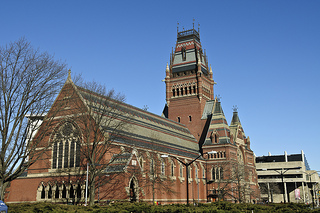
Harvard’s Memorial Hall

As the competition to attract and keep the world’s scholars heats up, countries around the globe are loosening immigration restrictions to allow more international students to stay after graduation. This is especially true for graduates in the highly prized STEM fields: Science, Technology, Engineering, and Mathematics.

The US is no exception, with plans to attract foreign-born STEM graduates as a significant factor in several current immigration-reform proposals. For instance, President Barack Obama’s plan calls for giving a green card to PhD and master’s degree graduates in STEM fields who find work in the US. He calls it “stapling” green cards to their diplomas. In January of last year, the president described the goal this way:

If you’re a foreign student who wants to pursue a career in science or technology, or a foreign entrepreneur who wants to start a business with the backing of American investors, we should help you do that here. Because if you succeed, you’ll create American businesses and American jobs. You’ll help us grow our economy. You’ll help us strengthen our middle class.

Sounds like one more thing for Putin and Obama to spar over.

(Sergey Titov and Gregory Milov, [Google translation of Russian article] “The State Is Ready to Pay for Training Russians in Foreign Universities,” Begin, January 14, 2014; “How Is International Student Mobility Shaping Up,” Education Indicators in Focus, OECD, July, 2013; Michael G. Finn, “Stay Rates of Foreign Doctorate Recipients from U.S. Universities, 2007,” Oak Ridge Institute for Science and Education, January 2010; “Increasing the ‘Stay Rate’ of International Students,” ICEF Monitor, May 30, 2013; “Creating an Immigration System for the 21st Century,” The White House)

[photos: “Moscow State University,” by Steve Jurvetson, used under a Creative Commons license; “Harvard University – Memorial Hall,” by Chen Yen Lai, used under a Creative Commons license]
“Clearing Customs,” the Album

OLYMPUS DIGITAL CAMERA

Ever heard of Fred Frith? No? Then prepare to have your horizons expanded.

I Google-stumbled across Frith while looking for other instances of clearing customs on the internet. He’s a world-renowned experimental musician and college professor who, in 2011, released Clearing Customs, the album.

Born in Sussex, England, Frith has traveled the globe composing, performing, and teaching. He now lives in the US with his wife, German photographer Heike Liss, where he teaches at Mills College in Oakland, California.

Clearing Customs is an hour-long improvisational performance by Frith and other musicians using several instruments, including a Chinese gu zheng and an Indian mridangam and tabla.

To give you a taste of Frith’s kind of music, here’s a clip of him performing at a Mozg festival in Bydgoszcz, Poland. In it, he plays a guitar using a drum stick and a thin strap. As I watched it the first time, I thought, Hey, I could play a guitar with a drum stick. But I’m pretty sure Firth has more musical talent in his little finger than I have in my whole body. And I’m pretty sure he uses his little finger to play, as well.

Frith is also in the 2009 Canadian documentary Act of God, about people who’ve been struck by lightning. In the film, his brother, neuroscientist and author Chris Frith, measures the electrical impulses in Fred’s brain while he improvises on a guitar. In this way, the documentary compares the electrical activity of a storm to the electrical activity of the brain.

I wonder if Fred Frith will ever Google clearing customs, find my site, and blog about me. There’s probably about as much chance of that happening as the chance of me being struck by lightning (which, by the way, the National Weather Service says is 1 in 10,000, during my lifetime).

[photo: “Record Player,” by Ralf Heß, used under a Creative Commons license]
Sorry—No Ifs, Sos, or Buts

139499559_0248586250_nIf you were following the news a couple weeks ago, you got to hear a great example of a straightforward, unequivocal apology from MSNBC host Melissa Harris-Perry. Earlier, on her show, she and her guests had made fun of a photograph showing Mitt and Ann Romney with their 21 grandchildren. The subject of their jokes was that everyone in the photo was white, except for the adopted African-American baby sitting on Mr. Romney’s knee.

In a tweet following the show, Harris-Perry wrote, “I am sorry. Without reservation or qualification. I apologize to the Romney family.”

That kind of an apology is hard to come by. It’s hard to get, and it’s hard to give. But it’s the kind of apology necessary for healthy repentance and healthy relationships—and for healthy good-byes.

R is for Reconciliation

In their book, Third Culture Kids: Growing Up among Worlds, Third Culture Kid experts David Pollock and Ruth Van Reken advise that those transitioning from one country to another should build a “RAFT.” The four parts of that raft are

  • Reconciliation
  • Affirmation
  • Farewells, and
  • Think Destination

“Reconciliation,” say the authors, “includes both the need to forgive and to be forgiven.” And this forgiveness is especially important preceding a move across time zones and oceans.

When transitions approach, those leaving—and those staying—have a small window of opportunity for a face-to-face healing of wounded relationships, a window that gets smaller as the departure gets closer. That’s why apologies become more and more necessary, even at a time when they may seem more and more difficult.

But simply deciding to say “I’m sorry” isn’t enough, because not all apologies are created equal. In fact, we live in the age of the “non-apology apology.” When you say, “I’m sorry,” do you add on any qualifiers? Do extra words reveal your true feelings?

Or do your words of remorse stand on their own, with no ifs, sos, or buts?

No Ifs

The “If” apology is probably the most popular way to get out of a full confession. It goes something like this: “I’m sorry if my choice of words offended you.” What that says is “If my words offended you, then you must be very thin skinned. You should not be offended by what I said, because it wasn’t really offensive. But because you are upset, I would like you to know that had I known I was dealing with someone as sensitive as you, I would not have said what I said . . in your presence.” When this kind of apology is given, is there any real doubt in the speaker’s mind that someone is offended, hurt, etc.?

No Sos

Sos aren’t usually spoken—unless we’re particularly brazen—but they appear when we require something in return for our apologies. If they were actually to emerge from the recesses of our hidden motives and be vocalized, we might say, “I’m sorry . . . so now I’ll listen while you tell me there’s nothing to apologize for,” or “I’m sorry . . . so you need to stop blaming me,” or “I’m sorry . . . so you’re sorry too, right? (I’m more than willing to meet you halfway. That is the way it works, isn’t it?)”

No Buts

By definition, but means that what comes second is going to contrast with what came first. Sometimes the I’m sorry is just a way to softly introduce the “truth”: “I’m sorry, but you had it coming to you.” The but can also announce excuses: “I’m sorry, but I was really tired.” It can spread around the blame: “I’m sorry, but I’m not the only guilty party here.” Or it can even pass the buck on to all of humanity: “I’m sorry, but anyone else in my situation would have done the same thing. (And any reasonable person would agree.)”

Sorry Does Seem to Be the Hardest Word

It’s difficult to apologize without tacking on a weasel word or two, to just let our “I’m sorry” resonate in silence. I should know, as I’m guilty of using every kind of disclaimer above myself, several times. I’ve also left apologies unsaid.

So why is it so hard?

Maybe it’s habit. It’s easy to fall into old patterns, in particular when we’re under stress. And few things are more stressful than voicing an apology that’s been a long time coming. If you don’t want it to come out wrong, you might need to practice beforehand.

Maybe it’s self preservation. A real apology leaves us truly vulnerable. We have to drop our guard and be willing to take our licks.

Or maybe it’s because of the word sorry itself, coming from the Old English sarig, meaning “full of sorrow.” Today, sorry can range from a deep, sorrowful regret over something said or done to a simple usage that means “excuse me,” such as when we’re walking through a crowded hallway. And we also use it to express our sympathy for someone else’s sorrow, as in “I’m sorry for your loss.” I think it’s this last usage, in the context of an apology, that often get’s us in trouble. As with several examples above, our words sound less like “I’m sorry that I wronged you” and more like “I’m sorry you feel that way.”

Regardless of why it’s hard, it’s worth the effort. We need to mend relationships, and we need to bring healing to our own hearts. And we need to do it as soon as possible, so we don’t have to try to work it in at the airport.

And one more thing. There’s no guarantee that the person on the other end of an apology will forgive us. In fact, the deepest apologies come when we don’t think we deserve to be forgiven. And the greatest relief comes when we receive forgiveness anyway.

A Final Disclaimer

Maybe I’ve stepped on some toes with this post. I apologize if you’re bothered by what I’ve written, but sometimes I have a hard time getting my real meaning across, so please don’t think that any of it was on purpose.

I guess what I’m trying to say is “I’m sorry.”

Well, no. Not really.

(Melissa Harris-Perry, “An Apology from Melissa Harris-Perry,” MSNBC, January 4, 2014; David C. Pollock and Ruth E. Van Reken, Third Culture Kids: Growing Up among Worlds, Boston: Nicholas Brealey, 2009)

[photo: “Sorry!” by Andrew Yee, used under a Creative Commons license]

Film on Joplin Tornado Named Best Foreign Language Documentary in Beijing

8556513652_dae518ce3d

On May 22, 2011, the southwest Missouri city of Joplin made news reports around the globe when it was hit by an F5 tornado. Before moving to Taiwan, Joplin was our home for 5 years, and it became our home again when we moved back to the States one month after the storm.

On that day a coworker told us we should go to the Weather Channel’s Internet site, and we got our first look at the devastation from a distraught Mike Bettes, a Weather Channel storm chaser who arrived 10 minutes after the tornado had cut a 13-mile long, up to 3/4-mile-wide path through the city. Then we scanned CNN and several other national online news outlets. It was difficult to make sense of all the reports, largely because we were trying to convince ourselves that it couldn’t have been as bad as they reporters were saying. But while there were some inaccuracies in the initial reporting—due to the chaos and difficulties in communication—in the end, most of it was just as bad, or worse, than what we had heard. In a city of 50,000, 161 people had died, and 7,500 homes had been destroyed or damaged.

Our oldest son was back in Joplin, attending college, and we were able to get ahold of him fairly quickly by phone. At one point I might have said he was unaffected by the tornado, but we soon learned that everyone in Joplin, and in nearby communities, was affected somehow.

After we returned, we saw the immensity of the damage, but we know that that did not compare to living through it. We heard so many stories of loss, of hurt, of survival, of fear, of hope, of comfort. So many stories.

Documentary Wins Award on Other Side of the World

One of the groups telling the stories was The Joplin Globe, the city’s newspaper. Even though The Globe lost one of its staff and the homes of 25% of their employees were destroyed, they kept reporting. Their story is told in a documentary, Deadline in Disaster, produced by Orr Street Productions.

The film aired on Missouri PBS stations last year and won a 2013 Emmy in the Cultural Documentary Feature category, presented by the MidAmerica Chapter of the National Academy of Television Arts & Sciences.

But that’s not the only academy that’s taken notice. Last month, the third China Academy Awards of Documentary Film (CAADF) honored Deadline in Disaster as its choice for best foreign language film. The award ceremony, held on December 29, was organized by the China Documentary Research Center and hosted by the Communication University of China.

Beth Pike and Stephen Hudnell, directed and edited the film. Pike told  The Globe that she decided to contact CAADF after the documentary was praised by two employees of China Radio International. The two, Danna Ao, a visiting scholar at the University of Missouri-Columbia’s School of Journalism, and Yinan Yan, saw it when it was screened at a Missouri Press Association conference they attended.

“They were very moved by the resiliency of the Globe staff and the people of Joplin,” Pike told the newspaper. “They could relate since China has had its share of earthquakes, with many deaths and injuries.”

Facts about the 5/22/11 Joplin tornado

  • 161 people killed
  • 4,000 residential dwellings destroyed
  • 3,500 residential dwellings damaged
  • 9,200 people displaced (estimated)
  • almost 3 million cubic yards of residential debris generated
  • 553 businesses destroyed or severely damaged
  • $2,017,564,600 in losses incurred (as of October 31, 2012)
  • 176,869 volunteers registered (as of April 30, 2013)
  • 1,146,083 hours of volunteer work recorded

(“‘Deadline in Disaster’ Wins China Academy Award for Foreign Language Film,” The Joplin Globe, December 30, 2013; “Fact Sheet–City of Joplin, May 22, 2011 EF-5 Tornado,” City of Joplin, Missouri, July 1, 2013)

[photo: “2011 Joplin Tornado,” by Ozarks Red Cross, used under a Creative Commons license]

“An Extraordinary Theory of Objects”: A TCK in Paris and the Things That Keep Her Sane, Sort of

31703109_4ad6f7ce2c_nI just finished reading a cool little book entitled An Extraordinary Theory of Objects: A Memoir of an Outsider in Paris. It was a Christmas gift from my son, the one who got a Moleskine Journal from me.

An Extraordinary Theory of Objects is a series of vignettes by Stephanie LaCava about her move to France as a twelve-year-old in 1993, her years there growing up, and then her visits back again after attending college in the States.

On the cover of my copy of the book are romantically filtered and tinted photos of the Eiffel Tower, and on the pages inside, her writing style evokes the same kind of mood. If stories could be sepia-toned, this is how they might sound.

Actually, the filter through which LaCava encounters the world is her attachment to things. First, there are the small, curious relics—a skeleton key, a mushroom, an opal necklace found in the mud—that she gathers and places on her windowsill. Initially they replace her old collection, “everything that represented [her] past life and its predictable ways,” which is on a container ship making its way across the ocean from New York.

And then there are the objects she encounters from day to day, common things that she illuminates in copious footnotes often taking up more than half a page. Cataloging these objects gives her security and makes sense of her life in a new city . . . as she faces depression and what she calls her own “kind of crazy.”

Some might find her footnotes distracting, but they cover just the kind of obscure topics that intrigue me, such as a Japanese smuggler of black-market butterflies, a photo book dedicated to Salvador Dali’s mustache, and the origins of the tea bag. And they are replete with references to a variety of figures, from Pliny the Elder to Kurt Cobain, from Anne Boylen to Kate Moss.

Much of LaCava’s narrative is about time spent with her father, often searching flea markets for items to fulfill their eccentric tastes. At other times, she talks about her classmates at the international school. She says she was “mostly alone” her first year there. Even among these other outsiders, she doesn’t fit in.

I rode the bus to school and listened to my Discman while the girl in the back row threw gum wrappers at my head. The girls at school didn’t like me very much. They had never given me a chance, decided immediately that I didn’t belong, which was funny, as they didn’t either—at least not in France. They made me feel as if I had done something wrong, and they spoke badly about me to each other. Through my own odd rationalization, I decided excommunicating me meant they belonged to something, simply because I did not. . . .

Come the new academic year, the old class would be replaced with another set of students who had just moved overseas. Only a few remained year after year—and still the same insensitivity.

One day, a classmate tells her that she looks like Angela from the TV series My So-Called Life.

“I haven’t seen it,” she replies.

“Everyone’s seen that show,” he says. “Don’t you have friends in the States? They can send it to you.”

In a footnote, LaCava delves into the significance of the series, quoting Matt Zoller Seitz of The New York Times, who writes, “What the series’ narration does best: it shows how teen-agers try to control their chaotic inner lives by naming things, defining them, generalizing about them.”

That’s what LaClava does, as well—controlling the inner chaos of her life in a Paris suburb by naming the objects she encounters. Then, years later, she examines them even more closely and writes about them so that she can share with us her own kind of strange . . . and her own kind of normal.

(Stephanie LaCava, An Extraordinary Theory of Objects: A Memoir of an Outsider in Paris, New York: Harper Perennial, 2013)
[photo: “Eiffel Tower,” by charley1965, used under a Creative Commons license]

Repost – You Remember You’re a Repat when . . . (Part 1)

Repatriation—to borrow a phrase from John Denver—is coming home to a place you’ve never been before.

Here’s a repost from my first year blogging, with 92 things that remind repats that they’ve been out of the country for a while. As time goes by, more and more of them are happening less and less for me. But some will never go away.

_______________________________

In the hallowed tradition of “You Know You’re an Expat / Third Culture Kid / Missionary when . . .” lists, I offer my own version for repats. This is for the times when you’re reminded that your plug doesn’t always fit the outlet.

Since I’m a former missionary to Asia who’s repatriated back to the US, a lot of my list leans in that direction, but I hope there’s something here for repats of every stripe (or voltage, as it were).

You remember you’re a repat when . . .

1. Your passport is your preferred form of ID.
2. You comment on how cheap gas is in the US.
3. You ask your friends who they’re picking to win the World Cup.
4. Your CNN web page is set on “International.”
5. You accidentally try to pay for something with the strange coins from the top of your dresser.
6. You don’t trust your friends when they say they’ve found a “good” Italian restaurant.
7. You ask the clerk at the convenience store if you can pay your electric bill there.
8. You don’t know how to fill out taxes without Form 2555.
9. You think Americans are loud.
10. You talk about Americans overseas and call them “foreigners.”
11. You find out that living overseas is not the top qualification employers are looking for.
12. You learn to stop talking about the nanny and groundskeeper you used to employ.
13. You have to ask how to write a check.
14. You forgot how many numbers to dial for a local phone call.
15. You tell your toddler, “No seaweed until you finish all your hamburger.”
16. You try to order fried chicken at Burger King.
17. You check prices by converting from what a similar item cost overseas.
18. You think American paper money is boring because it lacks color and the bills are all the same size.
19. You don’t know how to respond when people say, “I bet you’re glad to be back home.”
20. You prefer to hear news reports from someone with a British accent.
21. You wonder why all the commentators on TV are yelling.
22. You wish you’d brought back ten of your favorite kitchen utensil because you didn’t know it’s not sold in the States.
23. You realize international students are you’re kind of people.
24. You ask where you can get a late-model, low-mileage Toyota for around $2000.
25. You turn on the subtitles on an English movie because you don’t want to miss anything.
26. You ask the clerk at the video store if they have VCDs.
27. You wonder if organization should be spelled with an s.
28. You load up your suitcase and you try not to “pack like an American.”
29. You stop bringing your bi-lingual Bible to church.
30. You smirk inside because someone calls a 4.3 earthquake “a big one.”

(Part 2Part 3)

[top photo: “Electrical Outlet,” by grendelkhan, used under a Creative Commons license; bottom photo: “Having It Both Ways,” by Keith Williamson, used under a Creative Commons license]

It’s the New Year, So How About a New Accent?

11678039353_deb2f45a1b_nIf you’re tired of failing your do-or-die New Year’s resolutions, maybe you should make a resolution lite.

Can’t see yourself losing 50 pounds? Why not shoot for 15?

Don’t want to read a book a week? Maybe a page a day is more your speed.

And if you’re not ready to learn a new language, here’s an alternative: Acquire an accent instead.

Learn Accents from a Pro

Professional help is just a couple clicks, and a couple minutes, away. Just listen to Gareth Jameson, London-based actor and voice coach, and you’ll be speaking like a Brit, or an Aussie, or a German speaking English, in no time. Take your pick from Jameson’s series of 19 videos at Videojug.

“The key to any accent,” says Gareth Jameson, “is to isolate the sounds that are specific to that accent.” Isolating—and reproducing—those sounds is tough for me. To my ear, there are two kinds of English: American and non-American. Tell me to imitate a Scott, and it comes out as something like a parody of Ringo Starr. Same for imitating a South African or an Australian. I know they don’t really sound alike, but I just don’t know exactly why.

So hear you go (yeah, I meant to do that). Click on the photos below for a sampling of videos, or go to the complete gallery, and soon you’ll be well on your way to annoyi . . . I mean, impressing your friends.

[photo: “Happy New Year!” by Chris Chabot, used under a Creative Commons license]