Short Fiction at High Altitudes

36689030556_7a2750be3e_z

“Is Wi-Fi the existential threat that will finally kill the inflight magazine?” That’s the question Mark Tjhung asked this past July in Forbes. His answer is No, in part because his answer has to be No: He’s editor of Silkroad, the inflight magazine for the Hong Kong airline Cathay Dragon. But he also explains that he believes in the future of inflight magazines, if they “keep up and raise their standards.” And he writes, “Ironically, rather than being the death knell of the inflight magazine brand, the online revolution in the media landscape may present its greatest opportunity.”

Part of Silkroad‘s raising of its standards, as Tjhung points out in the article, is the inclusion of a “Short Story Anthology.” Last summer, they invited authors to send them short pieces of fiction, with the result being a collection of four stories, each set in a different Asian country, written specifically for Silkroad readers. The anthology includes works from David Mitchell, author of Cloud Atlas; Lijia Zhang, a Chinese author who writes in English for international publications; Nuri Vittachi, author of The Feng Shui Detective; and Manu Joseph, author of Serious Men. Each story is accompanied by an author interview.

A Forgettable Story,” by Mitchell, is something of a Japan-based combination of Groundhog Day and an inside-out 50 First Dates, told by an airline passenger to his seatmate. In describing himself, he says,

Where am I from? Tricky question. ‘From my mother’? I had a peripatetic childhood, so I’ve got more passports than Jason Bourne. All legal, I hasten to add. Even the matter of where I live now gets a bit . . . complicated. You know those wandering poet-monks in feudal China and Japan who used to say the road was their home, and the grass was their pillow? You could say I’m a contemporary reboot of them. ‘My spiritual home is the transit lounge.’ I should get that printed on a T-shirt. Don’t think I’m romanticising this way of life: I’m not. I envy what I guess you have. Friends, a partner maybe, a job, or at least a role, a family to be a part of – even if they drive you crazy now and then. Belongingness is underrated, especially by the young.

Zhang’s “Permission” tells the story of Lin, a young man who has moved from rural China to study in one of the country’s most-prestigious universities. There he is faced with the conflict between Chinese and Western values, as well as his own conflicting emotions concerning a nurse who shows him attention.

In “Geek Girl and the Digital Planet,” Vittachi writes about an expat in Hong Kong who infiltrates the world around her by hacking into the scores of wi-fi and bluetooth signals available in her apartment. On fiction’s ability to inspire travel, Vittachi says, “The best way to visit somewhere is to read a novel about it – and then buy an airline ticket.”

And “The Fight,” by Joseph, is about a family vacation in India. But rather than focusing on the beauty of Goa, the husband and wife are preoccupied with arguments and frustration. “‘Everybody fights,” the father tells his seven-year-old daughter. “They go to beautiful places to fight.” About the inspiration for his story, Joseph writes,

I like the joy of vacations, especially time spent with the children, but the most interesting thing is the pressure on the adults to pretend they are having a good time. I am sure most people do have fun but many other things go on during family vacations—tension between adults that’s often continuation of old feuds.

Kudos to Silkroad for broadening its repertoire to include fiction. What a great way to introduce readers to the subtle nuances and intricacies of travel and destinations. As Vittachi says in his interview, “I think inflight magazines are a great place for fiction. Fiction transports you in a delightful manner—exactly like a good plane journey!”

If you’d like to read more from international inflight magazines—without getting on a plane—go to my recently updated list of over 100 offered online.

(Mark Tjhung, “No, the Inflight Magazine Isn’t Dead,” Forbes, July 20, 2017; “The Silkroad Short Story Anthology,” Discovery, July 3, 2017)

[photo: “DSC01783,” by Anthony Pujol, used under a Creative Commons license]

Beware the Travel Syndromes: Just How Many Symptoms Can Come About from Going Places?

737288190_68adcfa830_z

Have you every heard of “travel syndrome”? Me neither, until I saw a video circulated recently by Newsfare showing a distraught traveler in Qingdao, China. The man rushed off his train, which was stopped at a station, and tried to throw himself over a guardrail to the underpass below. He was spared injury when a policeman and two passengers caught him. The story accompanying the video says that the man had spent 40 hours on the train and was suffering from “travel syndrome,” defined as “a short-time psychotic disorder.” The man reportedly became calm after ten minutes.

I’m still not sure if travel syndrome is a real thing. Maybe there’s something going on with the translation. And maybe there was more to the man’s situation than just a long train ride. A more detailed video and story at CCTV+ doesn’t mention a syndrome but rather says that medical workers think that the man “might have had a hallucination which caused his physical disorders.”

(China.Recorder, “Police Grabs Man Jumping off Guardrails at Train Station,” January 1, 2018; “Police Officer Stops Hallucinated Passenger from Jumping off Railway Platform,” CCTV+, January 1, 2018)

But regardless of the accuracy, or lack thereof, of this gentleman’s diagnosis, there are such things as syndromes associated with travel. And I’m talking not just about made-up maladies, like “rude-tourist syndrome” or “lost-luggage syndrome.” No, these syndromes are real enough to garner serious discussion.

Economy-class syndrome
“Economy-class syndrome,” “second-class-travel syndrome,” and “cheap-airfare syndrome” are all names for deep vein thrombosis, or the formation of blood clots, in the legs, caused by lack of movement by passengers during long flights. Deep vein thrombosis is a real concern, especially if a clot detaches and gets lodged in the lungs (pulmonary embolism), a potentially fatal condition. But in an article at WebMD, the American College of Chest Physicians says that the risks are low for healthy travelers and that sitting in coach does not make the risks higher. Rather, it’s long stretches of immobility that cause the most problems, regardless of where your seat is located—though being trapped in a window seat can limit opportunities to move around.

(Salynn Boyles, “New Guidelines Debunk ‘Economy Class Syndrome,'” WebMD, February 7, 2012)

High-altitude syndrome
A brochure published by the Port Health Travel Centre of Hong Kong’s Department of Health says that high-altitude syndrome is caused by ascending to altitudes above 8,000 feet more rapidly than your body can acclimate. Symptoms begin with a mild headache and can progress to Acute Mountain Sickness—including a headache “similar to a bad hangover” plus nausea, fatigue, dizziness, or difficulty sleeping—High Altitude Cerebral Edema (fluid accumulating in the brain), and High Altitude Pulmonary Edema (fluid accumulating in the lungs). Without treatment, these last two conditions can result in death.

(“High Altitude Syndrome,” Port health Travel Centre, Department of Health, Hong Kong, 2005)

Culture-shock syndrome
You probably know what culture shock is, but adding syndrome after it sounds much more significant, especially with this definition from the Handbook of Psychiatric Education and Faculty Development:

a protean psychodynamic manifestation including mourning of the lost culture, severe anxiety in adapting to the new and consequent identity disturbances.

(Jerald Kay, et al., Handbook of Psychiatric Education and Faculty Development, American Psychiatric, 1999)

Time-zone-change syndrome
Likewise, jet lag has its own “syndrome” name, too. And here’s how time-zone-change (jet-lag) syndrome is described in the  International Classification of Sleep Disorders: Diagnostic and Coding Manual:

varying degrees of difficulties in initiating or maintaining sleep, excessive sleepiness, decrements in subjective daytime alertness and performance, and somatic symptoms (largely related to gastrointestinal function) following rapid travel across multiple time zones.

(American Academy of Sleep Medicine, International Classification of Sleep Disorders, Revised: Diagnostic and Coding Manual, American Academy of Sleep Medicine, 2001)

Chinese-restaurant syndrome
So with “gastrointestinal function” as a segue. . . . Not a few people complain of adverse physical reactions after eating food with monosodium glutamate (MSG), which is often used as a flavor enhancer in Chinese cuisine. I don’t think the label “Chinese-restaurant syndrome” is fair, not because I don’t believe in the negative effects of MSG (I’m not going to enter that debate), but rather because Chinese cuisine is far from the only food containing the additive. First introduced in Japan in 1908, MSG has since spread across Asia. But you don’t need to go overseas or even to an Asian restaurant to get your fill. MSG is found naturally in foods such as tomatoes and parmesan cheese; it’s added for flavor to products such as Doritos and Campbell’s Chicken Noodle Soup; and it’s in the recipes at KFC and Chick-fil-A.

Toxic-airline syndrome
“Toxic-airline syndrome” and “aerotoxic syndrome” are names given to symptoms that some believe are caused by breathing airliner cabin air that is contaminated with engine lubricants or noxious fumes. There is disagreement as to the potential dangers:. On the one hand is the UK’s Committee on Toxicity of Chemicals in Food, Consumer Products and the Environment (COT), which states that a valid explanation for the illnesses is that they are manifested in people who perceive cabin air to be hazardous. This is called the “nocebo effect,” as opposed to the “placebo effect.” But on the other hand are those who believe long exposure, such as by flight crew or frequent fliers, has led even to the deaths of their loved ones. Regardless, most agree that the issue is serious enough to warrant further investigation.

(Kate Leahy, “There Are Hundreds of Sick Crew’: Is Toxic Air on Planes Making Frequent Flyers Ill?” The Guardian, August 19, 2017; “Position Paper on Cabin Air,” Committee on Toxicity, 2013)

Airport-assault syndrome
A 1982 issue of The BMJ (formerly British Medical Journal), contains a short article on “airport-assault syndrome.” Those were simpler times, and the assault referenced there isn’t concerning terrorism. Instead it’s the “plague” of luggage trolleys running into the Achilles tendons of innocent passersby. The authors suggest developing shorter, more easily maneuverable trolleys or pulling, rather than pushing, them as ways to “prevent many travelers from grievous bodily harm at the hands of unsuspecting charioteers.”

(Michael Heim, et al., “The Airport Assault Syndrome on the Increase,” The BMJ, December 23, 1989)

Airport syndrome
Sometimes the syndromes are not a result of travel, but traveling, or attempting to travel, is a manifestation of previous disorders. “Airport syndrome,” as referenced in the BJPsych Bulletin, is characterized by “airport wandering,” when “travel to the airport [is] in some way a product of [psychotic] illness.”

Jet-set Munchausen syndrome
The same BJPsych Bulletin article also cites a case of Munchausen syndrome that took place on a plane, causing the flight to be diverted. Munchausen syndrome is a mental disorder in which a person repeatedly pretends to be sick even though the illness is not real. In this “jet-set” case, it happened to occur on a plane.

(Harvey Gordon, et al., Air Travel by Passengers with Mental Disorder,” BJPsych Bulletin, July 30, 2004)

Florence Syndrome, et al.
And then there is a small atlas of syndromes named after travel destinations that overwhelm visitors, with symptoms including anxiety, disorientation, dizziness, fainting, and even convulsions and hallucinations—sometimes leading to hospitalization.

Florence syndrome is also called Stendhal syndrome—after the French author who reported his reaction to visiting Florence in 1817—and can apply to visiting any destination with cultural and artistic significance.

Paris syndrome, most often experienced by Japanese tourists, comes about when the reality of Paris does not meet the romanticized expectations of the visitors. Jerusalem syndrome involves religious delusions or obsessions caused by travel to the city. And India syndrome is a set of psychotic symptoms experienced by outsiders coming to the country on spiritual journeys.

In his book A Death on Diamond Mountain, Scott Carney includes a simple cure for India syndrome, given by Kalyan Sachdev, the medical director of New Delhi’s Privat Hospital: a trip home. “[Y]ou put them on the plane,” Sachdev says, “and they are completely all right.”

(Scott Carney, A Death on Diamond Mountain: A True Story of Obsession, Madness, and the Path to Enlightenment, Penguin, 2015)

Post-travel syndrome
But is going home the answer to travel woes? Though it’s not officially recognized, I’ll include “post-travel syndrome” here because so many people talk about it and claim to experience it. Also called “post-travel depression,” it’s the emotional low one gets after returning from a trip. But as Dr. Sebastian Filep of the University of Otago’s Department of Tourism tells NBC News, “The idea of post-travel depression is largely a myth.” In the same report, Jeroen Nawijn, of the Centre for Sustainable Tourism and Transport, who has studied vacationing’s effect on mood, says he’s “found no proof of post-travel depression,” and labels it “not a legitimate mental health issue.”

And yet it can feel so real.

(Dana McMahan, “Do Well-needed Vacations Actually Bum Us Out?NBC News, May 9, 2013)

So, in light of all this, should we just stay home and never venture beyond the confines of our immediate locales? I guess that’s one solution, but be warned. That would mean giving up on all that can be gained from seeing the world and expanding our horizons. And if you let your concerns about travel consume you, you run the risk of suffering the incapacitating effects of treksyndraphobia syndrome—the fear-of-travel-syndromes syndrome.

Yeah, I made that one up.

(Mike Robinson and David Picard, eds., Emotion in Motion: Tourism, Affect and Transformation, Routledge, 2012)

[photo: “Stranded in Madrid,” by Daniel Gasienica, used under a Creative Commons license]
33 Clickbait Headlines for Expats—Number 12 Will Make You Gasp [—at A Life Overseas]

Giorgi - Shocked

Normally, clickbait headlines are created simply to grab clicks—and clicks and clicks and more clicks. But you can’t click on the titles below, since there aren’t any stories linked to them. Instead, if being an expat is in your past, present, or future, the stories are up to you, to write or live out yourselves.

So here’s to the new year . . . and all the stories ahead!

  1. They had no idea why all the nationals were staring at them
  2. She said the same thing to her neighbor every morning for a month—until her language teacher explained to her what it meant
  3. Only 1 in 1000 people can identify these countries by their shapes—can you?
  4. He thought his carryon would fit in the overhead bin, then this happened
  5. 5 things visa officers don’t want you to know

See the rest of the list at A Life Overseas

[photo: “Giorgi – Shocked,” by japrea, used under a Creative Commons licesnse]

Christmas, 2, 3, 4

“This Airport’s Christmas Tree Was So Offensively Ugly They Had to Take It Down”

[T]he people of Beirut, Lebanon were far from pleased with the Christmas tree that was standing in Rafic Hariri International Airport this season.

It wasn’t just ugly—it wasn’t really a tree. The structure was actually made of metal, fire extinguishers, life vests, and other recycled airplane parts.

The tree was actually commissioned as part of an environmental initiative from Middle East Airlines in order “to raise awareness about environmental protection and to prevent logging and awareness on the recycling process.” However, most people traveling through the airport couldn’t really get past the idea that they were looking at what was basically a Christmas tree made of garbage.

. . . . .

After many complaints, the tree was removed from the airport.

Andrea Romano, Travel and Leisure, December 15, 2017

Cross-cultural Books for the First Year of the Rest of Your Life

17265854745_d3fdd125af_z

Did you know that penguins (the birds that swim instead of fly) thrive in saltwater environments because they have a gland above their eyes that filters salt from their blood, and then the salt is excreted through their bills, either as a drip or by a sneeze?

And did you know that Penguin (the publisher that’s part of Penguin Random House) puts out a list each year aimed at first-year college students, called “Penguin Books for First-Year Experience and Common Reading Programs“?

(The rest of this post is going to elaborate on the second fact above, though the first one is pretty cool.)

Many colleges and universities have first-year-experience (FYE) programs aimed at laying an introductory foundation for beginning students. Programs often have as their focus a course taken by all new students and may also include a common text that students share in reading. Chosen well, this book expands the world of incoming students and creates avenues for growth and discussion.

Look at Penguin’s 2017-18 catalog of books recommended as common readings and you’ll find plenty of award-winning works, filled with inspiration and covering a myriad of challenging topics, and you don’t need to be a college freshman to appreciate the width and depth represented there. And within that list, you’ll also find a lot with cross-cultural and international themes—so many, in fact, that they’re worth listing here.

I’ve divided them into the categories that Penguin uses in its catalog, showing the title and author, followed by the place or situation, if not already apparent. I can’t personally vouch for all of these books, since, regrettably, I haven’t read any of them. But I can certainly say that I’d like to use these titles to start a to-read list . . . or maybe a list for Christmas.

Nonfiction:

In Order to Live: A North Korean Girl’s Journey to Freedom
Yeonmi Park with Maryanne Vollers

It’s What I Do: A Photographer’s Life of Love and War
Lynsey Addario

The Line Becomes a River: Dispatches from the Border
Francisco Cantú
(at the Mexico/US border)

Fiction:

The Association of Small Bombs
Karan Mahajan
(India and the US)

City of Saints and Thieves
Natalie C. Anderson
(Kenya)

Everything I Never Told You
Celeste Ng
(Chinese Americans)

Exit West
Mohsin Hamid
(imagined world of refugees)

How to Get Filthy Rich in Rising Asia
Mohsin Hamid

Quiet until the Thaw
Alexandra Fuller
(Native Americans)

The Shadow of the Crescent Moon
Fatima Bhutto
(Afghanistan and Pakistan)

Contemporary Fiction:

And the Mountains Echoed
Khaled Hosseini
(Kabul, Paris, San Francisco, and the Greek island of Tinos)

The Cellist of Sarajevo
Steven Galloway

Don’t Tell Me You’re Afraid
Giuseppe Catozzella
(a Somali girl and the Olympics)

Ghachar Ghochar
Vivek Shanbhag, translated by Srinath Perur
(Bangalore)

Girl in Translation
Jean Kwok
(an immigrant from Hong Kong to Brooklyn)

Home Fire
Kamila Shamsie
(Pakistani immigrants in London and Massachusetts)

How I Became a North Korean
Krys Lee
(at the Chinese border with North Korea)

The Idiot
Elif Batuman
(immigrant and international students at Harvard)

In the Language of Miracles
Rajia Hassib
(Egyptian immigrants to the US)

Lucky Boy
Shanthi Sekaran
(an undocumented Mexican immigrant and Indian-American in the US)

Redeployment
Phil Klay
(US soldiers in Iraq and Afghanistan and returning home)

Refuge
Dina Nayeri
(an immigrant from Iran to the US to Europe)

Reputations
Juan Gabriel Vásquez, translated by Anne McLean
(Colombia)

The Shape of Bones
Daniel Galera
(Brazil)

A Tale for the Time Being
Ruth Ozeki
(Tokyo)

A Word for Love
Emily Robbins
(Syria)

General Nonfiction

Excellent Daughters: The Secret Lives of the Young Women Who Are Transforming the Arab World
Katherine Zoepf

A School for My Village: A Promise to the Orphans of Nyaka
Twesigye Jackson Kaguri with Susan Urbanek Linville
(Uganda)

Shooting Ghosts: A U.S. Marine, a Combat Photographer, and Their Journey Back from War
Thomas J. Brennan and Finbarr O’Reilly
(Afghanistan and Iraq)

The Way to the Spring: Life and Death in Palestine
Ben Ehrenreich

Memoir and Biography

Autumn
Karl Ove Knausgaard
(Sweden)

The Bosnia List: A Memoir of War, Exile, and Return
Kenan Trebinčević and Susan Shapiro

The Boys in the Boat: Nine Americans and Their Epic Quest for Gold at the 1936 Berlin Olympics
Daniel James Brown

Escape from Camp 14: One Man’s Remarkable Odyssey from North Korea to Freedom in the West
Blaine Harden

The Girl from the Metropol Hotel: Growing Up in Communist Russia
Ludmilla Petrushevskaya

Looking for Palestine: Growing Up Confused in an Arab-American Family
Najla Said

An Ordinary Man: An Autobiography
Paul Rusesabagina and Tom Zoellner
(Rwanda)

Shoot like a Girl: One Woman’s Dramatic Fight in Afghanistan and on the Home Front
Mary Jennings Hegar

Stealing Buddha’s Dinner
Bich Minh Nguyen
(Vietnamese immigrant in Michigan)

Undocumented: A Dominican Boy’s Odyssey from a Homeless Shelter to the Ivy League
Dan-el Padilla Peralta

Wine to Water: How One Man Saved Himself While Trying to Save the World
Doc Hendley

You Will Not Have My Hate
Antoine Leiris
(Paris)

And finally, a few books on listening and telling stories, all from David Isay, the founder of StoryCorps:

Callings: The Purpose and Passion of Work

Listening Is an Act of Love: A Celebration of American Life from the StoryCorps Project

Ties That Bind: Stories of Love and Gratitude from the First Ten Years of StoryCorps

[photo: “Happy World Penguin Day,” by Christopher Michel, used under a Creative Commons license]

Seaweed, It’s Not Just for the Fishes

3421949942_e2dfb4e3e4_z

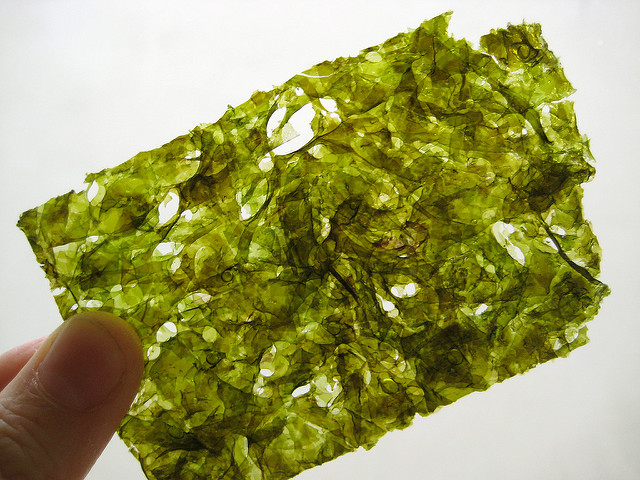
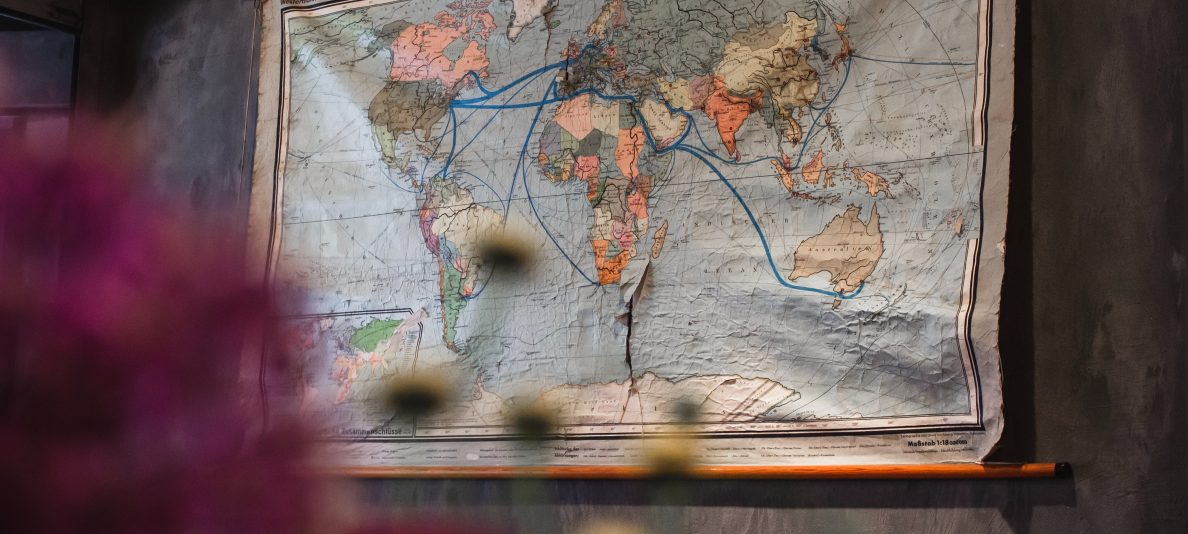
On Wednesday, while we were watching Game 6 of the World Series, I saw a commercial that featured a young girl introducing herself to her new classmates. Her parents met in Texas, she tells them, then relocated to Washington, and she was born at Fort Knox. Next came Georgia and then Korea. “Mmm,” she says, pointing to South Korea on the wall map, “Seaweed snacks.”

Her fellow students think that sounds pretty awful, but my son, who was born in Taiwan, yelled out, “See? See? I’m not the only one!”

She ends her introduction with “And now we live here for good.”

What were they advertising? I didn’t know, but I wanted to find the commercial online and watch it again. I Googled “home ad seaweed.” Google asked if I meant “home and seaweed” and showed me 5 Creative Uses for Seaweed in the Home, from Rodale’s OrganicLife: fertilizer, dietary supplement, East Asian cuisine ingredient, pet food ingredient, and beer additive. It also led me to a Wired article telling me, “This Seaweed-Covered House Is the World’s Coziest Sushi Roll” (“The primary challenge for the designers was turning an unruly weed into a consistent building material”), and The New York Times sharing that “Seaweed’ Clothing Has None, Tests Show” (“the labs found no evidence of seaweed in the Lululemon clothing”).

Thinking the commercial might be selling houses, I searched for “real estate commercial seaweed,” but that honed in on “commercial seaweed,” which gave me Grand View Research’s “Commercial Seaweed Market to Reach $22.13 Billion by 2024,” and “The Power of Seaweed, from the Wall Street Journal (“there’s growing evidence that seaweed might fit the bill as a raw material for biofuel, and one Indian entrepreneur is hoping to exploit it”).

No World Series commercial yet, but I didn’t give up. And through some combination of search terms, I found what I was looking for. The ad is from Navy Federal Credit Union and is titled “Here for Good.” I couldn’t embed it, but you can watch it at iSpot.tv.

Are you like the students in the commercial and you think that eating seaweed is more yuck than yum? Or are you like my son: “Edible seaweed? What’s not to like?” Either way, if you want to find out more about “the new potato chip,” edible seaweed (nori in Japanese, hai tai in Mandarin, or kim in Korean), take a look at KQED’s “Savoring Seaweeds: What You Need to Know before Diving In.” More options? Well Deutsche Welle would like you to know “Seaweed Wine Hits Germany’s Stores, and The Portland Phoenix wants to introduce you to “Seaweed Tea: The Next Big Drink Trend?

Of course, the chips aren’t made from potatoes, the wine isn’t made from grapes, and the tea isn’t made from tea. They’re all made from marine algae.

So, how long before you’re saying, “Mmm. Marine algae.”

[photo: “Wasabi flavored snack nori わさび风味のり,” by kattebelletje, used under a Creative Commons license]

What Did I Do Today? I Made a Copy. Woohoo! [—at A Life Overseas]

2374109818_9419690fbb_b

An imagined but quite possible day in a life overseas . . .

This morning I woke up with my to-do list waiting for me on the nightstand. Item number one was Get out of bed (I’d written that one down so I could start the day by crossing it off). Number two said Copy document. That’s because yesterday at the county government office, when I went to get my resident permit renewed, the lady behind the desk told me I needed to bring a copy of my registration letter to leave with them.

I was more than ready to get that taken care of and move on to the other, bigger, better, more important things on my list. It was an impressive list. I had quite the day planned.

After a quick shower and a slice of toast for breakfast, I grabbed my permit documents and walked the four blocks to the bus stop and took the bus to the copy shop, about 15 minutes away. But when I stepped off the bus I saw that the copy shop wasn’t a copy shop anymore. Instead,  sometime over the weekend, it had been turned into a KFG Chicken restaurant. (That’s right, a KFG not a KFC. This one had a big green smiling rooster on its sign.) I called my teammate to get her advice, and she said I could get a copy at a bank. There was a bank down the street, and after going there and standing in line, I asked the teller if she could help me make a copy. She said that was impossible.

On the way back to the bus stop, I called another teammate, and he told me to try the photo shop next to the new high school. I decided to take a taxi there to save time, but the only cash I had was a large bill and I figured the driver wouldn’t have change for it, so I walked back to the bank to withdraw some money from the ATM. But then the ATM ate my card and wouldn’t spit it out no matter how many buttons I pushed. I went back into the bank to retrieve it, but they said that was impossible—at least until after two business days.

You can read the rest at A Life Overseas. . . .

[photo: “Braden’s Woohoo!,” by Laura Molnar, used under a Creative Commons license]

Of Big Macs, KFCs, and Tall Lattes: A Full Menu of Global Indexes

2390204986_7379b1f29e_z

I’ve always wondered about the “heat index” and “chill factor,” ways to say, “We know how hot or cold it is, but here’s how it feels.” Obviously there are scientific factors figured into the calculations, but it makes me think we could also have a “Great Grandma Gordon Index”: “I’m telling you, it’s at least 125 degrees in the shade!” or a “Guy Who Lives Down the Block Index: “It’s so cold I can’t feel my left foot!”

When you travel, you see how much weather standards aren’t standardized around the world, either. For people in hot climates, the winter parkas might come out when the temperature dips below 60°F, or for those where cold is routine, when they register the same temp, it’s time to put on shorts.

But keeping track of relative weather norms isn’t the only concern when going abroad. There’s also that finances thing. You want to know how much money you’ll need to spend while spending time in another city—in terms that make sense. So you might be thinking “How much does, for instance, a Big Mac cost there?”

Well, funny you should ask.

One of the most well-known economic indexes has the answer. Taking its name from the classic McDonald’s sandwich, the Big Mac Index was developed in 1986 by The Economist “as a lighthearted guide to whether currencies are at their ‘correct’ level.”

“Burgernomics,” says The Economist “was never intended as a precise gauge of currency misalignment, merely a tool to make exchange-rate theory more digestible.” But the Big Mac Index has gotten a lot of weighty attention, garnering coverage in textbooks and academic studies. In fact, the index is taken seriously enough that a New York Times article postulated in 2011 that Argentina was artificially keeping its Big Mac prices down to influence its place on the scale. And Computerworld reported this year that the malware Fatboy, a ransomware-as-a-service (software that locks up a computer and demands payment to decrypt its data) uses the Big Mac Index to determine how much ransom needs to be paid for a particular location.

The Big Mac Index is based on the idea of purchasing-power parity. I’m not an economist, so it’s easy for me to get lost in the weeds on economic theories. But rather than use it as a rigorous currency-valuation metric, I see it more as a quick-and-dirty cost-of-living index.

If you have a hunger for that type of thing, too, I’m glad to tell you there’s much more on the menu than just the Big Mac. Here’s a list to whet your appetite:

The Tall Latte Index
Also called the Starbuck’s index, this is another iteration from The Economist, comparing prices from the coffee chain.

The KFC Index
Because McDonald’s has restaurants in only three African countries, the Big Mac Index doesn’t work very well on that continent. Therefore, Sagaci Research developed an index based on KFCs, which are present in nearly 20 nations in Africa. The metric is based on the price of an Original Recipe 15-piece bucket.

The Mini Mac Index
Invented by Benn Steil and Emma Smith of the Council on Foreign Relations, it compares the global prices of iPad Minis.

McDonald’s Index of Humanitarian Access
Jonathan Whittall, head of humanitarian analysis at Médecins Sans Frontières/Doctors Without Borders writes that

no country with a McDonald’s has ever rejected humanitarianism on ideological grounds. It is in those states where the economic and political influence of the west still has space that all components of the west’s foreign policy are accepted: both McDonald’s and INGOs.

The Coca-Cola Index
This analysis branches out a bit more, showing the relationship of Coke consumption with quality-of-life factors. Using UN figures, The Economist (those guys sure are busy), shows that countries’ higher rates of Coca-Cola drinking correlate with higher wealth, health, and political freedom. Have a Coke and a smile?

The Happy Planet Index
Speaking of smiles, the New Economics Foundation publishes this global ranking of “how efficiently residents of different countries are using environmental resources to lead long, happy lives.” (I really wanted to find a “Happy Meal Index,” but so far, it hasn’t been created yet.)

And while we’re on the topic of quality of life, we have

The Better Life Index
from the Organisation for Economic Co-operation and Development

The Legatum Prosperity Index

The Human Development Index and The Gender Development Index
from the United Nations Development Programme, and

The Where-to-Be-Born Index
from the Economist Intelligence Unit

And finally, if you’re looking for some straight-up cost-of-living indexes, take a look at

Expatistan’s Cost of Living Index and

Numbeo Indexes
The Numbeo site describes itself as “the world’s largest database of user contributed data about cities and countries worldwide.” Not only does it have an overall cost-of-living index, it also includes indexes that compare property prices, crime, health care, pollution, traffic, quality of life, and travel costs.


(D.H. and R.L.W, “The Big Mac Index,” The Economist, July 13, 2017; Daniel Politi, “Argentina’s Big Mac Attack,” Latitude, The New York Times, November 24, 2011; Darlene Storm, “Local Cost of a Big Mac Decides Ransom Amount for Fatboy Ransomware,” Computerworld, May 8, 2017; Jonathan Whittall, “The McDonald’s Index of Humanitarian Access,” MSF Analysis, February 7, 2014)


[photo: “NRT: McDonald’s Menu,” by jpellgen, used under a Creative Commons license]