To the men and women in the armed forces, thank you for serving our country. The sacrifices you make are more than I will ever truly know.
I just listened to a re-airing of a 2012 NPR interview with Brian Castner, author of The Long Walk: A Story of War and the Life That Follows. Castner served as commander of Explosive Ordnance Disposal units in Iraq. The entire conversation is well worth listening to, but one part that jumped out to me was when Terry Gross asked Castner about a letter he’d written.
When groups visited us on the mission field, we’d have them write letters to themselves before they left, and we’d mail them the letters several months later. The idea was that the notes would be a reminder of what they had felt and experienced—sort of an encouragement to their future selves. We also think this is a great thing to do with missionaries who come off the field as a way to help them process the changes that they are going through.
Castner’s letter is one he wrote to his sons before he went to Iraq, a letter that they were to read if he didn’t come back, a letter that still sits in a safe, a letter that now frightens him. It’s not always easy to get a message from the person you used to be.
“You haven’t read it since you’ve gotten back,” says Gross, “and you don’t even remember what you wrote. So I guess I’m wondering why you kept it, and yet why you haven’t read it.”
Castner replies,
You know, as a bomb tech, you don’t spend a lot of your life being scared, but I’m scared to read that letter. I don’t want to read it, because I don’t know what I put in. And I’m afraid that it’s going to just be full of bravado and flag and country and this is my great purpose and a lot of the things that I felt that just don’t make a lot of sense anymore.
I kept it because it is honestly who I was, and either when my sons are older or after I’m gone, it’ll give some insight, I suppose. I feel like I can’t throw it out unless I read it first. And since I’m too scared to read it, it’s still sitting there.
The host on NPR says that Castner recently came across the letter, and he reports that it remains unread.
(“‘The Life That Follows’ Disarming IEDs in Iraq,” “Fresh Air,” NPR, July 8, 2012)
[photo: “Envelope,” by skeptical view, used under a Creative Commons license]
Don’t forget in the darkness what you have learned in the light.
I trust Phillip Yancey, who writes that Bayly said it, but I couldn’t find a specific citation and I was curious if it was original to him. Then I got a copy of Miriam Rockness’s A Blossom in the Desert: Reflections of Faith in the Art and Writings of Lilias Trotter, a collection of the missionary artist’s thoughts, paired with her watercolor paintings. This is the same Lilias Trotter whom I wrote about back in July. In the book, I found these words:
Believe in the darkness what you have seen in the light.
When I saw this, I contacted Rockness, through the blog she writes about Trotter. When I asked her about the source of the quotation, she replied,
This is one of my favorite Lilias quotes. It was taken from her diary, 10 August 1901. She was taking a “break” from the heavy load in N.A. and, after having a reunion with her brother in Zermott (Switzerland) she sought a place even higher in the mountains to “be alone with God.” And, here, as always seemed to be the case for Lilias, God “spoke to her” through His Handiwork. She writes, “‘Believe in the darkness what you have seen in the light’ – That was this mornings ‘first lesson’ – For when I opened my shutters about 5.30, there was a lovely clear happy morning sky above the grey gold rocks a[nd] glistening snow of the Weirshorn & Roth-horn. While a thick bank of white cloud lay below in the valley – Half an hour more & it had risen around us till there was nothing to be seen but a few dim ghosts of trees. Yet one knew having once seen that sky, that a radiant day was coming, & that the clouds could do nothing but melt. And me[lt] they did, the peaks glimmering like far off angels at first, & clearing till they stood out radiant & strong, with the fogs dropped down to their feet like a cast off mantle. All depended on what one had seen first.”
Elsewhere in her blog, Rockness puts the quotation in more context, describing the “heavy load” that Trotter had experienced in North Africa:
It is interesting to note that when Lilias recorded the above statement of faith in her diary, she was in the midst of an unprecedented and sustained period of challenge in ministry. After more than 3 years of political opposition and spiritual oppression, their work had come almost to a halt. Activities in Algiers and itineration in Algeria were severely curtailed as they were dogged by the shadow of suspicion. Even their most beloved Arab friends pulled away in fear of being identified with them.
(In this post, Rockness shows the date for Trotter’s journal entry containing the darkness/light phrase as August 16, 1901.)
In A Passion for the Impossible: The Life of Lilias Trotter, Rockness writes that the difficulties faced by Trotter included the investigation of English missionaries by the ruling French government and the targeting of young Algerian converts by sorcerers using poison and “black magic.” Also, a missionary family that had come to help in the ministry left after six months, unable to meet the demands of caring for their three children in Algeria.
Trotter writes in a journal entry from 1897,
One literally could do nothing but pray at every available bit. One might take up letters or accounts that seemed as if they were a “must be”—but one had to drop them within five minutes, almost invariably, and get to prayer—hardly prayer either, but a dumb crying up to the skies of brass.
For Trotter, during difficult times, the skies could turn to brass and clouds could obscure the sun and envelop the world around her. But she had seen the “clear happy morning sky,” and she knew that a “radiant day was coming.” It “all depended,” she writes, “on what one had seen first.”
John Ruskin, Trotter’s good friend, and artistic mentor earlier in her life, had had his own encounter with the Swiss town of Zermatt (Zermott) years before. As a young man in 1844, he captured the scene there in the watercolor below.
(Miriam Rockness, ed., A Blossom in the Desert: Reflections of Faith in the Art and Writings of Lilias Trotter, Discovery House, 2016; Rockness, in a comment (September 5, 2016) for “Lilias Trotter Symposium,” Lilias Trotter, August 17, 2016; Rockness, “Believe!” Lilias Trotter, July 28, 2012; Rockness, Passion for the Impossible: The Life of Lilias Trotter, Discovery House, 2003)
[photo: “Switzerland-55,” by Strychnine, used under aCreative Commons license; John Ruskin, Zermatt, public domain, from artinthepicture.com]
I don’t much trust stories that end with “And they all lived happily ever after.” That’s because experience has taught me that princes often turn out to be less than charming and fairy-tale princesses turn out to be, well, only in fairy tales. Of course, we don’t hear “happily ever after” a lot any more, not because we no longer hope for happy endings, but because our vocabulary has changed. Now, we’re more apt to end our stories with something more modern, more definitive, more in your face . . . something more like a mic drop. You know, that’s where you extend your arm and let your live microphone fall to the floor. It’s an exclamation mark with attitude. It’s the walk-off home run of speech making and story telling. It’s “Game over.” It’s “‘Nuf said.” It’s . . . “Boom!”
When it comes to mission work, are you looking for a method that will produce a mic-drop moment? Are you in search of a fool-proof plan that is the perfect answer to the question “What would Jesus do?” Are you hoping for a newsletter story that emphatically tells how you’ve unlocked the secret to soul-winning?
I don’t much trust those stories either.
And that’s because when it comes to mission strategies, after the boom of the microphone hitting the floor, you can expect some kind of a bounce and a clatter and a roll. Those are simply the sounds of real life.
I’m only about one and a half olympics behind on this post, but at least I have the editors of Advertising Age’s Creativity Daily Newsletter on my side. Back in 2012 they said,
Arguably, the campaign that will continue to resonate with viewers well after the Olympics are over is Nike’s “Find Your Greatness” campaign. . . .
I’m a little late to the party, since I hadn’t seen any of these videos until a couple days ago, but they still resonate with me—four years after they were made. Do you remember them?
Art director for the campaign, Sezay Altinok, says,
Greatness isn’t reserved for the chosen few in one special city, it can also be found in London, Ohio, and London, Norway, and East London, South Africa, and Little London, Jamaica, and Small London, Nigeria and the London Hotel and London Road and anywhere else someone is trying to find it.
This sounds like little g greatness to me, which must be a close kin to little h heroes.
Inspiration can come from almost anywhere. Take, for instance, a recent trip to Kirkland’s, the home-decor store. I’m not talking about their Bible verselettes painted on pallet boards (not that there’s anything wrong with that) (it seems pretty popular right now). I’m talking more about things that get me thinking about crossing cultures, relocating, transitioning, and the like.
So on that trip to Kirkland’s, as I thumbed through the stack of framed art leaning against the wall (stampeding horses, bikes on Paris streets, a flower garden), I saw a print of an Asian lady surrounded by hummingbirds carrying keys. Interesting. I wondered who’d painted it, and I had to look no farther than the tag attached to the frame. It was Duy Huynh, a Vietnamese-born artist who came to the US in the early eighties. According to Huynh’s website,
With difficulties adapting to new surroundings and language, he took refuge in the art of comics, cartoons, and graffiti. His first art commission came in the third grade when a classmate hired him to draw the Teenage Mutant Ninja Turtles. Payment came in the form of 2 dollars and chocolate milk for the week. More importantly, Duy learned it was possible to make a connection through the use of a visual language.
His “about” page goes on to say that a common thread in his art is “geographical and cultural displacement.”
Ethereal characters maintain a serene, precarious balance, often in a surreal or dreamlike setting. With his figures, Duy explores motion along with emotion in order to portray not just the beauty of the human form, but also the triumph of the human spirit. Images that recur, such as boats, trains, suitcases, and anything with the ability of flight relate to travel, whether physical or spiritual.
Below are some of Huynh’s works that grab my imagination. I could tell you how they represent “geographical and cultural displacement” for me, but it’s better that you interpret them yourself. And don’t search online for the artist’s explanation of his images. He wants you to supply that on your own.
Maybe you’d like some of his other works more. He’s got quite a few to choose from. But if you want to buy Fair Trade Frame of Mind, don’t go to Kirkland’s. It sold out a couple weeks ago and isn’t available on their website anymore. That makes me sad, because it never even went on green-tag sale.
Of course, Huyn’s style may not be your cup of tea. Kirkland’s still should have you covered. Maybe you’re more into psychedelic cows. Apparently that’s a thing, since more than one version is available (not that there’s anything wrong with that) (inspiration can come from almost anywhere).
Consider this your six-month reminder: March 20 is the International Day of Happiness, and author Randy Alcorn is already telling us we should all celebrate the event, even Christians who have been taught “that God is interested in our holiness, not our happiness; that joy is the opposite of happiness; that joy isn’t an emotion.”
In fact, Alcorn, who last year wrote a book titled Happiness, tells Christianity Today this week that the church shouldn’t just acknowledge Happiness Day, we should embrace it:
Wouldn’t it be great if Bible-believing evangelical Christians were the first to put that day on the calendar and declare a day of feasting? Great food, great drink, partying, games for the kids. We could invite the community, wave the flags of various nations, welcome people from all different ethnic and national backgrounds, and just invite everyone to come eat and drink and have fun.
We don’t have to give them all a tract—though of course we can explain the Bible’s good news of happiness, that God sent his Son Jesus into the world. But it isn’t just a means to that end. You could take most of the outreach plans and programs of many evangelical churches and reach more people and give more people a favorable view of the gospel by celebrating a day like this. And then, when our kids are in their college dorms and hearing about all the stuff that can supposedly make them happy (drugs, sex, changing their worldview because Christianity is so negative and intolerant), they might remember amazingly great times of celebration alongside people of every tribe, language, worldview, and faith. That would go a long way toward dissolving the unfortunate notion that church is an unhappy place.
So, what calendar should you mark the date? Well, how about the “Happiness Is . . . 2017 Daily Calendar“? By the way, I cheated and looked ahead. March 20 says,
Happiness is . . . talking music with someone who gets it.
Alcorn talks about using the International Day of Happiness for cross-cultural outreach, and here’s a video, created by This American Life, that bridges its own cultural divide. It’s about Maggie, who is afraid to tell her “conservative Christian” parents about her 17 tattoos. She has this memory from her childhood:
I remember saying, “God wants me to be happy,” and my parents said, “No, he wants you to obey him. He doesn’t care if you’re happy.” To me God is so much more than that. There’s also grace. I think that is something that gets forgotten a lot in my family.
Turns out, their cultures aren’t as far apart as Maggie thought, and the distance between was bridged with an unexpected “ton of grace.”
Grace, grace, God’s grace,
Grace that will pardon and cleanse within;
Grace, grace, God’s grace,
Grace that is greater than all our sin!
In a university class I’m teaching, I started the semester by having the students answer some questions about themselves: What scares you? (Spiders, heights, and death were popular—or unpopular, as it were.) What is your hometown, or where else have you lived? (See how I phrased that one, in case we had some TCKs in the group?) Who is your hero and why?
In answer to that last question, a few said Jesus—with a couple adding, “Because he’s, um, Jesus.” Some chose a famous athlete or a figure from history. But for most, their heroes aren’t well-known. They’re personal heroes: my father, because he works three jobs to support our family; my grandma, because she raised my sisters and me by herself; my teacher, because she never gave up on me.
Last year, Amy Peterson wrote a wonderful article for Christianity Today entitled “Farewell to the Missionary Hero.” In it she talks about how missionary biographies of the past have portrayed missionaries as larger-than-life “saints,” often moving from one glorious adventure to another. She contrasts that with the approach of many missionaries today who are more willing to present the hardships and mundane routines of missionary life, as well as their own shortcomings. Peterson even mentions A Life Overseas and some of the authors here as examples of this new openness and honesty.
As I reread Peterson’s article, I am even more a fan, and I’m glad that she has extended the conversation outside the missionary community. So it might surprise you to hear me say that I actually don’t think we should say “farewell to the missionary hero.” I’m not arguing against her premise. No, mine is only a semantic concern. I just want to take the word hero and look at it from a different direction. . . .
The complete post is at A Life Overseas. Finish reading it there.
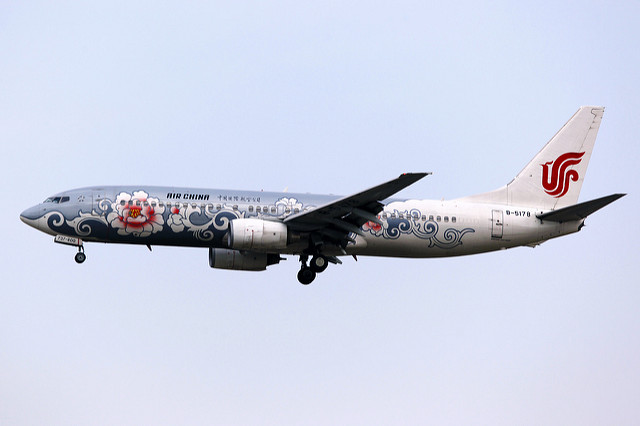
The Interwebs have been in an uproar the last few days over an article in Air China’s inflight magazine Wings of China. As reported by journalist Haze Fan for CNBC, the latest issue of the magazine touts London as a top destination but includes the following “safety” advice in a section called “Tips from Air China”:
London is generally a safe place to travel, however precautions are needed when entering areas mainly populated by Indians, Pakistanis and black people. We advise tourists not to go out alone at night, and females always to be accompanied by another person when travelling.
Fan notes that the capital city is currently being led by a mayor, Sadiq Khan, who was born in London to Pakistani parents.
After Fan’s reporting, Air China North America issued the following apology via Twitter:
We at Air China Limited do not condone discrimination in any shape or form. We regret and apologize for the offensive language. . . .
But Air China was not done reversing its engines. The company also pulled the magazine from their planes and even deleted the above Tweet. Wings of China is now offline, as well.
So . . . I can’t send you to the Wings of China to read the article yourself, but I will remind you that if you’d like to see some other airline mags from around the world, go to my list of over 100 links at “Inflight Magazines: My Virtual Seat-Back Pocket Runneth Over.” Maybe you’ll be the one to scoop the next big piece of travel news.







 Clearing Customs