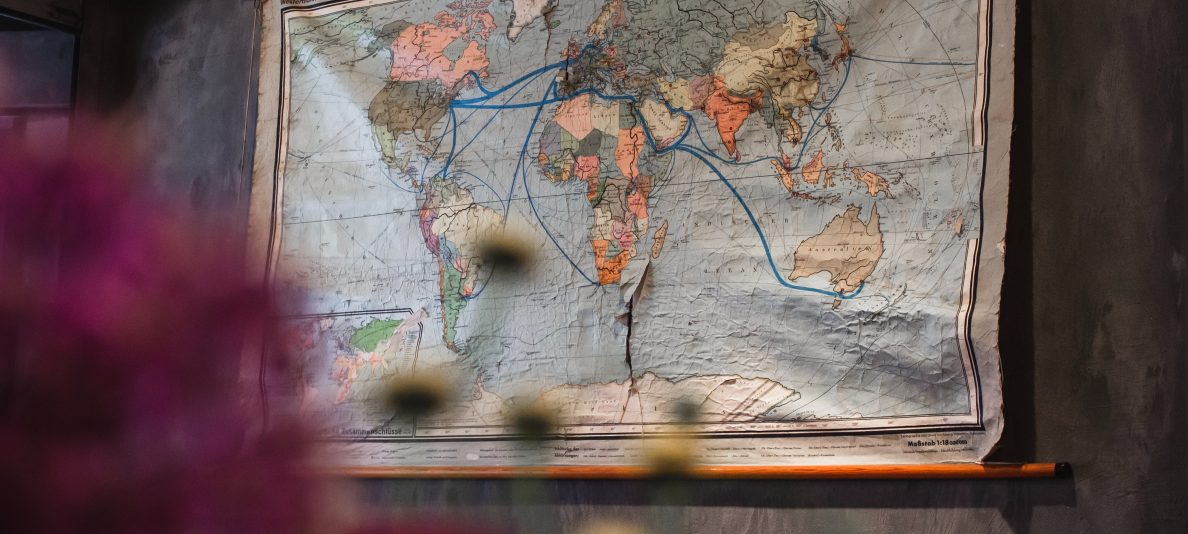
how the people and parts of our world cross cultures
Author: Craig Thompson
Interested in cross-cultural issues, particularly the emotional process of adjusting to new cultures, whether that’s brought about by a move to another country or a move back “home.”
Last week’s post on adoption got me rethinking some of my family’s experiences. Here’s a story we put in a newsletter three years ago. One of our sons is Taiwanese and had been in our Taipei home for a couple years, long enough to become a part of the culture within our walls.
Our youngest son has recently started preschool in the mornings. The main goal is to help him understand and speak more Chinese. After his first day, the teacher told my wife that he was hugging the other children—and they didn’t know how to respond. The teacher said that she explained to them, “It’s OK, he’s a foreigner. They hug a lot at his house.”
As he learns more about himself and the world around him, we have more opportunities to talk with him about “who he is.” While we were out one day last month, he saw a sign showing Chinese chess pieces. He asked why they had letters on them. I told him that they weren’t letters, they were Chinese characters. Seeing an opportunity, I asked him, “Are you Chinese?”
You already know that McDonald’s is the global king of fast-food success, but do you know which US chains are next in line outside of America’s borders?
Well, the answer depends on how you define success. If overall non-US sales is important to you, then number two is KFC, followed by Burger King (according to figures from 2011).
But if you’re more of a How-many-international-restaurants-do-they-have? kind of person, then Subway comes after the Golden Arches and KFC.
Or maybe you care about who’s expanding the most. In that measurement, McDonald’s isn’t in the top five. The three American companies that opened the most non-US units—from 2009 to 2010—are Subway, Dunkin’ Donuts, and KFC.
All this information comes from QSR‘s “Global 30,” a sortable list ranking the top American “quick-service” restaurants outside the US.
Below are the ten American chains with the most restaurants outside the US. That’s the list I’m most interested in, since that gauges your chance of running into one of them overseas. Most are in Taiwan, so I’m adding embellishments from my experiences during my time in Taipei. We had more than our fair share of American fast-food outlets in the capital city, but there were still some gaps. I mean, how can a city of 6 million be Taco Bell-less?
McDonald’s – 18,710 units When we first arrived, we didn’t have the vocabulary to order individual items, so we just ordered meals by number. This meant a soda for even our smallest child, and we had four children. One day I walked up three flights of stairs (most McDonald’s in Taiwan are vertical) balancing 6 Cokes on a tray. I was pretty proud that I’d made it and pretended to stumble when I got to our table . . . and spilled the whole tray. . . . On another day we went to our local McD’s to find out that they’d run out of hamburger. I didn’t know that was possible.
KFC – 11,798 The extra crispy chicken at Taiwan’s KFCs is spicy hot, which we grew to like more than its American counterpart. And because the Taiwanese like dark meat better than white meat, when we ordered a bucket of chicken, we could substitute white for dark at no extra cost. One negative is that their KFCs don’t have slaw. I love KFC’s slaw.
Subway – 10,109 You could almost replace your vegetable-vocabulary unit in language learning with several trips to Subway. If you want the right toppings on your sandwich, you simply have to learn the words. Pointing at “that green thing” won’t do. Building a sandwich at Subway is like a chapter test. . . . By the way, a Subway near us in Taipei also ran out of meat. For a few days it was a salad shop.
Pizza Hut – 5,890 We had a Pizza Hut around the corner from our last apartment in Taiwan. Loved their pepperoni pizza. Not so crazy about toppings with peas or corn . . . or squid . . . or tuna.
Starbucks – 5,727 Most of what I have to say about Starbucks I’ve already said here. The chain has made a big enough impact on the tea-drinking island of Taiwan that several coffee shops have sprung up with circular green logos and/or copycat names (ecoffee, for example). My favorite was the shop that had a sign that said, in a small font, something like, “We’re Not,” over the very large, “STARBUCKS.”
Burger King – 4,998 For a while, my absolute favorite sandwich was a bacon cheeseburger from the Burger King in Keelung next to the train station, eaten on the train as I and a teammate rode back to Taipei after our evening Bible studies with students at the National Taiwan Oceanic University. My second favorite sandwich near the station was a da chang bao xiao chang, or “big sausage wrapped around a small sausage” (the outer “sausage” was made from sticky rice).
Domino’s – 4,422 After serving for two years as a Mormon missionary in Taiwan, Scott Oelkers returned to Minnesota and double majored in Chinese and economics. Following his graduation, he got a job as a buyer for Domino’s Pizza International and worked his way up to vice president. He sold franchise rights in Taiwan to a private equity firm, and the firm asked him to run the business for them. He did, and in the process became a minor celebrity in Taiwan with his humorous TV commercials. Now Oelkers is president and CEO of Domino’s in Japan. He’s still making commercials, like the one below that just came out last month. Betsy Isaacson of the Huffington Post calls it “the most awkward ad in the universe.” I guess one man’s awkward is another man’s profitable.
Dunkin’ Donuts – 3,005 When the first Mister Donut opened in Taipei in 2004, the lines were so long that there was a sign a ways back on the sidewalk that read, “240 minutes from this point.” Dunkin’ Donuts came not long after, and we were glad to see one open in our neighborhood. We held our team meetings there for a while because we usually had the upstairs mostly to ourselves. Not a good sign. It closed.
Dairy Queen – 802 There’s no DQ in Taiwan that I know of (and we usually heard about those kind of things). I do see from an article in Taiwan Today that one was slated for opening in 1986 “located near Church’s Texas Fried Chicken and Lotteria in Taipei.” Someone else with a longer history in Taiwan would have to say whether it ever opened its doors.
Papa John’s – 755 We’re getting farther down on the list, and neither is there a Papa John’s in Taiwan. But that doesn’t mean there’s not room for another pizza franchise, or room for some other kind of fast-food chain. The question is, which one should it be? . . .
For those of you living outside the US, are there any restaurants that you long for? For you American expats, what tastes do you miss, and what do you think would go over well among the locals?
Wendy’s? It comes in at number 11. Taipei used to have at least one. I’ve heard stories from my former coworkers, and a Taipei Wendy’s is even the setting for a short scene in Ang Lee’s 1994 movie, Eat Drink Man Woman.
Or how about Long John Silver’s? It didn’t make the Global 30. One came to Taipei for a short time. We ate there a couple times just to try it out. As I recall, it didn’t last more than a year.
Oh, yeah. There’s Taco Bell (#19). Why can’t you find more Taco Bell’s overseas? I can’t count how many times I heard American expats say that when they get back home the first thing they want to do is eat at a Taco Bell.
I asked a good Taiwanese friend—who had studied at a US university—if he thought Taco Bell would do well in Taiwan. He wasn’t sure that it would, as Mexican flavors don’t always fit the Asian palate. Then I asked him about Arby’s (#21). It seems to me that roast-beef sandwiches could fit in in a lot of cultures, and I like them a lot, too. He said, no, that he didn’t think that there would be enough room for parking. That seemed strange since most fast-food restaurants in Taiwan don’t have any dedicated parking at all. When I questioned that, he said that Arby’s are just too big for Taiwanese. I was confused. Were we talking about the same thing? They’re too big, he said again. Who in Taipei would have room to park an RV?
Hmmmm. Maybe our miscommunication has birthed an idea. How about setting up a fleet of mobile Arby’s in RVs around the globe. I wonder. . . .
With President Vladimir Putin’s signing of a new law at the end of last year, as of January 1, US citizens are no longer able to adopt Russian children. For Americans seeking international adoptions, this means one more closed door, in an environment that has seen the number of foreign children adopted by US parents steadily decline since 2004.
Nine years ago, adoptions of foreign children peaked at 22,991. In 2012, that number had dropped to 8,668, representing a decline of 62%. Last year, before Russia’s new law went into effect, that country was the third-largest provider of children for foreign adoptions to Americans, at 748.
There are several reasons for the lower numbers. One is the enforcement by the US, beginning in 2008, of stricter guidelines under the Hague Adoption Convention. The Convention was formed to cut back on child trafficking and other abuses, which is a good thing. But this has also complicated the process for reputable adoptions and has caused some countries to restrict, or eliminate, adoptions to foreign countries, as they try to meet Convention standards. (The State Department maintains a list of global updates and notices concerning adoption, here.)
For some countries, politics is at play, which seems to be the case in Russia, which is widely thought to have passed their ban in response to a US law that targets human-rights violators in Russia.
And in other countries, feelings of nationalism have caused governments to make it harder to adopt out their children in an effort to have more of their own citizens fulfill the adoptions—and take care of the problem without outside help.
In the case of China, numbers have dropped, in part, because more Chinese have become economically able to adopt (China’s one-child policy allows for additional children through adoption) and because the nation has lengthened its list of restrictions limiting which foreigners can adopt. A 2009 article in Time also cites changing attitudes by the Chinese that are increasing in-country adoption of girls, who, at the time, made up 95% of the children in their orphanages.
With international adoption statistics changing so dramatically over the years, it’s hard to keep up with the numbers. Here’s a look at the latest figures from the US Department of State—for fiscal year 2012, ending September 30:
Most Adoptions, by Country of Origin
1. China 2,697
2. Ethiopia 1,568
3. Russia 748
4. Republic of Korea 627
5. Ukraine 395
Most International Adoptions, by State
1. Texas 617
2. California 555
3. New York 492
4. Florida 398
5. Illinois 390
Median Fees for Hague Convention Adoptions (Most Expensive)
1. South Africa $160,217
2. Albania $25,960
3. Hungary $21,685
4. Canada $20,000
5. Armenia $19,825
(For perspective, the median fee for adoptions from China was $15,600)
Median Fees for Hague Convention Adoptions (Least Expensive)
1. Sri Lanka $6,200
2. Ecuador $6,250 ++Kenya $6,250
4. Philippines $8,500
5. Brazil $10,413
Average Number of Days to Complete Hague Convention Adoptions (Longest Wait)
1. Mexico 770
2. Dominican Republic 741
3. France 709 (1 adoption)
4. Costa Rica 690
5. Armenia 667
(For perspective, the average wait to complete adoptions from China was 267 days.)
The Both Ends Burning Campaign is concerned with facilitating adoptions and decreasing the time that children spend in orphanages. Their work includes the Both Ends Burning book, an online petition, and the Step Forward for Orphans March, scheduled for May 17 in Washington, D.C. Here’s a trailer for their documentary, Stuck. The full video is available here.
A Note on the Numbers: Stuck gives the average length of time for an international adoption as 896 days, while the State Department figures above list Mexico as the country with the longest average time at 770 days. I’m curious as to why the numbers are so far apart. I’m not doubting the validity of the documentary’s statistics, but I wonder where the difference comes from. Maybe it’s because the State Department left out non-Hague countries or because the two differ on what constitutes the complete adoption “process.”
Found in Western churches today as the tune for “Be Still My Soul” and “This Is My Song,” Finlandia has a rich, globetrotting history.
In 1889, the Finnish composer, Jean Sibelius, wrote a piece of music to be performed at a rally protesting censorship by the Russian Empire, of which Finland was a part. This work became the basis for his symphonic poem Finlandia, completed the next year. Finlandia begins with stirring music, but ends with a more tranquil—and more well-known—section, called the “Finlandia Hymn.” It can be heard, beginning at the 5:33 mark, in this performance:
Later, Sibelius reworked the hymn into a standalone piece, and in 1940, the Finnish poet Veikko Antero Koskenniemi added words, and the “Finlandia Hymn” became a popular, though unofficial, anthem for Finland.
Nearly 150 years before the composition of Finlandia, Katharina Amalia Dorothea von Schlegel had written the words for the German hymn, “Stille meine Wille, dein Jesus hilft siegen,” in 1752. Scottish-born Jane Laurie Borthwick translated the hymn into English in 1855 as “Be Still, My Soul,” and in 1927, Borthwick’s lyrics were put to the tune of the “Finlandia Hymn,” to form today’s familiar song.
David J. Mitchell writes about meeting the Olympic gold medalist Eric Liddell during World War II when Mitchell entered a Japanese internment camp in China as a child of missionary parents. Liddell, whose story was later told in the movie Chariots of Fire, was in the camp because of his own missionary work in China. Liddell was a great encouragement to his fellow prisoners, including Mitchell, who remembers the Scottsman teaching the children “Be Still My Soul.” The hymn’s first verse is
Be still, my soul: the Lord is on thy side.
Bear patiently the cross of grief or pain.
Leave to thy God to order and provide;
In every change, He faithful will remain.
Be still, my soul: thy best, thy heav’nly Friend
Through thorny ways leads to a joyful end.
“These words were a great comfort to one of our missionaries who was not only separated from her husband throughout the war,” remembers Mitchell, “but whose son was accidentally electrocuted by a bare wire running to one of the searchlight towers.”
Another prisoner, Norman Cliff, played trombone in a band organized by members of the Salvation Army. He recounts that a week before Liddell died while still in the camp, he heard the band and, from his hospital bed, asked them to play the hymn.
Here is a rendition of the song by Kari Job, with the addition of the refrain “In You I Rest.”
Another hymn sung to the Finlandia tune is “We Rest on Thee,” written by Edith G. Cherry, of Plymouth, England, in 1895. The hymn became part of the account of the 1955 martyrdom of five Christian missionaries by the Waroni (Auca) Indians in Ecuador, as the group sang “We Rest on Thee” before leaving to contact the tribe. The first verse is
We rest on Thee, our Shield and our Defender!
We go not forth alone against the foe;
Strong in Thy strength, safe in Thy keeping tender,
We rest on Thee, and in Thy Name we go.
Strong in Thy strength, safe in Thy keeping tender,
We rest on Thee, and in Thy Name we go.
When Elisabeth Elliot, wife of Jim Elliot, one of those who died, wrote the missionaries’ story, she got the title of her book, Through Gates of Splendor, from the song’s fourth verse:
When passing through the gates of pearly splendor,
Victors, we rest with Thee, through endless days.
The “Finlandia Hymn” continued its global trek as the tune for the Welsh national song, “A Prayer for Wales,” and for “The Land of the Rising Sun,” the national anthem of the African country of Biafra, during its existence from 1967 to 1970.
Among the other church hymns that got their melodies from Finlandia is “This Is My Song,” which, given its global theme, provides a fitting ending for this post. Sung to the “God of all the nations,” it calls for peace and hope for “lands afar and mine.”
The words of the hymn were written in 1934 by the American Lloyd Stone. Additional verses were later added by another American, Georgia Harkness. Here is Stone’s first verse:
This is my song, Oh God of all the nations,
A song of peace for lands afar and mine.
This is my home, the country where my heart is;
Here are my hopes, my dreams, my sacred shrine.
But other hearts in other lands are beating,
With hopes and dreams as true and high as mine.
Have you seen the viral video of actress Mila Kunis and BBC Radio 1’s Chris Stark? Kunis was on the interview circuit for Oz the Great and Powerful, in which she plays the witch Theodora, and sat down with Stark for a segment on the Scott Mills show.
Stark told The Daily Beast‘s Kevin Fallon that Mills, as “a bit of a joke,” didn’t let him know he’d be interviewing Kunis until only around half an hour before they were to meet. Sounding somewhat starstruck, Stark begins the interview with “Seriously, I’m petrified” and “I’ve never done this before,” leading to an informal chat on a range of subjects, including his “boys” at the bar, the local football team, and Nando’s chicken. Kunis calls it “the best interview I’ve had today.”
It strikes me that we can learn a lot from these two about how to have a good cross-cultural conversation. So here’s the “interview”—between a Third-Culture Kid who moved from Ukraine to Los Angeles at the age of 7 and a lad from England—followed by 10 lessons that they can teach us:
Be yourself and don’t put on airs. Talking to someone from another culture can be daunting, but if you admit your limitations, you stand a better chance of having a meaningful and heartfelt conversation. Genuine curiosity trumps preparation. Just jump “in the trenches.”
A conversation, where both people talk and learn is much better than an interrogation (where one person simply rattles off a series of questions) or a speech (where one person simply rattles off a series of facts).
Boilerplate questions and answers can give some useful information, but after you get them out of the way (Where are you from? What’s your job/major? What do you miss most from your home?) It’s obvious that the reason this video is popular isn’t because we learn that Kunis “loved working with James Franco.” Actually, the biggest scoop probably is finding out that she used to be a bartender.
Asking questions that build upon what someone just said is much better than working through a list. It shows you’re interested and that you’re paying attention. And it’s “way more fun.”
You may need to listen to the voice inside your head (or off camera) to get you back on track if you start talking too much about yourself, but it’s even better just to listen to the voice across from you.
Showing an interest in someone else’s story is a great way to put that person at ease, so is finding something you have in common, which is probably easier than you might think.
Realize that words may need defining. Football isn’t always football. And a pie isn’t always a pie.
It’s one thing to invite people into talking about your world. It’s even better to invite them to experience it themselves. Too bad Kunis has that silly movie she’s working on in June.
Understand that there are cultures within cultures, and not everyone represents an entire country or continent. I really don’t think that “dropping trou” at wedding parties is common with all people all across the UK (though I’m open to learning otherwise).
Have gifts on hand. Imagine how much it would have impressed Kunis if Stark had been able to pull out a Watford jersey—even a yellow one.
Chances are if you have a frequent-flyer account, you’ve probably seen that message, or something like it, in your email inbox.
Few things last forever, including airline miles, but keeping your miles available may not be as difficult as you think. There are a lot of ways to keep your account active, and though I’m not an expert on all the tricks of the trade, here are some things I’ve learned about one option: MagsforMiles:
MagsforMiles (or Magazines for Miles) offers one of the cheapest ways to create account activity, at least for these airlines: Alaska, American, Delta, Frontier, Hawaiian, Spirit, United, and US Airways. For as few as 500 miles, you can get a year’s subscription to a wide variety of magazines.
While some think that you need to clean out all your miles before they expire, you simply have to show some kind of activity—just spend or add as few miles as possible. That means one subscription with MagsforMiles will do.
According to MagsforMiles FAQ page, you should wait 6-12 weeks for the first issue of your subscription to be delivered. Save the reply email you get showing that your order is being processed so you’ll know the order date and magazine name in case you need to follow up later.
Don’t wait until the last minute. The required amount of miles will be taken out of your account within 2-4 weeks, and it could possibly take up to 6 weeks. This is important to remember, as you’ll not be able to redeem your miles on the last day of the deadline. I found this out when I got a postcard in the mail saying that MagsforMiles couldn’t fulfill my order because there were insufficient miles in my account. That was because after the deadline passed, the airline zeroed my account before MagsforMiles could take out the miles they needed.
MagsforMiles has a customer service page, but when I called their number, all I got was an automated help line. This didn’t help me a lot, since the magazine subscription I was checking on wasn’t in the system, since it hadn’t been fulfilled.
If, like me, you do your best and your miles get cancelled anyway, all is not lost. Call the airline and explain your situation. In my case, they called MagsforMiles (I assume they talked to a real person) and then gave me back all my miles as a one-time courtesy. I’m not sure how far you could go with that, but even if you miss the deadline with no really good excuse, it would be worth the call to see if the same policy would apply.
After all’s said and done, with MagsforMiles you’ll save your miles and you’ll get some pretty good magazines. Some, like Afar, Coastal Living, and Condé Nast Traveler can even make you feel as if you’re traveling from the comfort of your own easy chair. (OK. I know. It’s not the same, but it’s better than nothing.)
As a followup to “Music for the Unsettled Soul,” I’m passing on the announcement by Page CXVI that they are making all their albums available for free download during the month of March. Their “Jubilee” giveaway celebrates the three musicians’ seven years together, both as The Autumn Film and Page CXVI.
The downloads, available here at Noisetrade, include 74 songs from 11 albums. The giveaway lasts till the end of this month.
No matter how you slice it, some people in some countries are just so gullible.
Kim Jong-un, supreme leader of North Korea, has had a busy few weeks. Not only did he watch a basketball game in the company of Dennis Rodman, but he also threatened to launch a nuclear missile at the US. He sure knows how to grab the headlines.
Phony News Is Still News But the dictator whom Rodman calls “awesome” isn’t new to being in the news. Take for instance when The Onion last year named him the “Sexiest Man Alive.” Of course, you and I know that The Onion is a satirical news outlet, so everything it reports is fake news. But it appears that others outside our borders are not so savvy.
Following the bogus proclamation, the People’sDaily in China jumped on board, running its own story on Kim—including 55-photos of the dictator—and borrowing quotations from The Onion, such as
With his devastatingly handsome, round face, his boyish charm, and his strong, sturdy frame, this Pyongyang-born heart-throb is every woman’s dream come true.
Will Tracy, editor of The Onion, told BBC that he’s not surprised. “I mean, this kind of thing has happened in different forms before,” he said, “so it never totally takes us by surprise, although it’s a total delight whenever it does happen.”
Last year, the Iranian news agency Fars apologized as well, after publishing a story based on The Onion‘s “Gallup Poll: Rural Whites Prefer Ahmadinejad to Obama.” In the agency’s defense, Fars’ editor-in-chief wrote,
Although it does not justify our mistake, we do believe that if a free opinion poll is conducted in the US, a majority of Americans would prefer anyone outside the US political system to President Barack Obama and American statesmen.
Good Thing the US Is Safe What is it that makes the rest of the world so easily taken in by satire? You’d never read about an American publication believing foreign-born fake news.
For instance, a magazine like Harper’s would never be duped by a report on something like “visual allergies” from, say, the satirical program This Is That of the Canadian Broadcasting Corp. Harper’s, in its “Findings” section last month, wouldn’t have written, “A Canadian student sued her university for failing to accommodate her allergies to cactuses, escalators, tall people, and mauve,” as if it were true and then wouldn’t have had to follow up in its March issue with “We regret the error.” Of course, that kind of thing would never, ever happen here. Right?