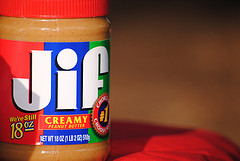
Peanut Butter and Nutella: A Tale of Two Spreads

6398248857_aefa147739_mA few days ago I was the only one in the house at lunch time and I couldn’t find the peanut butter to make a peanut-butter-and-jelly sandwich.

No peanut butter? Why, it seemed downright un-American. And not only that, but it was nothing less than a betrayal of my upbringing.

An American Staple

Writing in the Pacific Standard, Karina Martinez-Carter quotes Jon Krampner, author of Creamy and Crunchy: An Informal History of Peanut Butter, The All-American Food. “Peanut butter,” he says, “embodies the raw primordial heart of American childhood.”

PB&Js are so fundamental to our formative years that, according to the National Peanut Board, the average American will eat 1,500 before graduating from high school.

Peanut butter is part of what makes America America. Even those from outside our borders know it’s so.

While it’s not nearly so popular around the world, once people arrive in the US, they are pulled in by the gooey spread. After giving us another quotation from Krampner—“immigrant kids tend to take to it as a part of their Americanization process”—Martinez-Carter tells of her own experiences:

My father is a first-generation Mexican immigrant and my sister adopted from China, and our cupboard reliably contained a jar of peanut butter we dug into daily. Much like how my sister’s English as a Second Language class teacher screened the classic Disney movies for her kindergarten students to catch them up on cultural references, developing a taste for peanut butter is a component of the acculturation process in the U.S. It is sustenance for understanding America.

Peanuts have their own story to tell about immigrating to America. According to the National Peanut Board, Europeans first came across peanuts while exploring Brazil. Later, Spanish explorers brought peanuts back home from their excursions into the “new world.” From Spain, they were introduced to Asia and Africa. And finally, in the 1700s, Africans brought peanuts to what is now the US.

But it wasn’t until 1884 that Canadian Marcellus Gilmore Edson received a US patent for creating a peanut paste, which he used for making a type of peanut candy. In 1895, John Harvey Kellog invented his own version of peanut butter, a year after he and his brother invented corn flakes. And peanut butter got it’s public debut at the 1904 World’s Fair in St. Louis, when C. H. Sumner sold it at his concession stand.

Now, back to my can’t-find-the-peanut-butter dilemma. I’d already spread my jelly, and I had to eat. So I did what I had to do . . . and used Nutella instead.

The Hazelnut Alternative
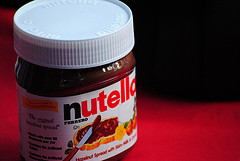
6398251975_042c8b2e79_mThere it was, a jar of Nutella sitting where I thought the peanut butter should be. (Since we’re still unpacking from our move, there are a lot of things out of place.)

I don’t know where it had come from.

Well actually I do. It had come from all over the world.

According to the Organisation for Economic Co‑operation and Development (OECD), Nutella is such a good example of the “global value chain” that the group used the chocolate-flavored hazelnut spread as a case study for one of its policy papers.

Here’s the globality of Nutella: Ferrero, the Italian company that produces Nutella, is headquartered in Germany. The ten factories that make Nutella are located in the European Union, Russia, Turkey, North America, South America, and Australia. As for the ingredients, a list with their origins includes

  • hazelnuts mainly from Turkey
  • palm oil from Malaysia, Papua New Guinea, and Brazil
  • cocoa mainly from Ivory Coast, Ghana, Nigeria, and Ecuador
  • sugar mainly from Europe
  • vanilla flavor from Europe and the US

Put it all together and you have a product that’s sold in 75 countries. OECD even made a map to show Nutella’s main suppliers, factories, and main sales offices.

Invented by Pietro Ferrero in the 1940s, Nutella has become the self-proclaimed “number one spread in Europe.” And while it hasn’t yet become a major competitor to peanut butter in the US, it does have it’s devoted Stateside fans.

Take, for instance, the students of Columbia University. Last year, the Columbia Daily Spectator, the school’s newspaper, launched headlines around the country when it reported that in just the first week Nutella was added to the menu at two dining halls, students went through $5,000 worth of the spread. Dining Services said that students were consuming up to 100 pounds of Nutella daily. And by “consuming,” I mean eating it for meals and stealing jars to take home. It was what one student called “all you can eat, and all you can hide.”

If that rate held up, noted the Spectator, it would cost the dining halls $250,000 a year.

But, alas, the numbers didn’t quite hold up. Another article in the newspaper two days later reported that the first week’s Nutella demand actually cost Dining Services $2,500, not $5,000, and the amount quickly faded to $450 a week after that. But even with the revised numbers, that’s still a lot of hazelnut spread.

I guess I can see the appeal. Nutella isn’t necessarily my thing, but I’m sure I would have liked it when I was in college. My mother never let me eat chocolate frosting by the spoonful when I was growing up, but at college, with no Mom looking over my shoulder, I could have eaten all the frosting . . . uh . . . Nutella I’d wanted.

Well, my college days are now long behind me, and I have new voices in my ear (many of which sound a lot like Mom’s). I don’t think I’ll ever develop an extreme taste for Nutella. I do like a good peanut butter and jelly sandwich, though. You really are what you eat, or at least you are what you ate when you were a kid. And I sure did eat a lot of PB&J sandwiches.

PB&Js. What a strange thing, my friend from Asia once told me. She had never seen one, but she’d heard about them. Why, she asked, would Americans want a sandwich made from peanuts, butter, and jelly. Strange indeed.

(Karina Martinez-Carter, “As American as Peanut Butter,” Pacific Standard, February 14, 2014; “Fun Facts,” National Peanut Board; “History,” Peanut Butter Lovers; Koen D. Backer and Sébastien Miroudot, “Mapping Global Value Chains,” OECD Trade Policy Papers, No. 159, OECD Publishing,  2013; Cecilia Reyes, “Nutella in Ferris Booth Costs Dining $5,000 per Week, in Part Due to Dining Hall Thievery,” Columbia Daily Spectator, March 5, 2013; Finn Vigeland, “University Says Nutella Cost $2,500 in First Week, less than $500 After,” Columbia Daily Spectator, March 7, 2013)

[photos: “Jif Peanut Butter” and “Nutella,” by Brian Cantoni, used under a Creative Commons license]

A DIY Banquet of Global Proportions, $1 at a Time

B-E-R-Y-A-N-I

I had to go back a second time to get the spelling from the lady handing out servings of her dish. She was standing at the Middle East table, sponsored by the Islamic Society of Joplin, part of the World Cuisine and Music Festival at Missouri Southern State University.

The music included an African marimba band, a mariachi band, a Chinese ensemble, and a Caribbean steel drum group.

And the food . . . well here are the five  $1 dishes that I chose for my meal:

Iraqi Beryani

2448042544_34a53a326a_qFirst there was the Iraqi Beryani. There are many versions of beryani (also spelled biryani), depending on the area of the world, but the cook wanted to make sure I knew the one she was serving was the Iraqi variety. It had long-grain rice, chicken, peas, potatoes, and—a surprise to me—almonds and raisins. All the spices and flavors worked so well together that I came home and Googled how to make it on (that’s why I had to double-check the spelling).

I found several recipes, but the one that seems closest to the dish I sampled is from “Chef Zina,” highlighted on the website of CWS. Another recipe option is at the Nestlé Middle East site. More from Nestlé later.

Tea Eggs

8493882246_3ddc931fcb_qAt the Chinese table, I spotted some tea eggs (also called five-spice eggs). They’re not exactly a delicacy, but I couldn’t pass up the chance to have one. It had been a few years since I’d picked up my last one from the brown-stained rice cooker sitting on the counter of a 7-Eleven in Taipei. For those who aren’t familiar with tea eggs, they’re hard-boiled eggs soaked in tea seasoned with soy sauce and a mixture of spices. The shells are cracked, letting the tea soak into the eggs, flavoring them and giving them a marbled brown color. If you’d like to make your own, I found a fairly simple recipe at Kirbie’s Cravings. (It calls for Chinese five spice, which my wife says is easy to find.)

A Couple Dishes from the Pros

Along with the MSSU faculty, staff, and students who provided dishes for the festival were local restaurants. From M & M Bistro I got a snack-sized version of their “Mediterranean Platter.” Go to their page for photos from the event.

And from Flavors International Cuisine, specializing in Indian-Pakistani dishes, I got chicken curry and rice. (I see on their site that they also serve biryani at their restaurant. Need to give that a try.)

No recipes here, just recommendations for two good places to eat.

Chocolate Mousse 4248844482_20e315935d_q
Finally, my five-course meal was complete with a cup of chocolate mousse from the Belgian table. It was served in a small, clear plastic cup. I’m pretty sure that if I had been in a fancy restaurant, and the same dessert had been in a champagne flute, topped with whipped cream and a sprig of mint, it could have sold for 5 times as much as the $1 price tag.

So how can I make my own mousse to impress my friends and neighbors? The answer, it seems, is easier than I would have thought. NPR reported last month that the secret to authentic “rich, creamy, dark, dreamy, delicious chocolate mousse,” as Dorie Greenspan, author of Around My French Table, describes it, is not a secret at all. Greenspan, who has lived part time in Paris for 16 years, says that it took nearly all of one of those years to get a good friend to reveal her recipe. But finally she handed it over, literally. Her friend gave her a Nestlé chocolate bar, and on the back of the wrapper was “the recipe for the mousse every savvy French cook makes.” The ingredients are simple: bittersweet chocolate, eggs, salt, and sugar. That’s it.

Now that I have the recipes, I’m motivated to do some cooking, or at least see if I can beg my wife into doing it for me. It remains to be seen if I’ll actually get it done. I’m already looking forward to next years festival.

(“Paris Confidential: The Mystery Mousse behind the Chocolate Bar,” All Things Considered, NPR, February 13, 2014)

[photos: “Biryani Rice,” by Maria, used under a Creative Commons license; “Chinese Marbled Tea Egg,” by Kattebelletje, used under a Creative Commons license;  “Chocolate Mousse.” by Ulrika, used under a Creative Commons license]

Repost – Merry Christmas, Colonel Sanders-san

Here’s a repost of something I wrote back in March of 2012—it was only my fifth entry—back when I had no followers and very few readers. It’s an interesting and timely story, and helps give me a break during the busyness of the holidays. May you enjoy the blessings of Christmas, wherever you are in the world.

SONY DSCIn the early 1970s, a Christian missionary school in Tokyo was looking for turkey for Christmas dinner. Finding none, a representative contacted the local Kentucky Fried Chicken and ordered chicken instead. A KFC employee suggested the company turn the request into an ad campaign, and Japan has never been the same since. Today, KFC’s Christmas Party Barrels are so popular that sales for December 23rd, 24th, and 25th usually equal half of what is sold during a normal month, and Christmastime customers wait in long lines to pick up their orders, placed as early as October. Very few in Japan celebrate Christmas for its religious meaning, as less than 2% of Japanese even call themselves Christian. Instead, consumerism is emphasized, and the focus is on gifts, decorations . . . and chicken from the Colonel.

(Lindsay Whipp, “All Japan Wants for Christmas Is Kentucky Fried Chicken,” Financial Times, Dec. 19, 2010)

[photo: “KFC Colonel Santa” by Kleemo, used under a Creative Commons license]

Cake from a Roaster, Bread from a Rice Cooker—Where Will the Madness End?

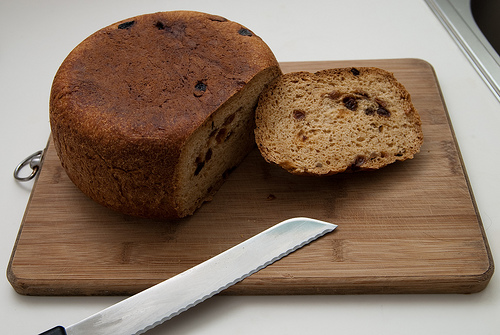
3430989175_bbbcb39cc0
Yes, a loaf of bread can be baked in a rice cooker

So you need to make a cake or bake some bread, but you don’t have a full-size oven. How about using a roaster or a rice cooker instead?

It can be done. And while they may not be your top choices, in some countries, these small appliances may be your best options.

2067859950_2302a07639_m
We used a roaster similar to this one while we were in Taipei.

The Roaster Oven
In Taiwan, most meals are built around things cooked on top of a burner, rather than in the belly of an oven: There aren’t too many nationals cooking a pot roast or broiling steaks. The Taiwanese aren’t big on sweets, like us Americans, so there’s not a lot of cookie and pie baking either. With great bakeries scattered throughout most cities, there’s little need to whip up a cake on your own. And besides all that, the typical Taiwanese kitchen is pretty small, without room for any “extra” appliances.

Before we moved to Taiwan, we considered our options: Bringing over a Western-style range-oven combo and finding a place for it on a balcony of an apartment that we hadn’t found yet would have been troublesome. Besides that, the oven we had at the time wasn’t worth shipping over. Buying a used oven from another expat family who was leaving would have been unpredictable. And buying a new oven there would have been expensive. In the end, we decided on the roaster-oven option.

Turns out, it worked pretty well. In fact, my wife used ours nearly every day for four years—until it wore out and quit heating up. She used it for cakes, cheesecakes, cookies, pies, dinner rolls, casseroles, and, of course, several types of meat. Probably the trickiest project was an angel food cake, but she met even that challenge. (As I recall, the hardest part wasn’t the baking. It was finding something to invert the pan on, since we didn’t have any glass soda bottles.)

Mostly through trial and error, here are some things that she learned:

  • You’ll probably have to leave your food in the roaster longer than the recipe calls for. And lifting the lid to check on your progress releases a lot of heat and adds more time.
  • A small metal rack, or something else that lifts up the baking/cooking pan, will keep foods from burning on the bottom. If you don’t have a rack, you can use an upside-down cake pan.
  • If you can find a rack with legs, you can cook on two levels, with a pan above and one below.
  • It can be difficult to get large pans into and out of the roaster. There’s not a lot of wiggle room, so be extra careful not to burn your hands.

After our roaster gave out, some generous friends bought us a countertop convection oven. We brought it back from the States with our checked baggage, and it worked great for the rest of our time in Taipei. It wasn’t long before we saw a similar oven for sale in a shop near our neighborhood, so if we were to go back to Asia again, we’d probably plan on locating one there.

The Rice Cooker
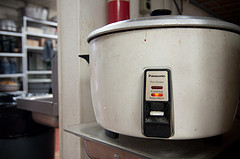
But what if a roaster oven is out of the question? What if your kitchen countertop space is all full? Or what if you don’t even have a kitchen? Don’t despair. A rice cooker can save the day. And if you’re in Asia, you certainly won’t have any trouble finding one to buy.

If you’d like to find recipes and how-to’s for baking with a rice cooker, just do a search on the Internet. You’ll see that it’s not a problem, as the even the simplest model can bake cakes, cheesecakes, and breads.

I’ve never baked with one myself, but here’s some bits of advice I’ve gathered from the sites I looked at:

  • Most recipes will work in a rice cooker without being modified, but you may need to cut back on the size. Cakes won’t cook evenly if they are too deep, and breads will work best if they’re no more than a few inches thick.
  • Bread will need to be flipped over several times during the baking process so that it won’t burn underneath.
  • If it takes more than one cooking cycle to complete a recipe, then let the cooker cool down and start it again. Another option is to wedge something under the switch to prevent it from flipping to “warm.” Be careful with this second method. You’re bypassing the cooker’s automatic shutoff, so it can get too hot if left unattended, and it might shorten the life of your cooker.
A simple, tried-and-true rice cooker
When it comes to choosing a rice cooker, Roger Ebert suggests, “Nothing Fancy.”

Of course, one way to make things easier is to buy a modern rice cooker with a “bake” or “cake” setting. (I didn’t know those existed until I started writing this.) But if you’re old school in your rice-cooker preferences, you’ll go with a more traditional style.

Roger Ebert, the Pulitzer Prize-winning movie critic, was one such devotee of the simple elegance of the basic “Pot.” In fact he was such a fan that he wrote a book dedicated to its multiple uses: The Pot and How to Use It: The Mystery and Romance of the Rice Cooker. In it he advises,

Have nothing to do with anything “Micom Programmable.” Nothing to do with words like “Neuro Fuzzy.” No dials or “settings.” Nothing fancy. You will only cost yourself money and mess things up. If a rice cooker comes with more than two pages of instructions, you’ve overspent. I am saving us money. What you want is your basic Pot with two speeds: Cook and Warm. Maybe it will say it in Japanese. You’ll figure it out.

Though Ebert doesn’t stray into the realm of baking, he does enthusiastically praise the rice cooker for its abilities in preparing such things as vegetables, stews, soups, sauces, and oatmeal.

And the Crockpot, Too

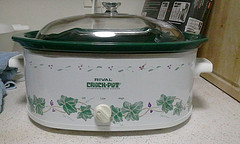
This crockpot is a real "Crock Pot" from Rival.
There are crockpots, and then there’s the Rival Crock-Pot®, “The Original Slow Cooker.”

I was about to finish up this post when I had a thought: I wonder if you can bake with a crockpot (slow cooker). Sure enough, you can do that, too.

I don’t have any experience with this—cooking or eating—but I can point you to a couple sites that give some details. The first one is from Better Homes and Gardens, entitled “Easy Slow Cooker Dessert Recipes.” There you’ll find directions on making cheesecake, pudding cake, brownies, and cobbler, along with the kind of almost-too-good-to-be-true photos you see in magazines like . . . well . . . Better Homes and Gardens.

The second is from Carroll Pellegrinelli at About.com—”Crockpot Baking: Making Breads and Desserts in the Slowcooker.” If you don’t have a slow cooker with a baking insert (again, who knew there was such a thing?), you can use a coffee can, paper towels, and aluminum foil. It’s not fast—it is a slow cooker—but, according to Pellegrinelli, it’s easy.

So . . . what else can you use a roaster oven, rice cooker, and crockpot for? Or what else can you use to bake a cake? Well, that’s up to you.

Experiment.

Try. Fail. Try again.

And remember these two important phrases: “Necessity is the mother of invention,” and “You don’t know how far you can go until you’ve gone too far.”

PS: It Ain’t Over Yet
A friend, former coworker, and long-time missionary to Taiwan, Bev Skiles, commented below that she’s used a rice cooker for cakes and a crockpot for bread. Not only that, but she’s baked cakes in an electric skillet and in cookware on top of the stove. Want more info? Check out these two sites from eHow: “How Do I Bake Bread in an Electric Skillet?” and “How to Bake in an Electric Frying Pan.”

Thanks to Bev for her input. She’s been a great help to expats in Taiwan for many years, showing them how to adjust their Western recipes to Eastern kitchens and cupboards.  She even helped helped put together a cookbook in 1981, “Tips ‘n’ Treats” on Taiwan. If I’d looked in my wife’s copy before I wrote this post, I would have seen several recipes for baking with a rice cooker. I should have consulted her as an expert.

(Roger Ebert, The Pot and How to Use It: The Mystery and Romance of the Rice Cooker, Kansas City, MO: Andrews McMeel, 2010)

[photos: “Currant Bread Made in a Ricecooker,” by Dennis Kruyt, used under a Creative Commons license; “Westinghouse Roaster,” by Julie Weatherbee, used under a Creative Commons license; “Rice Cooker, Peking House, Dudley Square, Roxbury,” by Planet Takeout, used under a Creative Commons license;  “Rival Crock-Pot,” by George Kelly, used under a Creative Commons license]

A Biscoff Cookie, an Inflight Magazine, and Some White Noise. . . Welcome Aboard

5720172830_9a58e44e33

It’s been more than a year since I put together my list of online, English-language, international (read, with other than just US destinations) in-flight magazines.

Not long ago, I found 27 more and have added their links to the post. That brings the total to 91.

So . . .

[photo: “Pink Jet Wing,” by Cyndy Sims Parr, used under a Creative Commons license]

Passion Fruit and Birds of Paradise, What’s in a Name?

535800103_b7553b4fa4The passion fruit, with its leathery skin, slimy seeds, and great flavor, has always been something exotic (strange?) to me. I used to think that it got its name because people thought that eating it would produce passionate feelings. Wrong kind of passion. I now know that the name comes from the “passion,” or the suffering, of Christ.

When Spanish Jesuit missionaries found the plant in South America, they called it the “passion flower” because they saw in its bloom symbols of Jesus’ crucifixion. Specifically:

  • The 10 petals and sepals of the bloom represent the 10 disciples present at Christ’s crucifixion (the 12 minus Peter and Judas),
  • The fringe inside the flower represents the crown of thorns on Jesus’ head.
  • The five stamens represent  Christ’s wounds (one in each hand and foot and one in his side).
  • The flower’s three styles represent the nails used for the crucifixion.
  • The plant’s tendrils represent the whips used to scourge Jesus.
  • The leaves represent the hands of those who killed Jesus.
  • And the flower’s colors, white and blue, represent purity and the heavens, respectively.

But that’s not all I’ve learned. I lately found out the origin of the name for birds of paradise. Again, I figured they were called that because of their exotic beauty—that would be found in a tropical paradise. Wrong again.

6956272927_479613cc0a_nAn article in a 1906 issue of Birds and Nature (the “only magazine in the world illustrated by color photography”) states that European traders first discovered birds of paradise when they visited islands in southeast Asia—some 300 years earlier—looking for spices. Some natives gave the explorers the dried skins of  birds with beautiful plumage. The locals called the birds “God’s Birds,” and when they killed them, they cut off the legs and feet, burying them under the tree where the birds came from as an offering to heaven.

The dried bodies of the birds were exported as time went on, and as the people of Europe had never seen one alive, but always the skin without legs and feet, they came to consider them as heavenly birds, indeed, formed to float in the air as they dwelt in the Garden of Eden, resting occasionally by suspending themselves from the branches of trees by the feathers of their tails, and feeding on air, or the soft dews of heaven. Hence they called [them] the Birds of Paradise.

Those Europeans with their creativity and imaginations.

So what’s in a name? Obviously, a lot more than I thought.

(Robert E. Paull and Odilio Duarte, Tropical Fruits, Volume 2, Cambridge, MA: CABI, 2012, p 168; “The Kingbird of Paradise,” Birds and Nature, October 1906, p 92)

[photos: “Passion Flower,” by kuribo, used under a Creative Commons license; and “n7_w1150,” by Biodiversity Heritage Library, used under a Creative Commons license]

Nando’s: Tastes like Chicken, Looks like an Art Gallery

2791367612_e1be822cbf_nThe Obama family are currently in South Africa, as part of a three-country visit to the African continent. The president will not meet with Nelson Mandela, who is in the hospital, but he has spoken with Mandela’s family by phone. While there, they will also tour Robben Island, where Mandela was a prisoner for 18 years.

I’ve never been to South Africa, but would love to visit. I have, though, found a place (somewhat) closer to home that might some day give me a taste of the country.

In Chris Stark’s interview with Mila Kunis, Stark invites Kunis to a Nando’s for some chicken (to which she responds, “You’re teaching me so much.”)

So what is Nando’s? Why, it’s “Home of the legendary, Portuguese flame-grilled Peri-Peri chicken,” of course.

And what does that have to do with South Africa? Go to the “Story of Nando’s” and you’ll see an animated history of how the restaurant came to be. In a nutshell. . . . Years ago, exploring Portuguese sailors ended up in Mozambique where they discovered the African Bird’s Eye chili pepper. Some 400 years later, some of these Portuguese left Mozambique for Johannesburg, taking with them their peri-peri chicken recipes. (Peri-peri is how they pronounced the Swahili name for the chili.) In 1987, Fernando Duarte and Robert Brozin bought a chicken restaurant—featuring peri-peri sauce—in the Rosettenville suburb of Jo’burg. They changed the name from Chickenland to Nando’s, and the chain was born. Nando’s restaurants are now found around the globe, and while they’re present in the US, they’re (so far) confined to Maryland, Virginia, and Washington, DC.

While each Nando’s is unique, one constant is that they all display artwork from South Africa. Their “art project” started in 2002, and since then, Nando’s has become the self-proclaimed “largest buyer of South African contemporary art in the world.”

What we like most about our art project is that it’s given undiscovered, emerging and established artists from diverse social and economic backgrounds the opportunity to have their work on display in our restaurants around the world. It feels really good to know that we’ve helped give many artists the freedom to focus on their art full time, and that we’ve given our customers something beautiful to look at, without having to set foot in a gallery. (from “Our Restaurants)

Nando’s even has an online display of over 170 pieces of their South African art, produced by “everyone from bushmen on community farms to renowned Johannesburg painters.”

Here’s a recent commercial for Nando’s in South Africa. Eyes down. Now up. Now look closely and you’ll see some of the South African art on the wall.

[photo: “Nando’s Peri Peri Sign,” by Mr T in DC, used under a Creative Commons license]

Comfort Food, Stress, and Life Expectancy

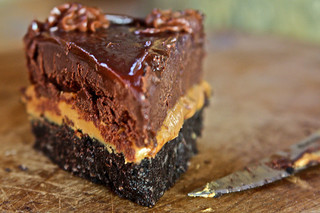
3966115371_47a4d1b1a5_nChocolate. Macaroni and cheese. Ice cream. Potato chips. Hot dogs. Chocolate.

When we feel down, we often turn to familiar foods, junk food, or other “guilty food pleasures” for comfort. The stresses of living in a new culture often provide the emotional downturn, and that, coupled with the fact that our usual feel-good foods are hard to come by, means that we want comfort food even more.

But comfort food, like many things that we enjoy, is a double-edged sword.

First, while we often look to food for a pick-me-up, a recent study suggests that typical comfort foods—which are often not the best health-wise—can actually make you feel worse. Researchers at Penn State University found that among women who are concerned about their body image but also have “high levels of unhealthy eating habits,” negative moods were “significantly higher” after what they called “disordered” eating.

Added to this, more research has found that mildly depressed people can have more difficulty discerning fatty tastes in food. A study, the results of which were published last week in the scientific journal PLOS ONE, used happy, sad, and neutral videos to alter the moods of participants. While those with mild (nonclinical) depression typically had normal perceptions of fat content in foods, after increased positive or negative moods, they lost that ability to discern between high-fat and low-fat foods. Thus, people seeking comfort from food are more susceptible to make unhealthy eating decisions.

But there may be a silver lining: Being somewhat overweight can improve your health. Of course, severe obesity is never good, but according to an NPR report, an analysis of literature by the Centers for Disease Control and Prevention found a 6% decrease in the risk of death for people who are slightly overweight (as measured by body mass index [BMI]). The findings, published in JAMA, have been met with skepticism by some in the medical community, but others find common ground.

As reported in a Worldcrunch article (translated from the German newspaper Süddeutsche Zeitung), since 1999, studies in several countries have shown that overweight people with BMIs of around 27 to 30 have higher life expectancies than their thinner counterparts. It is important to note, though, that the extra weight is helpful when it occurs in places like the arms, legs, hips, and bottom. When it’s around the waist, as in a “spare tire,” though, it does more harm than good.

The article also cites the work of Achim Peters, at Germany’s University of Lübeck, and Bruce McEwen, of Rockefeller University in New York, who have developed a theory called the “obesity paradox.” It states that being overweight is a healthy way to manage stress. That’s because Peters claims that the brain is “selfish,” requiring 50% of the body’s glucose when a person is not under stress. But when stress occurs, the brain wants 90% of the glucose. In an obese person, the glucose is tied up in building fatty deposits, which means the brain demands more energy, and the cycle continues. Thus, according to the theory, obesity is caused by, and is a healthy response to, chronic stress. That means that being skinny isn’t always the best thing. In fact, according to Peters, the worst category to be in is “thin and under pressure.”

If all this leaves you a little confused, and if that confusion has you feeling down, don’t despair.

I’ve already mentioned my fondness for Arby’s and my desire to see them expand around the globe. So just relax and follow me over to Arby’s for a comforting meal of a roast beef sandwich (with horseradish sauce), curly fries, and a Dr. Pepper. After all, it is “Good Mood Food.”

(Matthew Swayne, “Unhealthy Eating Can Make a Bad Mood Worse,” Penn State University, March 15, 2013; Petra Platte et al., “Oral Perceptions of Fat and Taste Stimuli Are Modulated by Affect and Mood Induction,” PLOS ONE, June 5, 2013; Allison Aubrey, “Research: A Little Extra Fat May Help You Live Longer,” NPR, January 2, 2013; “‘Obesity Paradox’—More and More Studies Find the Overweight Live Longer,” Worldcrunch, November 8, 2012, translated from Christina BerndtDicke leben länger,” Süddeutsche Zeitung, November 3, 2012)

[photo: “Chocolate Peanut Butter Cake of Decadence,” by Nora Kuby, used under a Creative Commons license]