

“Wherever You Go, There You Are” and Other Such Words of Wisdom

6170496511_0a3b07b582_z

Somewhere, in one of the back rooms of the internet, sits a frazzle-haired, bespectacled gentleman thumbing through a box of yellowed index cards. On each card is typed out a well-known saying, often in multiple versions, and it’s the man’s job to assign to each one a source. He doesn’t track down the actual origin, but rather he writes down who it sounds as if might have come from. To do this, he refers to a wall chart over his desk that shows a spectrum of names, ranging from the profound—Confucius—to the nonsensical— Yogi Berra—with prominent figures filling in the space in between. His assignments go out to the many and sundry quotation sites around the world wide web. After he’s worked his way through all the cards, he refills the box and starts again. His is the Office of Misattribution.

Even with such an imprecise methodology, it seems odd that a single quotation could be assigned to both ends of the authorial range: Confucius and Yogi Berra. But at least one phrase has that distinction:

Wherever you go, there you are.

(also with the versions “No matter where you go . . .” and “Wheresoever you go . . .”)

First off, I’ll say that I’ve seen no real evidence for its origin. (As I’ve written before, it’s the kind of thing my father would attribute to Shakespeare, but he was just kidding.) Google searches most often show it belonging to Confucius, or, more specifically, coming from the The Analects of Confucius. But when I go to The Analects, I don’t find it, nor anything close. I’m thinking that those who claim Confucius as the source would lean toward explaining the meaning of the phrase as “You can’t escape yourself. No matter your new location, you will bring your past, your faults, your regrets with you.”

Those who would claim the saying belongs to Yogi Berra would probably think it’s simply stating the obvious: “You are where you are.” But I’m pretty sure Berra, who subtitled a book “I Really Didn’t Say Everything I Said!” didn’t create it either. He was, though, in the same ballpark, so to speak, when he came up with

If you don’t know where you’re going, you might not get there.

In another perspective on the theme, the popular spiritual teacher and author Eckhart Tolle talks about intentionally being present in the moment, when in his book The Power of Now: A Guide to Spiritual Enlightenment, he says:

Ordinary unconsciousness is always linked in some way with denial of the Now. The Now, of course, also implies the here. Are you resisting your here and now? Some people would always rather be somewhere else. Their “here” is never good enough. Through self-observation, find out if that is the case in your life. Wherever you are, be there totally.

The Christian missionary and martyr Jim Elliot wrote something similar 47 years earlier in his journal:

Wherever you are, be all there.

To this, he added, “Live to the hilt every situation you believe to be the will of God.”

The idea behind these last two selections reminds me of the phrase

Bloom where you are planted.

Who originally said that? According to the internet, it might be Mary Engelbreit, Paul Harvey, Mother Teresa, Cory Booker (with blossom instead of bloom), Nardi Reeder Campion’s Aunt Grace, Nancy Reader Campion’s Aunt Grace, St. Francis of Sales, an Afghan proverbist, or someone in the Bible. The Office of Misattribution certainly has been busy on that one.


(Yogi Berra, When You Come to a Fork in the Road, Take It!: Inspiration and Wisdom from One of Baseball’s Greatest Heroes, 2001; Eckhart Tolle, The Power of Now: A Guide to Spiritual Enlightenment, Namaste, 1997; Elisabeth Elliot, ed., The Journals of Jim Elliot, Revell, 1978)

[photo: “Compass,” by Walt Stoneburner, used under a Creative Commons license]

Beating the Drum for Missionary Care: An Interview with Neal Pirolo [—at A Life Overseas]

5771632301_9eb216148f_b

In her post “Closer to the Truth about Current Missionary Attrition: An Initial Analysis of Results,” Katie Rowe looks at the findings of a recent survey of missionaries, showing that respondents rated “lack of missionary care” as one of the most common reasons for leaving the field. One of those who commented on the post was Neal Pirolo, author of Serving as Senders—Today: How to Care for Your Missionaries as They Prepare to Go, Are on the Field and Return Home, and The Reentry Team: Caring for Your Returning Missionaries. The current edition of Serving as Senders—Today is a revision of the original, first published in 1991. Since then, it has been translated into 20 languages and has nearly a half million copies in print.

In reference to missionary/member care, Neal writes, “I have been ‘beating this drum’ since 1976!” I contacted Neal to get his long-term perspective, and he graciously agreed to answer my questions (and along the way, with his wife’s help, remembered that the year was actually 1978).

Why was 1978 a starting point for you to begin your drumbeat for missionary care? 

Oftentimes, telling a story communicates better than “just the facts.” Let me tell a story:

I went to Brazil to administer the five schools Wycliffe/SIL was using at the time for missionary children. My wife was given the responsibility of overseeing the Group House in Cuiaba. We had a choice: move our family of six in with all the singles or move from house to house every three months as translators went to their villages and back. We moved in. We looked in the refrigerator. Every item had someone’s initials on it. We looked at each other. “This will not work,” our eyes said to each other. But how do you change a group of people so entrenched?

Read the rest at A Life Overseas. . . .

[photo: “Drum,” by André Prata, used under a Creative Commons license]
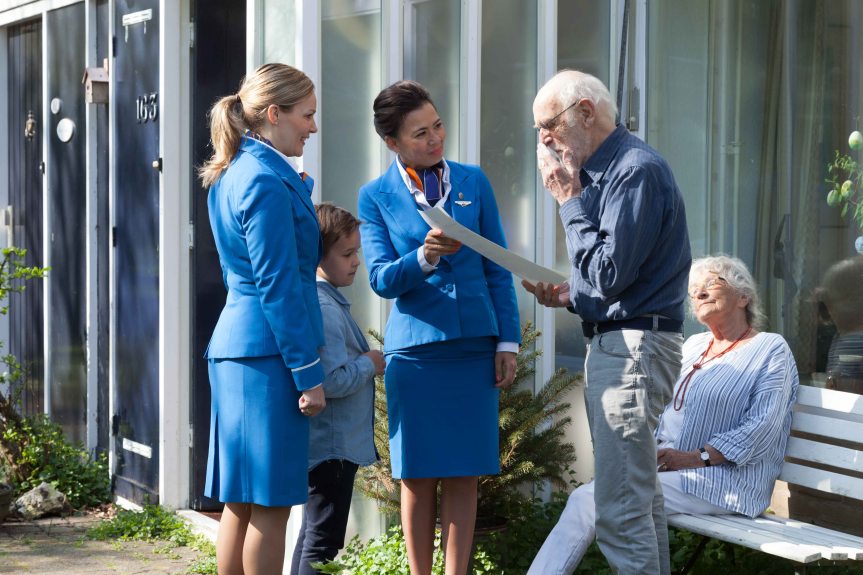
KLM, where the K is for Karing

img-5443

When Arnold Neuhaus was a small lad growing up in Amsterdam, he entered a contest sponsored by KLM, and won. The prize was a flight over Amsterdam, but he wasn’t able to collect because of his sister’s illness. Eighty three years later, with the help of his seven-year-old great-grandson, KLM delivered with a surprise for “Grandpa Nol’s” ninetieth birthday.

How’s that for a caring company?

Each year, AirHelp rates airlines by looking at their on-time performance, quality of service, and claim processing. I’m going to call that a “care” index (work with me here). Back in 2016, KLM Royal Dutch Airlines came in second. Since then, though, they’ve seen a bit of a dip in their ranking. Last year they came in at 11, and this year, it’s 11 again.

But KLM cares about caring, and maybe they’ll soon regain their number-2 spot. (Good look trying to be number 1. Qatar Airways seems to have a lock on that.) Take, for instance, their special-assistance program. It’s called KLM CARES.

And this summer, they’re introducing Care-E, a luggage-carrying robot that can scan your boarding pass and take you where you need to be, even if the gate changes. KLM tells CNN Travel that Care-E is currently in testing, with plans to debut it in New York’s JFK airport and San Francisco International later this year.

Care-E looks like another step toward airport robot domination, and it’s an upgrade of KLM’s Spencer, who, alas, couldn’t carry your bags.

Last year, the airline introduced the KLM Care Tag, a smart luggage tag that uses GPS and a speaker to provide helpful “tips and tricks” as you travel around Amsterdam. It’s another technology that’s in beta mode, as it was available only during September of 2017.

The Care Tag. Yeah, it’s kind of like having a stewardess riding on the back of your bike or on top of your roller bag. Of course, that’s not going to happen (though the images are kind of seared into my brain). But don’t be surprised if a member of the KLM cabin crew sneaks up behind you on the street to zip up your backpack or adjust your child’s shoulder strap. “It’s not the blue uniform that make us stand out,” they say, “It’s because we care.”

And if you still don’t believe me about KLM’s karing kulture, here’s a video in honor of Mother’s Day, for those who live far away from Mom. It’s actually my favorite of this whole bunch.

By the way (#1), do you know what KLM actually stands for? It’s Koninklijke Luchtvaart Maatschappij, which translates to Royal Aviation Company.

By the way (#2), in case you’ve never heard of AirHelp before . . . besides rating airlines (and airports), they want to help you get compensation for any flight delays, cancellations, or overbookings that have affected you in the last three years. Just let them know the details, then “sit back and relax while [they] jump into action.”

(Lilit Marcus, “KLM’s New Airport Robot Care-E Will Guide You to the Gate,” CCN Travel, July 11, 2018;

[photo from KLM, used with permission]

Balls, 2, 3, 4

“South African-Lithuanian Stuffed Matzah Balls”

9. Divide the matzah meal mixture into 8-10 balls of equal size.
10. Flatten the balls, then and place 1 tsp of meat filling in the center of each. Enclose the filling, pinch the edges together and form into balls.
11. Place the matzah balls into the rapidly boiling salted water and simmer 20 minutes.
12. Preheat the oven to 400°F.
13. Drain the matzah balls and place in a pan greased with chicken fat; cover with remaining 4 tsp chicken fat and sprinkle with cinnamon.
14. Bake 15 to 20 minutes or until slightly browned.

Eileen Goltz, OU Kosher, from Joan Nathan’s Jewish Holiday Kitchen

Flying First Class minus That Pesky Flying Thing

2573622523_c4cb25fdd4_z

If first-class flying is beyond the reach of your bank account, Tokyo has a solution. All you need to do is contact First Airlines and book a virtual flight to Paris, Rome, New York, or Hawaii. Your trip will include authentic first-class seats from the Airbus 310 and 340; service provided by airline crew members in training who will lead you through announcements, demonstrations, and in-flight sales; engine sounds; a four-course chef-prepared meal; and a tour of your destination using a VR headset. According to CNN Travel, the cost is around $56 for a 2-hour first-class “flight.”

Real intercontinental travel usually lasts more than a couple of hours, though, so you’ll want to complete your adventure at Tokyo’s First Cabin Tsukiji. The deluxe pod hotel features small (tiny?) rooms fashioned after “premium,” “first,” and “business” class airline amenities. There’s also a “premium economy class cabin,” where the pods are stacked two high. From what I can tell, costs are about $40 plus.

A more pricey option would be to make a reservation for Air Hollywood’s Pan Am Experience in Los Angeles. It’s a five-course meal served in an “exact replica” of a Pan Am Boeing 747. A pair of tickets run from $475 to $875, but good luck making that purchase, as July’s only offering is already sold out.

Why Not DIY?

Alright, I know what you’re thinking—We don’t live in Japan or LA! (unless, of course, you actually do live in Japan or LA). Well, I’m here to help. Back in 2013, I wrote a post that will set you up with some in-flight snacks, in-flight magazines, and an in-flight soundtrack. But that was pretty bare-bones. Now it’s time for an upgrade.

To create your own first-class-cabin experience, first, you’ll want to head over to ebay to purchase some used airline seats, just waiting to be bolted to your living-room floor. Or, for a bigger selection, and a bigger price tag, visit SkyArt for aircraft seats, fuselage panels, and emergency-exit doors. And if you’d like some airline trolleys (the kind that deliver your meals inflight) drop by SkyCart, where prices start at $1,500.

Next, you’ll need some in-flight blankets. According to Travel + Leisure, “Airlines Are Sick of First Class Passengers Stealing Blankets,” so don’t be doing that. Instead, visit the Westin Store online to purchase their $37 “Heavenly In-Flight Blanket,” created exclusively for Delta. For a couple of dollars more, go to the United Shop and get a Saks Fifth Avenue lap throw, used in United’s Polaris business class. United also sells duvets, amenity kits, and soap bearing their custom “United Landing scent.” For cheaper fare, Made in China offers coach-style airline blankets—for the rest of us. They’re as low as $1.30 apiece, but you’ll need to gather up a lot of friends, since you’ll need to buy at least 1,000. The same kind of bulk pricing can be found for eye masks and disposable slippers at EverythingBranded, and for amenity kits at Global Sources.

Let’s see, what are we still missing? Oh yes, in-flight meals to stock your trolleys. I thought I’d found the answer when I heard about Air Food One, where you can subscribe to a service that delivers to your door business-class-style food for about $12 meal. The menu comes from LSG Sky Chefs, who provide food for Lufthansa Airlines. I thought I’d found the answer, but, alas, no. Air Food One was only available in Germany and it’s no longer delivering meals. Ditto for Air New Zeland’s pop-up restaurant: only in London and only last year. So when it comes to food, you’ll just have to pop a frozen meal into the microwave. Or . . . you could pretend your flight is headed to outer space and treat yourself to some freeze-dried ice cream and fruit from Astronaut Foods.

So that about wraps it up, except for the buying, gathering, and assembling. If you’d like to skip all that, there is an alternative. But you’ll have to move to Austin (unless, of course, you already live in Austin), where you can purchase a home, built by a pilot, with its own in-flight media room. The walls and overhead bins are from a Boeing Qantas 767, and the seats come from a Delta L-1011 first-class cabin. The windows even have video monitors simulating flight scenes. Current asking price for the property is $2,689,600.

Oh yeah, one more thing. Regardless of how you set up your  first-class cabin, you’ll need some kind of curtain to draw a line between you and the rest of the world in coach. Might I suggest this or maybe even this?

(Francesca Street, “Fly from Tokyo to Paris without Leaving the Ground,” CNN Travel, February 20, 2018; Audrey Ference, “Austin Home Features Airplane Cabin-Themed Media Room Made from Real Airplane Parts,” realtor.com, April 11, 2018)

[photo: “Lufthansa First Class-Cabin,” by TravelingOtter, used under a Creative Commons license]

Eight “Ifs” I Don’t Believe So Much Anymore [—at A Life Overseas]

10745434953_9bfd3d14ca_h

After my mother’s death last year, my sister and I sorted through the items in her house, and I came home with some boxes that Mom had saved for me, holding grade-school spelling books, newspaper clippings, cards and letters, and old grad-school acceptance letters. There were some posters, too, ones that I’d used to decorate my room when I was a university student.

Do you remember those Argus posters with inspiring words printed over inspiring photos? (If you don’t, ask your parents—it was that long ago.) I recently unrolled a few of them, and remembered them hanging on my wall. There’s the photo of a sailboat against the horizon, reading, “A ship in the harbor is safe, but that’s not what ships are made for.” And there’s the image of a man climbing a nearly vertical cliff face. That one says, “If it is to be, it is up to me.”

That’s one of the “If” phrases that used to guide me, but I don’t believe it as much now after living overseas. I can’t say for sure it was the location that changed my thinking. Maybe it was just the time that went by, and I would have come to the same conclusions regardless of where I lived. But I can’t separate the when and the where—from the experiences that made up my life then and there.

If it is to be, it is up to me
You’ve got to admire that mountaineer on my poster. He’s straining for his next handhold, his bearded face a display of determination. He knows that he must—he will—reach the summit. He knows the printed message is true. It’s made up of 10 two-letter words. How cool is that?

I understand what the poster is getting at—that we shouldn’t wait around for others to get things done. But somewhere along the way I learned that I’m not the center of the making-things-happen-universe. And it’s a good thing for the world that I’m not. Now I’m more on board with an image that says something like “If it is to be, it is up to God using whomever he sees fit to grace with the opportunity to join him. Finding what I can do to help is the part that’s up to me.” Not too catchy. Too many words and letters for a good poster. And for the picture? How about a guy pausing as he climbs the stairs?

If you want something done right, do it yourself
This phrase is a second cousin to the one above. . . .

Finish reading at A Life Overseas.

[photo: “to climb the stairs” by Thomas8047, used under a Creative Commons license]

 

Kate Bowler: Everything Happens. Period.

34518036102_01f4510f8d_z

My wife, Karen, has been reading Kate Bowler’s book Everything Happens for a Reason: And Other Lies I’ve Loved. She’d heard about Bowler, a professor at Duke Divinity School, when I showed her some short videos that introduced the author.

Bowler previously wrote Blessed: A History of the American Prosperity Gospel, but her focus changed when, in 2015, at the age of 35, she was diagnosed with stage-four colon cancer.

“Why don’t you put those videos on your blog,” Karen asked me. I reminded her that Clearing Customs is about cross-cultural issues, and though I’ve stretched that definition at times, I need some kind of hook to pull an idea into the boundaries of this site. Bowler hasn’t been a missionary (that I know of), and though cross-cultural workers face struggles and loss, they aren’t usually of the terminal-cancer-diagnosis kind.

But . . . I’ve decided to post the videos anyway. Why? Because Bowler’s message resonates with Karen, a Christian who’s served overseas, who’s dealt with grief, who’s survived cancer, and who’s talked with many former and current cross-cultural workers who need Bowler’s kind of thoughtful encouragement and empathy instead of trite phrases, even those that come “from such a good place.”

So that’s my hook.

And here they are.

Kate Bowler:

I think everything happens. Period. . . . I do think things just happen and some things come apart and some things come together. If I could pick one thing it would be that everyone simmers down on the explanations for other people’s suffering and just step in with love.

I realized . . . that I’m not special. And like, yes, I’m special to my parents and I am a beloved child of God, but like, I’m not—I’m not special insofar as, like, I am not the exception to the rule that sometimes bad things just happen.

. . . the tyranny of prescriptive joy . . .

[photo: “All Tied Up,” by Janet Bland, used under a Creative Commons license]

If Peter Piper Picked a Peck of Global Tongue-Twisters

4377745488_edc2af2f61_z

As if learning a new language weren’t hard enough . . . here are some tongue twisters from around the world to remind you that talking isn’t always easy even for native speakers:

Need more ways to twist your polylingual tongue? Then go to the “1st International Collection of Tongue Twisters,” which boasts 3,660 entries in 118 languages.

Even American Sign Language (ASL) has it’s own tongue. . . uh . . . finger twis- . . . uh . . . “finger fumblers.” Here’s an example:

If you’re wondering what the hardest tongue twister in the world is, Google will point you to several articles claiming that the top spot belongs to “pad kid poured curd pulled cod.” (Try it for yourself.) That list of words was put together by researchers at MIT, while using tongue twisters to study the “brain’s speech-planning processes.”

But is “pad kid poured curd pulled cod” really the toughest thing to say on the planet? That’s a pretty bold claim to make. First of all, choosing a phrase in English would seem pretty lingo-centric. And second, even Stefanie Shattuck-Hufnagel, the psycholinguist at MIT who presented the study’s results, says no such thing. “I make no claims,” she tells NPR’s Ira Flatow, “to have found the hardest, the mother of all difficult tongue twisters.”

Maybe you’re not into tongue twisters at all (though, in that case, I’m not sure why you’re still reading this). Maybe you don’t like making things more difficult than they have to be. Maybe, you agree with the comedian Brian Regan, who thinks it’s enough of an accomplishment to speak English—by itself without any added challenges. Here’s what he has to say on the topic in his show “Standing Up”:

Can you imagine being bilingual? Would that be . . .  Or even knowing anybody that was? I’m not even unilingual. Actually, I shouldn’t say that. I don’t give myself enough credit. I know . . . I know enough English to, like, you know, get by, you know. No, like, like, I can order in restaurants and stuff, you know. “I want ham. One ham, please, to eating the ham. Bring ham to eating the ham, please.” I can do that. You know, just not fluent, I guess.

(American Institute of Physics, “Tripped Tongues Teach Speech Secrets,” EurekaAlert!, December 4, 2013; Stefanie Shattuck-Hufnagel, et al., “A Comparison of Speech Errors Elicited by Sentences and Alternating Repetitive Tongue Twisters,” The Journal of the Acoustical Society of America, December 2013; “Speech Science: Tongue Twisters and Valley Girls,” Science Friday, NPR, December 6, 2018; Brian Regan, “Standing Up,” 2007)

[photo: “Terribly Tongue Tied,” by Brian, used under a Creative Commons license]